What Is Voice of Customer and How Does It Drive Growth
Discover what is voice of customer and learn how to use a VoC program to collect feedback, analyze insights, and fuel sustainable business growth.

Feb 12, 2026 · 18 min read
Free tool
Likert Scale Generator
Generate custom rating scales and survey questions tailored to your feedback needs.
Let’s start with a simple question for busy owners: what is Voice of Customer (VoC)?
Think of it as the complete process of tuning into what your customers are saying about your business, everywhere they’re saying it. It’s about taking all that scattered feedback—online reviews, survey responses, social media comments, support tickets—and weaving it into a single, clear story about what your customers expect and experience.
This isn't just about collecting data. It’s an actionable strategy that helps you shift from putting out fires to proactively building a business your customers will love, so you can collect smarter, act faster, and grow stronger.
What Is Voice of Customer in Simple Terms?
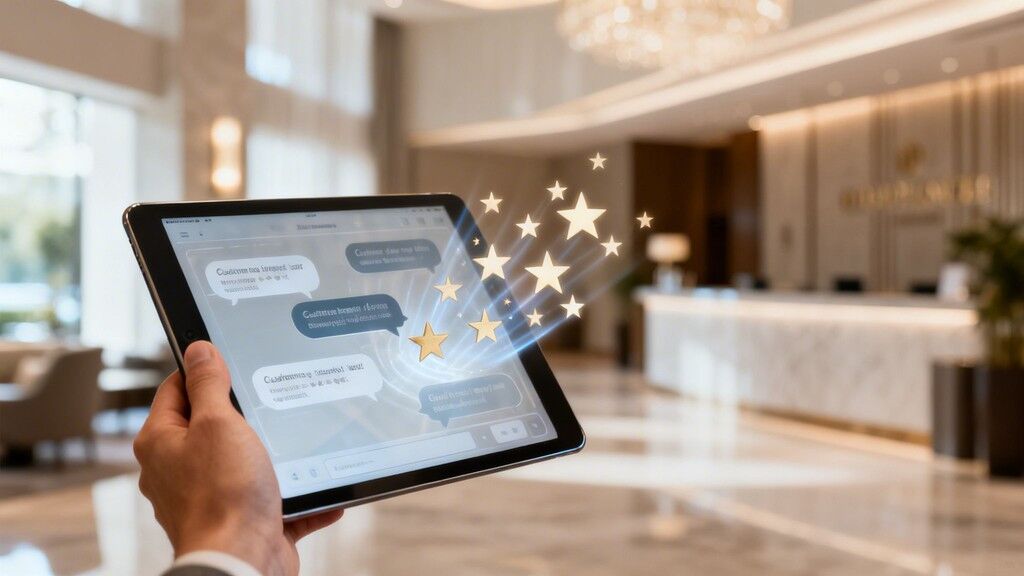
Imagine trying to run a hotel based only on the few comment cards left at the front desk. You’d be flying blind, completely ignoring the hundreds of detailed reviews popping up on Google, TripAdvisor, and Instagram.
Voice of Customer is the system that brings all those conversations into one place. It lets you stop guessing and start knowing what truly matters to your guests.
It’s less of a buzzword and more of your business’s central nervous system. A structured VoC program is designed to help you collect smarter, act faster, and grow stronger. By systematically gathering and analyzing feedback, you get an unvarnished look at what drives satisfaction and loyalty.
The Core Components of a Modern VoC Program
So, what does a modern Voice of Customer program actually look like? It’s a continuous cycle of listening, interpreting, and acting on what you hear. It’s built on a few key pillars.
Here’s a quick breakdown of what a comprehensive VoC strategy includes:
Component | What It Means for Your Business | Why It's Critical |
|---|---|---|
Holistic Data Collection | Capturing feedback from all channels—surveys, reviews, social media, support tickets, and even in-person comments. | It gives you the full picture, not just a sliver of it. You can't fix what you don't know is broken. |
Centralized Analysis | Bringing all that scattered information into a unified dashboard to spot trends, measure sentiment, and identify recurring issues. | It connects the dots between a bad review on Google and a spike in support tickets, revealing the root cause. |
Actionable Insights | Translating raw data into clear, specific tasks. You go from "service feels slow" to "check-in times on Saturdays cause a 20% drop in satisfaction." | Vague problems get vague solutions. Specific insights lead to targeted, effective improvements. |
Closing the Loop | Responding to feedback and making visible changes. This shows customers you’re listening and turns bad experiences into trust-building moments. | It’s the difference between a complaint that disappears into a black hole and one that gets a direct, helpful response. |
A solid VoC program means you’re no longer operating in the dark. It’s a strategic compass that guides every decision you make.
Voice of Customer is active, data-based market research that captures the customer's perspective directly from real conversations—going far beyond what traditional surveys or a handful of reviews can tell you.
Ultimately, this process ensures every move you make—from staff training and product updates to marketing messages and new investments—is perfectly aligned with what your customers truly want.
How VoC Drives Real Business Growth
Understanding the Voice of Customer isn't just a feel-good exercise. It's about building a healthier, more profitable business from the ground up. When done right, a VoC program delivers tangible, measurable results that directly impact your bottom line, turning abstract feedback into a clear roadmap for growth.
Think about it in real terms. For a restaurant owner, VoC isn't just a pile of comment cards. It's the data that reveals exactly why a new menu item is bombing—maybe customers find it overpriced, or the description is confusing. For a hotel manager, it’s the system that finally uncovers the root cause of those recurring complaints about room cleanliness, allowing for targeted staff training that actually boosts online ratings.
When you truly listen, you start making smarter, data-backed decisions on everything from inventory and marketing to employee incentives. This isn't just reactive problem-solving; it's how you build a resilient and profitable operation.
From Insights to Increased Revenue
At its core, VoC is about connecting customer happiness directly to your financial performance. Once you understand what drives satisfaction, you can double down on what works and fix what doesn't. This leads straight to a higher customer lifetime value (CLV).
Happy customers don't just come back; they spend more. Research consistently shows that businesses excelling at customer experience drive 4-8% higher revenue than their rivals. This isn't luck. It’s the direct result of systematically turning feedback into improvements.
Boost Repeat Business: A hotel that uses feedback to streamline its check-in process gets fewer frustrated guests and more five-star reviews, which naturally encourages repeat bookings.
Increase Average Spend: A local coffee shop learns its regulars are craving more non-dairy options. By adjusting the menu, they see larger orders and happier customers.
Strengthen Brand Reputation: Great experiences create the most powerful marketing there is: word-of-mouth. This organic buzz lowers your customer acquisition costs over time.
Sharpening Your Operational Edge
VoC is also one of the best tools for improving operational efficiency. Instead of guessing where the problems are, you get a clear, customer-validated punch list of what needs attention. This saves time, money, and your team's valuable energy.
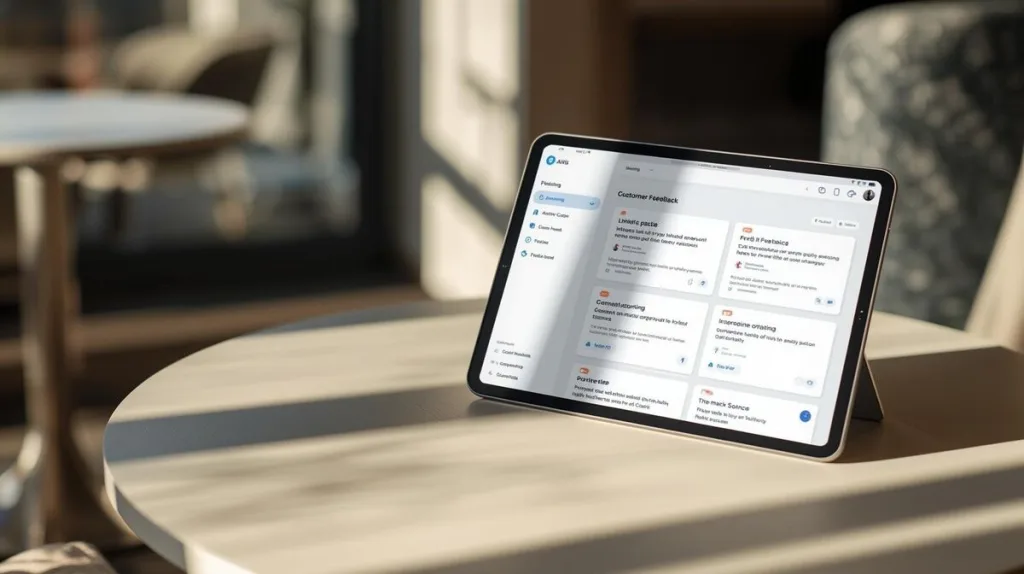
Imagine seeing every piece of customer feedback—from Google reviews, surveys, and social media—all in one place. That’s the entire point of a Feedback Operating System. A feature like Radar delivers unified review intelligence, pulling all that scattered data together. Suddenly, you’re not just reacting to a single bad review; you’re spotting a real trend across every platform.
When you can instantly see that "slow service" is mentioned 30% more often on Friday nights, you know exactly where to focus your training and staffing. You stop wasting resources on guesswork and start making targeted fixes that work.
Turning Feedback into Your Competitive Advantage
Ultimately, your VoC program becomes your strategic compass. It guides product development, service enhancements, and marketing messages, making sure every move is aligned with what your customers actually want. This is how you outmaneuver competitors who are still running on gut feelings.
To make this happen, you need tools that deliver insights fast. Our AI Summaries provide instant insights & sentiment analysis, digging through hundreds of comments to tell you the main themes and feelings. Instead of spending hours reading, you get a clear report in seconds.
For negative experiences, the Resolutions Engine offers automated service recovery. If a guest reports a broken AC unit in a survey, the system can automatically alert maintenance, notify the front desk, and send a personalized apology with a discount for their next stay. This is how you act faster, turning a potential one-star review into a showcase of exceptional service that builds loyalty.
Where to Capture Authentic Customer Feedback
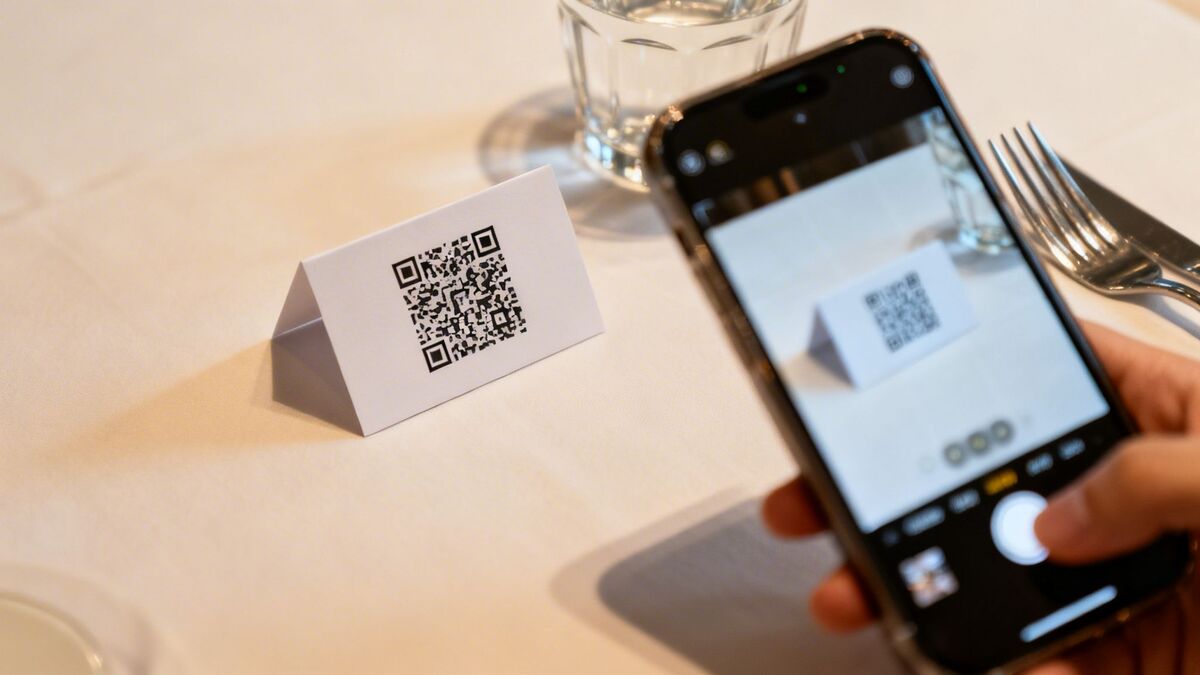
If you want to truly understand your customers, you have to meet them where they are. Authentic feedback isn’t something you get from one perfectly timed annual survey. It's a constant stream of conversation happening across dozens of channels, every single day.
A strong VoC program is all about listening everywhere. The goal is to make it incredibly easy for customers to share their thoughts the moment an experience happens. For a restaurant, that might be a simple QR code on the table linking to a two-question survey. For a hotel, it's an automated email that lands in their inbox right after checkout.
This is the first step in our core value: to collect smarter. It’s about moving beyond just passively waiting for feedback and instead actively creating opportunities for it. These direct and indirect channels are the lifeblood of your strategy.
Direct Feedback Channels
Direct channels are where you're deliberately asking customers for their thoughts. Think of these as your controlled sources of information, where you can ask specific questions about service, quality, or a new menu item.
Surveys: These are the workhorses of any VoC program. Whether it's a quick SMS poll or a more detailed email questionnaire, surveys give you structured, measurable data.
QR Code Feedback: Perfect for in-person businesses, QR codes on receipts, tables, or signage capture immediate, on-the-spot feedback while the experience is still fresh in a customer’s mind.
In-Person Conversations: Never, ever underestimate the power of a simple, "How was everything for you today?" Your frontline staff are your best intelligence gatherers. In fact, many principles from a good ultimate guide to employee feedback strategies can be adapted to improve how your team listens to customers, too.
Indirect Feedback Channels
This is where things get really interesting. Indirect channels are where customers are talking about you, but not necessarily to you. This is where you'll find the most candid, unfiltered opinions.
Online Reviews: Sites like Google, Yelp, and TripAdvisor are the new town square. What people say here has a direct and immediate impact on your reputation and bottom line.
Social Media Mentions: Customers use platforms like Instagram, Facebook, and X to praise great service and vent their frustrations. You have to be listening.
Support Tickets & Chats: Your customer support inbox is a goldmine. It's filled with raw data on common problems, points of friction, and product flaws.
The world of customer communication is moving fast. Interactions are projected to increase fivefold by 2026, driven by AI and instant messaging. With 61% of customers now preferring digital channels like live chat, your listening systems need to keep up.
The Big Idea: Collecting smarter means using a mix of channels. If you only rely on surveys, you get a filtered view. If you only monitor reviews, you're always playing defense. The magic happens when you combine both.
Automating Feedback Collection with FeedbackRobot
Let's be realistic—no busy owner has the time to manually track all these channels. This is where technology becomes your best friend, automating the collection process so you never miss a thing. For a deeper dive, check out our guide on how to collect feedback from customers.
FeedbackRobot is built to help you collect smarter, effortlessly.
Our Prompt to Survey feature is a game-changer for time-crunched owners. Just type a simple request like, "Create a post-stay survey for my boutique hotel," and our AI builds a ready-to-use survey in seconds. No more wasted hours.
Better yet, our integrations with systems you already use—like Mews for hotels or Toast for restaurants—put the entire feedback loop on autopilot. When a guest checks out or a diner pays their bill, a personalized feedback request is automatically triggered. You get timely, high-quality insights without lifting a finger, building a powerful foundation for your entire VoC program.
Turning Raw Feedback into Actionable Intelligence

Collecting customer feedback is just the start. The real value comes when you turn all that raw, scattered data into clear insights that actually guide your business decisions. For busy owners, this can feel like the hardest part of the whole Voice of Customer puzzle.
You might have hundreds, even thousands, of comments pouring in from surveys, online reviews, and social media. How do you find the important patterns in all that noise without spending your entire week reading every single one?
This is where a solid feedback system becomes your best friend. It helps you stop drowning in data and start using it, turning that mountain of opinions into a short, clear list of priorities.
Unifying Your Feedback Universe with Radar
The first step to making sense of feedback is getting it all in one place. If your team has to constantly jump between Google, Yelp, TripAdvisor, and your survey software just to see what people are saying, you’re losing time and missing the connections between channels.
We built Radar, our unified review intelligence dashboard, to solve this exact problem. Think of it as your business’s mission control for all things customer feedback.
Radar pulls every review and mention into a single, easy-to-scan dashboard. Instead of working in silos, you get a complete, 360-degree view of your brand’s reputation. This unified view helps you spot trends you'd otherwise miss—like realizing that a complaint about slow Wi-Fi keeps popping up on both Google reviews and your internal post-stay surveys.
By bringing all your feedback together, you can instantly tell if a negative comment is just a one-off issue or the start of a bigger problem that needs your attention right away.
This consolidation is the foundation for turning random comments into a predictable, strategic asset. If you want to dig deeper into making your data work for you, check out our guide on the analysis of survey data.
Uncovering Insights Instantly with AI
Once all your data is in one spot, the next challenge is figuring out what it all means. Manually reading through every comment to find themes and gauge the general mood just doesn't scale. This is where artificial intelligence can become your most valuable employee.
Our platform uses AI Summaries to give you instant insights & sentiment analysis. This feature is like having a tireless data analyst working for you 24/7, reading, categorizing, and making sense of every piece of feedback that comes in.
Here’s what it can do for you in seconds:
Theme Detection: The AI automatically finds and tags recurring topics. You’ll instantly see that 15% of comments mention "slow service" or that positive feedback often includes the phrase "friendly staff."
Sentiment Analysis: Every comment is scanned for its emotional tone—positive, negative, or neutral. This gives you a real-time pulse on customer happiness without any guesswork.
For example, a restaurant owner can log in and see a summary highlighting that "uncomfortable seating" was a major negative theme last month. That insight is direct, clear, and—most importantly—actionable. You now have a data-backed reason to invest in new chairs, fixing a real customer pain point.
This kind of analytical power is quickly becoming essential. The global market for VoC analytics is exploding, projected to grow from USD 1.7 billion to nearly USD 4.7 billion by 2030. This proves that businesses everywhere are realizing that manual feedback processing is no longer good enough.
By automating your analysis, you free up dozens of hours each month and let your team focus on what really matters: making improvements that keep customers happy and coming back. This is how you translate the Voice of the Customer into a tangible plan for growth.
Closing the Loop to Boost Customer Loyalty

All the data in the world is useless if you don't do anything with it. Gathering feedback and spotting trends is only half the battle. The real magic happens when you respond to that feedback and fix the problems your customers point out.
This is called "closing the feedback loop," and it’s the single most powerful way to turn a negative experience into a loyalty-building moment.
This is where you learn to act faster. Instead of letting a complaint sit in an inbox or a bad review go unanswered, you jump on the issue, make things right, and show the customer you genuinely care. Acting quickly not only prevents churn but also protects your hard-earned brand reputation.
Fail to close the loop, and the consequences are predictable. When service fails, 21% of unhappy customers will take to social media to share their poor experience. That turns a private issue into a very public problem.
Turning Negative Feedback into Positive Outcomes
Every negative comment is an opportunity in disguise. It’s a chance to show your commitment to amazing service and prove that you’re actually listening. In fact, a customer who has a problem solved effectively is often more loyal than one who never had an issue at all.
But let's be realistic—manually tracking every piece of negative feedback is nearly impossible for a busy service team. A poor survey score can easily get lost in the shuffle, and a critical Google review might not get seen until it's too late. To act faster, you need a system that ensures nothing falls through the cracks.
Translating raw feedback into action means not just finding problems but also having a game plan to fix them. For example, knowing the best practices for managing negative Yelp reviews can turn a potential crisis into a chance to shine. This proactive approach is what closing the loop is all about.
Automate Service Recovery with the Resolutions Engine
This is where FeedbackRobot’s Resolutions Engine comes in, delivering powerful automated service recovery. It’s a system designed to make sure every critical piece of feedback gets an immediate and appropriate response, turning your Voice of Customer program into a loyalty-building machine.
Closing the loop isn't just about saying sorry. It's about providing a real solution that makes the customer feel heard and valued, transforming a moment of friction into a lasting positive impression.
Imagine this common scenario for a hotel manager:
A guest completes a post-stay survey and gives a low score for room cleanliness.
The Resolutions Engine instantly detects the negative score and triggers a pre-set workflow.
It automatically creates a task for the housekeeping manager to inspect the room and follow up with their team.
At the same time, it sends a personalized apology email to the guest from the general manager, offering a 15% discount on their next stay.
The system tracks the issue in a central dashboard until the manager marks it as fully resolved.
This entire process happens in minutes, not days. The guest feels heard, the internal team is held accountable, and a potential one-star review is stopped in its tracks.
You’ve successfully closed the loop, reinforced your commitment to quality, and likely secured a repeat customer—all without lifting a finger. This is how you systematically act faster to protect your business and grow stronger.
Using Positive Feedback to Attract New Customers
Your happiest customers are your best marketers. Seriously. After you've sorted out any negative feedback, the final play in a strong Voice of Customer program is to put the positive stuff on a pedestal. This is how you grow stronger, turning great experiences into the kind of social proof that brings in new business and builds real trust.
Think of every five-star review and glowing comment as a tiny marketing asset. When someone is on the fence, deciding between you and a competitor, seeing authentic praise from real people is often the thing that tips the scales. In fact, a staggering 93% of consumers say online reviews directly influence what they buy.
Turning Happy Customers into Brand Advocates
The trick is to make it easy—and even exciting—for satisfied customers to share their good experiences. Don't just cross your fingers and hope they’ll leave a review on Google. You can proactively guide them toward becoming advocates for your brand.
This creates a powerful loop: great service leads to positive feedback, which in turn drives more customers right to your door. It’s more than just collecting testimonials; it's about strategically showcasing your wins to build a reputation that basically markets itself.
For a deeper dive, check out our guide on building a killer customer testimonial landing page.
Social proof isn't just a marketing tactic; it’s a fundamental part of the modern customer journey. It answers the most important question a new customer has: "Can I trust this business to deliver on its promise?"
Introducing Spotlight: Your Dynamic Wall of Trust
To help you turn all that positive feedback into your most powerful customer acquisition tool, we’re thrilled to announce our upcoming feature: Spotlight: Feedback Wall.
This tool is designed to let you curate and display your best customer reviews, live, directly on your website. No more static, outdated testimonials that look like they were pulled from five years ago. Spotlight creates a dynamic, constantly updated wall of trust that shows off authentic feedback from real customers, complete with names and star ratings.
Imagine a potential guest browsing your hotel’s booking page and seeing a live feed of glowing reviews from people who stayed just last week. That kind of instant credibility helps drive direct bookings and crushes the hesitation that happens right at the point of decision.
By putting your best feedback front and center, you’re not just telling people you offer great service—you’re proving it.
Ready to turn your customer feedback into a growth engine? Start your 14-day free trial of FeedbackRobot to see how you can collect smarter, act faster, and grow stronger. Or, be the first to know when our new feature launches and join the waitlist for Spotlight: Feedback Wall today.
If you need ready-to-use resources, our voice of the customer templates page includes three free survey templates for hotels, restaurants, and retail — plus a comparison of 12 tools to automate collection and analysis.
Voice of the customer programmes and reputation management address the same underlying question from different angles. Our reputation management guide explains the relationship between public review signals and structured VoC feedback — and why businesses that run both get the most complete picture.
Voice of Customer: Your Questions Answered
Knowing what the Voice of Customer is on paper is one thing. Putting it to work in a busy hotel or a bustling restaurant is another beast entirely. Here are some quick, no-nonsense answers to the questions we hear most often from owners and managers.
How Is VoC Different From a Standard Customer Survey?
Think of it this way: a standard survey is a single snapshot, but a true Voice of Customer (VoC) program is the entire photo album of your customer's journey.
Surveys are just one tool in the toolbox. A complete VoC strategy pulls together feedback from everywhere your customers are talking—online reviews, social media DMs, support chats, in-person comments—and creates one clear, unified picture.
VoC isn't just about asking questions. It's about listening everywhere, all the time. It’s about analyzing all that data together to find the real story, and then using that story to make smarter business decisions. It’s a full-on operational strategy, not just a once-a-year questionnaire.
This is exactly what a platform like FeedbackRobot is built for. Our tools, like the Radar dashboard, act as a command center, pulling all that scattered feedback into one place. You stop just sending surveys and start running an actual intelligence operation.
My Business Is Small. Can I Still Implement a VoC Program?
Absolutely. In fact, for a small business where every single customer relationship is gold, a VoC program is arguably more important.
You don't need a huge budget or a dedicated analytics team to get started. The secret is to start smart and, most importantly, be consistent.
Begin with simple, effective tactics. Put QR codes on tables that link directly to a feedback form. Make it a non-negotiable weekly task to read and respond to every Google and Yelp review. The goal isn't to boil the ocean; it's just to build the habit of listening.
Tools like FeedbackRobot are designed to grow with you. Our AI Summaries can give a small cafe owner the exact same level of instant insight and sentiment analysis that a large hotel chain gets from its massive data sets. It saves you precious time and points you directly to the improvements that will make the biggest impact.
A VoC program for a small business isn't about complexity; it's about consistency. Even listening to five customers a day gives you over 1,800 pieces of feedback in a year.
How Quickly Can I See Results From a VoC Program?
You'll see tangible results almost immediately. Seriously.
The very first time you use a tool like FeedbackRobot's Resolutions Engine for automated service recovery to turn a 1-star review into a 5-star experience before that customer is lost forever, you've achieved a clear and immediate ROI.
Here’s a realistic timeline of what you can expect:
Within Days: You’ll see faster problem-solving. When a system automatically flags a negative comment and creates a task for your manager, your team can act faster. This stops small issues from spiraling and boosts team morale.
Within a Few Months: You'll start spotting valuable patterns. The data will reveal those recurring hiccups you always suspected but could never prove—like a specific dish that’s always sent back or a confusing step in your check-in process. Now you can make targeted, strategic fixes.
Long-Term: This is where the magic happens. All those consistent, small improvements start to compound. They lead directly to higher review scores, customers who come back again and again, and the kind of sustainable, predictable growth every business owner dreams of.
Ready to turn every customer comment into measurable growth? FeedbackRobot gives you the tools to collect smarter, act faster, and grow stronger.
What is 'Voice of Customer' (VoC) and why does it matter?
VoC is the process of capturing every interaction—surveys, reviews, and social mentions—to understand exactly what your customers need, want, and expect from your brand.
How does VoC drive business growth?
VoC removes guesswork. It tells you exactly which features to build, which service gaps to close, and which marketing messages will resonate most with your target audience.
What are the best methods for capturing VoC?
A mix of 'Direct' (surveys/interviews) and 'Indirect' (online reviews/social listening) methods provides the most complete and honest picture of your brand's reputation.
Can a small business implement a VoC program?
Yes. You don't need a huge team; you just need a platform like FeedbackRobot to automate the collection and analysis, giving you 'Enterprise-Level' insights on a small business budget.
Can a small business implement a VoC program?
Yes. You don't need a huge team; you just need a platform like FeedbackRobot to automate the collection and analysis, giving you 'Enterprise-Level' insights on a small business budget.
Stop reading about it. Let your agent handle it.
25 free AI actions · no credit card required
Start Free