What is proactive customer service? How to anticipate needs and win loyalty
Discover what is proactive customer service and how to anticipate needs, prevent problems, and turn feedback into loyalty and growth.

Mar 2, 2026 · 18 min read
Free tool
Business Reputation Calculator
Get an instant score of your online reputation across all major review platforms.
Let’s be honest: waiting for a bad review to tell you something's wrong is a losing game. As a busy hospitality or service owner, proactive customer service is your strategy for anticipating needs and solving problems before they ever happen.
It’s the difference between being a fire marshal who prevents fires and a firefighter who only puts them out. The first builds a reputation for excellence; the second is just damage control.
Moving Beyond Damage Control
You're constantly juggling a dozen priorities. The traditional approach to customer service—waiting for a complaint to land in your inbox or on a review site—forces you into a state of permanent reaction. This is reactive service: you're always playing defense, trying to fix damage that's already been done.
It's stressful for your team and, frankly, often too late to save that customer relationship.
Proactive customer service is the strategic shift from defense to offense. It's about using the information you already have to get ahead of issues. Instead of just reacting to a negative review about slow service, you proactively identify patterns in your feedback to fix the bottleneck before it impacts another guest.
This isn't about mind-reading; it's about listening intelligently and acting decisively to collect smarter, act faster, and grow stronger.
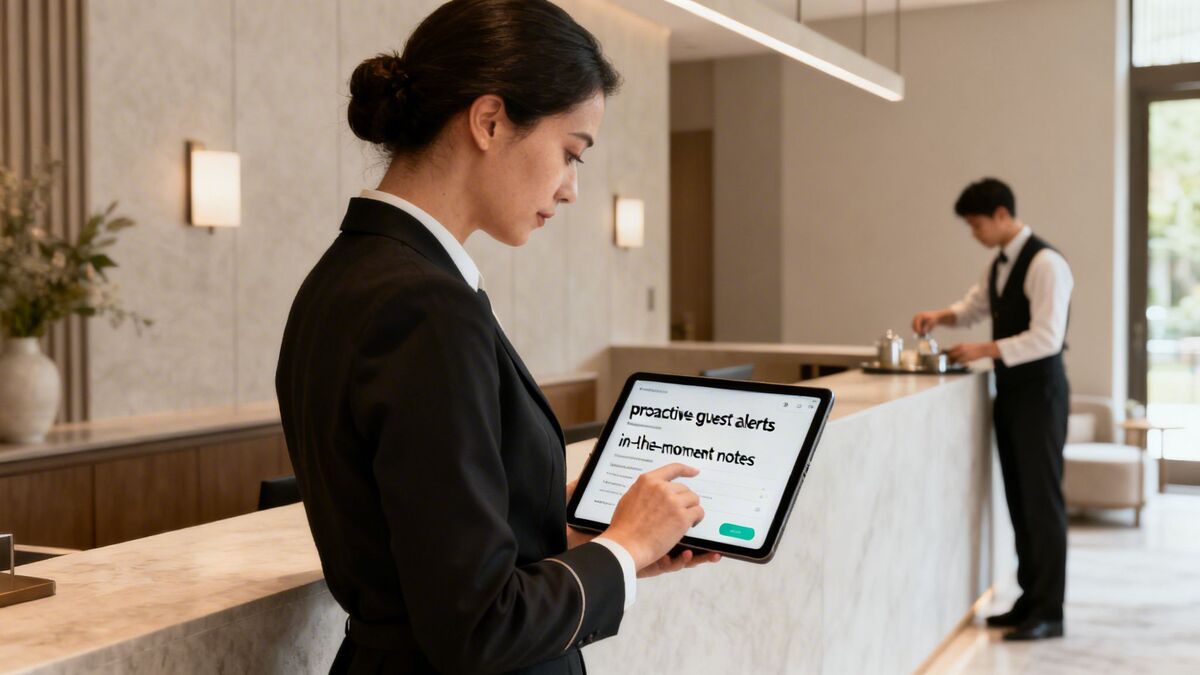
The core idea is simple yet powerful: Solve the problem before the customer has to complain. This transforms customer service from a cost center into a powerful engine for loyalty and growth.
The Old Way vs. The New Way
To truly grasp the impact, it helps to see the two approaches side-by-side. The differences in mindset, action, and outcome are stark. One approach keeps you stuck in a cycle of apologies, while the other builds a reputation for excellence.
Take a look at how they stack up.
Reactive vs Proactive Service: A Bottom-Line Comparison
Aspect | Reactive Service (The Old Way) | Proactive Service (The New Way) |
|---|---|---|
Mindset | "We'll fix it if they complain." | "How can we prevent this from happening?" |
Action | Wait for tickets, bad reviews, or calls. | Analyze data, monitor behavior, and anticipate needs. |
Customer Experience | Frustration followed by a (potential) resolution. | A smooth, positive experience from the start. |
Team Morale | High stress, burnout, and constant firefighting. | Empowered, efficient, and focused on delighting guests. |
Business Outcome | High churn, brand damage, and unpredictable costs. | Increased loyalty, positive word-of-mouth, and revenue growth. |
This forward-thinking approach isn't just a nice-to-have anymore; it's quickly becoming the standard for how top businesses operate.
According to recent industry analysis, an overwhelming 72% of customer experience leaders believe AI will be the main driver of this shift in the near future. Technology now allows brands to spot friction points and trigger personalized outreach before issues ever escalate.
What's more, 59% of these leaders expect this approach to directly boost customer loyalty and lifetime value. That's a huge deal—it turns your support function into a growth engine rather than a cost center. You can dig deeper into these trends in Nextiva's 2025 CX report.
For your business, this means moving from just collecting feedback to making it operational. It’s about creating a system where you can collect smarter, act faster, and grow stronger. This is the future of exceptional service, and it's more accessible than you think.
Why Proactive Service Is Your New Growth Engine
Shifting from a reactive to a proactive mindset isn't just about making customers happier; it's about fundamentally changing how your business grows. When you stop treating customer service as a cost center for damage control and start seeing it as a growth engine, you unlock serious, measurable results.
This is where you put our core value into practice: collect smarter, act faster, and grow stronger.
Instead of waiting for a one-star review to tell you the Wi-Fi in room 305 is spotty, proactive service means you already know. You've identified a pattern from past guest feedback and fixed the issue before the next guest even checks in. That’s how you move from losing customers to building loyal advocates.

From Cost Center to Revenue Driver
The financial impact of this shift is direct and significant. Proactive service isn't an expense; it's an investment with a clear return, particularly in a competitive market.
In the high-stakes world of hospitality and retail, proactive service is delivering retention boosts that traditional reactive models can't match. Data shows that businesses embracing proactive support—analyzing interactions to preempt needs—can see up to a 25% increase in customer retention. That’s a game-changer for restaurants facing seasonal churn or hotels battling for repeat bookings.
This approach directly improves your most important growth metrics:
Higher Customer Lifetime Value (LTV): Happy customers who feel understood don't just return; they spend more over time. Proactively solving a small issue today can secure years of future revenue.
Improved Net Promoter Score (NPS): By preventing problems, you create more "Promoters"—customers who enthusiastically recommend your business—and fewer "Detractors." This organic word-of-mouth is your most powerful marketing tool.
The goal isn't just to reduce complaints. It's to create an operational system where positive experiences are the default, directly fueling customer loyalty and sustainable growth.
Turning Insights Into Actionable Growth
A key piece of proactive service is identifying potential issues before they bubble up, like anticipating when customers might leave. Understanding strategies for predicting customer churn is crucial for any service business looking to secure its revenue base. This is where a feedback operating system becomes indispensable.
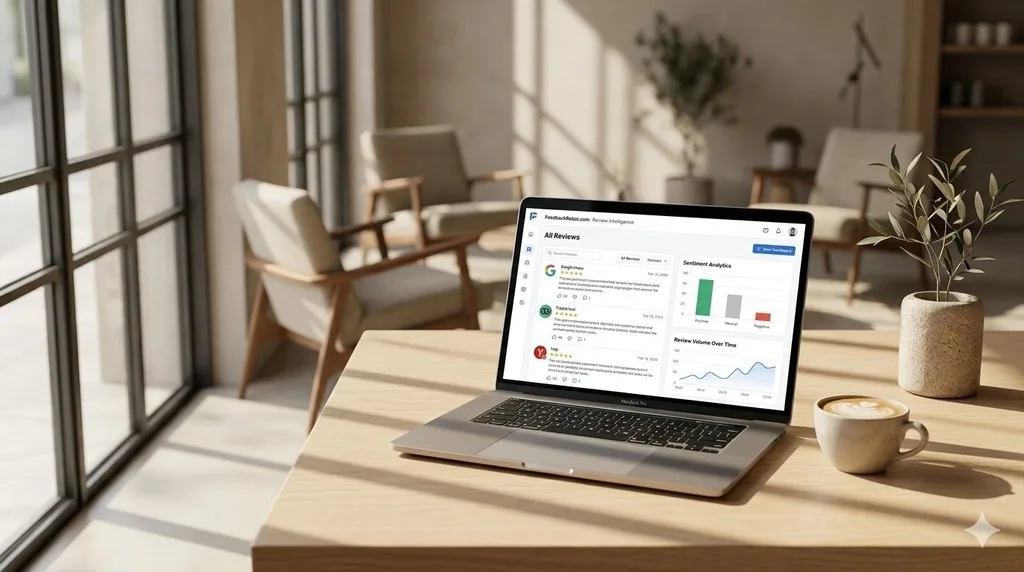
For instance, you can collect smarter by unifying all your customer feedback—from online reviews on Toast, Google, and Mews to internal surveys—into one dashboard. FeedbackRobot's Radar feature is your unified review intelligence dashboard, giving you this complete view at a glance.
From there, you act faster. Our AI Summaries provide instant insights & sentiment analysis, surfacing recurring themes like "cold coffee" or "long check-in lines." You no longer need to spend hours reading reviews; you get immediate, actionable insights. Imagine knowing that 15% of your lunch guests mentioned slow service last week—you can now address the staffing issue before the weekend rush. This is what proactive service truly means.
How a Feedback Operating System Works
Going proactive doesn’t mean you need a crystal ball. It just means you need the right system. Many business owners think anticipating customer needs is all guesswork, but it's really about having a smart, unified system that listens for you—and helps you respond before issues ever blow up.
This is where a Feedback Operating System comes in.
Think of it as the central nervous system for your entire customer experience. It pulls all your feedback sources, from online reviews to in-person surveys, into one intelligent dashboard. This lets you stop reacting to individual complaints one by one and start seeing the bigger picture.
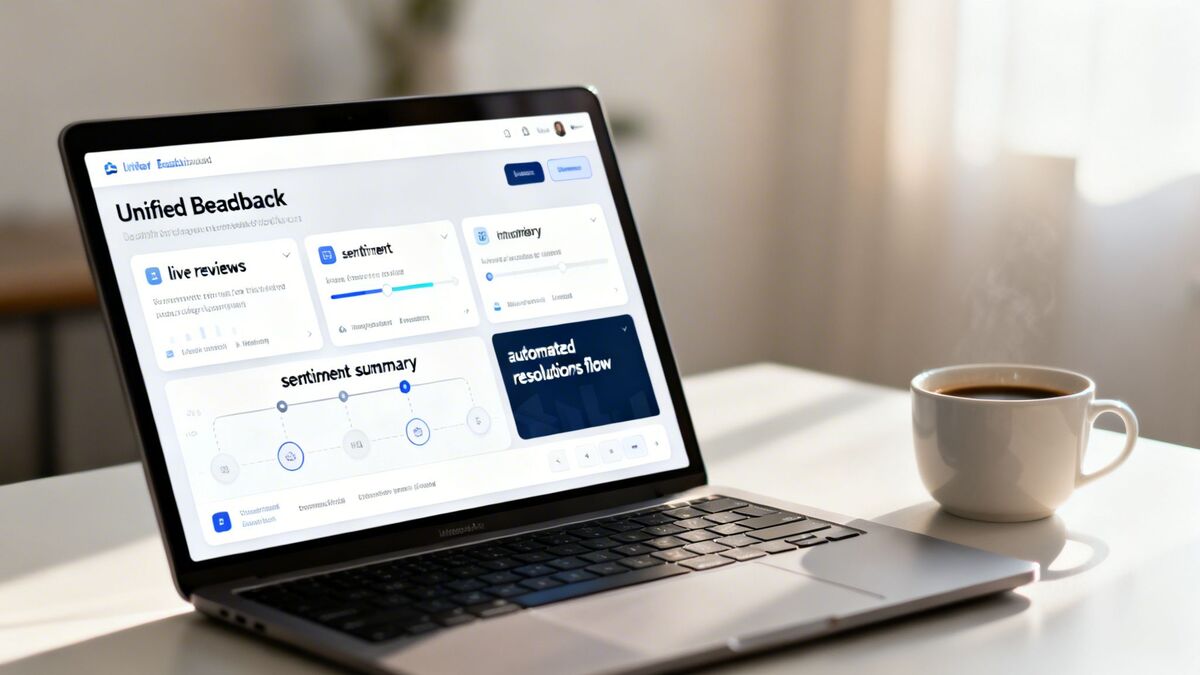
The whole process is built on a simple philosophy: collect smarter, act faster, and grow stronger. Let’s break down how each part works to make proactive service a reality for your business.
Collect Smarter, Not Harder
You can't get ahead of problems if you don't know what they are. The first step is to capture feedback at every possible touchpoint, especially in the moments that matter most. This is where so many businesses drop the ball, waiting for public reviews after the experience is over and the damage is done.
A Feedback Operating System flips that script with targeted collection tools.
Prompt to Survey: Imagine a guest finishes their meal or checks out of your hotel. You can automatically send them a simple, one-question survey via text or email. Our Prompt to Survey feature captures their thoughts while the experience is still fresh. This gives you honest, in-the-moment feedback instead of a delayed—and often more negative—public review.
Radar: Your customers are already talking about you on Google, TripAdvisor, Yelp, and even on integrated systems like Mews for hotels or Toast for restaurants. Radar is your unified review intelligence dashboard. It pulls all these public and private conversations into one place, so you're not stuck juggling ten different tabs just to see what’s going on.
By unifying your feedback streams, you create a single source of truth. You’re no longer guessing—you’re gathering the specific intelligence needed to anticipate the next guest’s needs.
Act Faster with AI-Powered Insights
Collecting feedback is only half the battle. The real challenge for busy owners is finding the time to analyze it all and figure out what to do next. A single busy weekend can generate hundreds of data points. Manually sifting through that is impossible when you're also managing staff and day-to-day operations.
This is where you need technology to act as your personal analyst.
AI Summaries: Instead of reading every single comment, you get instant insights & sentiment analysis. Our AI Summaries feature analyzes all incoming feedback, detects patterns, and identifies sentiment. In seconds, you can see that "slow drink service" was mentioned by 12% of customers last night or that "room cleanliness" scores have dropped. This lets you pinpoint problems immediately, without all the manual work.
This speed is what makes proactive service possible. It closes the gap between collecting feedback and taking meaningful action, turning a mountain of data into a clear decision-making tool. If you're interested in using tech this way, our guide on choosing the right feedback analysis tool for your small business offers more practical advice.
Grow Stronger Through Automated Resolution
The final step is closing the loop. Proactive service really shines when you not only spot a problem but resolve it so effectively that you turn a potentially negative experience into a positive one. This builds incredible loyalty and shows customers you're actually listening.
Our Resolutions Engine makes this happen automatically.
For example, our system might detect a negative survey response mentioning a long wait time. Instead of just flagging it for you to handle later, the Resolutions Engine provides automated service recovery. It can be set up to automatically trigger a personalized response, sending an email to that specific customer with a sincere apology and a discount code for their next visit.
This automated service recovery does two critical things:
It solves the customer's problem in real-time, often before they even think to post that negative review online.
It shows you care, transforming a moment of friction into an opportunity to prove your service is exceptional.
This is how you build a reputation that drives growth. You’re not just fixing one-off issues; you're systematically building a stronger, more resilient business where every piece of feedback makes you better.
Actionable Tactics for Your Service Business
Theory is great, but let's get practical. How do you actually make proactive service a reality for your business? Moving from constant firefighting to smart, forward-thinking problem-solving takes a clear playbook.
Whether you run a hotel, restaurant, or retail shop, these are strategies you can put to work right away. The goal isn’t to pile more onto your to-do list. It's about using the right tactics to cut down on chaos, creating better experiences for your customers and a calmer environment for your team.
Proactive Playbook for Hotels
In hospitality, the little things make all the difference. A truly proactive approach means using guest data to perfect the stay while it's happening—not just asking for feedback at checkout when it's too late. The key is integrating your Property Management System (PMS) like Mews with a feedback platform.
The Problem: A guest has a minor issue, like slow Wi-Fi or a noisy neighbor. They don't want to make a fuss at the front desk, so they stay quiet. But they leave frustrated and later post a scathing review that tanks your online reputation.
The Proactive Fix:
Collect Smarter: Use Prompt to Survey to send a simple, automated mid-stay text: "Hi [Guest Name], how is everything in Room 314 so far?" This simple touch captures private feedback before it ever becomes a public complaint.
Act Faster: All responses, including data pulled from your Mews integration, feed directly into Radar. Our AI Summaries instantly scan the text, flagging negative sentiment or keywords like "Wi-Fi" or "noise."
Grow Stronger: The Resolutions Engine can automatically alert the front desk manager to the issue. It can even trigger a follow-up message to the guest offering a solution. You solve the problem in minutes, showing the guest you’re listening and preventing that dreaded one-star review.
Proactive Playbook for Restaurants
For restaurants, success hinges on consistency and speed, especially during a packed dinner service. Proactive service helps you tune your operations in real-time by actually listening to what diners are saying through your Point of Sale (POS) system and other feedback channels.
The Problem: A new menu item is getting lukewarm reviews, or a bottleneck at the bar is slowing down drink orders. Customers are getting antsy, and your table turnover is suffering.
The Proactive Fix:
Connect Your Systems: First, integrate your Toast POS with FeedbackRobot. This lets you connect specific comments to individual orders, tables, and even servers.
Monitor the Trends: Use Radar to see all your reviews and survey responses in one dashboard. AI Summaries will quickly bubble up recurring themes like "gummy pasta" or "long wait for drinks."
Take Action: With this data in hand, you can have a quick chat with the kitchen about that pasta recipe or add an extra bartender for the next shift. You're no longer guessing—you're making sharp, data-driven decisions that improve service on the fly.
A critical part of shifting to a proactive model is using technology to your advantage. Learning how to automate your customer service is what allows you to scale these tactics without adding more staff.
Proactive Playbook for Retail and E-commerce
In retail, the customer journey doesn’t end when the credit card is swiped. Smart, proactive follow-ups can cut down on returns, answer questions before they’re even asked, and build the kind of brand loyalty that keeps customers coming back.
The Problem: A customer buys a product that needs a bit of assembly or has a slight learning curve. They get home, get confused, and get frustrated. Best case, they return the item; worst case, they decide never to shop with you again.
The Proactive Fix:
Automate Post-Purchase Help: Set up an automation to send a helpful email two days after an order ships. This isn't a sales pitch; it's a helpful nudge. Include a link to a quick setup video, a PDF guide, or a product-specific FAQ page.
Anticipate the Questions: Your feedback data is a goldmine. It shows you the most common questions for every product you sell. Answer them proactively in your follow-up messages.
Close the Loop: This simple, automated action shows you’re invested in the customer’s experience long after the sale. You turn a potential moment of frustration into one of delight. Our guide on customer service automation software has even more ideas on how to set this up.
By putting these specific tactics into play, you can start building a proactive service model today. You’ll quickly begin to collect smarter, act faster, and grow stronger, creating a more resilient and reputable business along the way.
Measuring the ROI of Your Proactive Strategy
Every smart business owner needs to see the numbers. Shifting to a proactive model isn't just about feeling good—it’s about making a real, measurable impact on your finances. A proactive strategy gives you a clear framework to prove your efforts are paying off where it counts: your bottom line.
You can't manage what you don't measure. The key is to track the right Key Performance Indicators (KPIs) that connect proactive actions directly to financial health. Let's break down the metrics that matter and what they mean for your business.
From Proactive Actions to Profit Growth
Tracking financial KPIs proves that getting ahead of problems isn't a cost—it's an investment that pays for itself. To see the direct return on your proactive strategy, zoom in on these three core metrics.
Customer Retention Rate: This is the ultimate measure of loyalty. When you solve issues before customers even have to complain, they have fewer reasons to leave. A 5% increase in retention can boost profits by a staggering 25% to 95%, making it the single most powerful financial metric to watch.
Customer Lifetime Value (CLV): Proactive service builds stronger, more durable relationships. Customers who feel cared for don't just stick around; they spend more over time. Tracking the growth in average CLV shows how preventing one small issue today can secure thousands in future revenue.
Churn Reduction: Churn is the silent killer of growth. By using feedback to anticipate needs and prevent frustration, you directly reduce the number of customers walking away. This KPI is a direct reflection of your ability to keep the revenue you've already worked so hard to earn.
Operational Metrics That Fuel Financial Wins
While financial KPIs show the final result, operational metrics reveal how you’re achieving it. These numbers give you a real-time pulse on your team's efficiency and your customers' happiness. For more ways to quantify success, you can explore other essential methods to measure customer satisfaction.
A proactive approach turns your service operation from a cost center into a profit center. When you solve issues before they escalate, you’re not just saving a customer—you’re driving revenue.
The global shift toward proactive service is picking up speed. Gartner forecasts that by 2026, 40% of organizations will adopt these strategies to anticipate needs and drive revenue. This is especially true in food & beverage and retail, where 66% of leaders are using AI for real-time personalization. The results? A 20% lift in loyalty and 15% growth in revenue. You can read more about these customer experience statistics and see how they are shaping the future of service.
Here’s how FeedbackRobot's features help you improve these numbers:
First Contact Resolution (FCR): With AI Summaries pinpointing root causes, your team can solve issues on the first try instead of going back and forth. No more frustrating email chains.
Net Promoter Score (NPS): The Resolutions Engine automatically turns detractors into promoters by resolving their issues instantly, boosting your score and driving powerful, positive word-of-mouth.
Reduced Ticket Volume: By using Radar to spot trends and fix them system-wide, you eliminate entire categories of future complaints. This frees up your team to focus on what matters most: delighting customers.
Your Roadmap to a Proactive Service Model
Shifting from a reactive "firefighting" mode to a proactive service model sounds like a massive undertaking. But it's not. You don't need to tear down your entire operation and start from scratch.
It’s really about taking small, deliberate steps. The goal is to build a system that sees problems coming and solves them before they ever have a chance to frustrate a customer.
This roadmap breaks that journey down into four manageable stages. It’s a blueprint for turning the idea of proactive service into a concrete plan you can put into action right away.
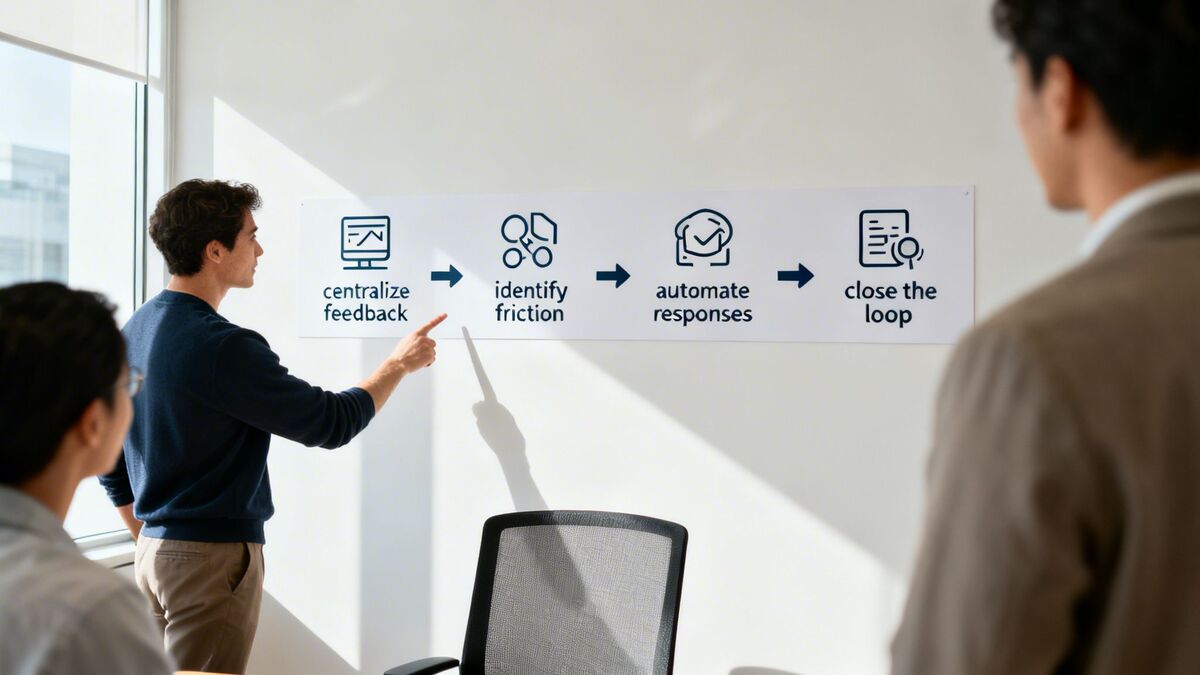
Stage 1: Centralize Your Feedback
You can't fix what you can't see. The first step is to get all your feedback in one place. Stop toggling between Google Reviews, Yelp, and the siloed feedback from your POS systems like Toast or Mews. You need a single source of truth.
This is where you collect smarter. A tool like FeedbackRobot’s Radar acts as your central command center. Radar is your unified review intelligence dashboard, pulling every scrap of customer feedback into one clean, coherent view. Instead of hunting for clues, you finally have the full picture.
Stage 2: Identify Friction Points
With all your data in one spot, the patterns start to emerge. This is the moment you move beyond isolated complaints and start spotting the root causes behind recurring issues.
Are multiple guests mentioning "slow service" on Friday nights?
Is "room cleanliness" a recurring theme in your hotel reviews?
Do diners consistently find a specific dish "disappointing"?
Here, the goal is to act faster. Our AI Summaries feature does the heavy lifting, delivering instant insights and sentiment analysis. It scans all your feedback and surfaces these trends for you, so you know exactly which fire to put out first. You don't have to be a data scientist—you just need to read the summary.
Stage 3: Automate Early Responses
Now that you know the common problems, you can get ahead of them. The third stage is all about building automated workflows that address known friction points before they blow up into public, one-star reviews.
This is where the Resolutions Engine becomes your secret weapon for automated service recovery. Imagine a customer gives a low rating on a survey about their wait time. The system can instantly send them a personalized apology with a small discount for their next visit. Just like that, a potential complaint becomes a story about how much you care.
Stage 4: Close the Loop and Share Your Success
The final step—and maybe the most powerful—is to close the feedback loop publicly. A proactive system doesn't just help you fix problems behind the scenes; it creates positive stories and proof of your commitment.
You’ve put in the work to listen and improve. Now it’s time to show everyone—past, present, and future customers—that you're a business that genuinely cares and acts on feedback.
This is the perfect job for FeedbackRobot's Spotlight: Feedback Wall. This feature lets you showcase your best reviews and positive outcomes directly on your website. It turns the goodwill you’ve earned into a powerful marketing asset, building trust and social proof that brings in new customers.
Ready to put this roadmap into action? Start your 14-day free trial of FeedbackRobot today and see how quickly you can transform your service model.
For a structured playbook you can put in place immediately, our guide to customer service best practices covers 12 tactics ranked by real-world impact — from AI-automated responses to proactive outreach before complaints escalate.
Common Questions Answered
If you’re a busy service owner, you probably have some tough, practical questions about switching to a proactive model. Let's tackle those head-on with direct, no-fluff answers.
Is "Proactive Service" Just Another Buzzword?
That’s a fair question. Most people think "good service" means reacting quickly when something goes wrong. Proactive service is entirely different—it's about stopping problems from happening in the first place.
Think of it like this: reactive service is apologizing for a cold meal. Proactive service is having a system that guarantees the meal arrives hot, every time. It uses data and smart automation to see what customers need and fix issues before they even think to complain. This turns your support team from a cost center into a powerful engine for building loyalty.
Will This Just Create More Work for My Team?
It's actually the opposite. A smart, proactive system powered by a tool like FeedbackRobot lifts the weight off your team. Instead of typing out apology after apology for the same negative reviews, our Resolutions Engine can automate service recovery.
By getting ahead of issues, you shrink the total number of complaints. This frees your team from firefighting and lets them focus on high-impact interactions that truly delight customers.
Features like our AI Summaries give you instant insights and sentiment analysis, turning hours of reading feedback into a few seconds of understanding. You're not adding tasks; you're eliminating the repetitive, soul-crushing job of dealing with the same preventable problems day after day.
How Quickly Will I Actually See Results?
With the right setup, the impact is almost immediate. As soon as you set up feedback collection points using our Prompt to Survey feature and turn on your automations, you’ll start preventing bad experiences in real-time.
For example, the Radar dashboard unifies all your review intelligence from platforms like Mews or Toast. This lets you spot a negative trend and fix it before it blows up online. Most businesses see a measurable drop in public complaints within the first few weeks as they start resolving issues privately.
Our platform is built for speed. Many businesses see real changes in team efficiency and customer sentiment well within their 14-day free trial. From there, the long-term ROI in customer retention and loyalty just keeps growing.
Ready to stop firefighting and start growing? With FeedbackRobot, you can collect smarter, act faster, and grow stronger. Generate your Hotel Management Guest Experience Survey.
How is proactive service different from 'Good' service?
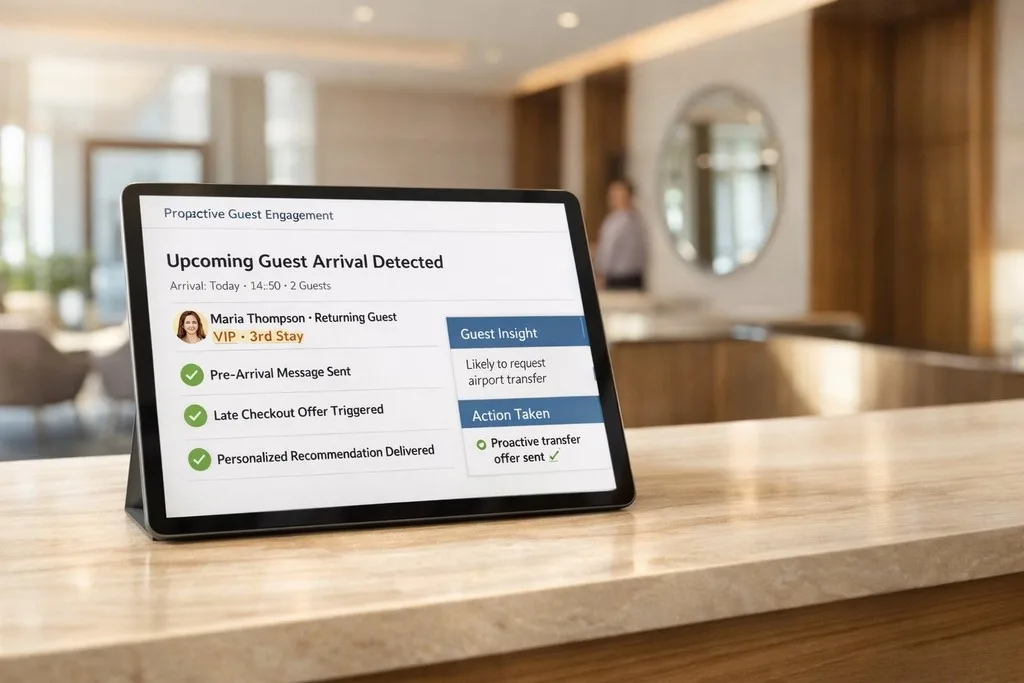
Good service reacts to a guest's needs; proactive service anticipates them. It's about fixing a problem (like a long wait or a cold draft) before the guest even notices it.
Can technology help me be more proactive?
Yes. 'Predictive Sentiment' tools can flag a guest who is 'at-risk' based on their past feedback history, allowing a manager to go to their table and ensure this visit is perfect.
What is a 'Proactive Feedback Loop'?
It’s when you reach out to a customer *before* they have a reason to complain—like an SMS check-in 10 minutes after their food is served to ensure everything is exactly as they liked it.
Does proactive service reduce the number of negative reviews?
Significantly. By intercepting issues 'in the moment,' you prevent the frustration that usually leads to a public 1-star review on Google or Yelp.
How do I train my staff to be more proactive?
Use your feedback data to show them 'Common Friction Points.' When staff know where guests usually get frustrated, they can look for those signs and intervene early.
Stop reading about it. Let your agent handle it.
25 free AI actions · no credit card required
Start Free