
Guide
How Generative AI for Customer Service Drives Real Growth
Learn how generative ai for customer service can speed responses, summarize issues, and elevate your support with smarter automation.

Mar 21, 2026 · 16 min read
Free tool
AI Survey Generator
Describe what you want to learn and get a ready-to-send survey in seconds.
Welcome to the new era of hospitality and service. This isn't just another tech trend; it’s about using generative AI for customer service as a real engine for business growth. It turns every customer interaction into a chance to collect smarter, act faster, and grow stronger.
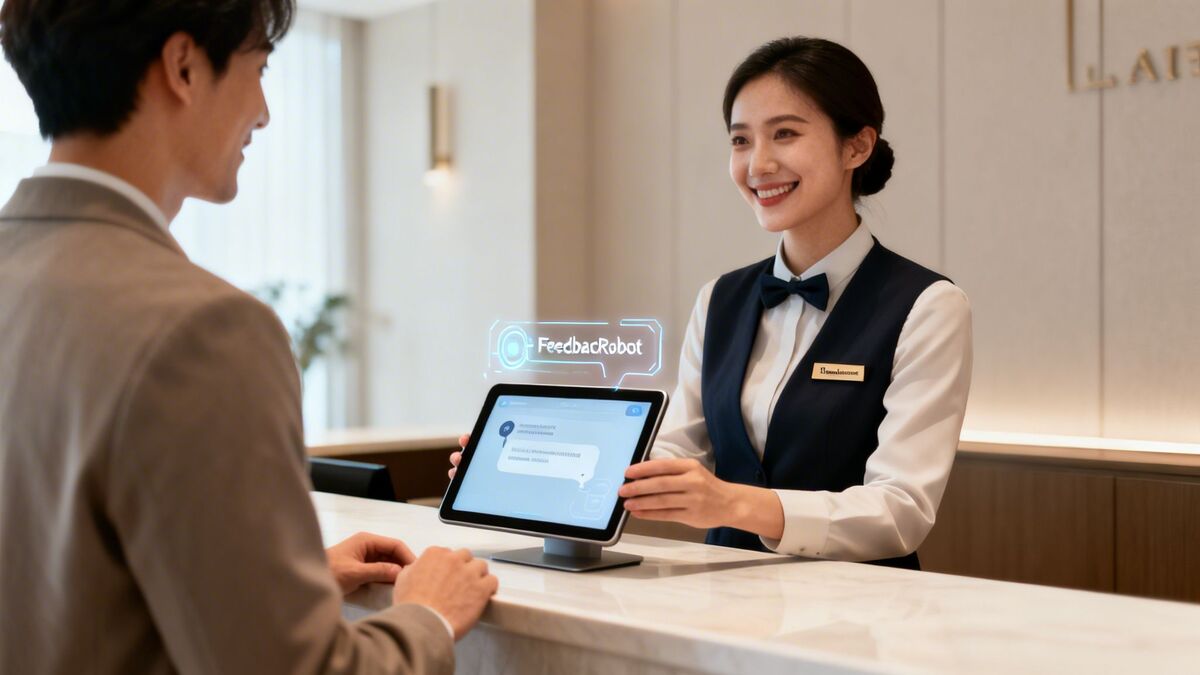
The New Standard in Service Excellence
Let's be direct. As a busy hospitality or service owner, your feedback is scattered across reviews, DMs, and complaint forms. Just keeping up feels impossible, and your time is better spent acting on feedback, not just digging through it.
This is exactly where generative AI changes the game. It takes that firehose of customer comments and turns it into clear, actionable steps you can take right now.
Imagine turning a one-star Google review into a loyal, repeat customer before they even walk out the door. Or picture a casual suggestion from a diner becoming your next big operational win. This is the practical power of AI in action. It helps you collect smarter, act faster, and grow stronger.
This guide cuts through the noise to show you exactly how this technology works for your hotel, restaurant, or service business. We’ll walk through how AI can:
Automate responses that feel personal and empathetic, saving your team hours every single week.
Analyze thousands of reviews in seconds to pinpoint precisely what customers love (and what they don’t).
Proactively resolve issues, often before you even realize a problem exists.
This isn’t about replacing your team; it’s about giving them superpowers. Our Feedback Operating System turns complex AI into simple, powerful tools designed to help you achieve true customer service excellence by making every single interaction count.
At its core, generative AI gives you the ability to listen at scale and act with precision. It’s the difference between manually reading every comment and having an expert analyst on your team 24/7, telling you exactly what to focus on to improve your business.
We’ll show you how to shift from being reactive to proactive, using AI not just to fix problems but to get ahead of them. Consider this your playbook for making customer feedback your most powerful growth engine. Let's dive in.
How Generative AI Actually Works for Your Business
Forget the complicated tech jargon. Think of generative AI as your smartest, most dedicated team member—one who never sleeps and understands your customers 24/7. This isn’t a complex system for data scientists; it’s a real-world tool for busy owners like you. Let's break down how it actually works.

Old-school automation is rigid. It just follows a simple "if this, then that" script. Generative AI is different. It’s a creative problem-solver, trained to understand context, emotion, and intent. It doesn’t just scan for keywords; it gets the feeling behind the words.
This means it can sift through thousands of reviews to find out what customers love, write human-like replies that show you’re listening, and even point out recurring problems before they get worse. It’s the difference between a clunky FAQ bot and an assistant that truly gets your business.
From Data Overload to Instant Insights
For any service business, your feedback is a goldmine. But it’s usually scattered across dozens of different channels. Generative AI acts as your personal data analyst, connecting the dots you don't have time to see. It takes all that unstructured text from reviews, surveys, and messages and organizes it into clear, actionable intelligence.
This is exactly what FeedbackRobot's AI Summaries does. AI Summaries functions as your instant insights engine, performing sentiment analysis on feedback from all your channels—Google, email, social media—and giving you a clean overview of what customers are saying. No more reading every single comment.
It’s like getting a daily briefing on what your customers really think. Instead of spending hours digging through feedback, you get a quick summary of key themes, top complaints, and where your team is knocking it out of the park.
This move from manual review to automated insight helps you collect smarter so you can act faster. You can dig deeper into how this works by learning more about AI-powered survey analysis and how it uncovers hidden trends.
Automating Empathy and Action
Once the AI understands the feedback, it can create new, original content. This is the “generative” part. It isn’t just grabbing a pre-written template; it’s crafting a unique response tailored to that specific customer and situation. To see how this changes the game, it helps to understand the basics of AI-powered workflow automation.
Here’s a quick look at how it plays out:
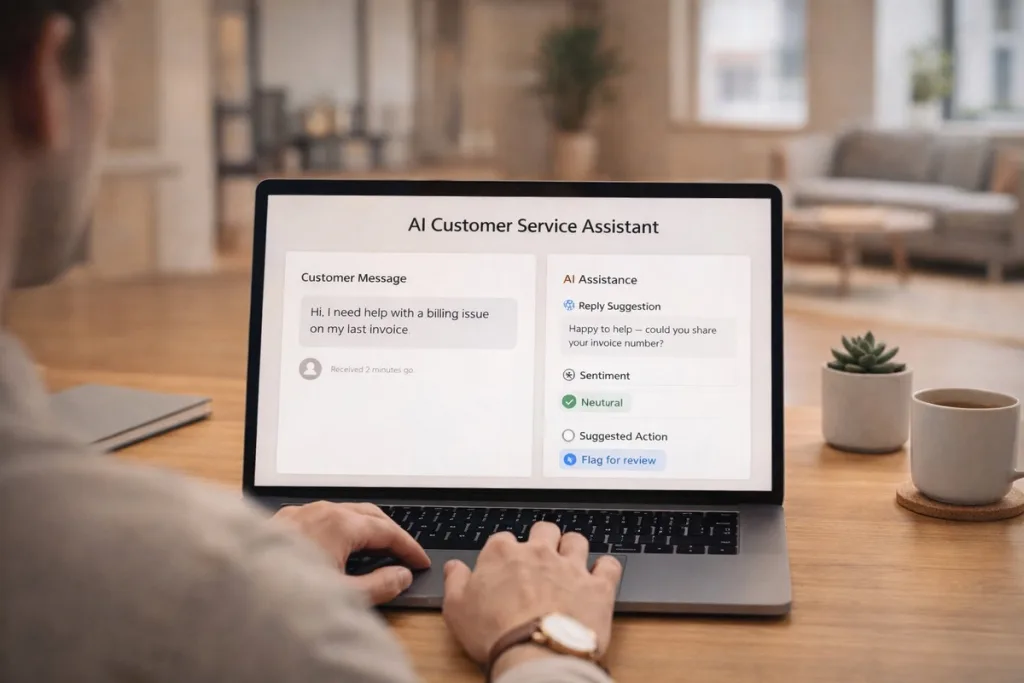
Identifies Intent: The AI reads a review and instantly knows if it's positive, negative, or mixed. It also catches specific issues, like a complaint about "slow check-in" or praise for a "friendly bartender."
Generates a Response: Based on the tone and topic, it drafts a personalized, empathetic reply. For a bad review, it can write an apology that addresses the specific problem mentioned.
Suggests Action: It doesn't stop at replying. Advanced systems can recommend the next move, like alerting a manager about a serious complaint or flagging a recurring equipment issue for the maintenance team.
This isn't some far-off future concept—it’s happening now and it's changing what customers expect. Recent data shows that 75% of consumers who've interacted with generative AI think it will completely change their service experiences. On top of that, 67% of CX leaders now believe bots can build stronger emotional connections with customers.
With tools like AI-generated replies, some businesses have seen their first response times plummet from over ten minutes to just 12 seconds. By automating the initial response and analysis, you free up your team to solve the real issues and add the human touch that builds loyalty.
Real-World AI Tactics That Actually Grow Your Business
It’s time to get past the buzzwords and look at what generative AI can do for you right now. This isn't just a futuristic concept; it’s a set of real tools you can use today to automate the tedious work that keeps you from focusing on growth.
Let’s dig into how you can apply generative AI for customer service in ways that save you time, make customers happier, and directly boost your bottom line. We'll show you how to handle review responses, fix problems before they escalate, and get specific feedback, all on autopilot.
The data shows this isn't just theory. AI agents can handle 13.8% more inquiries per hour than human agents. This boost is a game-changer for new team members, helping them get up to speed much faster. With 39% of businesses already using generative AI for customer communications, it’s quickly becoming a must-have for efficient service.
Instantly Create and Send Surveys
Gathering customer feedback is vital, but building a good survey often gets pushed to the back burner. It’s a chore. Generative AI gets rid of that friction entirely, so you no longer have to sweat the details of question design or survey flow.
This is exactly what our Prompt to Survey feature was built for. Prompt to Survey functions as your on-demand survey creator, turning a simple thought into a polished, professional survey in seconds.
Say you want to ask hotel guests about the new breakfast menu. Instead of spending half an hour writing questions, you just type: "Create a short survey for guests about the new breakfast menu." The AI instantly generates a well-structured survey that’s ready to go.
This lets you collect smarter feedback when the experience is fresh in your customer's mind. You can get insights on anything from a new dish at your restaurant to the wait time at your clinic, all with almost zero effort. Want to build better questions yourself? Check out our free Survey Question Generator.
Automate Service Recovery and Fix Problems Fast
Bad feedback happens. But how you handle it is what separates great businesses from the rest. A quick, thoughtful response can turn an angry customer into a loyal fan. The problem is, you can't manually track and reply to every negative comment while running a busy operation.
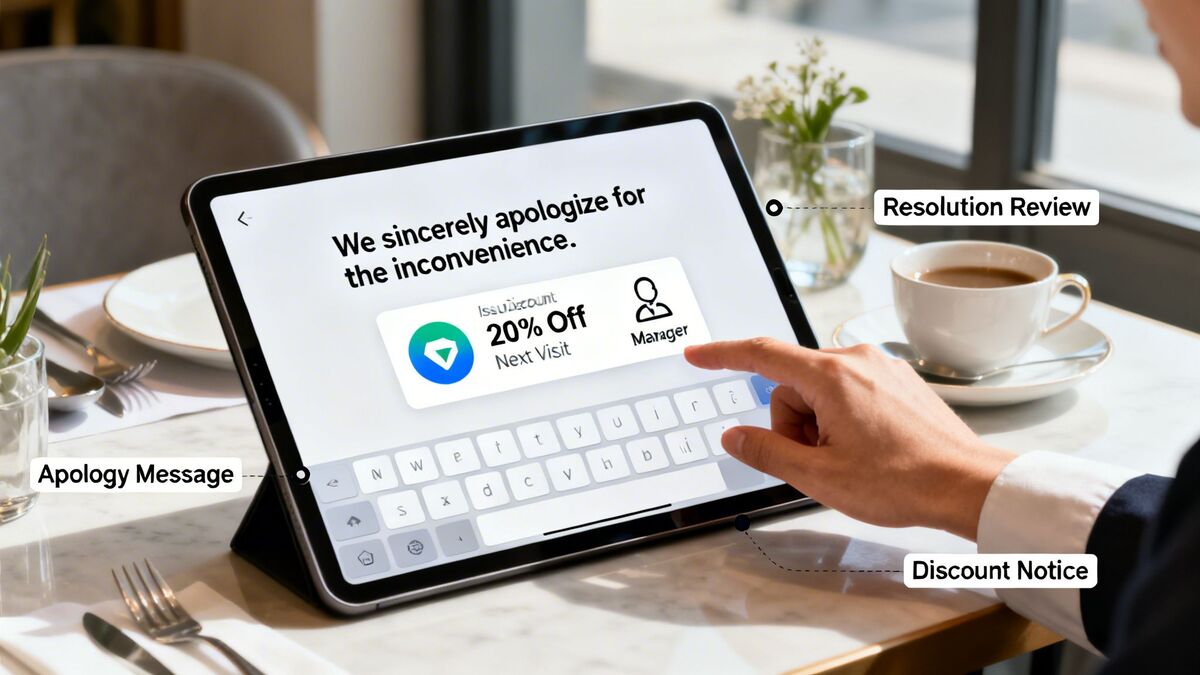
This is where you can act faster with automated service recovery. A tool like our Resolutions Engine uses generative AI to manage this whole process for you. The Resolutions Engine is your automated service recovery system; it identifies negative feedback and triggers predefined workflows to resolve issues immediately.
Here’s how it works:
It Spots a Problem: The system flags a negative Google review or a low survey score.
It Triggers a Workflow: Based on rules you create, it automatically starts the recovery process.
It Crafts a Reply: Generative AI writes a human-sounding, empathetic apology that mentions the specific issue.
It Offers a Solution: It can instantly send a personalized discount or a coupon for their next visit.
It Alerts Your Team: At the same time, it notifies a manager so they’re aware and can step in if needed.
For a great example outside of the hospitality space, this AI Healthcare Assistant case study shows how similar automation is improving patient support and satisfaction.
This level of automation means no unhappy customer slips through the cracks. It turns a potential crisis into a chance to grow stronger and show you care. By connecting to the systems you already use—like Mews for hotels or Toast for restaurants—you create a seamless loop where feedback directly triggers action.
Unifying Your Feedback into One Powerful System
Let’s be honest. Your customer feedback is probably all over the place. It's scattered across Google Reviews, booking sites like TripAdvisor, stray social media comments, and a dozen different email threads. Trying to connect the dots from that messy data is a nightmare. You end up playing defense, reacting to problems long after they’ve happened instead of getting ahead of them.
This is exactly why a Feedback Operating System is no longer a "nice-to-have"—it's essential.
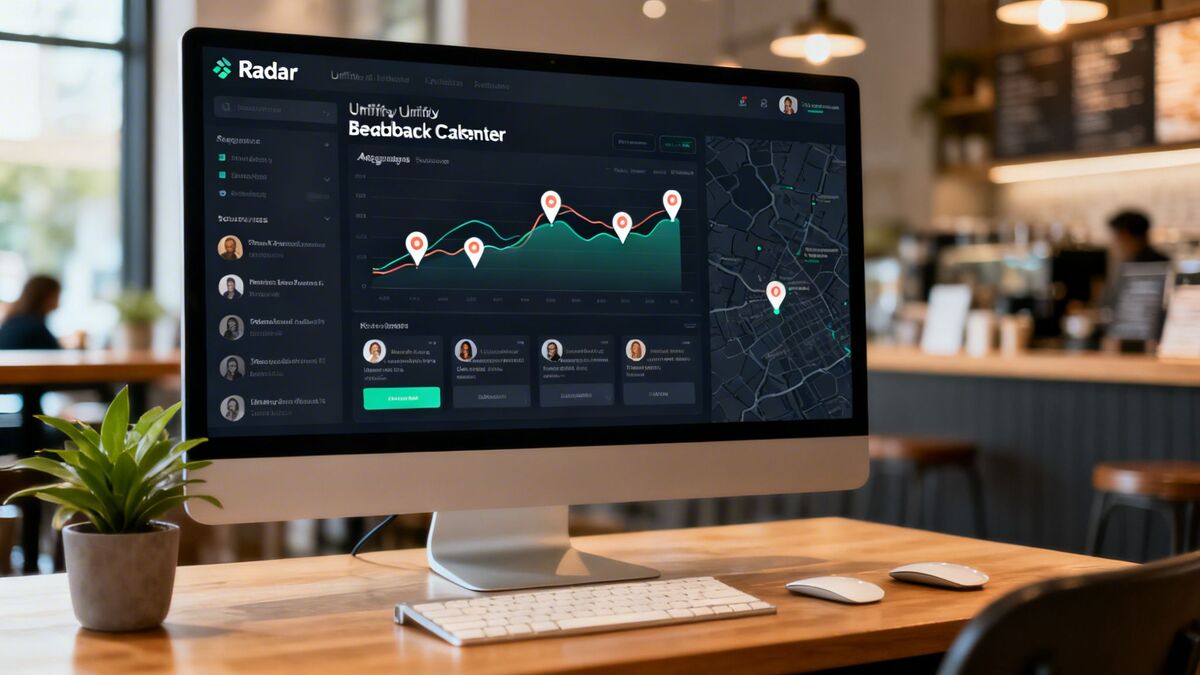
Pulling all that feedback into a single, smart dashboard is the first and most critical step before you can even think about using generative AI for customer service. It’s the foundation for our entire approach: collect smarter, act faster, and grow stronger. When you stop jumping between platforms, you finally start to see the real story your customers are trying to tell you.
From Manual Chaos to an Intelligent Command Center
We built FeedbackRobot's Radar to solve this exact problem. Radar is our unified review intelligence feature; it functions as your central command center, automatically pulling every review and public mention from across the web into a single dashboard.
But it doesn't just dump raw data on you; it makes sense of it. Using powerful AI, Radar gives you one clean, unified view of what's really going on.
Spot Emerging Trends: Instantly see recurring themes, whether it’s praise for a new menu item or complaints about slow Wi-Fi.
Track Customer Sentiment: Know at a glance if your customer mood is trending up or down, so you can measure the real impact of your changes.
Benchmark Against Competitors: See how you stack up against other local businesses and find your competitive edge.
This is the clear line between businesses that get ahead and those just trying to keep up. The market for AI in customer service has already hit over $15.12 billion, and while 88% of contact centers use some AI, a tiny 25% have actually integrated it properly. That gap is a huge opportunity for any business that gets its data centralized first. You can explore more about these trends and their impact.
Before you can act on feedback, you have to organize it. This table shows the difference between the old, manual way and using a smart system.
Manual vs AI-Powered Feedback Management
Task | Manual Method (The Old Way) | FeedbackRobot Method (The Smart Way) |
|---|---|---|
Data Collection | Logging into 5+ sites daily to copy-paste reviews. | All reviews from all sources automatically pulled into one dashboard. |
Trend Spotting | Reading hundreds of reviews to find patterns. It's slow and easy to miss things. | AI instantly flags recurring keywords and topics (e.g., "slow service"). |
Sentiment Analysis | Guessing the overall mood based on a small sample of reviews. | AI scores the sentiment of every single review for an accurate, real-time pulse. |
Action & Response | Reacting to problems days or weeks late, after the damage is done. | Getting alerts on negative trends in hours, allowing for immediate fixes. |
A smart system turns scattered data into clear, decisive action. You move from simply reacting to proactively managing your customer experience.
From Scattered Data to Decisive Action
Let's make this real. Imagine you're a hotel manager who sees a small dip in your overall satisfaction score. The old way? You’d spend hours digging through reviews on different sites, trying to figure out what happened.
With Radar, you find the root cause in seconds. The dashboard flags a sudden spike in negative comments all mentioning "slow check-in" and "long waits." The AI connected the dots from a dozen reviews across Google and Booking.com for you.
Now you have a specific, data-backed problem to solve. You can immediately check your front desk schedules for those peak times, retrain the team on a faster check-in process, and watch Radar over the next week to confirm that the negative comments disappear.
That's the power of having everything in one place. It turns feedback from a painful chore into your biggest strategic advantage. You’re no longer just "managing reviews"—you're managing your reputation with speed and precision, fixing small problems before they grow into brand-damaging disasters. This is how you act faster and build a stronger, more resilient business.
Implementing AI Without The Headache
Jumping into new technology can feel like a massive project. As a busy owner, the last thing you need is a complicated setup process that drains time you don't have. The good news? Getting started with generative AI in your customer service doesn't have to be a headache. It should be simple, fast, and show you real results almost immediately.
The secret is to start small. Don’t try to boil the ocean by overhauling your entire operation overnight. Instead, you can follow a clear, step-by-step plan to get up and running and see a real impact in days, not months.
Start With a Single Pain Point
First, pinpoint one specific, nagging problem in your customer service workflow. Is your team buried under negative Google reviews? Are you too slow to follow up on low survey scores? Pick a single, high-impact area where you know things could be better.
For a lot of hospitality and service businesses, this pain point is review response time. A slow reply to a bad review lets a customer's frustration simmer and makes your business look like it doesn't care. This is a perfect, self-contained problem to solve with AI.
The goal here isn’t to automate everything at once. It's about proving the value of generative AI for customer service with a quick, decisive win. By focusing on one clear problem, you can measure the impact directly and build momentum.
Once you’ve locked onto your target, the next move is to deploy a simple, automated solution. This is where tools built for easy implementation really shine.
Automate the Solution in Minutes
With a platform like FeedbackRobot, you don't need to hire a team of developers. You can use our Resolutions Engine to build a powerful automation in just a few minutes. For example, you can create a simple rule: "When a Google review with a rating of 2 stars or less comes in, automatically draft a response, offer a 15% discount, and notify the general manager."
This one workflow immediately takes pressure off your team. It turns a reactive, manual chore into a proactive, automated system that works for you 24/7. You can learn more about setting up these kinds of workflows in our guide on customer service automation software.
Measure the Impact and Expand
After your first automation is live, it’s time to watch the results roll in. Track key metrics like your average response time, customer satisfaction scores, and even the sentiment of follow-up comments. When you see your response time drop from days to minutes and watch frustrated customers thank you for the quick fix, you’ll have hard proof that the system is working.
This is the perfect way to test the waters with our 14-day free trial. You can prove the value firsthand without any risk.
Once you’ve found success in one area, you can expand with confidence. Maybe next you’ll use Prompt to Survey to gather feedback on a new menu item or use AI Summaries to get a weekly report on guest sentiment. You collect smarter, act faster, and grow stronger by building on small, successful steps—not by taking a huge, risky leap.
Your Next Step: From Insight to Action
Alright, let's take everything we've covered and turn it into real-world action. This is where the theory stops and the results begin.
You’ve seen how generative AI can handle replies, understand customer feelings, and even solve problems on its own. Now it’s time to move from knowing to doing, and transform customer feedback from a daily task into your biggest competitive edge.
The goal isn’t to replace your team. It’s to free them up. Let AI handle the repetitive work so your people can focus on the high-impact, human connections that build loyalty and drive your business forward. This is where you start to collect smarter, act faster, and grow stronger.
Your Next Step Starts Today
We’ve set up two clear paths to get you started, based on what your business needs most right now. There’s no complicated setup or lengthy commitment—just a straightforward way to see measurable value, fast.
Remember, the single biggest risk is inaction. Every day you spend manually managing feedback is another day your competitors could be using AI to get ahead, build stronger customer relationships, and capture market share.
Don't let that happen. It’s time to take control of your customer experience and make your feedback the engine for your growth.
Option 1: Ready to Automate and Grow?
If you're ready to see how AI can transform your service firsthand, this is for you. Jump in, start automating responses, summarizing reviews, and resolving issues faster with a 14-day free trial of FeedbackRobot.
No credit card required.
Connect your review sources in minutes.
Get immediate access to tools like the Resolutions Engine, AI Summaries, and Prompt to Survey.
This is your chance to prove the value to yourself, risk-free. Turn on automations for negative reviews and watch your response times shrink while customer satisfaction climbs.
Option 2: Showcase Your Success and Drive Bookings
Want to use your best reviews to attract new customers? We’re launching our new Spotlight: Feedback Wall. This tool automatically displays your glowing 5-star reviews directly on your website, building instant trust and social proof.
Showcasing positive feedback is one of the most powerful ways to convert lookers into buyers. Let your happiest customers do the selling for you. Sign up to get early access and be the first to launch your Feedback Wall.
Your journey to a smarter, faster business starts with a single step. Let's work together to make every piece of feedback count.
Frequently Asked Questions
It’s smart to have questions when you’re thinking about bringing new technology into your business. As a busy owner in hospitality or service, you need straight answers, not hype. Let's clear up some of the common concerns about using generative AI for customer service.
Will AI Make My Customer Service Sound Robotic?
Not a chance. That’s the biggest myth out there. We're not talking about the clunky, scripted chatbots of the past. Modern generative AI is built to be conversational and understand nuance.
With a platform like FeedbackRobot, you’re in complete control. You can fine-tune the AI's tone and style so it sounds exactly like your best-trained manager. The goal is to make every response feel authentic and personal, a true reflection of your brand's voice.
Is It Difficult to Set Up and Integrate?
No. We designed FeedbackRobot for busy owners, not IT departments.
You can connect your review sites (like Google or TripAdvisor) and the systems you already depend on (like Toast for restaurants or Mews for hotels) in a few clicks. The whole point is to get you up and running and seeing results in minutes, not months.
How Do I Know the AI Responses Are Appropriate?
You’re always in the driver’s seat. FeedbackRobot lets you choose the level of automation you’re comfortable with. You can set it up to review every AI-suggested response before it’s published, or you can let it automatically handle replies for simple feedback, like all those 5-star reviews.
The real magic is our Resolutions Engine. It lets you create a playbook for exactly how the AI should handle different situations—from a minor complaint to a major issue. This gives you total oversight and peace of mind. You define the rules, and the AI follows them perfectly.
This approach lets you collect smarter data and act faster on it, all while keeping a firm grip on your brand’s reputation. You get the speed of automation with the confidence of human control, helping you grow stronger by turning every piece of feedback into a lesson learned.
Ready to see how simple and powerful this can be? FeedbackRobot helps you turn customer feedback into your biggest strength. Start your 14-day free trial today and see the difference for yourself, or be the first to launch our new Spotlight: Feedback Wall to showcase your best reviews instantly.
How does generative AI differ from the standard automated templates most hospitality businesses already use?
Traditional automation relies on rigid "if-then" logic and static keywords, often resulting in cold, robotic interactions. Generative AI is a creative problem-solver that understands the nuance, emotion, and intent behind a customer’s words. Instead of pulling from a library of generic templates, it crafts unique, context-aware responses that address specific details—such as a specific mention of a "slow check-in" or a "friendly bartender"—ensuring the digital experience feels as personal as a face-to-face interaction.
How does the Radar feature solve the problem of fragmented feedback across multiple platforms?
Fragmented data often forces managers to play defense, reacting to issues long after they occur. Radar acts as a unified intelligence command center, automatically pulling reviews and public mentions from Google, TripAdvisor, and social media into a single dashboard. By centralizing this data, the system can perform real-time sentiment analysis and trend spotting, allowing you to benchmark your performance against local competitors and identify operational shifts before they impact your overall rating.
Can I maintain oversight when using the Resolutions Engine to handle sensitive negative feedback?
High-stakes service recovery requires a balance of speed and precision. The Resolutions Engine allows you to define a specific "playbook" for different feedback scenarios; for example, you can set a rule to automatically draft an apology and offer a discount for a 2-star review while simultaneously flagging the general manager for manual review. This human-in-the-loop approach ensures that while the initial response time drops to seconds, you retain final authority over the resolution of complex or high-priority complaints.
What is the practical advantage of the "Prompt to Survey" tool for a busy restaurant or clinic owner?
The biggest barrier to gathering high-quality data is the friction of survey design. "Prompt to Survey" uses natural language processing to turn a simple thought—like "ask guests about the new seasonal menu"—into a professional, structured survey in seconds. This allows you to deploy targeted feedback requests while the customer experience is still fresh, capturing specific insights that broader, generic surveys often miss.
Does implementing an AI-driven Feedback Operating System require a significant overhaul of my existing tech stack?
Integration is designed to be seamless rather than disruptive. FeedbackRobot connects directly to the industry-standard tools you likely already use, such as Mews for hotel management or Toast for restaurant operations. This creates an automated loop where feedback triggers immediate internal workflows, allowing your team to move from manual data entry to proactive service management within minutes of setup.
Stop reading about it. Let your agent handle it.
25 free AI actions · no credit card required
Start Free