Mastering The Digital Customer Journey For Your Business
Learn to map and optimize the digital customer journey. Turn feedback into growth with actionable strategies for hospitality and service businesses.

Mar 6, 2026 · 18 min read
Free tool
AI Survey Generator
Describe what you want to learn and get a ready-to-send survey in seconds.
The path from a curious browser to a loyal customer isn't a straight line anymore. Today, it’s a winding, multi-channel digital customer journey. Every interaction—from a quick Google search to a direct message on Instagram—is a crucial stop that shapes your guest's experience long before they ever set foot in your business.
Why Your Customer's Journey Is Now Digital
Think about the old customer journey. It was like a predictable train route: a customer saw an ad, came to your store, and made a purchase. Simple. But that train has been replaced by a sprawling road trip with endless detours, side quests, and scenic routes. The digital customer journey is this new, non-linear map that follows a customer across every single one of their digital touchpoints.
For busy hospitality and service owners, this shift can feel like a lot to manage. You’re not just running your physical location; you're also managing your reputation on review sites, your social media presence, and various booking platforms. To really get a handle on it, you need a holistic Customer 360 view that pulls together all these scattered interactions.
The Modern Road Trip Analogy
Let's use that road trip analogy to make this tangible for your business. Here’s how it might look:
Awareness: A potential guest spots a geotagged Instagram post from your restaurant. This is your billboard on the digital highway.
Consideration: They pop over to Google Maps, read a few reviews, and then click through to browse your menu online. They're checking their map and comparing possible routes.
Purchase: Impressed, they book a table right then and there through your website’s reservation system. The destination is locked in.
Service: During their meal, they scan a QR code to give quick feedback on a new dish. Think of this as a mid-trip check-in to see how the journey is going.
Loyalty: The next day, they get a thank-you email with a small offer for their next visit. They loved the experience, so they share a great photo online. They’re already planning their return trip.
The goal is no longer just to get the final sale. It's to be a helpful co-pilot at every single stop, guiding them smoothly from one point to the next.
This is where our philosophy comes in: collect smarter, act faster, and grow stronger. Instead of guessing what customers want, you need a clear dashboard showing you exactly where they are on their journey and what they’re feeling. You can dive deeper into this in our guide to crafting a better digital customer experience.
By understanding and improving each of these digital moments, you stop leaving your customer’s journey up to chance. You start building a reliable system that turns online lookers into loyal, repeat customers, giving you a powerful edge.
The Five Critical Stages Of The Digital Customer Journey
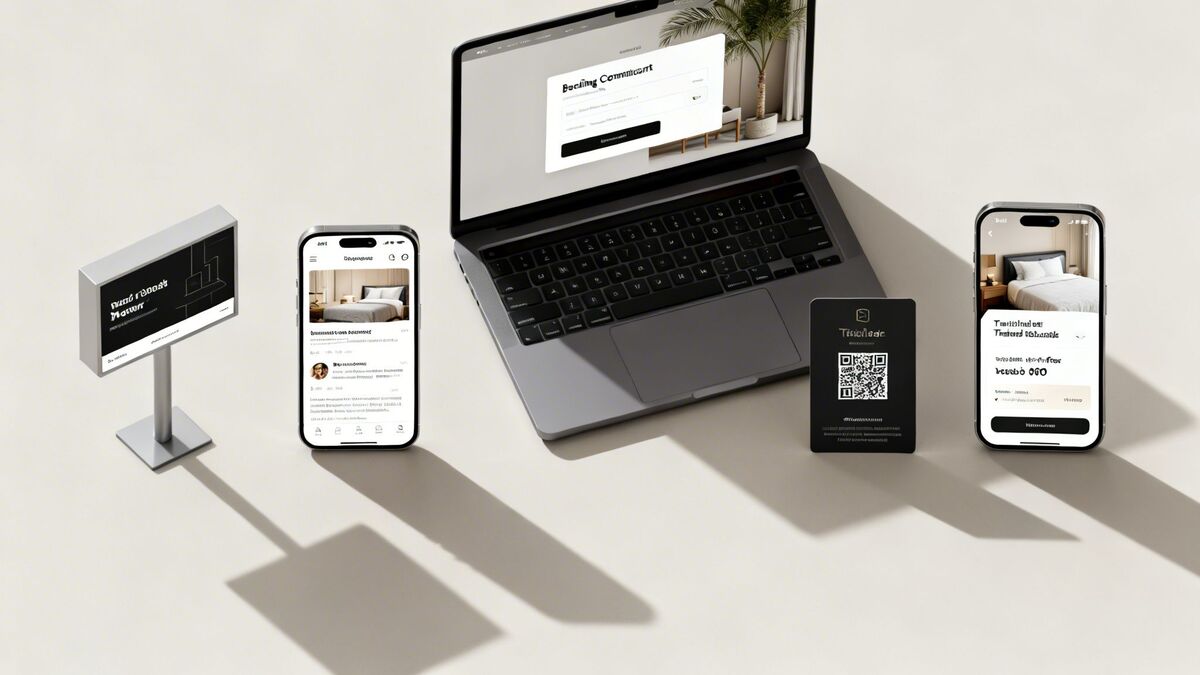
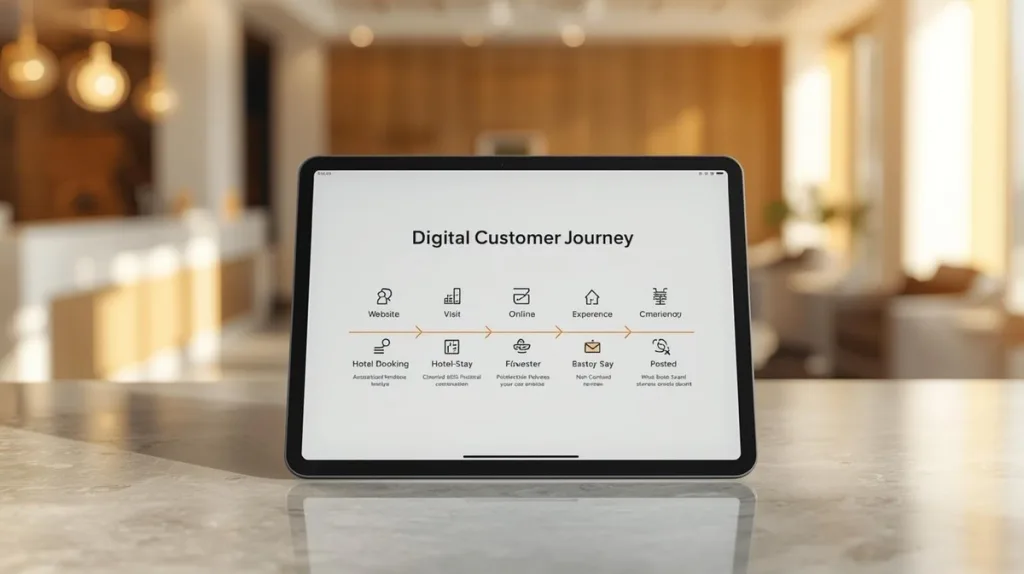
To really get a handle on the digital customer journey, you need a map. Think of it less as a mystery and more as a predictable path every customer follows. Once you understand these stages, you can meet people where they are and guide them from their first impression all the way to becoming a loyal fan.
Let's walk through it with a potential guest we'll call Sarah, who’s planning a trip to your boutique hotel. This same blueprint works whether you're running a hotel on a system like Mews, a busy café using a Toast POS, or any other service business.
Stage 1: Awareness
This is the spark—Sarah’s “I need a getaway” moment. Right now, she isn't looking for your hotel. She’s just looking for an experience that matches her style. Your job is to get on her radar.
Maybe she’s scrolling Instagram and sees a travel influencer’s post from your hotel. The vibe catches her eye. That’s a perfect first touchpoint. Others could be a targeted social media ad, a feature in a local travel blog, or simply ranking high when she Googles "boutique hotel downtown."
The biggest risk here is being invisible. If you’re not showing up where your ideal customers are browsing, you’re not even in the running.
Stage 2: Consideration
Okay, you have her attention. Now Sarah starts digging deeper. She wants to see if your hotel is as good as it looks online. She shifts from just browsing to actively weighing her options.
She’ll probably head straight to TripAdvisor and Google to read reviews from past guests. Then, she'll visit your website to check out photos, look at the amenities list, and see your prices. She might even glance at your competitors to see how you measure up. This is where your online reputation is everything. A few bad reviews or a clunky website can stop her journey cold.
Stage 3: Purchase
Sarah’s sold. Your hotel is the winner. Her goal is now dead simple: book a room with zero hassle. She clicks the "Book Now" button on your site, which takes her right to your integrated Mews booking engine.
The process is a breeze. The calendar is easy to use, the payment feels secure, and she gets a confirmation email instantly. That’s the moment of conversion. For a restaurant, this might be making a reservation or placing an online order through your Toast-powered app.
Any friction here is a deal-killer. A confusing checkout, a broken link, or surprise fees will cause customers to abandon their carts. Simplicity is what closes the deal.
Stage 4: Service
Sarah has checked in. The journey moves from digital to physical, but digital touchpoints are still key. Her goal is to have a fantastic stay that lives up to the promises you made online.
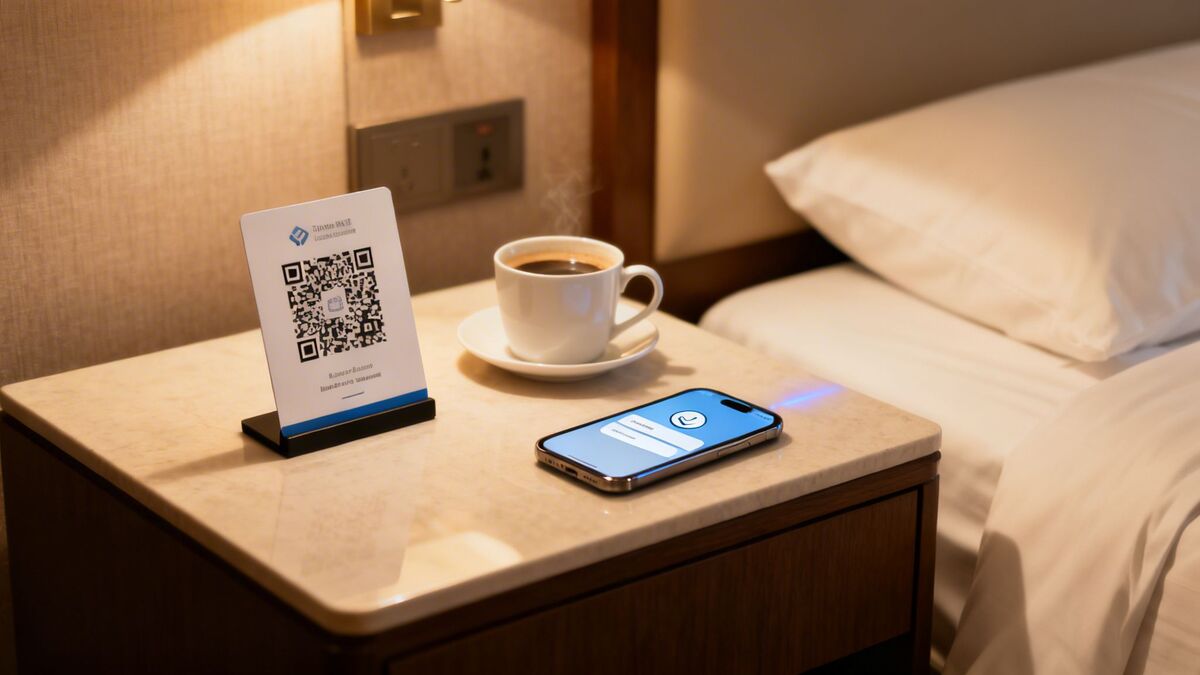
In her room, she sees a small QR code inviting her to share mid-stay feedback. This is a critical service touchpoint. It gives you a chance to solve a small problem before it sours her experience and turns into a bad review. Acting on these moments is a huge part of improving your operations, and you can dive deeper into how by exploring customer journey analytics.
Stage 5: Loyalty
Sarah's trip is over, but the journey continues. Now your goal is to turn her great stay into a lasting relationship that brings in future business. This is where you build real, sustainable growth.
A week after she checks out, she gets a personalized email thanking her for her stay and offering a special rate for her next visit. Because her stay was wonderful, she immediately books another weekend for her anniversary. Better yet, she leaves a glowing 5-star review you can feature on your website.
The loyalty stage is a loop, not an endpoint. A happy customer's positive review becomes the social proof that fuels the awareness stage for the next guest.
By mapping these five stages, you can stop guessing and start building a deliberate, repeatable process for turning strangers into your biggest advocates.
Using Smart Feedback As Your Navigation Tool
Mapping out the journey is just the first step. To navigate it well, you need a real-time guide. For a busy hospitality or service owner, that guide is customer feedback. It shows you where the roadblocks are, points out detours around problems, and highlights the clear path to a better experience along the digital customer journey.
Just waiting for reviews on Google or TripAdvisor is a passive strategy that no longer works. You're only hearing from the loudest guests, usually long after you could have fixed the problem. The modern approach is to get in front of it and collect smarter by gathering insights at the moments that truly matter.
Open A Direct Line of Communication
Imagine opening a direct, private line of communication with your guests while they are still on your property or right after a service. This isn’t about sending them annoying, 20-question surveys. It's about making feedback fast and effortless.
This is where Prompt to Survey, a core feature of the Feedback Operating System, changes the game. It’s a tool designed to turn any interaction into a simple, powerful feedback opportunity. By placing a QR code or link at a key touchpoint, you invite a private conversation, giving you the chance to hear from more guests and solve problems on the spot.
Instead of just hoping for a review, you actively invite a conversation. Think of the touchpoints you already control: a restaurant receipt from your Toast POS, a key card folio, or a simple QR code on a table tent. With Prompt to Survey, these become your gateways to valuable, in-the-moment insights.
Here’s how it works in practice:
For a hotel: Place a QR code on the bedside table. A guest who finds their room too cold can scan it and send a quick message in seconds. This gives you a chance to fix it before they go to bed unhappy.
For a restaurant: Add a link or QR code to the bottom of the bill from your Toast system. A diner can share that their server was exceptional or that a dish was perfect before they even walk out the door.
For a service business: A follow-up email after an appointment can include a simple, one-click question asking them to rate their experience.
Why Proactive Feedback Wins
The power of this approach is twofold. First, you start hearing from the "silent majority"—the customers who had a good or slightly off experience but would never take the time to write a public review. Their feedback is a goldmine for small operational improvements.
Second, you intercept problems before they turn into negative online reviews. A study found that 9 out of 10 customers will leave a brand after just one poor experience. By giving guests an easy way to voice concerns directly to you, they feel heard and valued. You get the chance to turn a potential critic into a loyal fan, just by listening and responding. This is the foundation of a smart feedback strategy that helps you collect smarter and build a stronger business.
Turning Data Overload Into Decisive Action With AI
So, you’ve opened up the floodgates for feedback. The data is pouring in from everywhere—Google reviews, Instagram DMs, post-stay surveys, and in-the-moment QR code scans. But now what? This constant stream of information can go from a goldmine to just noise, fast.
This is the point where you stop just collecting feedback and start using it to act faster. Managing the digital customer journey isn't about reading every single comment. It's about seeing the big picture instantly so you can make decisions that count. Drowning in data is just as bad as having none.
You need a system that automatically sorts, analyzes, and flags what's important. Instead of juggling a dozen logins and manually building spreadsheets, you need a command center that turns chaos into clarity. This is exactly where AI becomes your most powerful tool.
Unify Your Entire Online Reputation
Your online reputation is scattered all over the web. A potential guest might check Google, TripAdvisor, Yelp, and a handful of other sites before they even think about booking. Trying to keep up with all of them one by one is an impossible chore for any busy owner.
That’s why we built Radar (unified review intelligence) into our platform. Think of Radar as the air traffic control for your business’s reputation. It automatically pulls all your public reviews from every site that matters into one clean dashboard, giving you a complete, 360-degree view of your public feedback.
With Radar, you can finally:
See everything in one place: No more bouncing between tabs and logins just to check your ratings.
Track your reputation over time: Watch how your ratings change and see which platforms are really driving your reputation.
Spot competitive trends: Keep an eye on how you stack up against other local businesses.
Radar gives you that complete, 360-degree view of your public feedback. It’s the first step to truly mastering your digital presence.
Get Instant Insights With AI-Powered Analysis
Once your feedback is all in one place—both public reviews from Radar and private feedback from your surveys—the next challenge is making sense of it. Reading through hundreds of comments to spot patterns is a full-time job you just don't have.
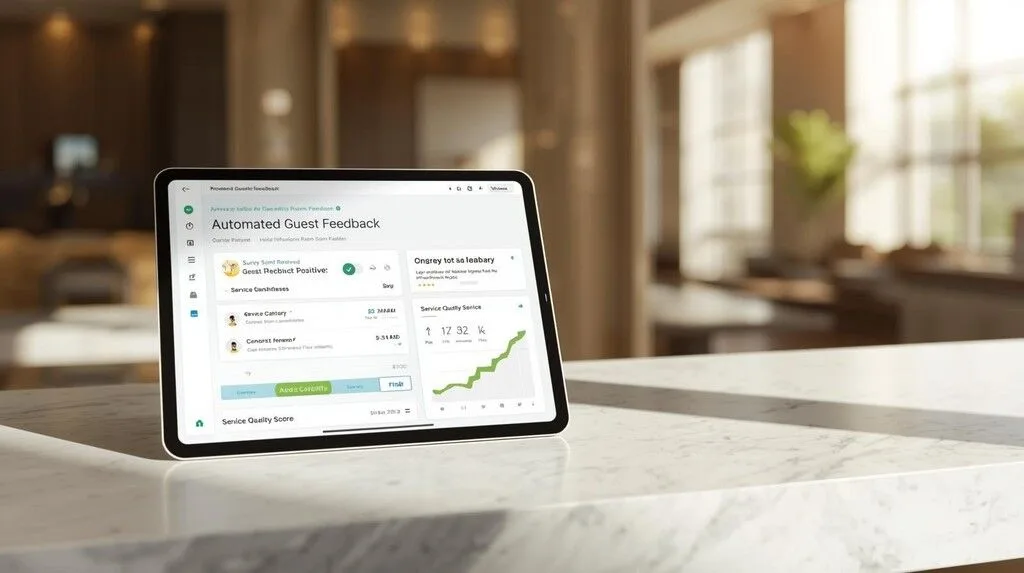
This is where AI Summaries (instant insights & sentiment analysis) comes in. This feature is like having a personal data analyst on your team, working 24/7 to digest all your feedback and pull out the critical insights you need to act on. It automatically groups comments into themes, detects sentiment, and flags urgent issues.
Instead of manually sifting through a mountain of comments, you get a quick, immediate report. AI Summaries instantly reads every piece of feedback to:
Identify recurring themes: It automatically groups comments to show you what people mention most, like "room cleanliness," "friendly staff," or "menu prices."
Detect customer sentiment: It analyzes the language to tell you if the feedback is positive, negative, or neutral, so you can gauge the overall mood at a glance.
Flag urgent issues: It highlights critical problems that need your attention right away, like mentions of "cold food" or a "slow check-in."
Instead of spending hours reading, you get an immediate alert: "25% of feedback this week mentions slow check-in." That's not just data; it's a clear, actionable directive for your front desk team.
This level of analysis is quickly becoming a must-have. The market for this technology is projected to hit $24.65 billion by 2026, as businesses race to turn real-time feedback into real-time action. You can read more about the growth of customer journey analytics platforms to see where the industry is heading.
By using AI Summaries, you stop drowning in raw data and start making fast, informed changes that directly improve guest satisfaction and your bottom line. You can learn more about using an AI feedback analysis tool in our dedicated guide. This is what it means to act faster—turning feedback from a reactive chore into a proactive way to grow.
Automating Service Recovery To Build Loyalty
You’ve collected the feedback and used AI to pull out the key insights. Now for the most important part of mastering the digital customer journey: turning that knowledge into automatic actions that grow stronger, more loyal customer relationships.
A negative experience isn't the end of the road. If you handle it right, it's the single best chance you have to earn a customer for life.
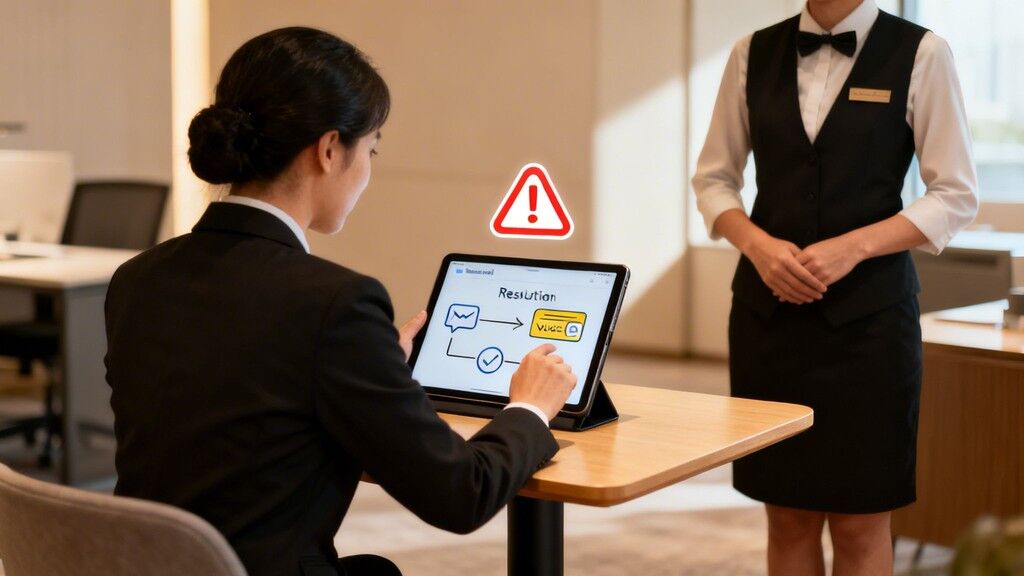
This is where you shift from just acting fast to acting smart—proactively, and at scale. Manually responding to every unhappy comment is impossible when you're busy running the business. That’s exactly why we built the Resolutions Engine, the muscle behind your Feedback Operating System.
From Problem To 'Wow' Moment Automatically
The Resolutions Engine (automated service recovery) is your automated service recovery specialist. It connects the dots between insights from AI Summaries and real-world actions, letting you set up simple "if this, then that" rules to fix common problems with zero manual effort, turning a negative experience into a positive outcome.
Think of it like a thermostat. You don't get up to turn the heat on and off all day; you set a rule, and it just works. The Resolutions Engine does the same thing for your customer service.
Here’s how it works for a restaurant:
The Trigger: A customer scans a Prompt to Survey QR code on their receipt and leaves a comment: "My steak was cold."
The Analysis: AI Summaries instantly flags the negative sentiment and the keyword "cold steak."
The Automated Resolution: The Resolutions Engine kicks in automatically. You can set it to:
Send an instant alert to the on-duty manager's phone.
Log the issue in a service recovery tracker for reporting.
Trigger a personalized, empathetic email to the customer, acknowledging the mistake and including a discount for their next visit.
This all happens in seconds, often before the customer has even left your parking lot. You've just turned a bad experience into a proactive "wow" moment that proves you care. This isn't just good service; it's a powerful retention tool. Building loyalty and keeping customers coming back depends on solid customer service retention strategies that boost lifetime value.
Close The Loop With Automated Social Proof
Fixing problems is one half of the equation. The other half is shouting your wins from the rooftops. You work hard for those glowing 5-star reviews, so don't just let them sit on some third-party site. Put them to work for you.
This is what the Spotlight: Feedback Wall was built for. It’s a feature designed to automatically turn your best feedback into powerful social proof on your own website, closing the loyalty loop and fueling growth.
You can set a simple rule: anytime a 5-star review comes into Radar, the Resolutions Engine automatically pushes it to your live Feedback Wall. This creates a dynamic, constantly updating stream of positive reviews that shows new customers you deliver great experiences, day in and day out.
Customers today expect immediate, personal service. With 81% of consumers wanting to avoid repeating themselves and 74% expecting fast solutions, automation is no longer optional. By 2026, AI will be a core part of customer interactions, and with 86% of buyers willing to pay more for a great digital experience, the ROI is clear. Tools like the Resolutions Engine help you meet and exceed those expectations without breaking a sweat.
By automating both your service recovery and your social proof, you create a self-reinforcing cycle of excellence that helps you grow stronger.
Your Action Plan To Master The Digital Journey
You’ve seen the map of the modern digital customer journey and the tools to navigate it. Now, it's time to put that knowledge into practice. This isn't about a massive, complex overhaul; it's about taking small, deliberate steps that build momentum.
Here is your concrete, five-step plan to start optimizing today.
Let’s turn our core philosophy—collect smarter, act faster, and grow stronger—into a simple checklist for you, the busy owner. This plan is designed to deliver quick wins and build a solid foundation for long-term growth.
Step 1: Map Your Key Touchpoints
First, forget the complicated software. Just grab a pen and paper. Think like your customer and sketch out the simplest version of their journey with your business.
Identify just one touchpoint for each of these three critical phases:
How they find you: Is it a Google search for "best coffee near me" or seeing a friend's post on Instagram?
How they buy from you: Do they use your Mews booking page or place an order on your Toast POS system?
How you follow up: Is there a post-stay email, or do they just get a simple receipt?
This quick map is your starting point. It shows you the exact moments where you can make an immediate impact.
Step 2: Set Up Your First Survey
Now, let's collect smarter feedback. Your goal is to open a direct line of communication at a moment that actually matters.
Your action here is to create your first Prompt to Survey. This is a powerful feature in our Feedback Operating System that turns any interaction into a chance to get feedback. The easiest way to start is with a QR code.
Place it on a receipt, a table tent, or in a follow-up email. Ask one simple question: "How was your experience today?" This single step starts gathering valuable, in-the-moment feedback from the silent majority of your customers.
Step 3: Connect Your Reviews To Radar
To act faster, you need a single source of truth. Stop wasting time bouncing between Google, Yelp, and TripAdvisor every day.
Your task is to connect your online review profiles to Radar (unified review intelligence). This feature pulls all your public reviews into one simple dashboard. For the first time, you'll see your complete online reputation in a single glance, saving you hours and eliminating frustrating blind spots.
The future of commerce is conversational. By 2026, AI is expected to be the main starting point for shoppers, with almost 60% already using it for research. This shift means businesses must be ready for a dialogue-driven world. Discover more about how AI is shaping future commerce trends on coremedia.com.
Step 4: Find One Actionable Insight
With real feedback coming in, it's time to find a signal in the noise. Don't try to boil the ocean; just find one thing you can actually improve.
Review your first AI Summary (instant insights & sentiment analysis). Our AI automatically analyzes all your reviews and survey responses to find recurring themes. Look for one specific, repeated piece of feedback—like "slow service on Tuesdays" or "confusing menu."
That one insight is your first target.
Step 5: Create One Automated Resolution
Finally, let's grow stronger by turning that insight into an automated action. This is where real change happens.
Using the insight you just found, create a simple rule in the Resolutions Engine (automated service recovery). For example, if AI Summaries detects a negative comment about "slow service," set up a rule to automatically alert your shift manager via SMS.
This ensures your team can address the issue in real-time, without you needing to lift a finger.
Stop guessing what your customers think and start knowing. Turn customer feedback from a chore into your biggest growth engine. Sign up for your free 14-day trial of FeedbackRobot or be the first to launch our new Spotlight: Feedback Wall to drive more direct bookings.
Common Questions Answered
Thinking about optimizing your digital customer journey? You're not the only one. Here are some straightforward answers to the questions we hear most often.
Is Mapping a Customer Journey Too Complicated for a Small Business?
Not at all. The reality is, your customers already have a digital journey with you—whether you’ve mapped it out or not. You don’t need a massive, complex chart to get started.
You can begin simply by focusing on three core touchpoints: how customers first find you online (like on Google Maps), how they complete a transaction (your website or booking page), and how you follow up (like with an email receipt). Improving just these moments with targeted feedback can make a massive difference.
Tools like FeedbackRobot are designed for this exact purpose. The setup is quick, letting you collect smarter insights in minutes, not months.
How Is This Different From Just Reading My Yelp or Google Reviews?
Reading reviews is reactive; optimizing the journey is proactive. Public review sites tend to only capture the most extreme experiences—the very happy or the very upset. A proactive feedback strategy helps you hear from the "silent majority" in between.
This is where you can act faster. For example, FeedbackRobot's Radar feature pulls all your public reviews into a single, unified dashboard. From there, AI Summaries instantly tell you what the reviews are about, saving you hours of reading so you can focus on fixing the root causes.
Will Asking for Feedback Annoy My Customers?
It only gets annoying when it’s done wrong—think long, irrelevant surveys sent at the worst possible time. A smart feedback approach is the complete opposite.
Using a simple QR code from our Prompt to Survey feature on a receipt, or sending a single, relevant question after a service is completed, shows you respect your customer's time. When people see you actually using their input to make real improvements, it doesn't just prevent annoyance; it builds trust and helps you grow stronger.
Ready to stop guessing what your customers are thinking and start knowing? FeedbackRobot turns customer feedback into your most reliable engine for growth.
What are the main stages of a digital customer journey?
The journey typically spans Discovery (Search/Social), Consideration (Reviews/Menu), Conversion (Booking/Order), Experience (The visit), and Advocacy (Post-visit feedback).
How do I find 'Friction Points' in my digital journey?
Use sentiment analysis on your feedback. If guests consistently complain about the 'booking process' or 'mobile menu,' you've identified a digital friction point that is costing you revenue.
Does the digital journey end after the purchase?
No. The most critical part of the digital journey is the 'Post-Purchase' phase. Automated follow-ups and review requests are what turn a transaction into a long-term relationship.
How can I personalize the digital journey for returning guests?
By using integrated guest profiles. If your system remembers a guest's past feedback, you can tailor your digital communications (SMS/Email) to reflect their specific preferences and history.
Why is mobile-optimization mandatory for the digital journey?
In hospitality, over 85% of guest interactions—from reading menus to leaving reviews—happen on a mobile device. If your journey isn't seamless on a phone, you're losing guests.
Stop reading about it. Let your agent handle it.
25 free AI actions · no credit card required
Start Free