Your Actionable Guide to Customer Journey Analytics: Turn Feedback Into Growth
Explore customer journey analytics to map touchpoints, collect feedback, and optimize experiences that drive hospitality and service growth.

Feb 13, 2026 · 19 min read
Free tool
AI Survey Generator
Describe what you want to learn and get a ready-to-send survey in seconds.
As a hospitality or service owner, you know your customers are your greatest asset. But do you really understand their experience from start to finish? This is where customer journey analytics comes in. It’s the process of seeing your business through your customers' eyes, connecting the dots between every single interaction they have with you—from their first Google search for your hotel to the post-stay survey they get in their inbox.

Why Customer Journey Analytics Matters for Your Business
Think of your customer's experience like a road trip. A traditional report might tell you they reached their destination (made a booking), but it won’t show you the confusing turn they took, the scenic route they loved, or the frustrating traffic jam that almost made them turn back. Customer journey analytics gives you that detailed, turn-by-turn map.
It moves you from guessing what customers want to knowing what they need. For businesses where the experience is the product, this isn't just a nice-to-have; it’s the foundation for growth. By analyzing the complete story, you can pinpoint moments of friction, find opportunities for delight, and ultimately build the kind of loyalty that brings people back again and again. It’s how you start to collect smarter, act faster, and grow stronger.
Moving Beyond Isolated Metrics
So many businesses fall into the trap of looking at metrics in silos. You might track website traffic, booking conversion rates, and post-stay survey scores, but you look at them all separately. While each number is useful on its own, they don't tell the whole story.
Customer journey analytics stitches these fragmented data points together into a single, cohesive narrative. It helps you answer the critical questions that isolated metrics can't:
Do customers who read our blog about local attractions end up booking longer stays?
Which online review sites are bringing in our most valuable first-time guests?
Is a slow check-in process directly causing negative online reviews a week later?
How does one bad interaction with a staff member impact a customer's odds of returning?
By connecting these dots, you shift from a reactive position—just putting out fires—to a proactive one. You can anticipate needs and fix systemic problems before they affect dozens of other customers.
The Foundation of Actionable Feedback
Understanding the journey is the first step, but the real power comes from acting on what you learn. This is where a Feedback Operating System becomes essential. It’s not just about collecting data; it's about putting that data to work across your entire team.
For instance, knowing that your checkout process is a point of friction is one thing. But being able to instantly trigger a survey at that exact moment to understand why is something else entirely. This is where tools like Prompt to Survey come in. This feature lets you capture real-time feedback with QR codes or links when the experience is still fresh in a customer's mind.
Likewise, sifting through hundreds of reviews to find patterns is a huge time sink. AI Summaries solves this by using AI to instantly analyze all your text feedback, highlighting key themes and sentiment so you know exactly where to focus. This is how you transform raw data into a clear improvement plan, turning insights into action and action into growth.
Mapping Your Customer's Journey From Start to Finish
Before you can improve the customer experience, you have to see it clearly from their perspective. Mapping the customer journey isn't just a marketing exercise; it's a practical blueprint showing every single interaction someone has with your business. It lets you step into their shoes to understand what they see, feel, and do at each stage.

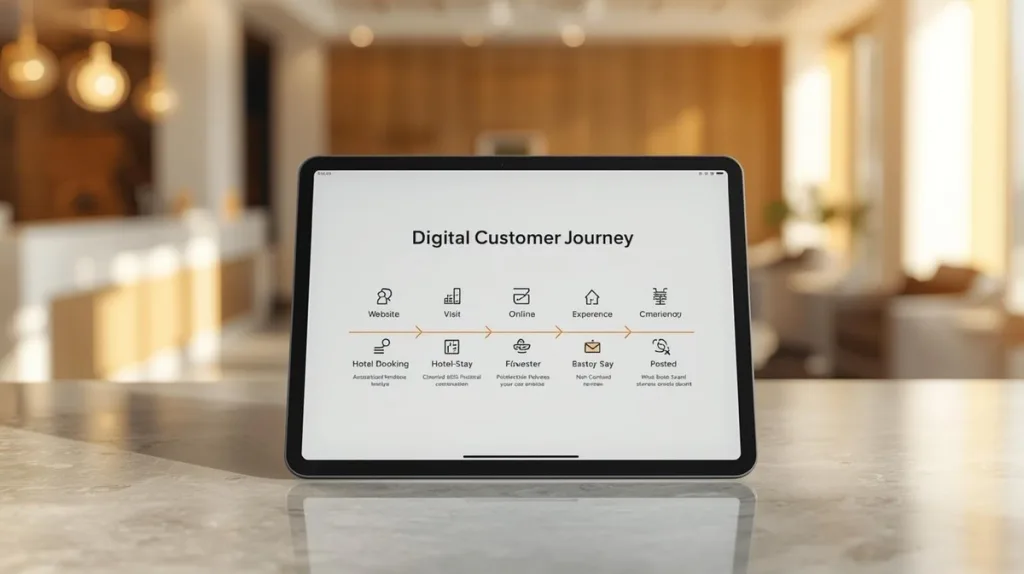
Think of this map as your guide to collecting smarter feedback. By visualizing the entire path, you can pinpoint the exact moments an opinion is most valuable, helping you act faster and grow stronger. The whole journey breaks down into three core stages, each with its own set of critical touchpoints.
Stage 1: The Pre-Arrival Experience
This stage covers everything that happens before a customer ever sets foot in your business. It’s where first impressions are formed and expectations are set. The journey here is almost always digital, spanning multiple platforms.
Key touchpoints include:
Discovery: A potential customer searches "best boutique hotel downtown" or sees an influencer's post about your restaurant. This is their very first awareness of your brand.
Consideration: They visit your website, browse your menu or room photos, and read online reviews on Google, TripAdvisor, or Yelp. They're actively comparing you to the competition.
Booking: The customer makes a reservation through your website, a third-party app, or by calling your front desk. This is the first major commitment they make.
Understanding this initial phase shows you how people find you and what convinces them to choose you. For practical guidance on streamlining these early steps, see how to automate customer onboarding.
Stage 2: The On-Site Experience
This is the heart of the journey—the moments when your team's service and your physical environment truly come to life. Every interaction here can either reinforce a customer's decision to choose you or create friction that leads to a negative review later.
Important interactions in this stage are:
Arrival & Check-in: The first human interaction, whether it’s a warm welcome from a hotel receptionist or a host seating a guest at a restaurant. A seamless start is crucial.
Service Interactions: This includes everything from ordering a meal and asking for directions to receiving room service. Each touchpoint is a chance to delight or disappoint.
The Core Service: The quality of the meal, the comfort of the hotel room, or the helpfulness of a retail associate. This is the main reason the customer is there.
Payment & Departure: The final on-site interaction. A complicated billing process or a rushed farewell can leave a lasting negative impression.
These moments are ripe for capturing in-the-moment feedback. You can learn more about how to create a visual representation of this process by exploring our guide to the AI customer journey map.
A common mistake is waiting until after a customer leaves to ask for their opinion. By then, the details are fuzzy, and the opportunity for immediate service recovery is lost.
This is why real-time feedback is so powerful. Using a tool like Prompt to Survey is a game-changer. Imagine a simple, elegant QR code on a restaurant table or at the retail checkout counter. A customer can scan it with their phone and provide feedback in under 30 seconds, turning a passive moment into an active feedback opportunity that gives you immediate insight you can act on.
Stage 3: The Post-Experience Follow-Up
The journey doesn't end when the customer walks out the door. This final stage determines whether a happy customer becomes a loyal advocate or a dissatisfied one voices their complaints publicly.
This phase includes:
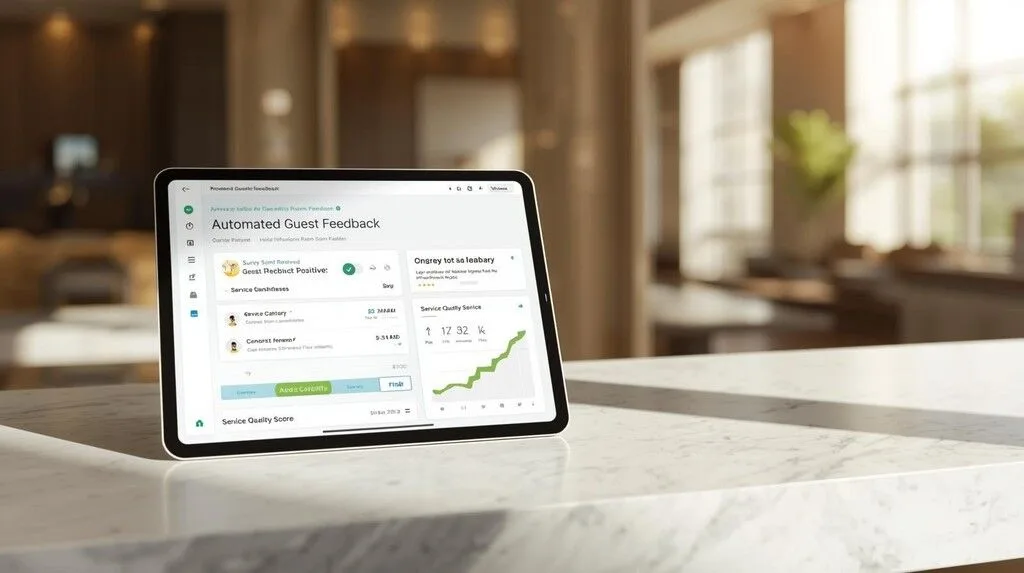
Feedback Requests: An automated email or SMS asking for a review of their stay or dining experience.
Online Reviews: The customer shares their feedback publicly on review sites, influencing future guests.
Loyalty Engagement: The customer joins your loyalty program or engages with your social media, signaling a desire to return.
Mapping these three stages gives you a complete picture, showing you precisely where to listen and when to act.
To better illustrate these moments, let's compare how they look across a few different service industries.
Key Touchpoints Across Service Industries
This table breaks down the critical customer journey stages and highlights feedback opportunities for hotels, restaurants, and retail stores.
Journey Stage | Hotel Example | Restaurant Example | Retail Store Example |
|---|---|---|---|
Discovery | Sees an ad for a weekend getaway package on social media. | Searches for "sushi near me" and finds your Google Business Profile. | Walks by the store window and sees an attractive display. |
Consideration | Reads reviews on Booking.com and compares room amenities online. | Browses the online menu and checks Instagram for food photos. | Enters the store to check prices and try on an item. |
On-Site Core | Experiences the room quality, interacts with housekeeping, uses the pool. | Tastes the food, interacts with the server, enjoys the ambiance. | Gets help from a sales associate, uses a fitting room. |
Departure | Checks out at the front desk and settles the bill. | Pays the check via a tableside QR code or with the server. | Completes a purchase at the checkout counter. |
Post-Experience | Receives an email survey asking to rate the stay. | Gets an SMS asking to review their meal on Yelp. | Signs up for the loyalty program and receives promotional emails. |
While the specific interactions change, the underlying structure of the journey remains the same. Mapping it out is the first step toward understanding—and improving—every moment that matters.
Turning Raw Data Into Actionable Decisions
Mapping the customer journey is a great start, but let’s be honest—data without insight is just noise. To really get a handle on your customer experience, you have to translate raw numbers into clear, actionable decisions. It's all about focusing on the key metrics that show you the health of your customer relationships at specific moments.

Just tracking an overall satisfaction score won’t cut it. The real magic is in understanding the context. A low Customer Satisfaction (CSAT) score at check-in tells a totally different story than a poor Net Promoter Score (NPS) after checkout. One points to an immediate operational problem, while the other is a warning shot about your brand’s reputation and future bookings.
Key Metrics and Their Place in the Journey
To make any sense of your data, you have to know what to measure and when. Each of these metrics tells you something different about how a customer feels about your service at a specific touchpoint.
Here are the three must-have metrics for any service business:
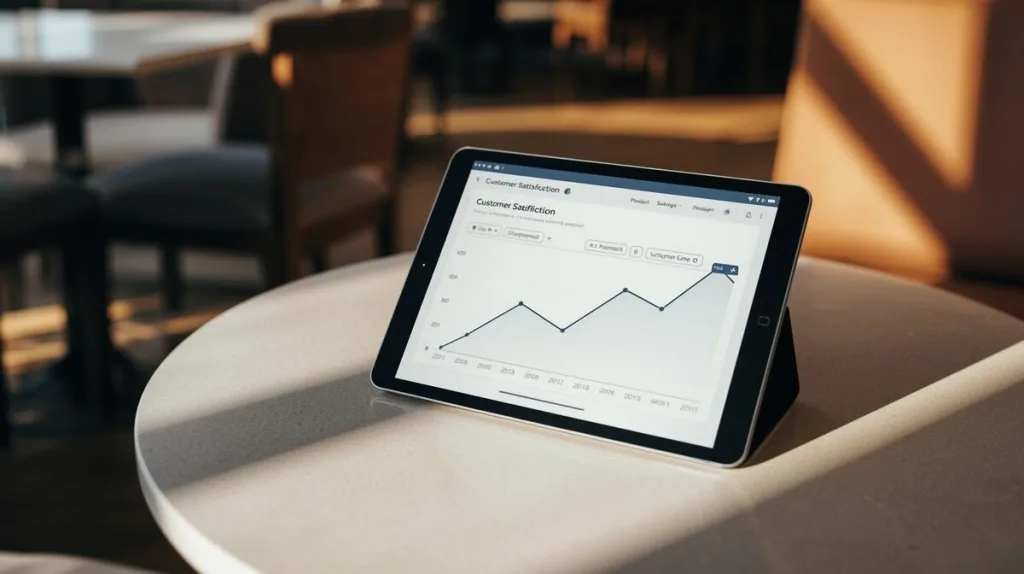
Customer Satisfaction (CSAT): Think of this as a snapshot of short-term happiness. It measures how a customer feels about one specific interaction, like the check-in process or a meal. A high CSAT score means you nailed that single moment.
Net Promoter Score (NPS): This one is all about long-term loyalty. It asks how likely a customer is to recommend your business, reflecting their entire experience and predicting future growth.
Customer Effort Score (CES): CES tells you how easy it was for a customer to get something done—like booking a room or resolving an issue. A low-effort experience is a massive driver of loyalty.
Seeing these metrics in context is what matters. A fantastic CES for your online booking system is great, but it won’t save you if the CSAT for room cleanliness is constantly in the gutter. This is where customer journey analytics comes in, showing you how these scores influence each other across the entire experience.
From Numbers to Narratives with AI
The scores tell you what is happening, but they don't explain why. This is the wall most businesses hit. They end up spending hours manually sifting through hundreds of individual comments and reviews, trying to pinpoint the root cause of a problem. That manual grind is slow, inefficient, and full of missed opportunities.
This is where technology becomes your secret weapon. Instead of drowning in raw feedback, you get immediate, clear insights.
AI Summaries completely changes the game. This feature instantly digests thousands of text comments from surveys and online reviews, turning a mountain of raw feedback into clear, actionable themes and sentiment analysis.
Think about it. Instead of reading 200 reviews one by one, you see a dashboard that says, “15% of negative comments this week mentioned slow bar service” or “Positive sentiment for front desk staff is up 25%.” All of a sudden, you know exactly where to focus. AI Summaries cut through the noise, giving you the why behind your scores so you can act faster and make smarter decisions. You can learn more about interpreting feedback in our guide to the analysis of survey data.
Ultimately, the goal is to tie these specific insights back to bigger business outcomes. Understanding metrics like Customer Lifetime Value (CLV) is the final step. When you can see how a positive check-in experience leads to higher CLV, you’re no longer just fixing problems—you’re strategically investing in the moments that drive long-term growth.
Building a 360-Degree View of Your Customer Experience
Your customer feedback is probably scattered all over the place. It's in Google Reviews, tucked away in TripAdvisor comments, popping up on social media, and sitting inside your own direct surveys. When feedback lives in silos like this, you're only seeing fragments of the story—never the full picture.
To make decisions that actually move the needle, you have to break down those data walls. You need a single, unified view of everything customers are saying. This is the heart of real customer journey analytics.
When you can see how a negative Instagram comment connects to a low survey score from that same week, you start spotting trends that were previously invisible. You stop reacting to individual complaints and start understanding the root causes affecting your entire customer experience.
Why Data Silos Kill Growth
Trying to understand your customer experience with siloed data is like trying to solve a puzzle with half the pieces missing. Your front desk team sees one part of the story, your marketing team sees another, and management gets a completely different report. Nobody has the full context.
This fragmentation is a huge problem. It leads to:
Missed Opportunities: You can't see that a glowing Google Review came after three fantastic interactions with different staff members, making it impossible to figure out what went right and how to replicate it.
Slow Reactions: By the time you manually connect the dots that multiple guests have complained about the Wi-Fi on different platforms, the problem has already soured the experience for dozens of people.
Incomplete Analysis: You might think a marketing campaign flopped because it didn't drive direct bookings. But a unified view could show it massively increased positive brand mentions on social media, which is a win you'd otherwise miss.
Without a central hub, you're constantly playing catch-up and making calls with incomplete information. It’s no wonder the global market for customer journey analytics is exploding—it shot up from USD 8.3 billion in 2020 and is projected to hit USD 25.1 billion by 2026. Businesses know this unified approach is non-negotiable now. You can dive deeper into the numbers in this customer journey analytics market report.
Creating a Single Source of Truth
The fix is to create a single source of truth—one command center where all your customer feedback flows automatically. This isn't about adding more work; it’s about using smart technology to gather and organize all that scattered data for you.
This is exactly what Radar was built for. It acts as your unified review intelligence hub, automatically pulling public reviews from all over the web into one clean, simple dashboard. Instead of logging into five different sites every morning, you get one clear view of everything being said about your brand, everywhere.
With a unified view, you can finally connect the dots. You see the entire conversation—not just bits and pieces—and that clarity is what empowers you to collect smarter, act faster, and grow stronger.
The power of a tool like Radar is about more than just monitoring your own brand. It gives you a complete view of the competitive and market landscape, turning raw feedback into strategic intelligence.
With Radar, you can:
Monitor Your Online Reputation in Real-Time: Get instant alerts for new reviews on any platform. This means you can respond right away to protect your brand image.
Track Competitor Performance: See what customers are saying about your direct rivals. Are they raving about a new menu item? Complaining about slow service? This is competitive gold you can act on.
Understand Platform-Specific Trends: Discover where different parts of your customer journey are being discussed. Maybe customers praise your food on Instagram but vent about wait times on Google.
This holistic view is the foundation for making improvements that have a real impact on your bottom line. To learn more about how a unified dashboard can change your operations, check out our guide on customer experience dashboard software. By bringing everything into one place, you finally get the 360-degree visibility you need to understand the complete customer story.
Automating Service Recovery to Build Unbreakable Loyalty
A bad experience doesn't have to be the end of the road. In fact, if you handle it right, a quick and thoughtful response can turn an unhappy customer into one of your most vocal supporters. The secret is to stop treating service recovery like a reactive, manual chore and start seeing it as a powerful, automated loyalty-building machine.
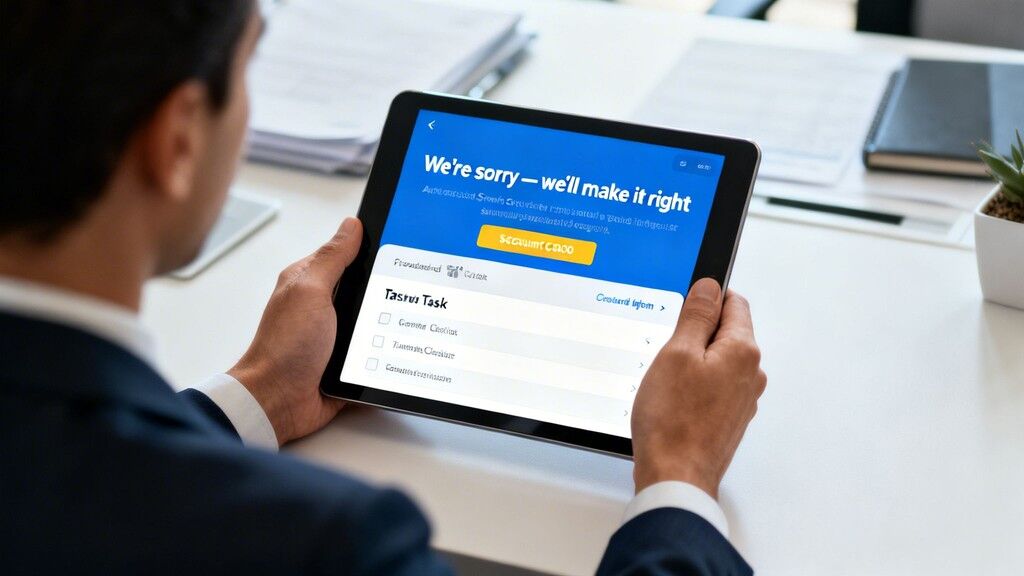
This means building systems that jump on issues the moment they happen. You want to make customers feel heard and valued before they even consider blasting you in a review. Your customer journey analytics shouldn't just spot friction—it should trigger the solution.
From Manual Firefighting to Automated Resolution
We’ve all seen the old way of doing things. A manager gets a fiery email, scrambles to piece together what happened, and tries to follow up, usually hours or even days too late. By then, the damage is done. The customer feels ignored, and they’ve probably already vented to their friends.
Automated service recovery flips that script completely. It uses feedback data as a trigger to launch instant, pre-planned actions. This brings consistency, speed, and accountability to the process, turning a moment of frustration into a real chance to connect.
This is exactly what the Resolutions Engine was built for. Think of it as your on-call specialist for automated service recovery, instantly firing off actions based on the feedback you receive. You set the rules; the engine executes them perfectly every single time.
How the Resolutions Engine Builds Loyalty
Let’s play this out. Imagine a guest at your hotel fills out a survey and gives a thumbs-down on their check-in experience. Instead of that feedback just sitting in an inbox waiting for someone to see it, the Resolutions Engine kicks into gear immediately.
Here’s what could happen in just a few seconds:
Instant Apology: The system automatically sends a personalized, empathetic email or SMS, letting the customer know you’ve heard them.
Smart Offer: Depending on the problem, it might include a targeted offer, like a discount on their next stay or a voucher for a free drink at the bar.
Team Alert: At the same time, it creates a task for the front desk manager, complete with the customer's feedback, telling them to follow up personally.
This rapid, multi-pronged response proves you're not just listening—you’re acting. The global customer journey analytics market has exploded from USD 8.28 billion in 2020 to an estimated USD 46.68 billion by 2030, and it’s because businesses are finally grasping the power of using data to drive immediate, personal actions like these. You can find more insights on the global market for customer journey analytics on fortunebusinessinsights.com.
Turning Recovery Into Your Competitive Edge
An automated system doesn't get rid of the human touch; it makes it better. By taking care of the immediate, time-sensitive response, the Resolutions Engine frees up your team to handle the high-impact, personal follow-ups. Now, your manager isn’t just reacting to a complaint. They’re walking into the conversation with context, ready to have a productive, healing conversation.
The goal isn't just to fix one problem. It’s to build a system where every customer feels valued, even when things go wrong. This proactive approach to service recovery is how you build unbreakable brand loyalty.
When you automate this crucial piece of the customer journey, you guarantee that no issue ever falls through the cracks. You give your team the tools to solve problems faster, turn unhappy customers into advocates, and show that your commitment to a great experience is more than just talk. This is how you collect smarter, act faster, and grow stronger.
Integrating Analytics Into Your Daily Operations
The best customer journey analytics tools are the ones you don't even have to think about—they just work. Real operational strength comes when insights flow directly into the systems you and your team already use every single day. The goal is to make feedback part of your natural workflow, not just another task on your to-do list.
This means connecting your analytics platform with the tech stack you already rely on, like your Property Management System (PMS) or Point of Sale (POS). With simple API connections, you can automate feedback collection and put insights to work without adding a single manual step. This seamless data flow is what separates businesses that just collect data from those that actually act on it.
Automating Feedback at Critical Touchpoints
Imagine never having to manually send another survey again. That's the real power of integration. By linking your tools, you can use specific moments in the customer journey to trigger immediate, relevant feedback requests. This makes sure you capture what your customers are thinking when the experience is fresh in their minds, which is exactly when your response can make the biggest difference.
Here’s how this looks in the real world:
For Hotels: Connect your Feedback Operating System with your PMS, like Mews. The moment a guest checks out, the system automatically sends a personalized survey asking about their stay. No delay, no manual effort.
For Restaurants: Link it up with your POS system, such as Toast. As soon as a table’s check is closed, a feedback request can be sent out via SMS or email.
This automated, event-driven approach guarantees you’re consistently collecting smarter feedback without lifting a finger, letting you get back to running your business.
This hands-off method does more than just save time. It creates a continuous, real-time stream of insights that flows directly from your operations, empowering your team to act faster and grow stronger.
The industry is moving quickly toward this connected, real-time model. In fact, cloud-based customer journey analytics is already capturing 61.65% of the market share and is expected to grow at a 25.10% CAGR through 2031. Businesses are prioritizing flexible, AI-ready systems that deliver instant insights, and that’s a perfect match for service operators who need to manage a high volume of feedback across multiple channels. You can learn more about these customer journey analytics industry trends on mordorintelligence.com.
Turning Insights Into Actionable Tasks
Integration isn’t just about collecting data; it’s about putting that data to work. When a piece of negative feedback comes in, the right integration can turn it into an immediate, trackable task for your team.
For instance, if a guest mentions a leaky faucet in their post-stay survey, a smart integration can automatically create a maintenance ticket in your operations software. This closes the loop between getting feedback and actually fixing the problem, making sure issues are addressed before they can impact the next guest.
When you embed analytics into your daily operations, your feedback transforms from a simple report card into a dynamic, actionable playbook for excellence.
Your Customer Journey Analytics Questions, Answered
Jumping into customer journey analytics always brings up a few questions. Let's tackle the most common ones we hear from busy service and hospitality owners like you.
How Quickly Can I Expect to See Results?
You can get immediate wins within the first few days. Seriously. Setting up instant alerts for negative feedback using a tool like the Resolutions Engine lets you start fixing problems in your first week. It’s all about acting faster on issues before they blow up online.
For bigger, strategic improvements—like redesigning a checkout process based on trend data from AI Summaries—you’ll usually see a real impact on metrics like customer loyalty and repeat business within one to three months. These are the insights that help you grow stronger for the long haul.
Is This Approach Suitable for a Small Business?
Absolutely. In fact, I’d argue it’s more critical for a small business. When every single customer relationship counts, you can’t afford to guess what people want. You don't need a huge team or a massive budget to get this right.
The key is to map your core journey and use accessible tools to collect smarter feedback at the moments that really matter. Modern platforms are built to help businesses of all sizes get started and see value right away without a heavy upfront investment.
What Is the Biggest Mistake to Avoid?
The most common pitfall is collecting data without a clear plan to do anything with it. Feedback that just sits in a spreadsheet is a completely wasted opportunity. The goal isn’t just to gather data; it's to turn it into action.
You need a system that helps you spot trends (like with Radar and AI Summaries) and gives your team the power to resolve issues on the spot (with the Resolutions Engine). Start with a specific, achievable goal, like "improve our check-in CSAT score by 10%," and use analytics to drive that one outcome.
Ready to turn feedback into your biggest growth driver? With a true Feedback Operating System, you can collect smarter, act faster, and grow stronger. Generate your Hotel Management Guest Experience Survey.
What is customer journey analytics?
It is the process of tracking every touchpoint a guest has with your brand—from their first search on Google to their post-visit review—to identify where you are losing customers and where you are winning.
How does analytics help improve guest retention?
It highlights 'Drop-off Points.' If guests consistently disappear after the booking phase, your analytics tell you there’s friction in your reservation system that needs fixing.
Do I need a data scientist for journey analytics?
No. Modern platforms like FeedbackRobot use AI to do the heavy lifting, providing you with a 'Sentiment Map' of the journey that is easy to understand and act on.
What is a 'Friction Point' in the hospitality journey?
It’s any moment where a guest feels frustrated—such as a slow check-in, a confusing menu, or a late bill. Analytics identify these spikes in negative sentiment so you can smooth them out.
Can I use journey analytics to predict future sales?
Yes. By analyzing how 'Sentiment Trends' correlate with 'Visit Frequency,' you can predict which customers are at risk of churning and intervene before they stop visiting.
Stop reading about it. Let your agent handle it.
25 free AI actions · no credit card required
Start Free