A Guide to Customer Experience Dashboard Software for Hospitality & Service Owners
Discover how customer experience dashboard software transforms feedback into growth. Learn about key features, metrics, and choosing the right platform.

Dec 10, 2025 · 19 min read
Free tool
AI Survey Generator
Describe what you want to learn and get a ready-to-send survey in seconds.
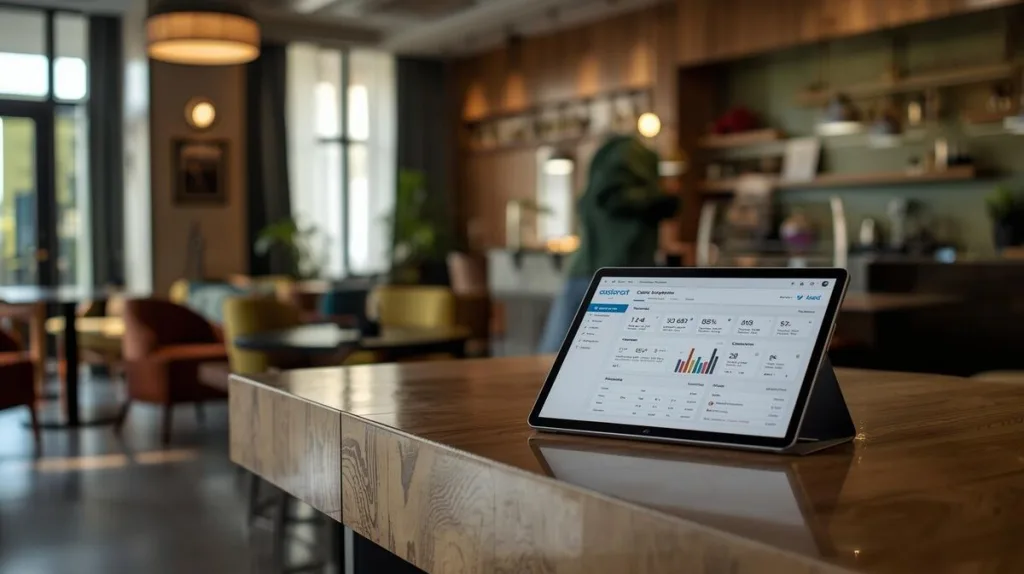
If you're running a busy hospitality or service business, trying to understand what your customers really think can feel like listening for a whisper in a crowded room. Customer experience dashboard software cuts through that noise. It acts as your central command center, pulling all that fragmented feedback into one clear, visual, and actionable hub.
Stop Guessing What Customers Want and Start Knowing
You already know that crucial customer feedback is out there—scattered across Google reviews, social media DMs, and maybe even a few internal surveys. But trying to piece it all together is overwhelming, and acting on it feels next to impossible. This is where the old way of managing feedback completely breaks down, leaving you drowning in data but starved for actual insights.
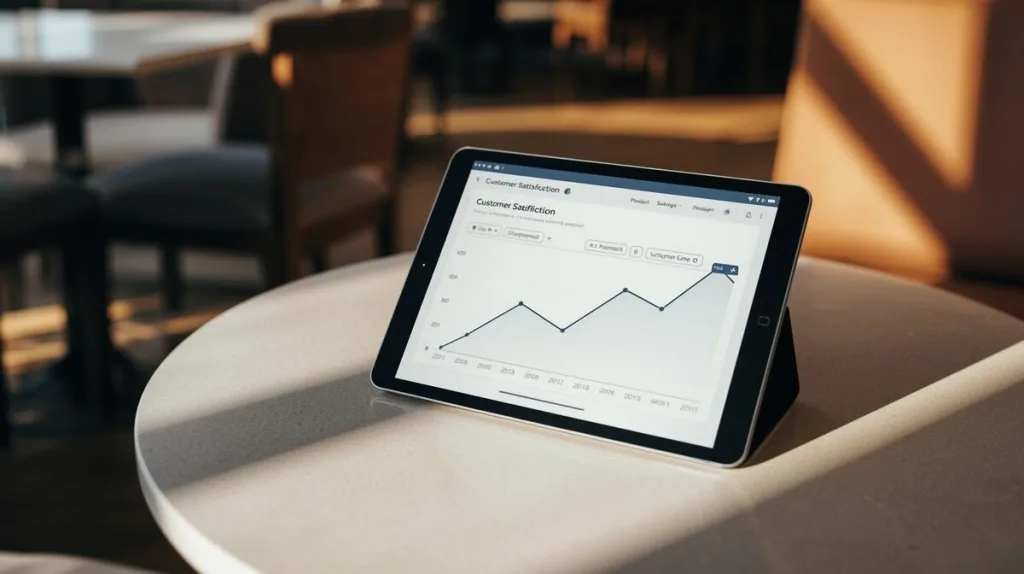
Instead of just guessing, a customer experience dashboard gives you a real-time snapshot of what’s working and what isn’t. That clarity lets you make confident, strategic decisions that directly boost guest loyalty and your bottom line. It’s not just about collecting data; it’s about translating customer voices into immediate, impactful actions.
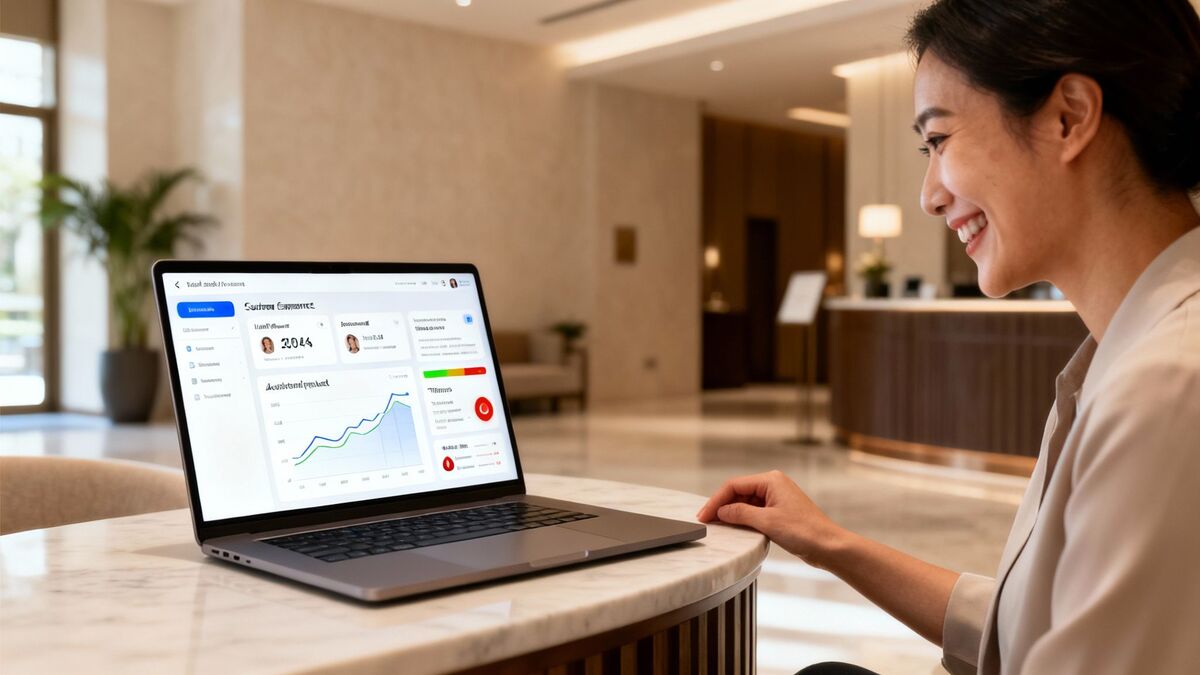
There's a good reason these tools are taking off. The global dashboard software market was valued at USD 4.5 billion in 2023 and is projected to more than double, hitting USD 9.8 billion by 2032. This boom is fueled by a simple, urgent need: businesses need tools that make complex data easy to understand and act upon. Discover more insights about the dashboard software market growth.
From Data Chaos to Actionable Clarity
Moving from scattered, manual feedback methods to a unified dashboard is a huge leap. It takes your team from being reactive and chaotic to proactive and organized. This single change empowers you to collect smarter, act faster, and grow stronger.
A customer experience dashboard doesn't just show you numbers; it tells you the story behind them. It connects a low satisfaction score to a specific issue, like slow check-in times on a Saturday, so you can fix the root cause, not just the symptom.
This operational clarity is where the real value is. You stop wasting time manually checking ten different websites for reviews and start spending that time where it matters—training your staff, improving your services, and actually engaging with your customers.
The old way just doesn't work anymore. Here’s a look at the shift a dashboard brings.
From Data Chaos to Actionable Clarity
Challenge | Traditional Method (The Problem) | CX Dashboard Solution (The Fix) |
|---|---|---|
Scattered Feedback | Manually checking Google, TripAdvisor, social media, and emails. | All reviews and messages are pulled into a single, unified inbox. |
Delayed Responses | Negative reviews are missed for days, causing brand damage. | Real-time alerts for new feedback ensure immediate action. |
No Clear Trends | Gut feelings and anecdotes drive business decisions. | Visual charts and data reveal recurring issues and opportunities. |
Team Misalignment | Staff members are unaware of customer pain points or successes. | A shared dashboard provides a single source of truth for everyone. |
Ultimately, a dashboard turns a messy, time-consuming chore into a streamlined source of business intelligence. It’s the difference between reacting to problems and getting ahead of them.
The Core Features of a Feedback Operating System
A modern customer experience dashboard is way more than just a collection of charts and graphs. It’s the engine that runs your entire feedback loop.
Think of it less like a passive report and more like a complete Feedback Operating System—a system built to help you collect smarter, act faster, and grow stronger. The best software doesn't just show you data; it gives you the tools to do something about it.
At FeedbackRobot, we’ve built our platform around the essential features that turn feedback from a chore into a real strategic advantage. These tools work together, creating a seamless flow from listening to acting, so no customer's voice ever gets lost in the shuffle.
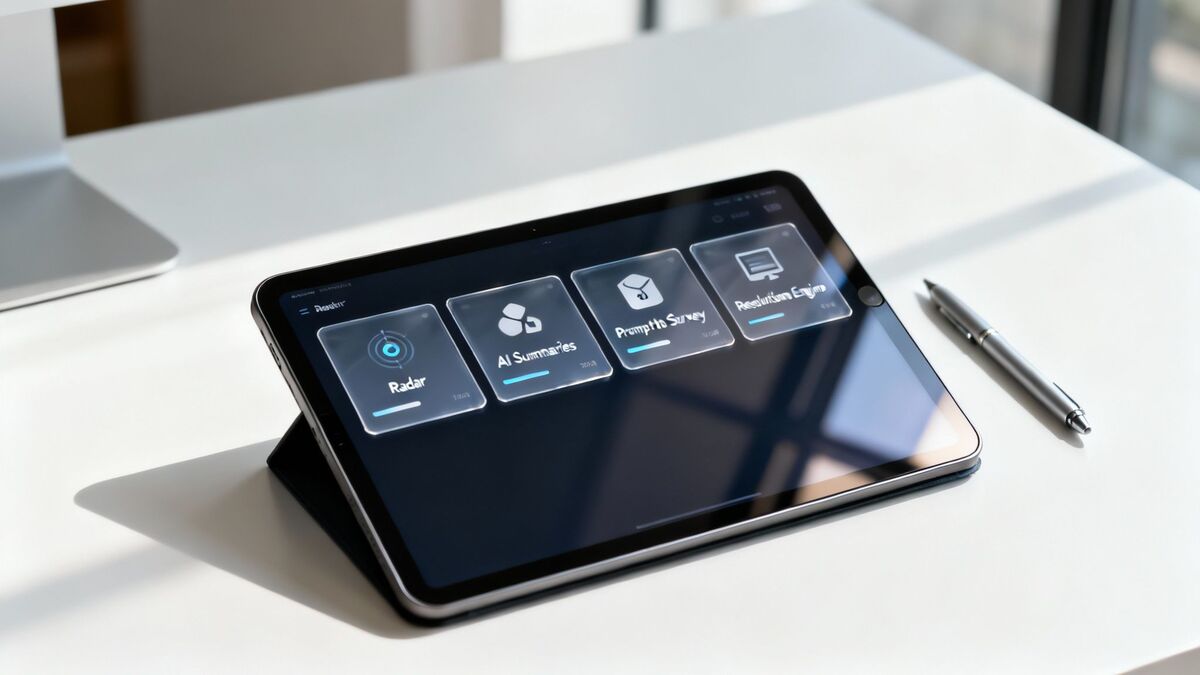
This kind of integrated approach is no longer a nice-to-have. Top brands rely on dashboards to keep a close eye on metrics like customer retention and Net Promoter Score (NPS), helping them spot friction and improve service in real-time. This is how massive amounts of data become clear, actionable insights. Explore how top brands use customer experience dashboards to get an edge.
Unify Your Intelligence with Radar
The first headache for any busy owner is the sheer number of feedback channels. You’ve got reviews popping up on Google, TripAdvisor, social media, and your own direct surveys. Trying to check all of them manually is a recipe for missed opportunities and total burnout.
This is where our first feature comes in. Radar gives you unified review intelligence by pulling all your customer feedback from every platform into a single, streamlined inbox. No more logging into a dozen different websites. Your team gets a complete 360-degree view of your customer experience, all in one place. You'll see every new comment, mention, and review the second it happens.
Get Instant Insights with AI Summaries
Okay, so you've collected the feedback. Now what? Reading through hundreds of individual reviews to spot trends is flat-out impossible when you have a business to run. This is where most managers get stuck, drowning in data without any clear takeaways.
Our AI Summaries cut right through that problem. This feature delivers instant insights & sentiment analysis by analyzing all your feedback and generating a clear, concise summary of the most important themes, trends, and emotions. In seconds, you can finally understand the ‘why’ behind your scores—like learning if "room cleanliness" is a recurring compliment or if "slow service" is a consistent issue during the weekend rush.
AI Summaries cut through the noise. They tell you exactly what your customers are talking about most, whether it’s praise for a specific staff member or frustration with your Wi-Fi, allowing you to focus your energy on what truly matters.
Automate Proactive Feedback and Recovery
Finally, a true Feedback Operating System has to be proactive, not just reactive. It should help you generate more positive reviews while managing negative experiences before they spiral out of control. Our platform includes two key features for this:
Prompt to Survey: This feature intelligently invites guests to share their experience. A positive interaction triggers a prompt to leave a public 5-star review, while a negative one directs them to a private survey. This builds your online reputation and gives you a chance for service recovery away from the public eye.
Resolutions Engine: This tool provides automated service recovery. When negative feedback is detected, the Resolutions Engine automatically creates and assigns a support ticket to the right team member. This ensures every single issue is tracked and addressed, closing the loop and turning unhappy customers into your most loyal advocates.
Key Metrics and Data Sources You Need to Track
To get a real handle on your customer journey, you have to track the right metrics from the right places. A great customer experience dashboard does more than just throw numbers at you—it pulls together data from countless touchpoints to give you a complete picture of your business's health. It’s a central hub for feedback from everywhere your customers are talking.
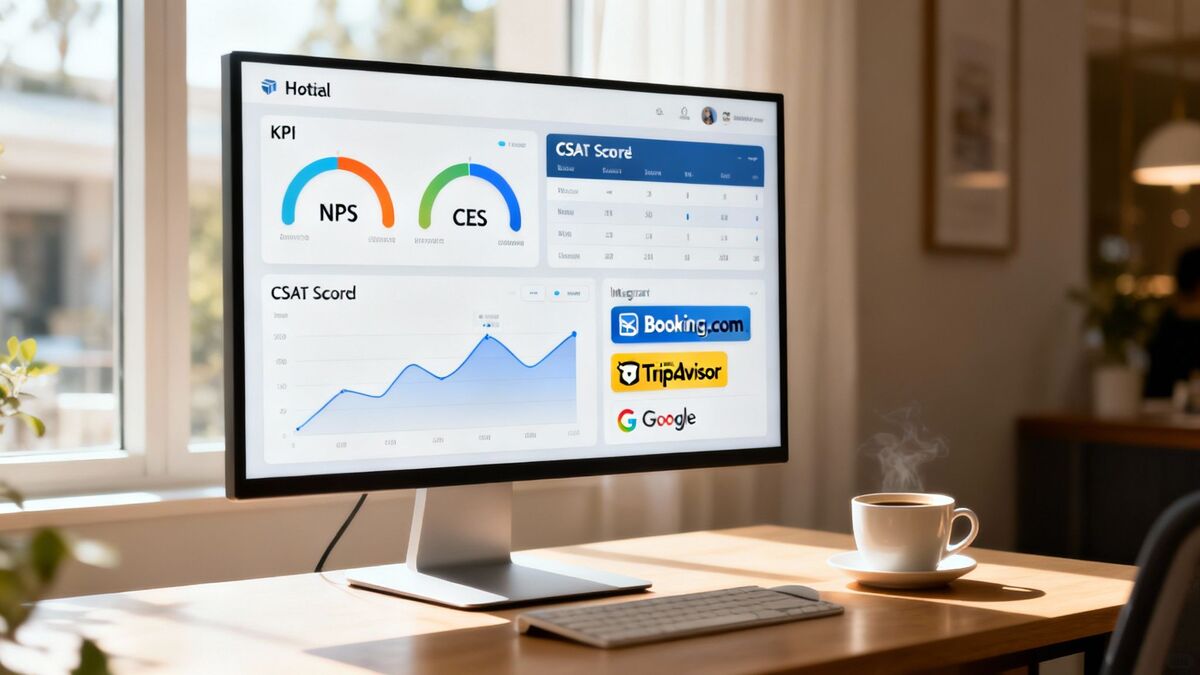
Think about it. You've got feedback coming in from online travel agencies (OTAs) like Booking.com, review sites like TripAdvisor and Google, and even the direct channels you control, like QR code surveys on a restaurant table. Without a dashboard, that data is just scattered noise, making it impossible to act on.
Core KPIs That Tell the Real Story
The key performance indicators (KPIs) you track are like the vital signs of your business. They tell you so much more than whether a customer was simply "happy." They reveal loyalty, effort, and satisfaction, letting you focus your energy where it actually counts.
Your dashboard should make it dead simple to monitor the big three:
Net Promoter Score (NPS): This is all about long-term loyalty. By asking, "How likely are you to recommend us?" you get your best read on organic growth and brand advocacy.
Customer Satisfaction (CSAT): Think of this as your in-the-moment happiness check. CSAT measures how satisfied a customer was with a specific interaction, like checking out of a hotel or paying the bill after a meal.
Customer Effort Score (CES): This metric answers a crucial question: "How easy was it for the customer to get what they needed?" A low-effort experience is a massive driver of repeat business.
Knowing these metrics is a great start, but the real magic happens when you connect them to your operational data. This is where integrations become absolutely non-negotiable.
Unlocking Deeper Insights with Integrations
If you're a hotel using a system like Mews for property management or a restaurant running on Toast, integrating that transactional data with your feedback is what provides the missing context. It’s the difference between knowing what happened and finally understanding why.
Imagine you see a low CSAT score. On its own, that's just a number. But what if your dashboard shows that score is tied to a specific room during a specific week? Or linked to a particular menu item during the Friday dinner rush? Suddenly, you have an actionable insight. You can pinpoint and fix the root cause, not just chase symptoms.
A great dashboard connects the dots. It shows you that the recent spike in negative reviews isn’t random—it correlates directly with the new front desk software you implemented, highlighting a need for more staff training.
This level of detailed analysis is what helps you collect smarter, act faster, and grow stronger. It transforms a pile of opinions into a precision tool for improving your operations.
The market is taking notice. The customer experience management software market is expected to rocket from USD 14.07 billion to an incredible USD 45.71 billion by 2032. This explosive growth shows just how essential these insights have become. You can discover more insights about the CEM software market growth here.
Of course, beyond the numbers, the emotional tone hiding in your feedback provides another layer of intelligence. To dig deeper into that, you can learn more about customer sentiment analysis in our article and see how it uncovers the feelings driving your scores.
How Different Industries Win with CX Dashboards
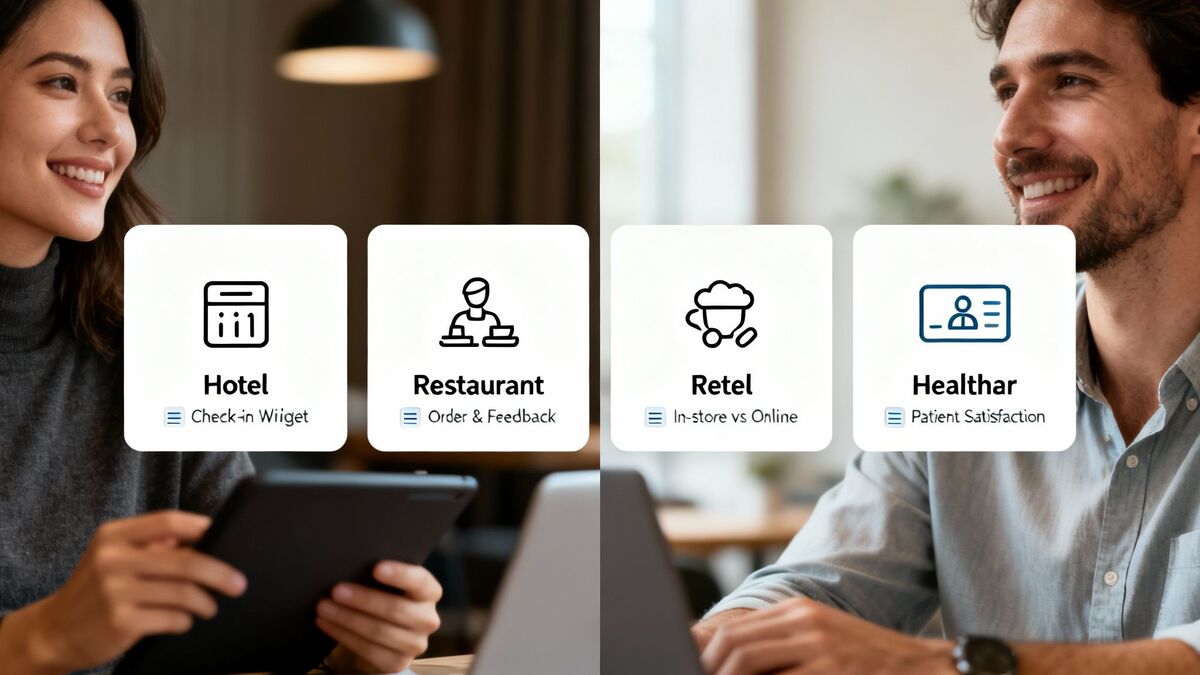
A great customer experience is the goal for any service business, but how you get there isn't one-size-fits-all. Customer experience dashboard software isn't some generic tool; it's a precision instrument you can tune to the unique rhythm of your industry. It helps you zero in on the metrics that actually matter to your business, so you can make changes that customers will feel.
Think of it like a mechanic's toolkit. Every tool has a purpose, but you wouldn't use a tire iron to fix an engine. In the same way, a hotelier tracks different signals than a restaurant owner, and both have different needs than a retail manager.
Hospitality: The Art of the Perfect Stay
For a hotelier, the guest journey is packed with make-or-break moments. Your dashboard acts as your eyes and ears, tracking everything from check-in wait times to comments about room cleanliness. By pulling in data from OTAs and your own surveys, you can spot trends that would otherwise stay hidden.
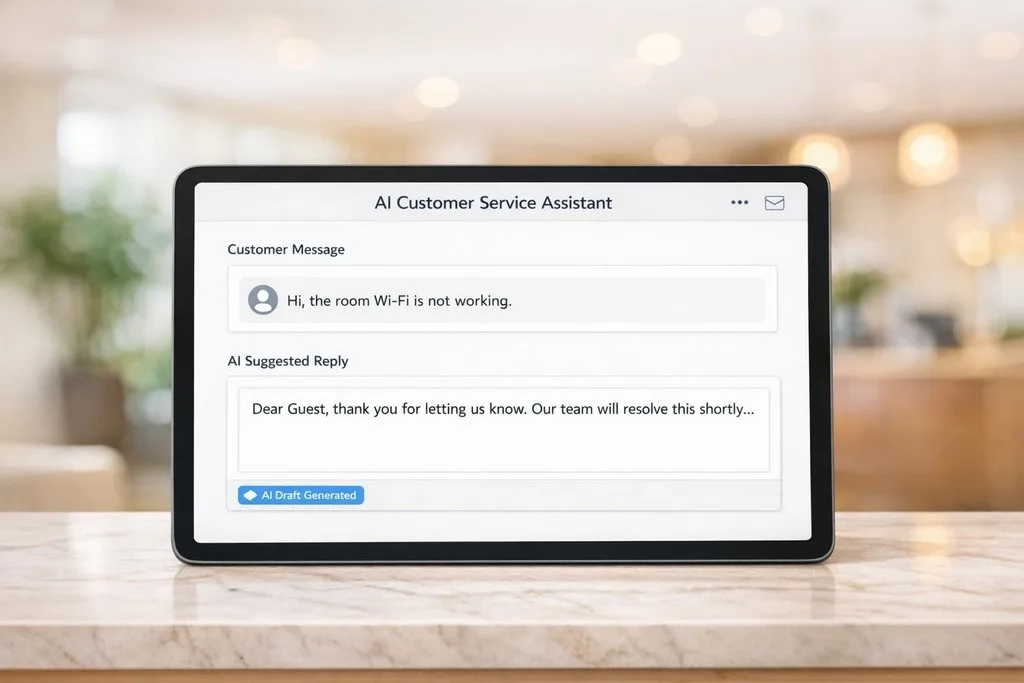
Imagine seeing a string of complaints about weak Wi-Fi, but only from rooms on the third floor. Your dashboard makes that connection crystal clear, turning a vague issue into a solvable problem. You can then use the Resolutions Engine to automatically assign a ticket to maintenance to check the router on that floor, fixing it before it ruins another guest's stay.
Restaurants: Serving Up Five-Star Feedback
A restaurant owner lives and dies by the quality of the dining experience. Integrating your CX dashboard with your POS system, like Toast, is a game-changer. This simple connection links feedback directly to specific menu items, servers, or even the time of day.
You might notice a pattern of low CSAT scores during the Saturday dinner rush. Instead of just guessing, you can use AI Summaries to instantly analyze all the feedback from that period. AI Summaries provide instant insights and sentiment analysis, quickly telling you if "slow service" or "cold food" is the recurring theme. This lets you adjust staffing or kitchen workflows with surgical precision.
Retail and Ecommerce: Bridging the Digital and Physical
In retail, the customer journey is often split between the store and the website. A CX dashboard unifies feedback from both worlds, helping you understand how they influence each other. You can compare in-store satisfaction scores with online checkout effort scores to see where the real friction is.
This data helps you optimize everything from store layouts to website navigation. For a deeper dive, our guide on improving the ecommerce customer experience shows exactly how these principles work online.
For any service business, a powerful CX dashboard provides the tailored insights needed to make informed operational changes, improve staff training, and ultimately, grow stronger. It turns raw feedback into a clear roadmap for success.
Healthcare and Services: Building Trust and Satisfaction
In healthcare or professional services, patient and client satisfaction is everything. Dashboards help clinics track wait times, measure how clearly providers communicate, and gauge overall trust. Using a feature like Prompt to Survey, a clinic can discreetly request feedback right after an appointment.
This helps them gather crucial insights to improve care. It also identifies happy patients who can be encouraged to leave positive public reviews, building a stronger, more trusted reputation.
To see how these concepts apply across the board, here’s a quick summary of how different industries put CX dashboards to work.
Industry-Specific Dashboard Use Cases
A summary of how different service industries leverage CX dashboards to solve unique challenges and track relevant KPIs.
Industry | Primary Use Case | Key Metrics to Track | Example Action |
|---|---|---|---|
Hospitality | Monitoring guest satisfaction across the entire stay | NPS, CSAT (by location/room), Review Ratings (OTAs) | Flagging negative feedback about cleanliness to housekeeping in real-time. |
Restaurants | Improving food quality and service speed | CSAT (by server/dish), Order Accuracy, Wait Times | Adjusting kitchen staffing after identifying a rush-hour bottleneck. |
Retail | Creating a seamless online-to-offline experience | Cart Abandonment Rate, Customer Effort Score (CES), In-Store Feedback | Redesigning the online checkout flow based on high CES scores. |
Healthcare | Enhancing patient trust and communication | Patient Satisfaction (PSAT), Wait Time Metrics, Provider Communication Scores | Using feedback to refine appointment scheduling and reduce wait times. |
Services | Ensuring client loyalty and project success | Client Satisfaction (CSAT), Net Promoter Score (NPS), Resolution Time | Escalating negative project feedback to a senior manager for follow-up. |
This table just scratches the surface, but it shows how a dashboard becomes a mission control center tailored to each industry's specific goals.
No matter your field, the right customer experience dashboard software helps you collect smarter, act faster, and grow stronger.
Choosing the Right CX Dashboard for Your Business
Picking the right customer experience dashboard is a big decision. It’s easy to get lost in feature lists and tech jargon, which often leads to analysis paralysis. To cut through the noise, you need to focus on what really matters for a service or hospitality owner—tools that help you collect smarter, act faster, and grow stronger.
Instead of getting overwhelmed by dozens of options, use a practical checklist. The goal isn't to find just another piece of software, but a partner that makes your life easier and your business more resilient.
Does It Unify Your Feedback?
Your team shouldn't have to waste precious time logging into ten different platforms just to see what customers are saying. A unified inbox is non-negotiable. It needs to pull all your feedback—from Google, social media, OTAs, and direct surveys—into one single, manageable stream.
This is exactly what FeedbackRobot's Radar was built for. Radar provides unified review intelligence, giving you a 360-degree view of your customer experience without the constant tab-switching. This centralized command center ensures no comment is missed, and your team can respond instantly from one place.
Can It Think for You?
The last thing you need is another tool that just dumps raw data on your plate. A great CX platform needs smart AI and automation to do the heavy lifting. It should tell you what the data means so you can take immediate action.
Ask yourself two critical questions:
Does it save you time analyzing feedback? Look for features like AI Summaries, which provide instant insights & sentiment analysis. This tool essentially reads all your reviews for you, delivering a clear summary of key themes so you can skip hours of manual work.
Does it automate service recovery? An automated Resolutions Engine is a game-changer. This feature delivers automated service recovery by detecting negative comments, creating a ticket, and assigning it to the right team member. It guarantees every single issue is tracked and resolved, turning potential detractors into loyal fans.
When you're looking at different solutions, it’s always a good idea to see a demo of a CX reporting dashboard to understand how these features work in the real world.
Does It Connect to Your Core Systems?
Your customer experience dashboard can't operate in a silo. It has to connect seamlessly with the technology you already rely on every single day. This integration is what provides the deep context needed to pinpoint the root causes of guest issues.
Whether you run a hotel on a PMS like Mews or a restaurant on a POS like Toast, your dashboard must integrate with it. This links feedback directly to specific transactions, rooms, or staff members, turning vague complaints into solvable operational problems.
Does It Help You Win More Positive Reviews?
Finally, the best software doesn't just help you manage feedback—it helps you generate more of it. A proactive system is your best tool for building a powerful online reputation and attracting new customers.
A feature like Prompt to Survey is designed for exactly this. It intelligently identifies happy customers and nudges them to leave a public 5-star review, while guiding unsatisfied guests to a private survey for service recovery. This simple automation helps you build social proof while handling issues behind the scenes. Your dashboard should be an engine for growth, not just a listening post.
Turn Your Customer Feedback into Your Greatest Asset
At this point, you've seen how the right customer experience dashboard can shift your business from putting out fires to proactively building for the future. It’s about taking all that scattered feedback and turning it into your single greatest asset for growth.
When you can finally connect the dots between what customers are saying and how your teams are performing, you unlock a powerful engine for improvement. It’s less about staring at data and more about empowering your team to deliver the kind of service that keeps people coming back.
With FeedbackRobot's Feedback Operating System, this isn't just a concept—it's your new reality. Forget juggling a dozen different logins. You can pull all your reviews into one place with Radar, giving your entire team a unified view of the customer voice. No more wasting hours trying to spot trends, either. Our AI Summaries give you instant insights & sentiment analysis, telling you what matters most to your customers, right now.
From Insights to Action
The first step in any good strategy is knowing how to gather customer feedback that actually helps you improve. But once you have it, the real magic is in acting on it quickly and decisively.
This is where automation becomes your secret weapon. Our Resolutions Engine automates service recovery by creating and assigning support tickets from negative feedback. This ensures no issue ever slips through the cracks and every customer feels heard.
Transforming your business means building a closed-loop system where feedback directly fuels improvement. It’s about creating a culture where your team is equipped to act on insights, not just admire them on a screen.
This systematic approach helps you collect smarter, act faster, and grow stronger. For a deeper dive into the mechanics, our guide on building a customer feedback insights platform offers more detail.
Showcase Your Success and Drive Growth
We think great service deserves to be celebrated. That's why we're so excited to announce Spotlight: Feedback Wall, a brand-new feature that lets you showcase your best reviews right on your website.
It’s a simple way to turn all that positive feedback into powerful social proof, building trust and attracting new customers without you lifting a finger.
Don’t let valuable insights stay buried in disconnected systems. It's time to build a system that drives both operational excellence and lasting customer loyalty. Ready to see how FeedbackRobot can turn your feedback into your most valuable asset?
Frequently Asked Questions
Got questions about customer experience dashboards? You're not alone. Here are the answers to what service and hospitality owners ask most, without the jargon.
What Is the Main Benefit of a CX Dashboard?
The single biggest benefit is turning a chaotic storm of customer feedback into a clear, actionable picture. Think about all the places your customers talk about you—Google, TripAdvisor, social media, direct surveys. A customer experience dashboard pulls all of those streams into one place.
Instead of spending hours each week jumping between a dozen different sites, you get a single command center showing you what's happening in real-time. This lets you spot trends instantly, put out fires before they spread, and make decisions based on data, not gut feelings. It’s all about replacing guesswork with clarity so you can collect smarter, act faster, and grow stronger.
How Does a CX Dashboard Integrate with Software Like Mews or Toast?
This is where a good dashboard becomes a great one. The best customer experience dashboard software doesn't just sit on its own; it plugs directly into the tools you already use to run your business, like a Property Management System (PMS) such as Mews or a Point of Sale (POS) system like Toast.
These connections are made through APIs (Application Programming Interfaces) that let the two systems talk to each other. For you, this means customer feedback gets automatically linked to specific transactions, hotel stays, or even menu items.
Imagine a negative review pops up. Instead of wondering what happened, you can instantly see which server was on duty, what the customer ordered, and the exact time they visited. That’s the power of integration. It gives you the full story so you can fix the root cause of a problem, not just the symptom.
That level of detail is a game-changer for making targeted improvements that actually move the needle.
Is This Type of Software Difficult to Set Up and Use?
Not anymore. Modern CX platforms are built for busy owners and managers, not IT experts. The days of clunky, complicated software that required a manual the size of a phone book are long gone. Tools like FeedbackRobot have intuitive, clean interfaces that your team can pick up and start using on day one.
Setup is usually a simple, guided process that gets you up and running quickly. Once you're in, the dashboard uses clear visuals, charts, and AI-driven summaries to make complex data easy to understand at a glance. You don't need to be a data scientist to get valuable insights. The whole point is to give you answers, not just more data, so you can focus on what you do best: running your business.
How Can a Dashboard Help Us Get More Positive Reviews?
This is where a proactive system really shines. A smart dashboard doesn't just react to the feedback you have; it helps you generate more of the positive reviews you want. The secret is smart automation.
For instance, FeedbackRobot's Prompt to Survey feature can tell which customers had a positive experience. It then automatically sends them a gentle nudge, encouraging them to share that great experience on a public site like Google or TripAdvisor. At the same time, it can route unhappy customers to a private feedback form, giving you a chance to make things right before they post a negative review. This two-pronged approach helps you systematically build a stronger online reputation.
What Makes a Feedback Operating System Different?
A Feedback Operating System is a whole lot more than just a dashboard. It’s an end-to-end solution for managing the entire customer feedback loop, from collection to resolution. It's a system designed for action, not just observation.
It’s built on four pillars that work together seamlessly:
Radar: This is your unified review intelligence, pulling every piece of feedback into a single inbox so nothing gets missed.
AI Summaries: Get instant insights & sentiment analysis that tell you the "why" behind your scores in seconds, without having to read hundreds of individual reviews.
Prompt to Survey: A proactive tool that helps you generate more 5-star reviews by asking your happiest customers at the perfect moment.
Resolutions Engine: Our engine delivers automated service recovery, turning negative feedback into tracked tickets and assigning them to the right person to ensure every issue is resolved.
This complete system turns customer feedback from a chore into a powerful engine for improvement and growth.
Ready to stop guessing and start knowing what your customers truly think? FeedbackRobot gives you the tools to turn feedback into your greatest asset. See how our Feedback Operating System can help you collect smarter, act faster, and grow stronger.
What is a customer experience (CX) dashboard?
A CX dashboard is a visual control center that aggregates feedback from all channels—reviews, SMS, and surveys—into a single view. It allows service owners to track real-time sentiment trends without digging through spreadsheets.
Why do hospitality businesses need specific CX software?
Hospitality operates at high velocity. Unlike generic BI tools, specific CX software like FeedbackRobot provides 'Sentiment Radar' and automated alerts that matter for daily shift management.
Can a CX dashboard track specific location performance?
Yes. For multi-unit operators, the dashboard allows you to compare performance across locations, identifying which managers are excels and which need additional support or training.
How does real-time data improve the guest experience?
When a dashboard updates instantly, it allows for 'proactive management.' If scores dip during a lunch rush, a manager can pivot resources immediately rather than reading about the failure the next day.
Is it easy to integrate my POS with a CX dashboard?
Modern platforms offer native integrations. Once connected, your sales data and guest feedback flow into the dashboard automatically, providing a full picture of your revenue-to-reputation ratio.
Stop reading about it. Let your agent handle it.
25 free AI actions · no credit card required
Start Free