
94%
of diners consider reviews before choosing where to eat
5–9%
revenue lift linked to a one-star rating increase
88%
of diners trust reviews as much as personal recommendations
Sources: Small Business Trends · Harvard Business School (Michael Luca, “Reviews, Reputation, and Revenue”)
A one-star bump is worth more than a marketing budget
Google and Yelp reviews shape most walk-in and delivery-app decisions, and TripAdvisor matters more in tourist-heavy locations. A one-star increase in average rating has been linked to a 5 to 9 percent revenue lift in published research, and restaurants that respond to reviews consistently see stronger repeat visit rates than those that let feedback sit unanswered.
The window to capture a diner's honest opinion is short — ideally within an hour of the bill being paid, before the specific details of the meal fade into a generic impression. Restaurants relying on diners to leave reviews unprompted get a skewed sample, mostly complaints, since satisfied diners rarely think to post unless asked.
Platform note
Google and Yelp reviews shape most walk-in and delivery-app decisions; TripAdvisor matters more in tourist-heavy locations.
How it works
Check closes
The moment a table's check closes in your POS, FeedbackRobot sends a short survey by SMS while the meal is still top of mind.
Feedback and reviews come in
Responses land in your dashboard alongside every new Google, Yelp, and TripAdvisor review — sentiment tagged automatically.
Your agent responds
A complaint about a slow table or a cold dish gets flagged and drafted an empathetic reply before the next diner sees it unanswered.
Built for Food & Beverages
Every feature, tailored to how you work
Radar
Every platform diners actually check, in one dashboard
Google, Yelp, and TripAdvisor reviews land in a single view instead of three different logins — with sentiment tagged automatically so a slipping location surfaces before next month's numbers do.
See Radar →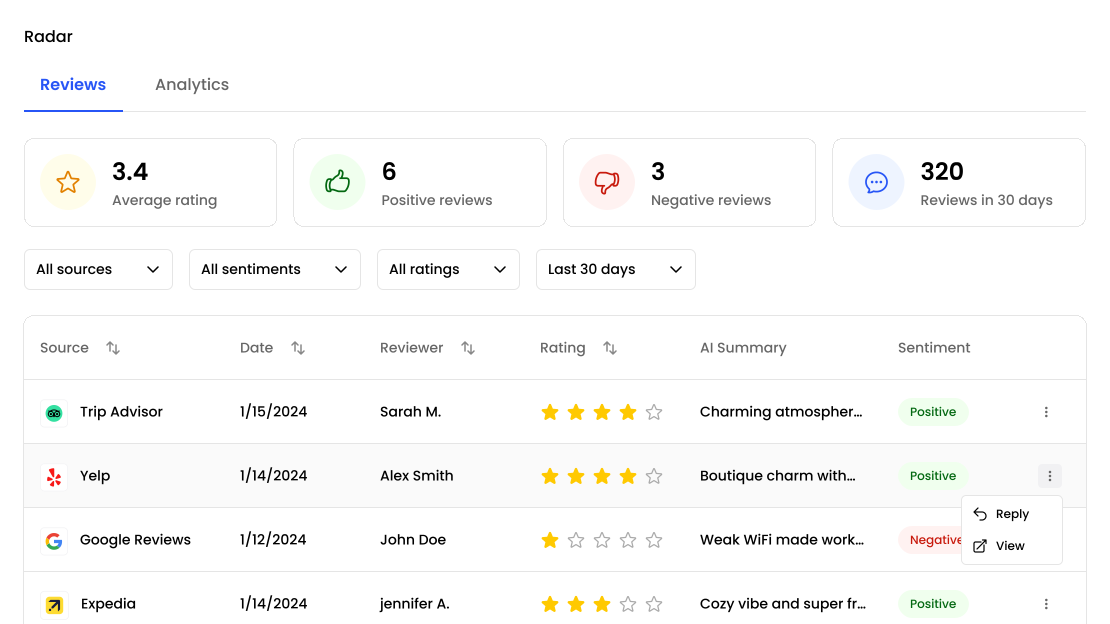
AI Prompt to Survey
Ask about the meal the moment the check closes
Describe what you want to learn — wait time, food temperature, service pace — and your agent builds the survey and sends it automatically when the table closes out, right when the meal is still fresh.
See AI Prompt to Survey →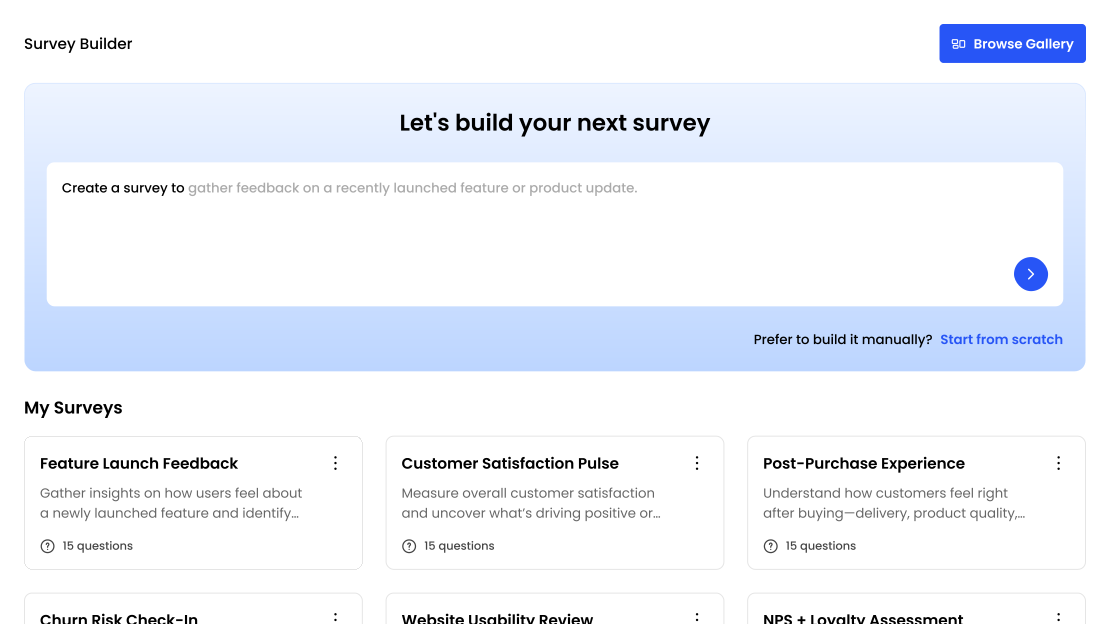
AI Resolutions
Turn a bad table into a saved regular
A complaint about a slow table or a cold dish gets flagged and drafted an empathetic reply in your brand's voice before the next diner ever sees it sitting unanswered.
See AI Resolutions →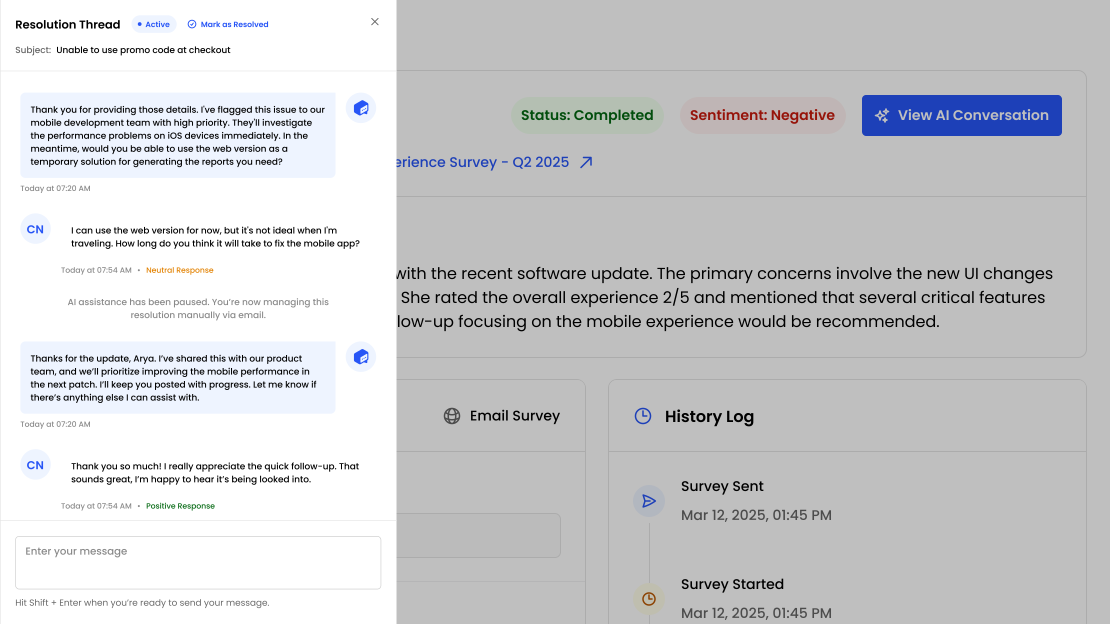
Automations
Trigger the right message at the right moment
Set the rule once — survey at checkout, alert on a 2-star review, follow-up after a private event — and FeedbackRobot runs it for every table and every service without a server remembering to ask.
See Automations →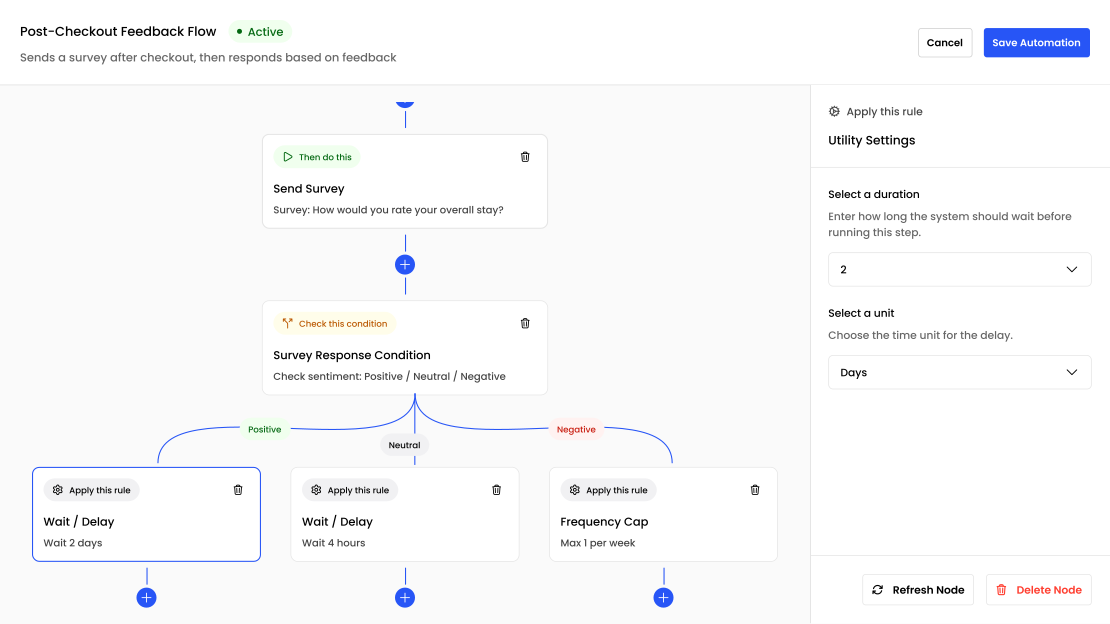
Team Inbox
Keep every location's team on the same page
Route diner feedback to the right GM or shift lead automatically, and give multi-location groups one shared view instead of a separate login per restaurant.
See Team Inbox →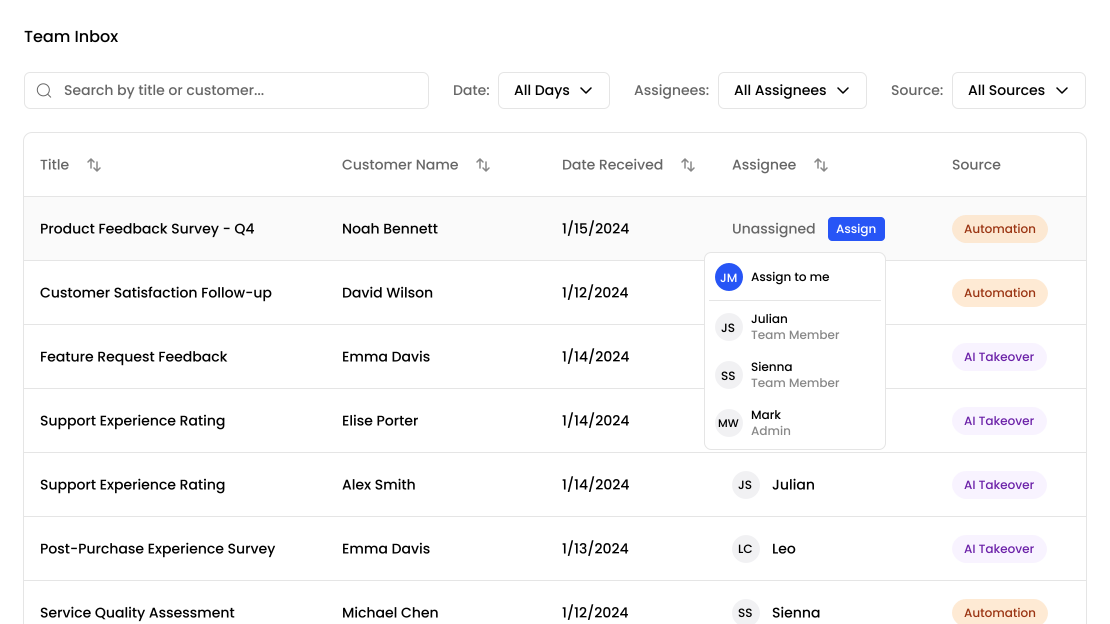
Spotlight
Put your best reviews to work
Turn glowing diner reviews into a branded feedback wall or ready-to-post social content — proof that fills the table next to the one still deciding where to eat.
See Spotlight →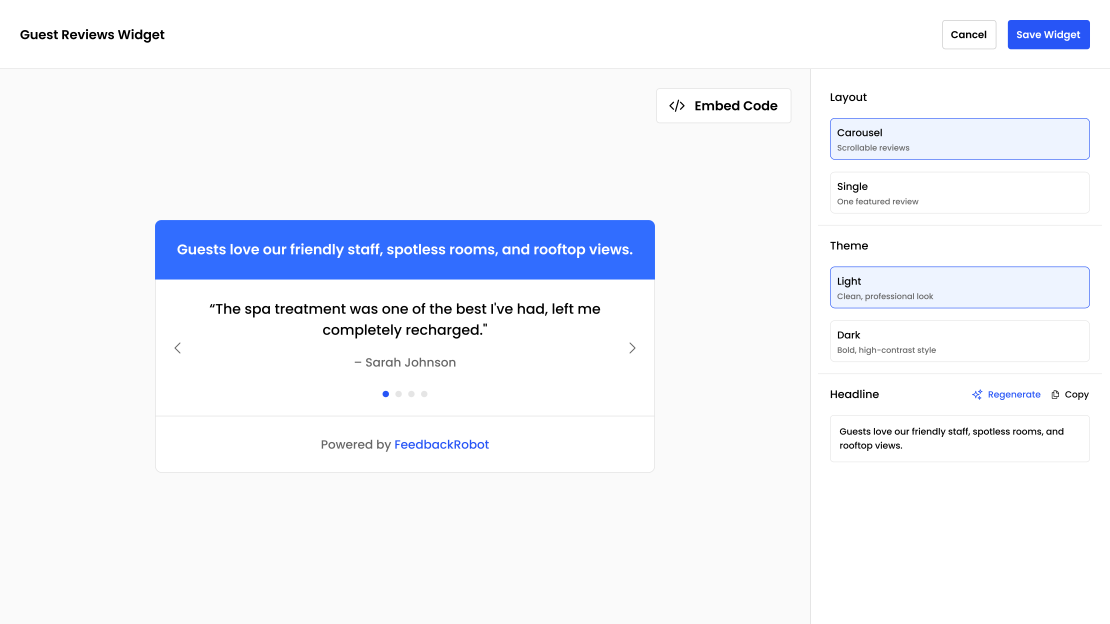
“Hospitality is present when something happens for you. It is absent when something happens to you.”
Danny Meyer · Founder, Union Square Hospitality Group
Works with
Connects to what you already run
Review & reputation platforms
Business & CRM systems
A one-star increase in average rating has been linked to a 5 to 9 percent revenue lift for restaurants in published research.
Sources: Small Business Trends · Harvard Business School (Michael Luca, “Reviews, Reputation, and Revenue”)
A slow Tuesday and a full Tuesday are often separated by nothing more than last week's reviews.How-to videos for Food & Beverages
About a minute each. What it is costing you, then the simple way to fix it.
 1:07
1:07
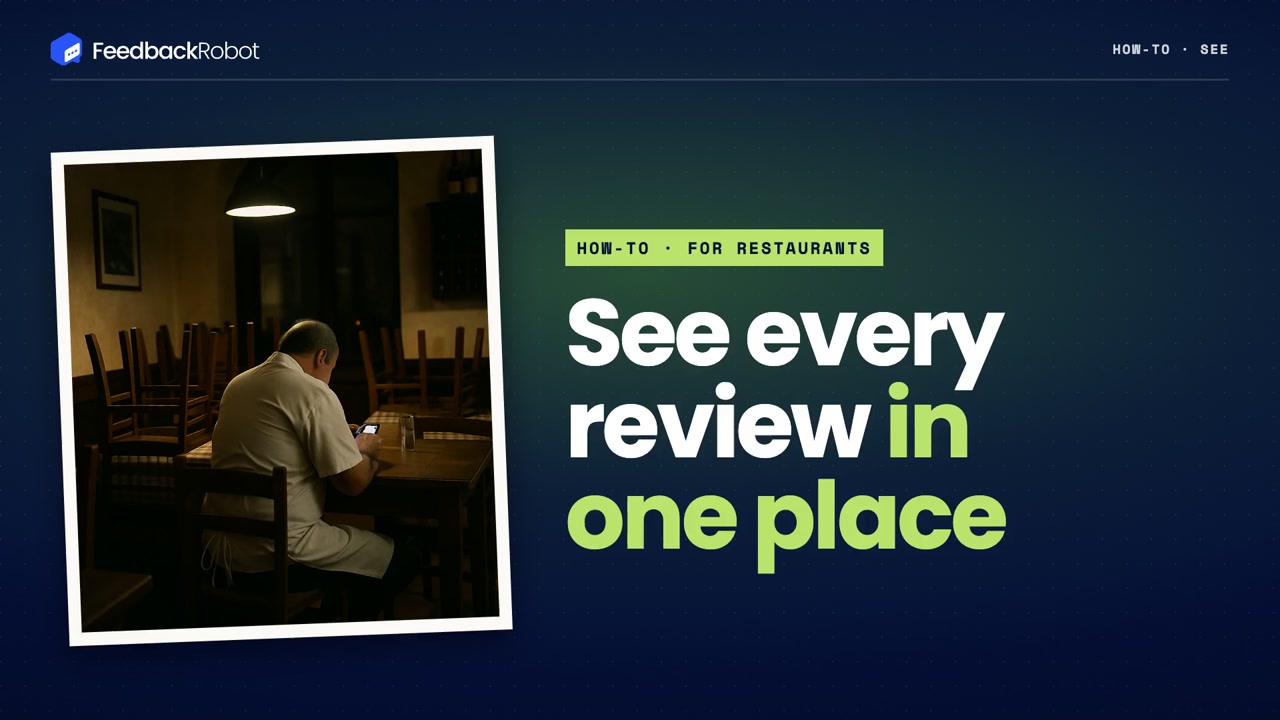
1 · See
See every review in one place
 1:13
1:13
2 · Respond
Reply to every review
 1:09
1:09
3 · Ask
Ask every guest after the meal
 1:10
1:10
4 · Grow
Turn happy guests into proof
 0:58
0:58
5 · Why it pays
Meet your new teammate
 0:56
0:56
6 · Why it pays
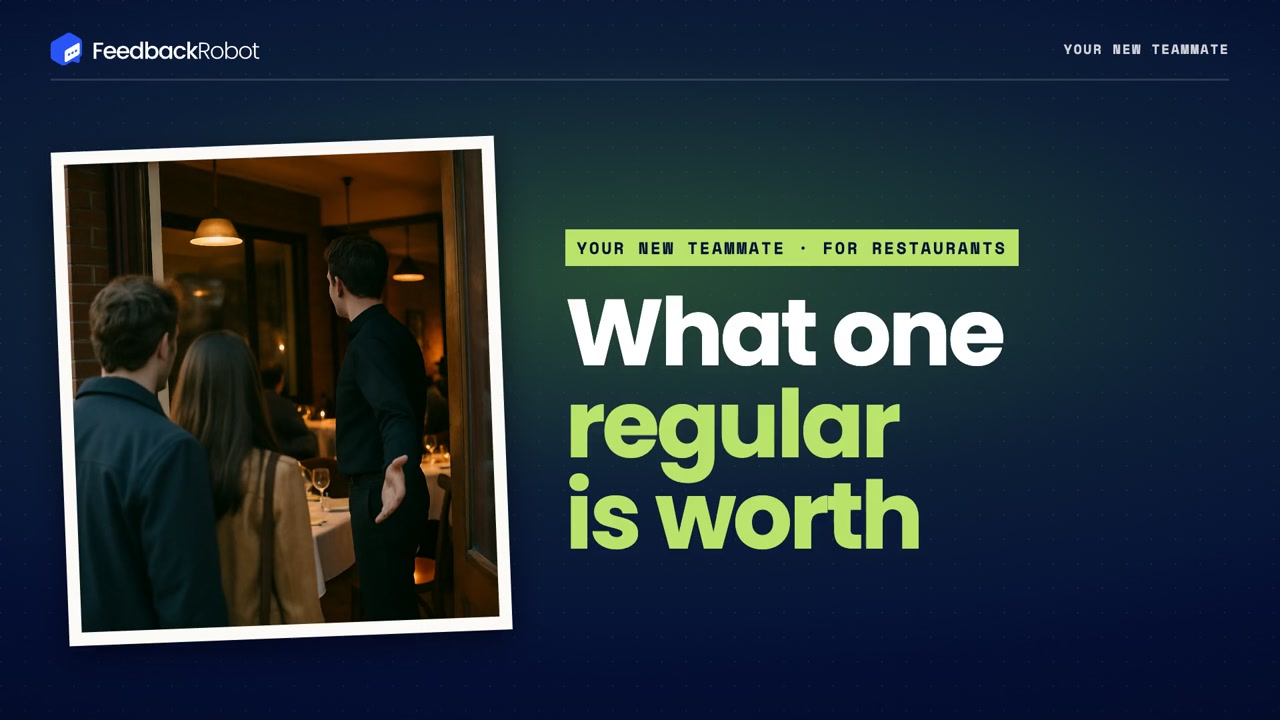
What one regular is worth
 0:50
0:50
7 · Why it pays
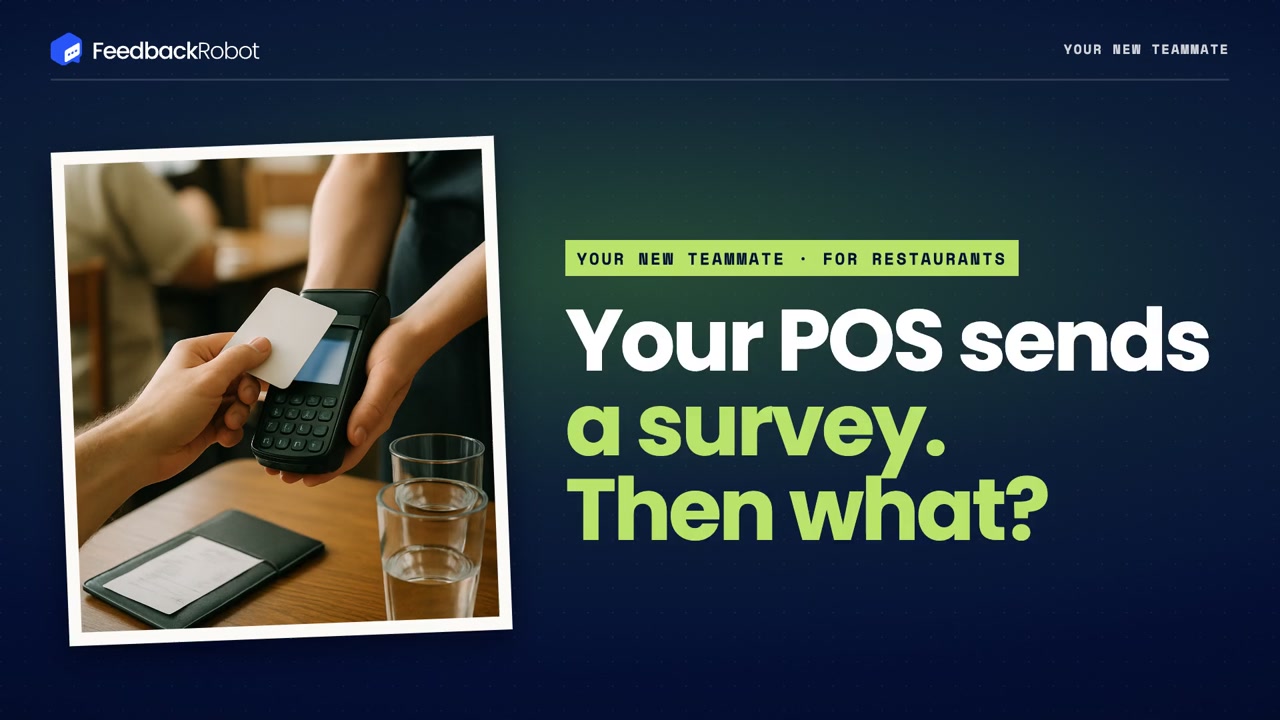
Your POS sends a survey. Then what?
 0:55
0:55
8 · Why it pays
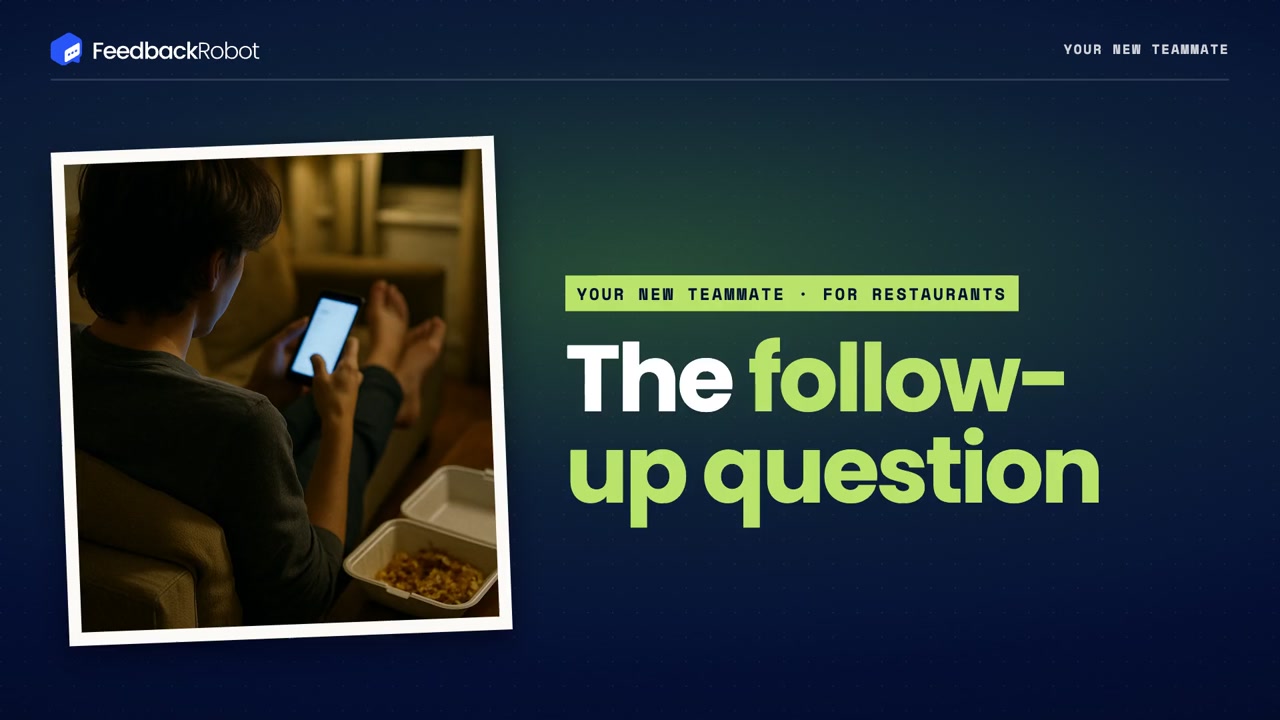
The follow-up question
 0:55
0:55
9 · Why it pays
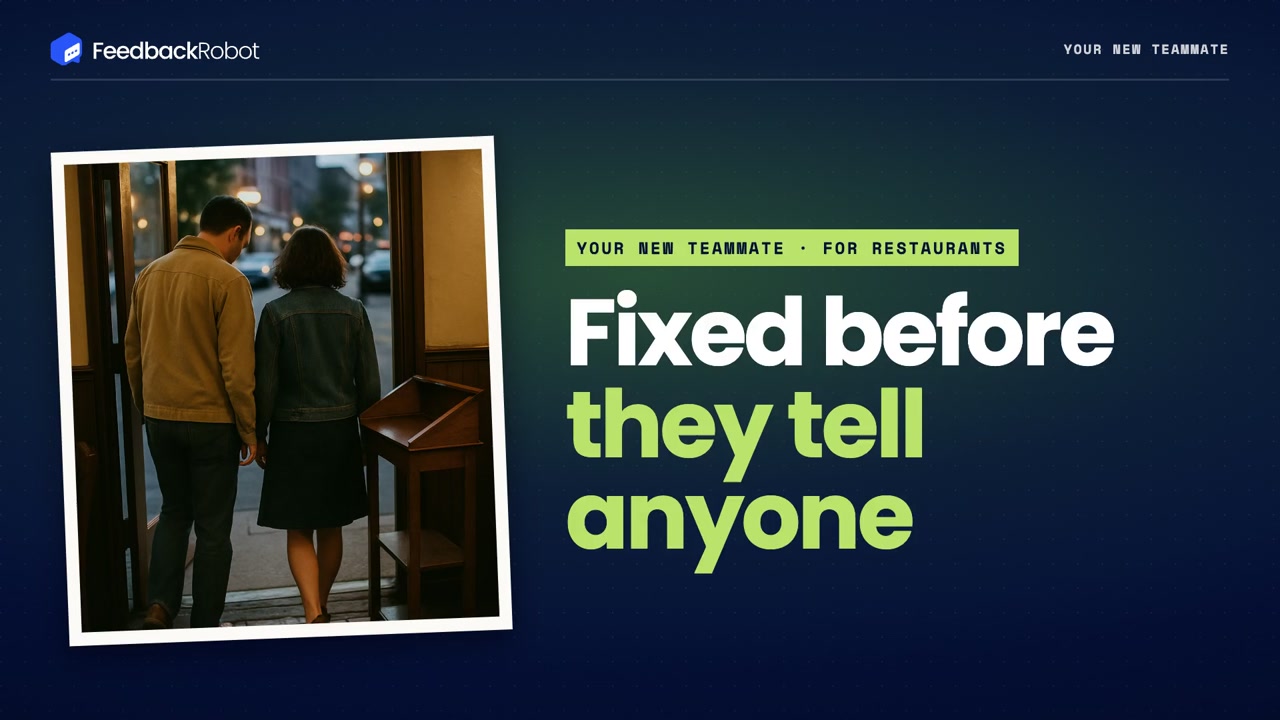
Fixed before they tell anyone
 0:54
0:54
10 · Why it pays
A happy guest becomes a review
 0:54
0:54
11 · Why it pays
What a month of answers tells you
Free tools for Food & Beverages
Free tool
AI Survey Generator
Describe what you want to learn and get a ready-to-send survey in seconds.
Free tool
AI Negative Review Responder
Turn 1-star reviews into recovery opportunities with AI-crafted responses.
Free tool
AI Review Answer Generator
Paste any review and get a professional, empathetic reply drafted instantly.
Free tool
Review QR Code Flyer Generator
Generate a print-ready QR code flyer that sends customers straight to your review page.
Free tool
Business Reputation Calculator
Get an instant score of your online reputation across all major review platforms.
Free tool
Review-to-Social Image Generator
Transform your best reviews into designed social posts ready to publish.
Free tool
Likert Scale Generator
Generate custom rating scales and survey questions tailored to your feedback needs.
Frequently asked questions
Which review platforms matter most for food and beverage businesses?
Google and Yelp drive the large majority of decisions for where to eat, with Google mattering more for search visibility and Yelp carrying particular weight in dense urban markets where diners actively compare nearby options. TripAdvisor matters more in tourist-heavy locations where visitors are choosing unfamiliar restaurants.
How do food and beverage businesses collect diner feedback automatically?
A short survey fires within an hour of the bill being paid, ideally triggered directly from the POS system when a check closes, rather than relying on a server to hand out a card. That timing window is short because the specific details of a meal fade into a generic impression quickly.
How quickly should a restaurant respond to reviews?
Within 24 hours. Restaurant review profiles get checked frequently by repeat and new customers alike, and a pattern of fast responses, especially to negative reviews, signals that management is paying attention to feedback in near real time.
What star rating should a restaurant aim for?
Above 4.2 is where foot traffic starts increasing measurably, and a one-star increase in average rating has been linked to a 5 to 9 percent revenue lift in published research. Below 4.0, diners comparing options nearby will typically scroll past without reading further.
Can a restaurant automate review requests without seeming pushy?
Yes, especially when the request references the specific visit rather than reading as generic. A message sent shortly after a meal, mentioning the actual dish or occasion, feels like a natural close to the experience rather than a sales ask.