Beyond "Fine": Using AI to Decode the Emotional Experience in Your Customer Feedback
AI prompts reading between lines consumer feedback emotional experience.

Mar 24, 2026 · 18 min read
Free tool
Review Sentiment Analyzer
Paste your reviews or survey responses and get an instant sentiment breakdown with themes.
Using AI prompts to read between the lines of consumer feedback isn't just a tech trend—it’s how you uncover the emotional experience your customers are really having. As a busy hospitality owner, you know the difference between a guest saying their meal was "fine" and seeing the genuine delight that guarantees they’ll be back. This guide will show you how to turn those vague comments into actionable intelligence, so you can collect smarter, act faster, and grow stronger.
Why Reading Between The Lines Is Your New Superpower
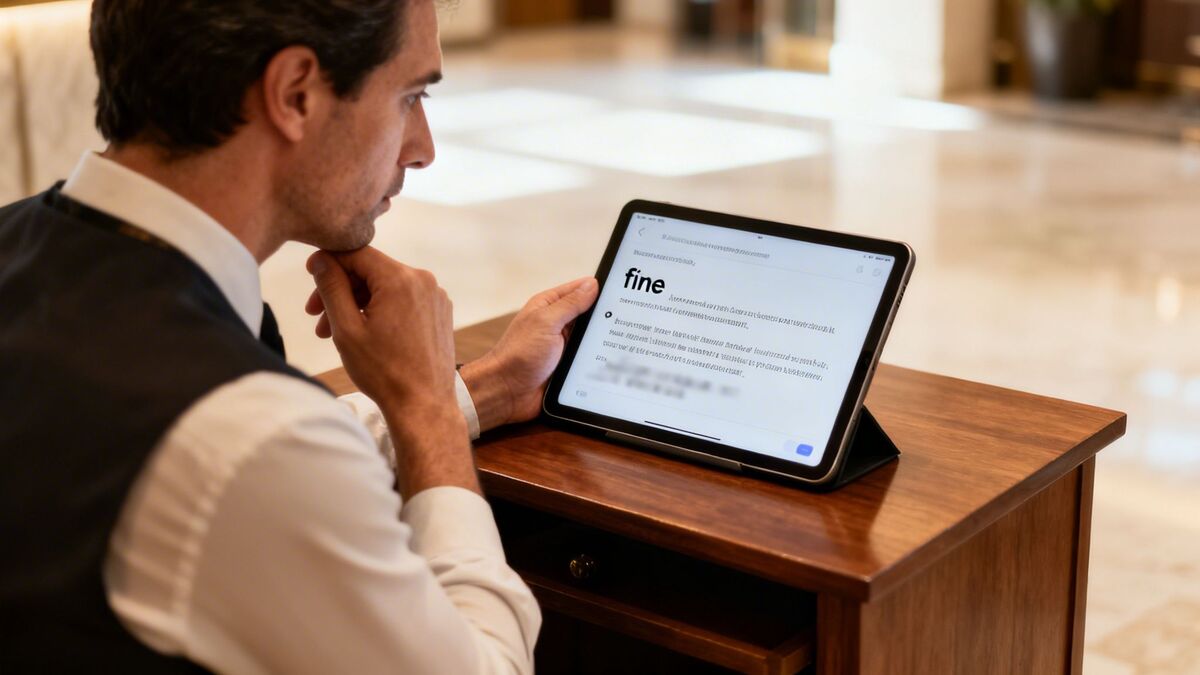
You're already an expert at reading a room. You can spot a happy couple on an anniversary dinner or a tired traveler who just wants to get to their room. But what happens when that feedback is digital, stripped of all the human cues you rely on?
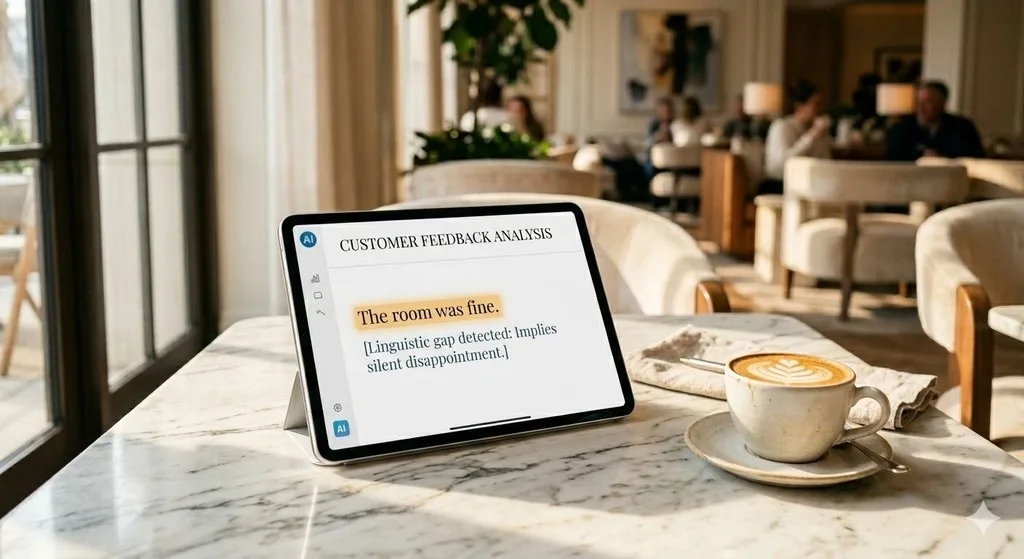
A single word like "fine" in a review can be a ticking time bomb. It rarely means genuine satisfaction. More often, it’s a sign of quiet disappointment—the kind that leads to a customer simply disappearing. The numbers are stark: studies show 96% of unhappy customers never complain directly, and 91% of them just leave for good. That's a massive, silent churn that can kill your business.
This is exactly why learning to interpret the unspoken emotional experience is a game-changer. It's no longer enough to just collect feedback; you have to understand what your customers are trying to tell you without saying it.
Decoding the Real Customer Story
Think about these common scenarios. Do any of them sound familiar?
The Restaurant Guest: A diner leaves a review saying, "The service was quick." On the surface, that sounds great. But an AI trained to spot emotional nuances would flag the absence of words like "friendly" or "attentive," suggesting the experience felt transactional and rushed, not warm and welcoming.
The Hotel Guest: A guest review mentions, "The room had a nice view." While that’s a positive note, the AI notices they didn’t say a word about cleanliness, the comfort of the bed, or the staff. Those omissions often point to underlying problems the guest was too polite—or too tired—to spell out.
The Retail Shopper: A customer comments, "The checkout process took a while." This seems like a mild complaint. But an AI can pick up on the underlying friction and frustration, which, when it happens repeatedly, is a leading cause of cart abandonment.
In every case, the most important part of the story is hidden between the lines. Trying to manually decipher this subtext across hundreds of reviews is impossible when you’re also trying to run your business.
For a busy owner, AI isn't just another tool; it's a translator. It converts the subtle, unspoken signals in customer feedback into clear, actionable directives that protect your reputation and revenue.
How a Feedback Operating System Helps
This is where a Feedback Operating System like FeedbackRobot changes everything, helping you collect smarter, act faster, and grow stronger. It’s designed to operationalize the entire process of understanding your customers' emotional experiences.
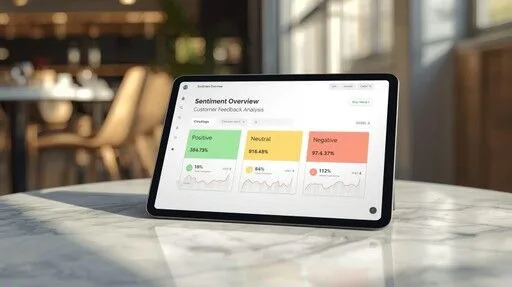
Instead of just guessing, you get a clear, consolidated picture. For example, our Radar feature gives you unified review intelligence by pulling all your feedback from every platform—Google, Yelp, TripAdvisor, you name it—into a single dashboard. It doesn't just show you star ratings; it highlights the emotional currents running through your reviews.
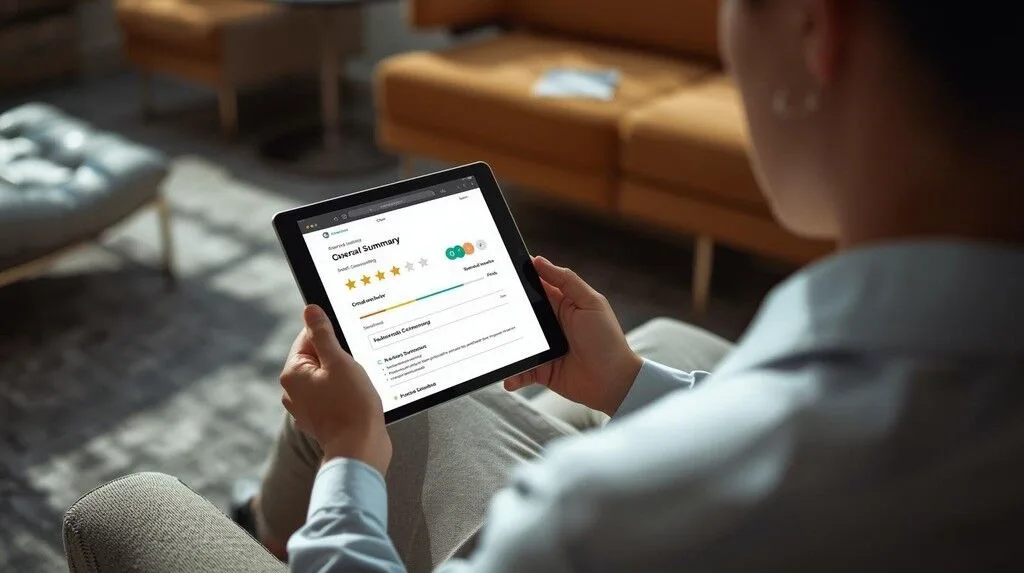
From there, AI Summaries deliver instant insights & sentiment analysis. The system can digest dozens of comments and tell you that "service" is a recurring pain point, with customers often feeling "rushed" during peak hours. This takes you from a vague feeling that something is off to a specific, solvable problem.
Ultimately, understanding the emotional layer of customer feedback is about prediction. It helps you see the early warning signs of churn, identify specific staff training opportunities, and even spot the moments of magic you can double down on. This isn't just about avoiding bad reviews—it's about proactively building a business customers love enough to come back to again and again.
Crafting AI Prompts That Uncover Emotional Truths
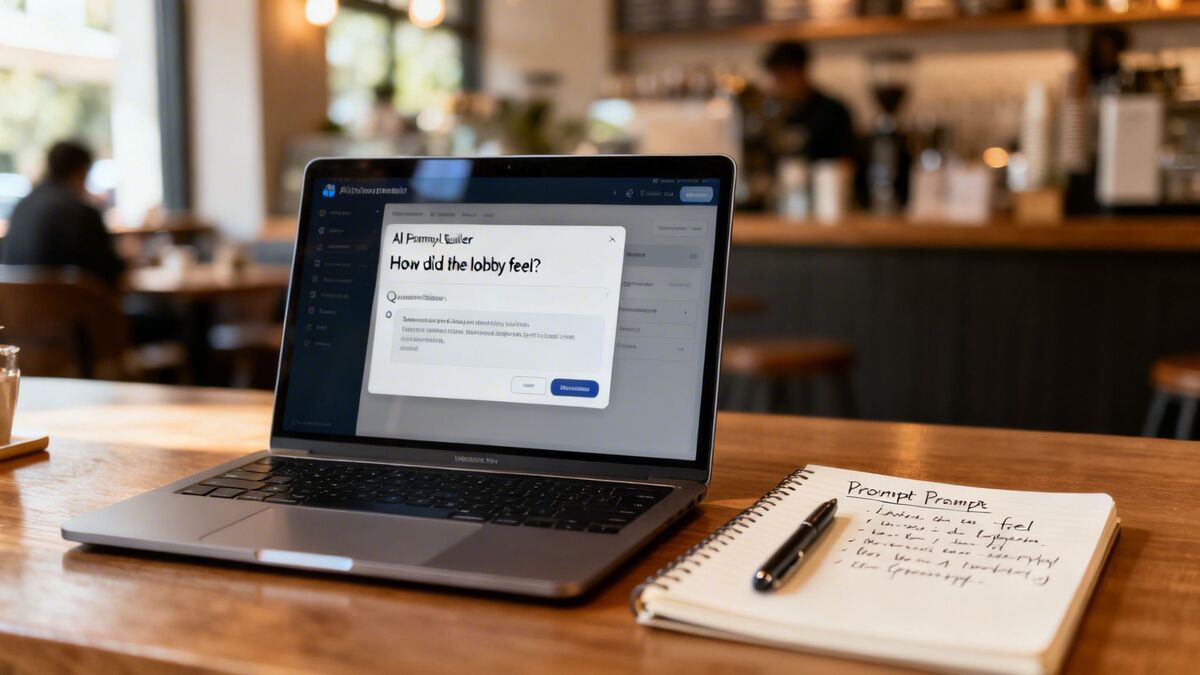
A generic question like, "How was your stay?" almost always gets you a generic answer. To really understand the consumer feedback emotional experience, you have to ask smarter, more specific questions that invite people to share how they actually feel. This is the whole game when it comes to crafting AI prompts for reading between the lines.
Your first step is to move beyond the obvious. Instead of asking about the quality of the food, you could ask what a particular dish reminded them of. Rather than just asking if the room was clean, you might ask how the space made them feel when they first walked in.
These small shifts in how you ask do something powerful: they open the door to richer, more honest feedback. They tell your customer you care about more than the transaction; you care about their personal experience.
From Vague Goals to Smart Surveys Instantly
As a busy owner, you don't have time to wordsmith the perfect survey. You have a goal—"find out how our new menu makes diners feel"—but turning that into an effective questionnaire is a job in itself. This is exactly where AI can step in as a strategic partner, not just a tool.
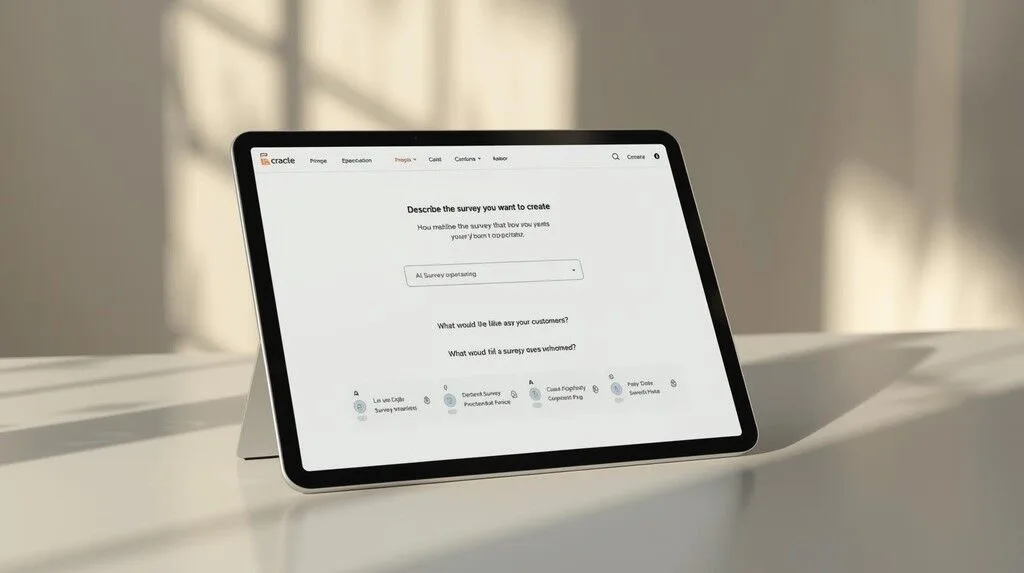
With FeedbackRobot, we've eliminated that tedious process. Our Prompt to Survey feature is purpose-built to translate your simple business goals into a powerful, ready-to-send survey.
You just type in your objective, and our AI instantly generates a series of questions designed to get to that emotional truth. It skips right past "Was it good?" and gets to questions like:
"Which dish on our new menu created the most memorable moment for you tonight, and why?"
"Describe the overall 'vibe' of our dining room while you were enjoying the new menu."
"If you were to recommend one new item to a friend, what would you say about the feeling it gives you?"
This isn't just about saving time; it's about asking better questions without the guesswork. Prompt to Survey ensures you're not just collecting data, but gathering stories that reveal the true emotional experience of your customers.
Prompt Patterns That Dig Deeper
To really get to the heart of customer sentiment, you need to use a few different prompt styles. Sticking to one type of question leads to repetitive, uninspired answers. For anyone looking to master this, an ultimate ChatGPT prompt cheat sheet offers some great practical examples that can sharpen your AI prompts.
Here are three powerful patterns you can adapt for your business right away:
Situational Prompts: Ask about a specific moment. For a hotel, this could be, "Thinking back to when you first checked in, how did our front desk team make you feel?" This zooms in on a single touchpoint.
Open-Ended Emotional Prompts: Use words that directly invite emotional reflection. A retail store might ask, "What was the most frustrating part of your shopping trip today?" This gives customers permission to be candid about friction points.
Reflective Prompts: Encourage customers to think about the big picture. For a cafe, a great reflective prompt is, "When you think about the atmosphere in our cafe, what one word comes to mind?"
Mixing up your question styles helps you create a more complete picture of the customer journey. You can learn more about how our AI survey generator helps with this process.
Recent findings show that 67% of consumers believe AI needs traits like empathy and creativity to be effective. That's why our system is designed to help you communicate with a more human touch. Using these prompt styles helps you collect smarter feedback, which is always the first step to acting faster and growing your business.
How AI Decodes Sentiment And Implicit Feedback
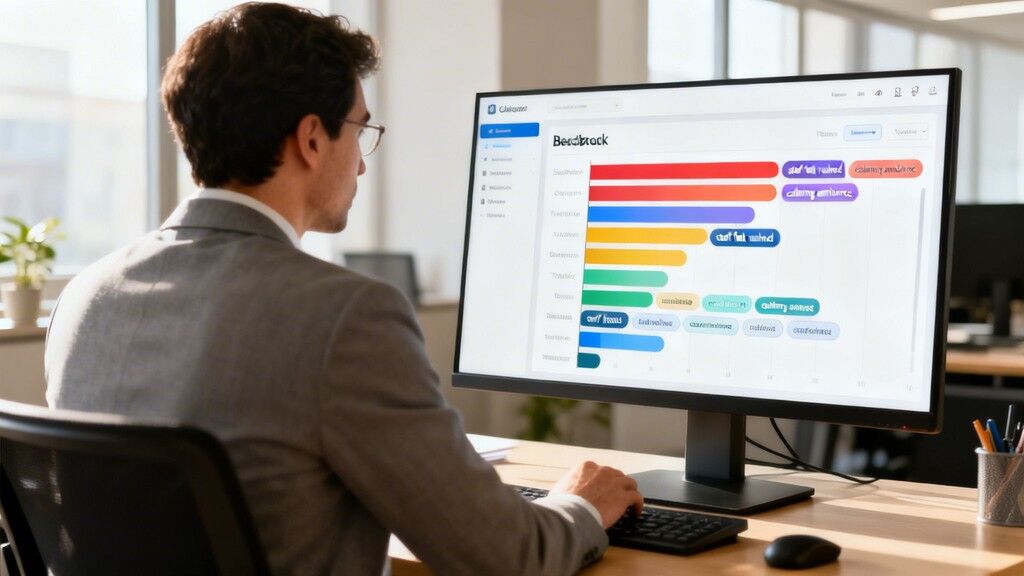
You’ve done the hard work of asking the right questions and collecting feedback. But now what? The real magic happens when you turn all those raw comments into actual business intelligence. This is where AI truly shines, decoding the consumer feedback emotional experience that’s hidden between the lines.
So, how does it actually pull this off? An AI doesn't just "read" the words you see. It analyzes the relationships between them. It’s been trained on millions of examples of human language, so it recognizes the subtle patterns, sarcasm, and indirect phrasing that give away how someone really feels.
For instance, it knows that "The waiter was...efficient" carries a very different emotional weight than "The waiter was warm and efficient." This ability to grasp context is what separates modern sentiment analysis from the old-school positive/negative/neutral labels.
From Vague Comments to Clear Actions
Customers often don’t spell out their feelings directly. They use vague language that’s full of unspoken emotion. Your team is left guessing what “The ambiance was fine” or “Service was okay” really means.
AI bridges this gap by translating those ambiguous comments into specific, actionable insights. It identifies the underlying emotion and connects it to a concrete operational area, turning guesswork into a clear to-do list for your team.
Here's a look at how this works in practice:
Translating Vague Feedback Into Actionable Insights
Vague Customer Comment | The Unspoken Emotional Experience | AI-Driven Insight from Summaries | Actionable Next Step |
|---|---|---|---|
"The room was fine, I guess." | Underwhelmed, disappointment, unmet expectations. | "AI Summaries show guest sentiment for 'room decor' and 'amenities' is trending neutral-to-negative, suggesting a lack of 'wow' factor." | Review room photos and descriptions online to ensure they align with the actual experience. Flag for a potential refresh. |
"Our server was pretty busy." | Frustration, neglect, feeling rushed. | "AI Summaries highlight multiple reviews mention 'slow service' and 'staff seemed overwhelmed' during peak dinner hours on weekends." | Schedule one additional server for Friday and Saturday evening shifts and monitor feedback for improvement. |
"The check-in process took a while." | Impatience, anxiety, a poor first impression. | "AI Summaries show a 15% increase in mentions of 'long wait' and 'front desk queue' over the past month." | Implement a mobile check-in option or add a dedicated staff member to manage the line during peak arrival times. |
"The new menu is interesting." | Hesitation, confusion, or mild curiosity—not excitement. | "AI Summaries show feedback on the 'new menu' is mixed. 40% of comments are positive, but 30% express confusion over item descriptions." | Add more descriptive language or photos to the menu. Ask servers to highlight and explain the new dishes to guests. |
This translation is what makes AI so powerful. It gives your team the "why" behind the feedback, so they know exactly what to fix.
From Keywords to True Emotional Understanding
Older systems relied on simple keyword spotting. If a review said "dirty," it was marked negative. If it had "great," it was positive. But we all know human language is far more nuanced than that, which is where today's AI models really pull ahead.
An AI doesn't just see the word "wait"; it analyzes the full context. "The wait for a table was worth it for the incredible food" carries a completely different feeling than "The endless wait for our food ruined the entire evening." The AI gets this distinction, capturing shades of intent that a keyword search would miss entirely.
If you want to go deeper on this, we have a whole guide on what customer sentiment analysis really is.
This process, known as Natural Language Understanding (NLU), allows the AI to categorize feedback with incredible accuracy. It figures out the true topic of the comment (service speed, food quality, room cleanliness) and the specific emotion tied to it (frustration, delight, disappointment).
Your Brand’s Emotional Health at a Glance
Getting insights from individual reviews is one thing, but seeing the complete picture is what drives real growth. That’s exactly why we built Radar, our unified review intelligence dashboard. Think of it as the command center for your brand's emotional pulse.
Radar pulls in all your feedback from every single channel—public sites via our Toast or Mews integrations, private surveys, QR code comments—and puts it all in one clean, visual dashboard. It takes the detailed analysis and plots it over time so you can see trends as they emerge.
This single-pane-of-glass view lets you:
Spot a downward trend in 'staff friendliness' at one location before it tanks your star rating.
See how a menu change is being received across Google, Yelp, and your own feedback forms at the same time.
Compare the emotional sentiment of your hotel's weekend guests versus your weekday business travelers.
By bringing all this intelligence together, Radar gives you a 360-degree view of your customer's emotional experience. You stop reacting to isolated complaints and start proactively managing your reputation, making smarter decisions to grow stronger.
Turning Emotional Insights Into Action And Loyalty
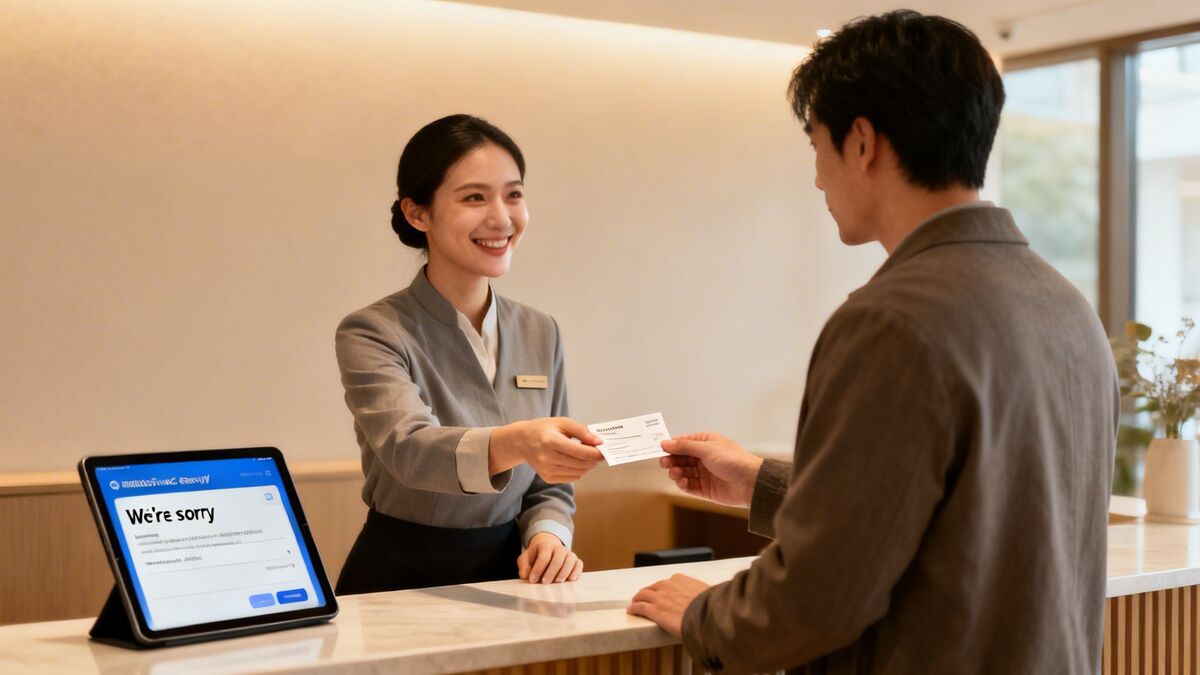
Understanding the emotion in your customer feedback is a massive first step. But insights without action are just interesting data points on a dashboard. The real win comes when you close the loop—turning a potentially bad moment into a business victory that builds unshakable loyalty.
This is all about operationalizing the insights your AI has uncovered. It means creating systems that can respond with genuine empathy and solve problems instantly, often before the customer even knows you’re on it. That’s how you make every single person feel heard and valued.
From Insight to Immediate Resolution
The fastest way to show a customer you care is to fix their problem quickly and thoughtfully. When you're managing a hundred other things, manually tracking every piece of negative feedback and crafting a personal response is next to impossible. This is where automation becomes your most valuable ally.
Imagine your AI system detects strong "frustration" in a review that mentions a "long wait" at check-in. Or it picks up on "disappointment" tied to a cold meal. Instead of that feedback sitting in an inbox for hours, an automated workflow can kick in immediately.
This is the core of modern service recovery. It’s not just about saying sorry; it's about proving you were listening and are committed to making it right, right now. That speed is what turns a one-star experience into a five-star recovery.
The Power of Automated Service Recovery
This is exactly why we built the Resolutions Engine into FeedbackRobot. It’s not just another automation tool; it’s your on-call service recovery specialist, working 24/7. It connects the "what" (the AI insight) with the "what's next" (the immediate, empathetic action).
The Resolutions Engine lets you set up rules that automatically trigger actions based on the sentiment, keywords, or emotions detected in feedback. It acts on intelligence from our AI Summaries and Radar features to ensure no unhappy customer slips through the cracks.
Here’s how you could set it up for a common restaurant scenario:
Define the Trigger: You create a rule that activates whenever feedback contains negative sentiment and specific keywords like "slow service," "long wait," or "forgot our order." You could also layer in a star rating below 3.
Set the Action: When that trigger is met, the Resolutions Engine automatically sends a personalized email. The AI helps craft a message that is both empathetic and brand-aligned, acknowledging the specific issue mentioned.
Offer a Resolution: The email can automatically include a unique discount code for 15% off their next meal or a complimentary dessert. This tangible offer proves you’re serious about winning them back.
This entire process happens in seconds. The customer who left the review gets a sincere apology and a reason to give you another chance before they’ve even decided to complain to their friends. You can see how powerful these small actions are over time in our guides on how to build customer loyalty.
Building Workflows That Create Advocates
The beauty of the Resolutions Engine is its flexibility. You can create workflows for just about any scenario to turn detractors into your biggest fans.
Here are a few more examples from different industries:
For a Hotel: A guest mentions "noisy room" and "poor sleep" with a sentiment of 'annoyance.' The engine can instantly alert the front desk manager to follow up and email the guest an offer for a room upgrade on their next stay.
For a Retail Store: Feedback from a QR code scan at checkout mentions "long line" and "frustration." You can trigger an instant email with an apology and a small online credit.
For a Healthcare Clinic: A patient's post-visit survey indicates they felt "rushed" by their provider. The system can flag their file for a personal follow-up call from the office manager to ensure all their questions were answered.
By automating these responses, you're not being impersonal—you're being incredibly efficient and consistent. You ensure every customer receives the same high level of care, even when your team is at its busiest. This is how you transform the consumer feedback emotional experience from a point of friction into a moment of genuine connection.
Showcasing Your Success To Build Social Proof
You’ve used AI to read between the lines of your customer feedback. You understand the emotional experience, you’re fixing issues faster, and you're making smarter improvements. But the job isn't done. The final step is to close the growth loop by turning those wins into new business.
This is where all that hard work translates directly into new customers. When people are deciding where to spend their money, they're not just scanning star ratings. They’re looking for genuine human experiences—and you now have a treasure trove of them.
Broadcast the Emotional Wins That Attract Customers
Simply put, positive feedback is one of the most powerful marketing assets you own. A review that says, "The staff was incredibly welcoming and made us feel right at home," sells your hotel better than any polished ad ever could. It speaks to the emotional experience a future guest is searching for.
But how do you make sure the right people see these powerful reviews at the right time? You can't just hope a potential customer stumbles upon the perfect comment on Google. You have to take control of the story. Understanding the principles of social proof in marketing is the key to solidifying trust and turning those positive emotions into a magnet for new business.
This means strategically broadcasting the moments of delight you've created. It’s about turning the positive sentiment you’ve earned into a beacon for new customers.
Introducing the Spotlight Feedback Wall
This is exactly why we’re so excited to introduce our newest feature: the Spotlight: Feedback Wall. We built this tool to help you complete that growth loop and effortlessly turn your customer success into your best marketing campaign.
The Spotlight: Feedback Wall is a simple, elegant widget you can install on your website in minutes. It automatically curates and displays your best, most emotionally resonant reviews directly on your site—a live, dynamic stream of social proof that works for you 24/7.
Instead of static, cherry-picked testimonials that can feel dated, the Feedback Wall showcases a real-time feed of authentic praise. It’s the digital equivalent of a bustling, happy restaurant that everyone wants to get into.
This powerful feature plugs right into our Feedback Operating System. It pulls the best comments identified by AI Summaries and validated through Radar, so only the most impactful and authentic feedback gets displayed. This is how you grow stronger, turning your operational wins into a customer acquisition engine.
Turning Authentic Praise Into Bookings and Sales
Imagine a potential guest on your hotel's booking page, hesitating. Just as they're about to click away, they see a real-time feed of comments from other guests:
"The relaxing atmosphere was exactly what we needed."
"I've never felt so welcomed. The front desk team are superstars!"
"The perfect quiet getaway. We'll be back for sure."
This is social proof in its most powerful form. It isn’t just a five-star rating; it’s a window into the genuine emotional experience you deliver. It gives a customer the confidence to choose you over a competitor, directly boosting conversions and driving revenue.
The Spotlight: Feedback Wall is more than a marketing tool. It’s a testament to your commitment to customer happiness. It tells the world that you don't just collect feedback—you listen, you act, and you consistently create experiences worth talking about. It’s the ultimate way to show off your success and attract your next wave of loyal customers.
Your Questions, Answered
If you're a busy owner in hospitality or services, you've probably got questions about using AI to really get inside the emotional experience of your guests. Let's tackle some of the most common ones we hear.
Can AI Really Understand Emotion in Text?
Yes, and it's surprisingly good at it. Modern AI doesn't just look for "happy" or "sad" keywords. It's trained to analyze sentence structure, word choice, and the context between words to pick up on sarcasm, frustration, delight, or disappointment.
For instance, AI knows the difference between "The service was... fast" and "The service was fast and friendly." The first one hints at a cold, transactional experience, while the second signals real satisfaction. It’s these small but critical details that the AI is built to catch.
Will Using AI Make My Business Seem Impersonal?
It's actually the other way around. When you use AI the right way, it lets you be more personal, not less. By taking over the heavy lifting of sifting through data, AI frees up your team to focus on the human side of service.
Think of it like this: FeedbackRobot's Resolutions Engine acts as your instant service recovery assistant. When it spots a frustrated customer, it can automatically trigger a personalized apology and a recovery offer. That immediate action shows you're listening—a deeply personal touch that's nearly impossible to scale by hand.
How Is This Different from Just Reading My Reviews?
Reading every review is a great habit, but it doesn't scale and our own biases can get in the way. You might obsess over one really angry review and completely miss the ten quietly disappointed ones.
A Feedback Operating System gives you the true, data-backed picture. Our Radar feature provides unified review intelligence, pulling all your feedback from every channel (like Mews or Toast) into a single, clear dashboard. You can instantly see if "slow check-in" is a one-off complaint or a growing trend that needs your full attention. This is about seeing the whole forest, not just a few trees.
What if the AI Gets It Wrong?
No system is 100% perfect, but the accuracy is incredibly high and always improving. The real win here is efficiency. An AI can analyze a thousand reviews in the time it takes you to read five, flagging the most urgent feedback that needs a human response.
FeedbackRobot’s AI Summaries are designed for exactly this. They deliver instant insights & sentiment analysis by bubbling up the most important themes. If the AI highlights a trend around "uncomfortable beds," you can click straight into those specific reviews to get the full human story. It just points your attention where it’s needed most.
AI is changing the game for businesses like hotels and restaurants. Projections show that by 2026, 95% of customer interactions will involve AI, letting platforms like FeedbackRobot analyze sentiment in real-time across surveys, reviews, and chats. You can discover more insights about the growing role of AI in customer support.
Is It Complicated to Set Up?
Not at all. Modern AI tools are built for busy owners, not IT wizards. With FeedbackRobot, our Prompt to Survey feature lets you turn a simple goal—like "Find out what people think of our new lobby"—into a smart, ready-to-send survey with a single click. You can be collecting smarter feedback and understanding your customers' emotional journey in minutes.
Ready to stop guessing and start growing? With FeedbackRobot, you can collect smarter feedback, act faster on insights, and build a stronger, more resilient business.
Sign up for a Free 14-Day Trial to experience the power of our full Feedback Operating System, or be the first to launch our new Spotlight: Feedback Wall to showcase your best reviews and build powerful social proof.
How can hospitality leaders identify "silent churn" when guests simply label their experience as "fine" or "okay" without lodging a formal complaint?
Statistical evidence suggests that over 90% of dissatisfied guests never voice their concerns directly; they simply exit the brand ecosystem. AI bridges this visibility gap by analyzing linguistic omissions—noting what a guest did not say. If a review highlights a "nice view" but ignores cleanliness or staff interaction, the system flags this as a high-risk neutral sentiment. This allows management to intervene with targeted service refinements before a guest's quiet disappointment turns into permanent churn.
Is there a risk that automated service recovery, such as the Resolutions Engine, might feel impersonal to a guest who is already frustrated?
Modern service recovery relies on speed and relevance rather than generic templates. The Resolutions Engine utilizes Natural Language Understanding (NLU) to categorize the specific root cause—be it a "cold meal" or a "slow check-in"—and triggers an empathetic response that acknowledges that exact pain point. By delivering a personalized apology and a tangible remedy, such as a discount or upgrade, within seconds of the feedback submission, you demonstrate a level of attentiveness that manual processes cannot match during peak operational hours.
How does a "Feedback Operating System" like Radar provide a more accurate sentiment analysis than traditional keyword-based tracking?
Keyword tracking is fundamentally flawed because it ignores context; it cannot distinguish between "the wait was worth it" and "the wait ruined the night." Radar moves beyond binary labels by analyzing the relational dynamics between words. It synthesizes data from disparate channels—including TripAdvisor, Google, and internal QR codes—to map emotional currents across the entire customer journey. This provides a 360-degree view of your brand’s emotional health, allowing you to spot micro-trends in staff friendliness or facility standards before they impact your aggregate star rating.
When using the 'Prompt to Survey' feature, why is it necessary to ask about "vibes" or "memorable moments" instead of standard quality metrics?
Standard metrics like "rate the food 1-10" yield transactional data that lacks psychological depth. To unlock true emotional intelligence, prompts must be designed to elicit narrative responses. Asking a guest how a space made them feel upon entry, or what a specific dish reminded them of, forces a shift from objective assessment to subjective experience. These "reflective" and "situational" prompts provide the AI with the rich, descriptive text required to decode the underlying emotional truth of the visit.
How does the Spotlight: Feedback Wall integrate with the broader goal of operationalizing customer feedback?
The Feedback Wall completes the "growth loop" by transforming internal operational successes into external marketing assets. Rather than displaying static, hand-picked testimonials that savvy consumers often distrust, the Spotlight widget curates a dynamic feed of AI-validated "emotional wins." By broadcasting authentic, real-time praise that highlights specific moments of delight—identified through the Radar and AI Summary features—you leverage social proof to build immediate trust with prospective clients navigating your booking or checkout pages.
Stop reading about it. Let your agent handle it.
25 free AI actions · no credit card required
Start Free