
Guide
Boost Conversions: Landing Page with Testimonials
Master the art of a high-converting landing page with testimonials. Our 2026 guide covers design, placement, & automation for hospitality & service businesses.

Apr 14, 2026 · 11 min read
Free tool
Review-to-Social Image Generator
Transform your best reviews into designed social posts ready to publish.
A lot of landing pages fail at the exact moment they need to win.
A guest clicks your ad for direct booking. A diner lands on your catering page. A clinic prospect opens your treatment page after searching for options. They read the headline, skim the photos, glance at the form, and then stall. The problem usually isn’t traffic. It’s trust.
That’s why a landing page with testimonials works so well when it’s built properly. Good copy makes a claim. Customer proof makes that claim believable. For busy operators, that difference shows up in more bookings, more inquiries, and fewer abandoned visits.
Why Your Landing Page Needs More Than Just Good Copy
Most landing pages say roughly the same things.
They promise better service, easier booking, faster setup, or a better guest experience. The trouble is that your competitor says the same thing. Visitors know that. They’ve seen polished marketing before.
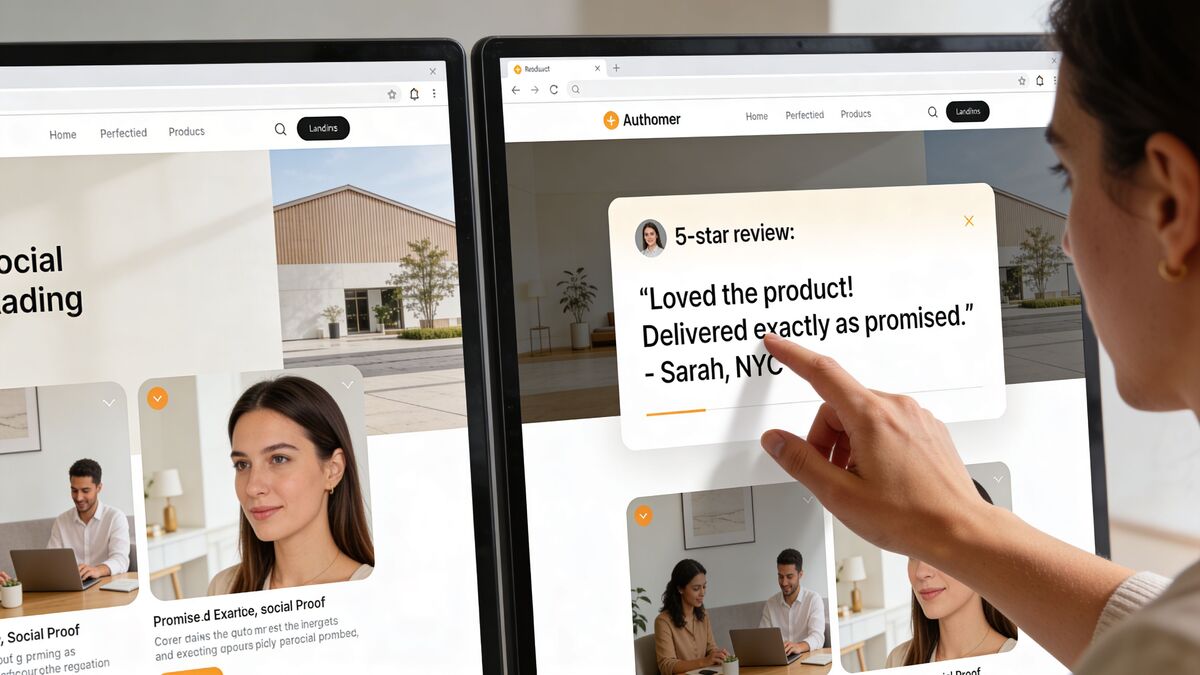
Proof changes the conversation
A testimonial does one job your headline can’t do on its own. It answers the silent objection in the visitor’s head.
They’re asking:
Is this place reliable
Will this be worth the price
Has someone like me had a good experience
Can I trust what this page is promising
That’s why testimonials aren’t decoration. They’re conversion infrastructure.
According to Muffin Group’s healthcare landing page analysis, 90% of people consult online reviews when evaluating providers, and 63% of customers are swayed by positive reviews. Those numbers come from healthcare, but the buying behavior is familiar to any hotel, restaurant, spa, or service business owner. People want reassurance before they commit.
Practical rule: If your page asks for a booking, demo, reservation, or deposit, it needs visible proof from real customers.
While testimonials build trust, a comprehensive approach to managing customer feedback across all channels is crucial for sustained growth. Exploring top-tier platforms can streamline this process, ensuring you harness every piece of customer insight. Discover how to elevate your strategy by learning about the best customer review platforms for retail.
What happens when testimonials are missing
A landing page without testimonials feels unfinished. The design may be clean. The offer may be strong. But the page still asks the visitor to take your word for it.
That creates friction in three ways:
Visitor concern | What copy says | What testimonials do |
|---|---|---|
Credibility | “We deliver excellent service” | Show a real customer saying what happened |
Risk | “Booking is simple” | Confirm the process was smooth |
Relevance | “We help businesses like yours” | Let a peer explain why it worked |
For hospitality brands, this matters even more because your product is partly emotional. A room, a meal, an event package, or a wellness service all carry uncertainty before purchase. Social proof reduces that uncertainty fast.
Good design still matters
Testimonials won’t rescue a messy page. If your layout is cluttered, your mobile experience is poor, or your CTA gets buried, visitors still won’t convert. If you’re reviewing structure and layout at the same time, these best practices for landing page design are a useful reference.
A better way to think about it is simple. Copy attracts attention. Design guides attention. Testimonials remove hesitation.
That’s how you collect smarter signals from customers, act faster on what builds trust, and grow stronger from proof you’ve already earned.
Choosing the Right Testimonial Formats and Content
Not all testimonials help.
“Great service” is pleasant, but it’s weak. It doesn’t tell the next visitor what happened, who it helped, or why they should care. Strong testimonials are specific enough to reduce doubt.
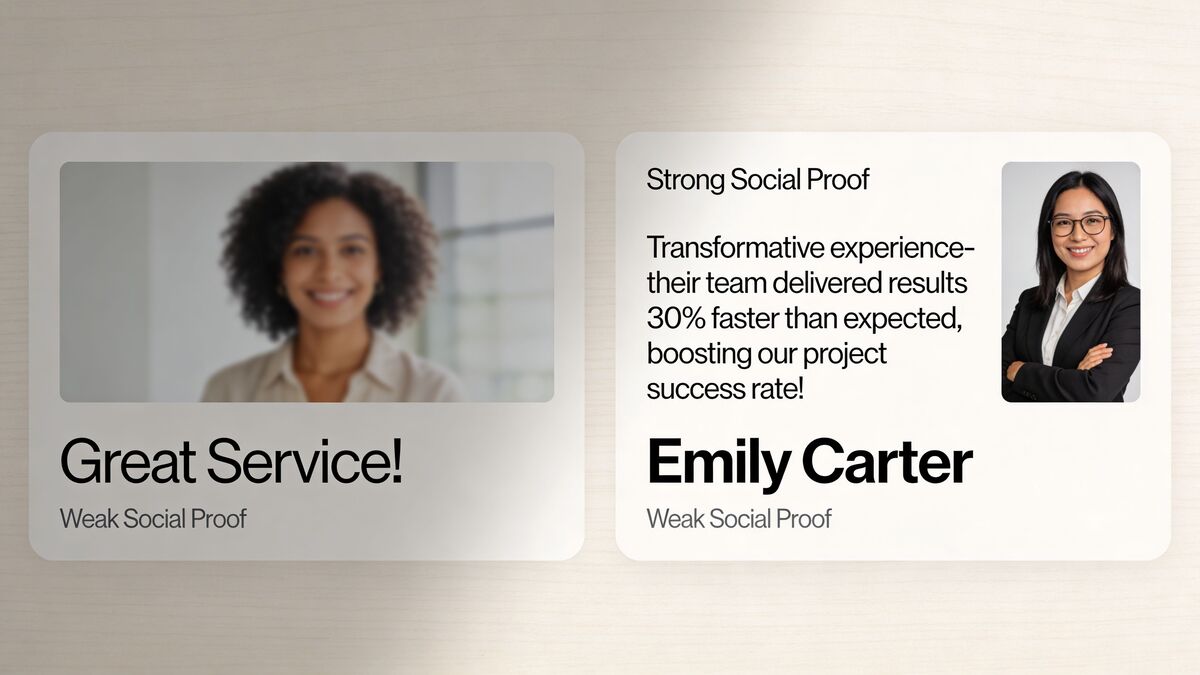
What strong testimonials actually say
The most useful testimonial usually contains three things:
The situation before
The experience during
The result after
That structure works because it answers the question buyers care about most: will this work for someone like me?
Boast reports that adding just three lines of testimonials can increase conversions by 34%, and for high-priced items that increase can reach 380%. The same source also makes the most important point: the strongest testimonials answer, “Has someone like me succeeded?”
A hotel owner should read a review from another property operator. A restaurant customer should see a review that mentions online ordering, speed, or event catering. A clinic patient should see a story tied to the service page they’re on.
Which formats work best
Different formats fit different buying decisions.
Short text quotes: Good near CTAs, forms, and booking buttons. Fast to scan.
Headshot plus quote: Better when trust is the main issue. The face makes the proof feel real.
Star ratings with review snippets: Useful when visitors already know your brand and need a quick confidence boost.
Short video clips: Strong for higher-consideration offers such as group bookings, venue hire, or treatment plans.
Logo plus quote: Helpful for B2B hospitality vendors, agencies, or service firms.
A practical mix often beats a single format.
A short quote near the button gets the click. A deeper testimonial lower on the page justifies the decision.
How to collect better raw material
You don’t get strong testimonials by waiting and hoping people write them perfectly on their own. You get them by asking better follow-up questions right after a positive experience.
That’s where Prompt to Survey matters. It helps teams send targeted survey prompts after a stay, meal, appointment, or resolved issue. Instead of “How was your experience?” you ask focused questions like:
What nearly stopped you from booking with us
What did our team do especially well
What felt easier than you expected
What would you tell someone considering us
Those questions produce useful copy.
Then AI Summaries turns a pile of responses into something a busy operator can use. It surfaces recurring themes, highlights sentiment, and pulls out phrases worth testing on the page. That saves hours of manual sorting.
If you want a page structure to work from, this testimonial landing page template is a practical starting point.
Strategic Placement for Maximum Conversion Impact
Placement decides whether testimonials help or disappear.
I’ve seen operators add good reviews to the very bottom of a page, below the footer-style clutter, where almost nobody sees them. That’s wasted proof. A strong testimonial should appear where the visitor feels the most uncertainty.
Put proof where doubt is highest
The highest-value placements are usually tied to moments of decision.
According to Testimonial.to’s landing page guidance, placing social proof near calls-to-action can lift conversion rates by 20-50%, especially for colder traffic. The same source notes that adding client logos can boost trust by 15%, and recommends keeping quotes under 50 words for scannability.
For a hospitality or service landing page, that usually means three zones matter most:
Page area | Best use | Example |
|---|---|---|
Hero section | Immediate reassurance | “Booked in minutes and check-in was seamless” |
Beside CTA | Last-second confidence | “We chose this caterer for our event and would book again” |
Under pricing or packages | Price justification | “Worth it because the team handled everything” |
Match the proof to the offer
Context matters more than volume.
If you run a restaurant using Toast, the testimonial near your ordering or catering CTA should mention speed, order accuracy, or ease of pickup. If you run a hotel using Mews, the review near your booking CTA should talk about a smooth reservation flow, check-in, or guest communication.
That kind of message match feels natural. It tells the visitor, “Someone came here with the same concern you have now, and it worked out.”
Keep the layout easy to scan
Testimonials fail when they look like filler.
Use these rules:
Keep it short: One tight quote usually performs better than a paragraph.
Add identity: Name, role, business type, or location helps if privacy allows.
Use spacing well: Don’t cram a carousel into an already busy section.
Support mobile reading: Stacked cards usually beat tiny multi-column grids on phones.
If you’re building or rebuilding the page in WordPress, OneNine’s guide on how to build high-converting landing pages with WordPress is useful for thinking through page flow and conversion structure.
For operators who also want to extend the same proof beyond the landing page, this guide on how to share reviews on social media helps connect on-page trust with off-page visibility.
Automate Your Social Proof with a Live Testimonial Wall
Manual testimonial management gets stale fast.
Someone on your team copies a few Google reviews into the website. A month passes. Then another. Soon your “recent feedback” is old, your strongest new reviews are stuck on third-party platforms, and your landing page no longer reflects what customers are saying right now.
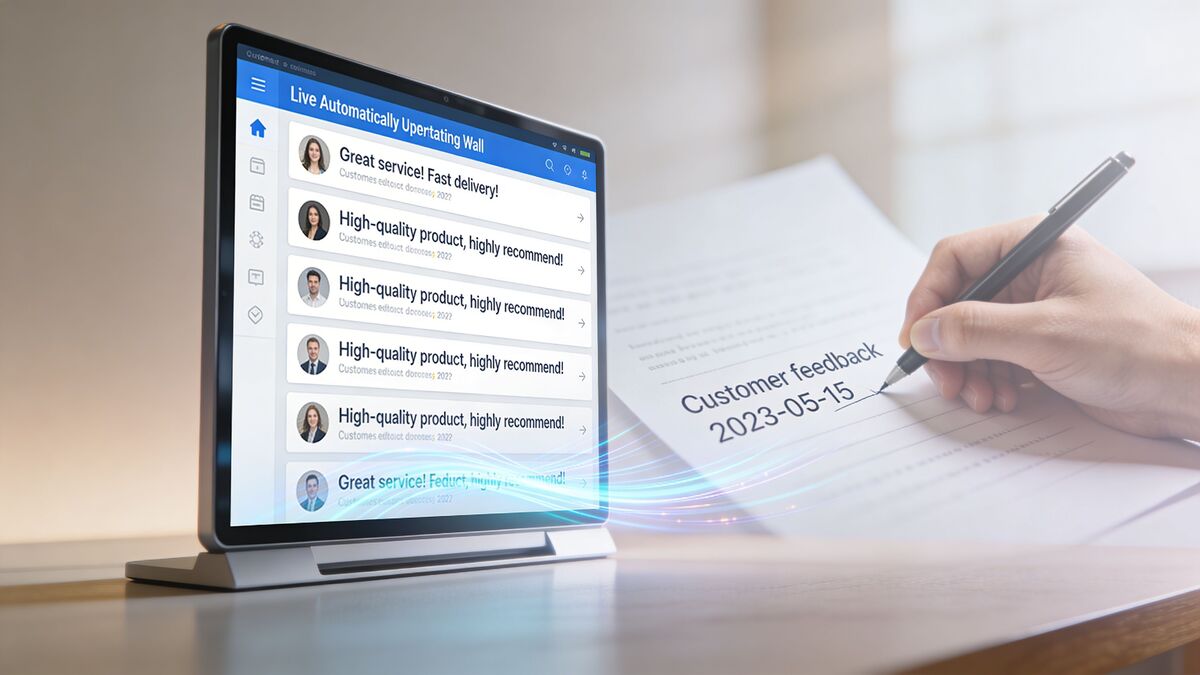
Static testimonials create avoidable work
The old process is familiar:
copy a review
trim it for length
paste it into the page builder
repeat when someone remembers
That workflow breaks for multi-location hospitality brands, busy restaurants, and operators who collect reviews across multiple platforms. It also creates a freshness problem. Visitors can tell when a testimonial section looks frozen in time.
The newer approach is automated and ongoing. That matters because, as noted in this review landing page article, the emerging trend for 2026 is the integration of AI-analyzed, real-time testimonials from multi-channel feedback, while many guides still ignore AI’s role in auto-curation.
What an automated setup looks like
A modern landing page with testimonials should work more like a live system than a brochure.
FeedbackRobot Spotlight can crawl your strongest public reviews from across the web, turn them into a self-updating testimonial wall, and let you publish them as sliders, carousels, or embedded sections on your website. That changes the job from manual upkeep to simple oversight.
The supporting pieces matter too:
Radar gives you unified review intelligence across platforms, so you can see what customers are saying in one place.
Prompt to Survey helps generate direct feedback you can use alongside public reviews.
AI Summaries identifies recurring praise and pulls out the strongest themes for display.
Resolutions Engine handles the other side of the equation by triggering service recovery when feedback turns negative.
That’s the feedback operating system in practice. You collect smarter, act faster, and grow stronger without running your testimonial strategy from a spreadsheet.
A live visual example helps more than a description. Watch this in action:
Use the same proof across web and social
The primary advantage isn’t only the landing page. It’s reuse.
A strong review can become:
An embedded carousel on your booking page
A testimonial slider on a service page
A social media graphic for Instagram or LinkedIn
A proof block inside email campaigns
If you want to test that workflow, try the Review Visualizers tool and turn review text into a sample social post. It’s a practical way to see how one customer comment can feed both your landing page testimonial section and your social content.
For more examples of how testimonial-focused pages are structured, this review landing page resource is worth bookmarking.
Personalizing Testimonials for Your Specific Audience
Generic testimonials create generic results.
If every visitor sees the same three quotes, you’re forcing them to do the work of deciding whether those reviews apply to them. Most won’t bother. They’ll move on.
Relevance beats randomness
Some testimonial sections look busy but still feel weak because they show the wrong proof to the wrong person.
A family considering a resort stay wants to know whether kids were comfortable, the check-in was smooth, and the room matched expectations. A business traveler cares more about speed, reliability, and convenience. A catering prospect wants confidence in timing and coordination.
That’s why personalization matters.
According to Vidlo’s analysis of testimonial pages, many guides overlook real-time personalization, even though showing testimonials from similar customers improves relevance and relatability. The core benefit is simple. A visitor sees proof from someone who sounds like them and has the same concern.
Show a restaurant owner a review from another restaurant owner. Show a family traveler a family review. Relevance does the persuading.
Useful ways to segment testimonials
You don’t need complicated technology to start. You need a sensible tagging system.
A practical hospitality setup might sort reviews by:
Audience type: family, couple, solo traveler, business guest, event planner
Use case: direct booking, private dining, catering, spa package, group stay
Pain point: speed, cleanliness, staff friendliness, check-in, communication
Outcome: easy booking, smooth event, repeat visit, fewer issues, better value perception
For service pages, align the testimonial pool with the offer on that page. Don’t place a generic “great team” quote on a page selling wedding catering if you have a review specifically praising event timing and food quality.
Where personalization pays off
Personalization is especially useful on:
Page type | Better testimonial angle |
|---|---|
Hotel booking page | guest type and stay purpose |
Restaurant catering page | event size, timing, food quality |
Clinic service page | treatment-specific outcomes and reassurance |
Demo or contact page | business type and buying concern |
This also helps teams avoid an easy mistake. They often choose their favorite review instead of the most relevant one. Those aren’t always the same thing.
A landing page with testimonials performs better when the quote feels like peer advice, not a trophy case.
Measure Optimize and Act on Your Feedback
A testimonial section shouldn’t be treated as finished once it’s live.
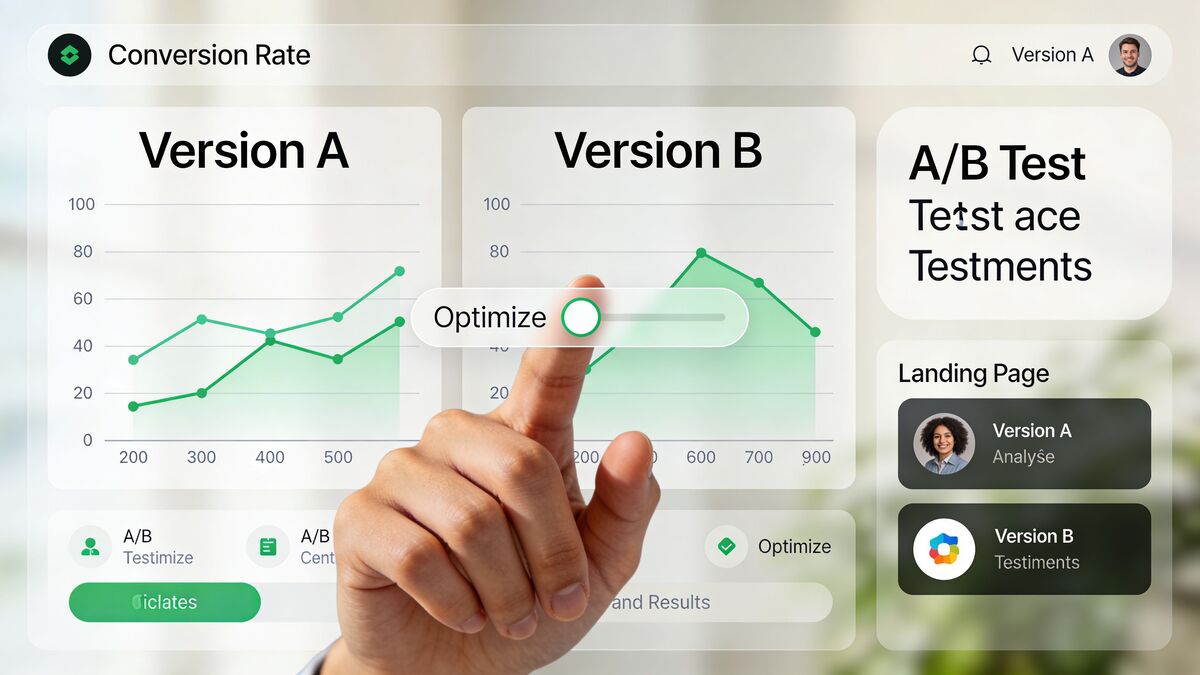
It’s part of the conversion path, which means it should be tested the same way you’d test a headline, image, or CTA button. What matters is not whether the testimonials look nice. What matters is whether they reduce hesitation and move more visitors to act.
What to test first
Start with variables that change visibility and relevance, not cosmetic details.
Test questions like these:
Does a testimonial beside the CTA outperform one lower on the page
Do short quotes beat longer story-style testimonials
Does a review with a photo outperform text alone
Does a service-specific testimonial work better than a general brand review
Track form submissions, booking clicks, reservation starts, and completed inquiries. Tie the testimonial variation to a real action.
Field note: The right testimonial often wins not because it’s more flattering, but because it removes one specific doubt at the exact moment the buyer hesitates.
Use feedback to improve operations too
The smartest teams don’t stop at conversion testing. They use the same feedback stream to improve the business behind the page.
In healthcare, Medfluence Advisors reports that 77% of patients read online reviews before choosing a provider, and one 2022 paid search campaign generated 242 leads for a clinic using landing pages enhanced with patient testimonials. The marketing lesson is clear. Testimonial-led pages can produce measurable return. The operational lesson matters just as much. The comments that help you convert are also telling you what guests, diners, and patients value most.
That’s where the full feedback loop matters:
Radar shows recurring review themes across channels.
AI Summaries turns raw feedback into quick patterns your team can act on.
Resolutions Engine helps automate service recovery when a bad experience needs a fast response.
If positive reviews keep mentioning staff warmth, promote that in your page messaging. If complaints keep mentioning slow check-in or delayed pickup, fix that before pouring more money into traffic.
A high-performing landing page with testimonials is not just a design asset. It’s the visible front end of a stronger operating system.
If you want to turn reviews into a self-updating landing page, social proof widgets, and reusable social content without managing it by hand, try FeedbackRobot. You can launch a live Spotlight Feedback Wall, pull in reviews from across the web, and test the full workflow with a free trial.
How should an operator determine the most effective placement for testimonials on a high-stakes booking or treatment page?
Strategic placement requires identifying "high-friction zones" where a visitor is most likely to hesitate. Instead of burying reviews at the bottom of the page, position proof points exactly where doubt peaks: within the hero section for immediate credibility, directly beside Call-to-Action (CTA) buttons to provide last-second confidence, or under pricing tables to justify the investment. Placing social proof near a CTA can lift conversion rates by up to 50% by resolving the silent objections that occur right before a commitment is made.
What specific structural elements distinguish a high-converting testimonial from a generic "good review"?
Expert-level testimonials move beyond vague praise like "great service" and follow a "Situation-Experience-Result" framework. This structure is effective because it narrates the customer’s journey: the challenge they faced before booking, the specific highlights of their experience during the service, and the tangible outcome they achieved. When a review details how a specific pain point—such as a complex catering setup or a stressful clinic visit—was resolved, it allows prospective clients to see a credible blueprint for their own success.
Why is manual testimonial management considered a significant liability for modern hospitality and healthcare brands?
Relying on a manual "copy-and-paste" workflow creates a "freshness problem" that savvy consumers can easily detect. Static testimonials often look like a curated trophy case frozen in time, which can actually undermine trust if the reviews are months or years old. For multi-location brands, this manual upkeep is also a massive drain on resources. Transitioning to an automated system allows for a live, self-updating testimonial wall that pulls real-time feedback from across the web, ensuring the landing page always reflects the most recent and relevant guest sentiment.
How can a landing page use personalization to increase the relevance of social proof for different visitor segments?
Relevance consistently outperforms volume; a visitor is more likely to convert when they see proof from a peer with identical needs. By utilizing a tagging system, you can segment testimonials by audience type—such as families versus business travelers—or by specific use cases like "event catering" versus "private dining." Implementing this level of detail ensures that a restaurant owner sees reviews from other restaurant owners, or a surgery patient sees outcomes from similar procedures, directly answering the visitor's internal question: "Is this the right fit for someone like me?"
Beyond marketing and conversion, what is the operational value of maintaining a sophisticated feedback loop?
A robust testimonial strategy doubles as a source of business intelligence. By using tools like AI Summaries to analyze recurring themes in positive feedback, leadership can identify and reinforce core brand strengths. Conversely, when the feedback stream is integrated with a Resolutions Engine, it allows for rapid service recovery when negative experiences occur. This creates a closed loop where the customer proof on your landing page isn't just a design asset, but the visible output of a healthy, responsive operating system that constantly refines the guest or patient experience.
Stop reading about it. Let your agent handle it.
25 free AI actions · no credit card required
Start Free