How to Handle a Customer Complaint and Turn Critics into Fans
Learn how to handle a customer complaint with this actionable guide. Transform negative feedback into lasting loyalty with expert tips and real-world examples.

Jan 26, 2026 · 14 min read
Free tool
AI Survey Generator
Describe what you want to learn and get a ready-to-send survey in seconds.
When a customer complaint lands, how you handle it defines your business. The best operators listen intently, take full ownership of the problem, and move fast to make it right. Done well, this process does more than solve one issue—it can turn an unhappy customer into a loyal advocate and give you a window into fixing bigger problems in your operations. It’s how you collect smarter, act faster, and grow stronger.
Why Ignoring Customer Complaints Costs You Money
Let's be blunt: for a busy hospitality or service owner, ignoring a customer complaint isn't just a customer service faux pas. It's a direct hit to your bottom line.
Every piece of negative feedback is a flashing red light on your dashboard. It signals a real risk of losing repeat business and chipping away at the reputation you've worked so hard to build. This isn't just another task on your to-do list; it's about protecting your revenue.

The financial stakes are huge. Businesses in the U.S. hospitality and retail sectors are at risk of losing an incredible $846 billion in sales every year just from poor customer service. Globally, that number jumps to a staggering $3.7 trillion.
That's not some abstract statistic. For a hotel owner, it’s the real cost of a family that never re-books because their complaint about a noisy room was dismissed. For a restaurant, it's the regulars who disappear after an undercooked meal was met with a shrug. The data is clear: while some people might forgive one bad day, 73% will jump to a competitor after a few bad experiences.
Reframing Feedback as an Opportunity
Look, every complaint is a gift. It's a chance to stop a customer from churning, a free lesson on what's broken in your operations, and an opportunity to make your brand even stronger.
Think of negative feedback not as an attack, but as free consulting from the only people who really matter: your customers. They are pointing out the cracks in your system before they turn into major fractures.
This mindset shift is at the heart of how modern service businesses thrive:
Collect smarter by asking for feedback at every key moment.
Act faster by solving problems before they spiral.
Grow stronger by using what you learn to improve everything you do.
The real danger isn’t the customer who complains. It’s the 91% of unhappy customers who never say a word. They just leave and tell their friends, leaving you wondering why sales are down.
To make this a reality, you need more than good intentions. A manual, reactive approach is too slow and too clunky to keep up. You need a system that helps you spot patterns, respond with genuine empathy at scale, and ensures no customer ever feels like they're shouting into the void. For more on this, check out our guide on how to reduce customer churn. And when you need the actual words, these complaint response examples give you 10 copy-paste replies organized by scenario.
Your Framework for Resolving Complaints Effectively
When a customer complaint lands in your inbox, it’s easy to get defensive. It can feel like a personal jab. But the best operators have a playbook—a consistent, empathetic framework that turns a potentially explosive situation into a chance to build serious loyalty.
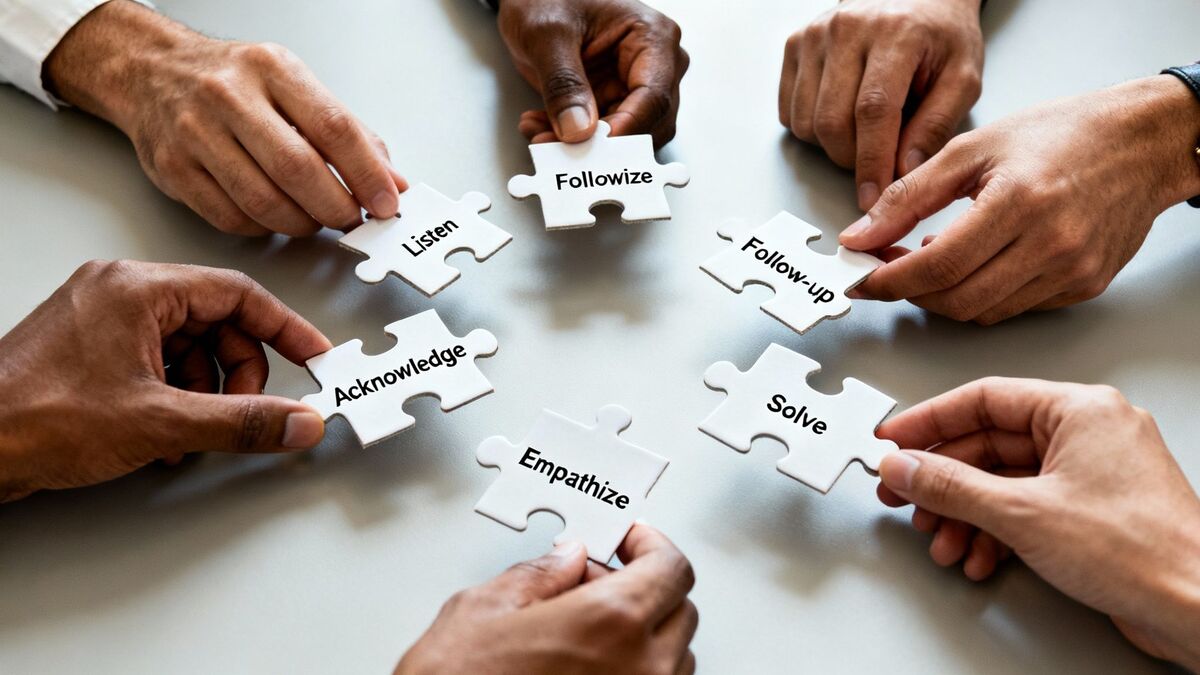
Forget complex flowcharts. All you need to master is a simple, five-part process: Listen, Acknowledge, Empathize, Solve, and Follow-up. This isn't just theory; it's a practical sequence that de-escalates tension and puts you and your team back in control.
Fixing problems quickly isn't just polite—it's a massive loyalty multiplier. While 73% of consumers will walk away after just a few bad experiences, the script completely flips when you get it right. Three out of four customers say they’ll spend more with brands that deliver great CX, and a whopping 88% are more likely to buy again after good service.
This is your shot to earn that repeat business. If you want to dive deeper, you can discover more customer support trends that will sharpen your strategy.
To make this dead simple, I’ve broken the ideal response into a quick-reference table. Think of it as the A.C.E.S. framework—a mental checklist for every reply.
The A.C.E.S. Framework for Effective Responses
Stage | Action | Example Phrase |
|---|---|---|
Acknowledge | State the problem back to them clearly. | "Thank you for letting us know about the issue with the booking confirmation." |
Confirm | Reassure them that their concern is valid. | "I can absolutely see why that would be frustrating, and it's not the experience we want for you." |
Empathize | Connect with their feelings. | "I’m so sorry for the inconvenience this has caused." |
Solve | Propose a clear, actionable solution. | "I've gone ahead and corrected the booking and applied a credit to your account for the trouble." |
Following this simple structure ensures every response hits the right notes, turning a negative interaction into a positive one.
Cut Through the Noise and Act Faster
Let’s put this into a real-world scenario. A guest leaves a scathing review about a dirty hotel room. The email is long, angry, and oozing with frustration. Manually reading it, pulling out the key issues, and figuring out the sentiment takes time—time you just don't have.
This is where you need to move faster. Instead of getting bogged down in the drama, you can use technology to get straight to the point. This is exactly what FeedbackRobot’s Feedback Operating System was built for. It starts with AI Summaries.
AI Summaries (instant insights & sentiment analysis) is a feature that instantly analyzes long, unstructured feedback—like an angry email or a detailed review—and boils it down to its core issues and sentiment. It tells you what the problem is (dirty room, broken AC) and how the customer feels (furious, disappointed) in seconds, not minutes.
This function lets your team bypass the emotional noise and immediately grasp the critical facts. You’re no longer just reacting; you’re responding with intelligence.
From Problem to Automated Solution
Once you understand the problem, the next step is solving it. The old way involves a clunky back-and-forth, getting approvals for a discount, and hoping the right person remembers to follow up. It's slow, inconsistent, and leaves way too much room for error.
This is where our Feedback Operating System truly changes the game. After AI Summaries pinpoints the issue—a major service failure like a dirty room—you can automate the entire resolution.
The Resolutions Engine (automated service recovery) is the function that closes the loop. It’s an automated tool that you can set up to trigger specific actions based on the complaint type or sentiment score.
For our hotel guest, the workflow would look something like this:
Trigger: The system detects negative sentiment and keywords like "dirty room" via AI Summaries.
Action: The Resolutions Engine automatically drafts an empathetic apology email and simultaneously issues a 20% discount code for their next stay.
Notification: Your front desk manager gets an alert to personally call the guest and follow up.
You’ve just transformed a stressful, manual task into a seamless system. You acknowledged the problem, offered a solution, and ensured a human follow-up—all within minutes. You're not just handling a complaint; you're running a world-class service recovery play that builds real, lasting loyalty.
Crafting Responses That Show You Genuinely Care
Having a framework for handling complaints is a great start, but it’s the words you choose that really de-escalate tension and begin to rebuild trust. When a customer is upset, they aren't just looking for a fix; they're looking for validation. They want to know they’ve been heard by a real person who gets it, not just a faceless company.
Your response—whether it's an email, a social media comment, or a face-to-face chat—is your best shot at showing empathy. This is where you move beyond a robotic apology and connect on a human level. The goal isn't just to solve the problem, but to make the customer feel seen and respected along the way.

Key Phrases to De-escalate and Words to Avoid
How you phrase your response can make or break the entire interaction. Certain words build bridges, while others put up walls. Arming your team with the right language empowers them to handle any situation with confidence.
Here are a few phrases that work wonders:
"Thank you for bringing this to our attention." This simple line reframes the complaint as helpful feedback instead of an attack.
"I can absolutely see why you're frustrated." This validates their feelings without you having to admit fault right away.
"Let's figure out how we can make this right for you." This signals you’re on their side and ready to find a solution together.
On the flip side, some common phrases do more harm than good. Steer clear of these:
"I understand, but..." That little word "but" completely negates any empathy you just tried to show.
"According to our policy..." This sounds defensive and bureaucratic when all a customer wants is a human connection.
"There's nothing I can do." Even if the fix is tricky, this phrase signals defeat and shuts down the conversation entirely.
Your most powerful tool is a genuine apology. Research shows that 45% of customers will take back a negative review after receiving one, while only 23% do the same when offered compensation alone. Sincerity is your best asset in service recovery.
When that feedback is public, it's even more critical to respond well to maintain trust. If you're wondering how to handle those tricky situations, it helps to know what to do when you get a bad review.
Using AI as Your Empathetic Co-pilot
Let's be real: crafting the perfect, empathetic response every single time is a massive challenge, especially when your team is swamped. This is where AI stops being a buzzword and becomes a seriously useful co-pilot for your service team. It’s not about replacing the human touch; it’s about scaling it.
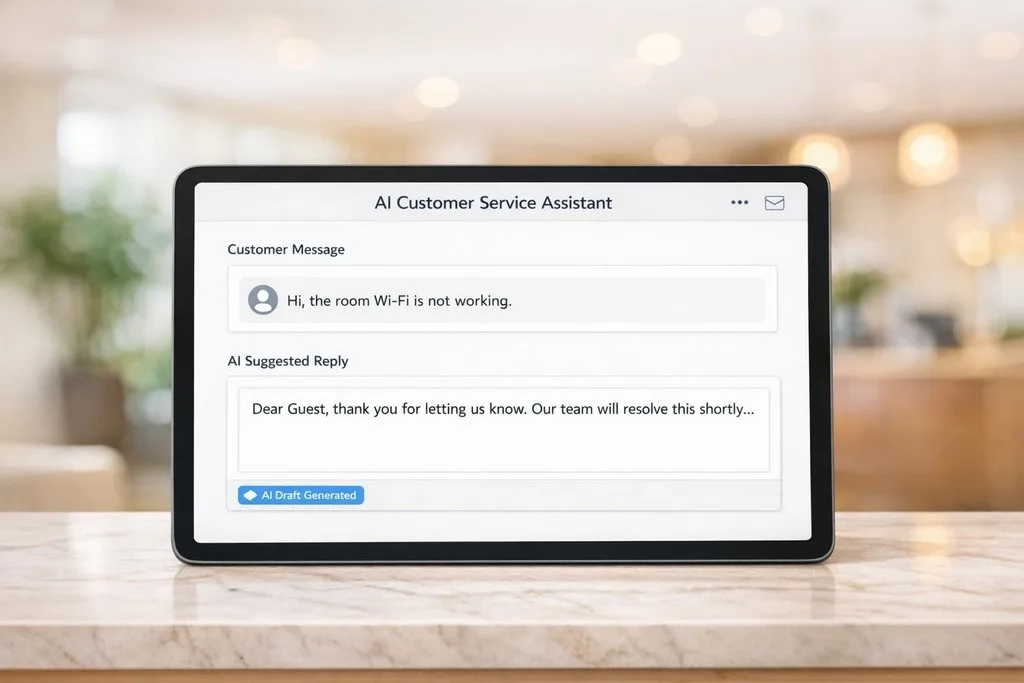
With FeedbackRobot, our AI Summaries don’t just spot problems—they analyze the emotional sentiment behind the feedback. The system then uses that insight to draft a high-quality, empathetic response that gives your team a running start.
Instead of staring at a blank screen, your team gets a thoughtfully composed draft that already acknowledges the customer’s frustration and uses brand-safe language. They can then quickly personalize it with specific details, adding their own human touch. This saves time, keeps your messaging consistent, and empowers every employee to respond with the confidence of a seasoned pro. You collect smarter, act faster, and grow stronger, all while making sure every customer feels truly heard.
Turning Reactive Fixes Into Proactive Improvements
Winning back one unhappy customer is a solid victory. But what about using their feedback to fix the root cause so no one else has the same bad experience? That’s how you build a business that lasts.
The goal is to shift from just putting out fires to redesigning your operations so those fires never start in the first place. This is where you graduate from reactive problem-solving to proactive, strategic growth. To do that, you have to connect the dots between a negative Google review, a frustrated email, and a private survey response.
If you can’t see the big picture, you're always one step behind.
Unify Your Intelligence to Spot Trends Early
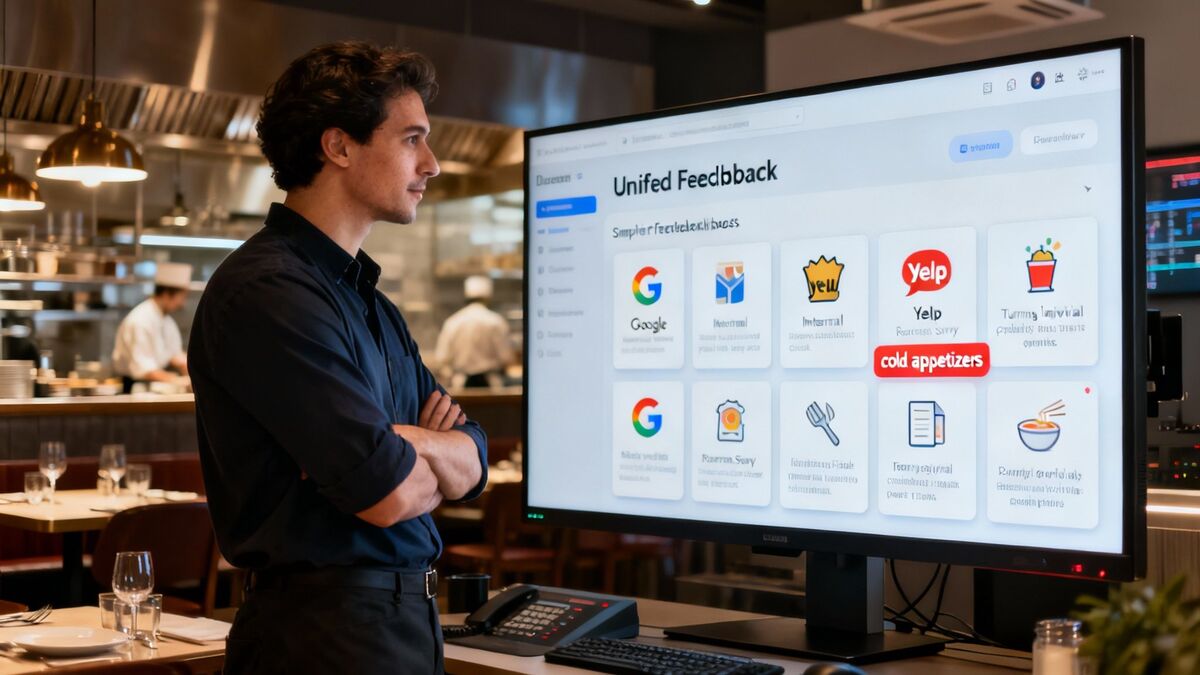
Imagine a restaurant owner getting a few scattered complaints about cold appetizers. One pops up on Yelp, another in a direct message on Instagram. In isolation, they’re just individual issues to resolve. But what if you could see them all at once, in one place?
This is the whole point of a true Feedback Operating System. With Radar (unified review intelligence), we give you a dashboard that pulls all your feedback—from public review sites like Google to private surveys—into a single command center.
Suddenly, those "isolated" complaints about cold appetizers aren't so random anymore. They form a clear, undeniable trend. Radar is the tool that spots this pattern, giving you a chance to fix your kitchen workflow before "cold food" becomes your restaurant's unofficial reputation.
Missing these patterns is costly. We've all seen how quickly a single unresolved complaint can spiral into social media backlash. The data backs this up: 32% of frustrated customers now broadcast their complaints on social platforms, and a staggering 70% will jump to a competitor after a poor experience.
With Radar, you get the early warning system you need to act faster and protect your brand.
Turn Every Transaction Into an Insight
You can’t fix problems you don’t know about. The smartest operators don’t just wait for customers to find them on Yelp; they make it incredibly easy for people to share feedback privately and immediately after a purchase.
This is where our Prompt to Survey feature comes in. It’s a simple but powerful tool that turns every single transaction into a feedback opportunity by automatically inviting customers to a private survey.
For Restaurants: Place a simple QR code on every receipt.
For Hotels: Send an automated follow-up email with a survey link right after checkout.
For E-commerce: Include a survey link in the purchase confirmation email.
This approach helps you collect smarter by catching issues while they're still small and private. Instead of letting frustration fester until it explodes in a public review, you give customers a direct, easy line straight to you. This constant stream of real-time data is the business intelligence that helps you grow stronger.
You can learn more about how to analyse survey data to get the most out of every response.
Ultimately, the goal isn't just to fix one-off issues. It's about taking that feedback and using it to enhance the entire journey. Learning how to improve ecommerce customer experience is a continuous loop of listening, acting, and improving.
Building Your Complaint Management Operating System
Let's be honest, handling customer complaints effectively isn't about good intentions—it's about building a reliable system. For anyone running a busy service or hospitality business, this means creating a clear operational blueprint. One that empowers your team, keeps things consistent, and ensures no customer ever falls through the cracks.
It's time to build the engine that drives world-class service recovery.
First thing's first: you have to get away from the chaotic, "everyone-for-themselves" approach. A centralized platform, like a shared team inbox, is non-negotiable. It guarantees that every single complaint—whether it comes from an email, a direct survey, or an integration with your Mews or Toast POS—lands in one place.
This creates a single source of truth, killing the classic "I thought you were handling it" problem for good. Instead of forwarding emails and losing context in messy chains, your entire team sees who is responding, what’s been said, and the status of every single issue.
Empower Your Front Line with Clear Rules
Consistency is born from clarity. Your team needs to know exactly what to do and when to do it. That means putting two key pillars in place for your complaint management system.
Service Level Agreements (SLAs): Set crystal-clear expectations for response times. For example, a simple rule that every complaint gets a first response within 60 minutes. This isn't just an internal metric; it's a promise to your customers that you're listening and you care.
Simple Escalation Paths: Not every issue can be solved by the first person who sees it, and that’s okay. Define a simple, clear path for escalating complex or high-stakes complaints to a manager or specialist. This ensures a swift and decisive resolution without any runaround.
Here's the critical part: you have to empower your front-line team with real autonomy. Give them the authority to solve common problems on the spot—like offering a complimentary drink or a discount—without needing a manager's approval. This transforms them from simple message-takers into genuine service heroes.
With a centralized inbox and clear rules, you’re not just handling complaints; you’re orchestrating a seamless Feedback Operating System. This structure ensures every issue is addressed with speed and empathy, turning potentially negative experiences into your best opportunities to build loyalty.
For a structured playbook you can put in place immediately, our guide to customer service best practices covers 12 tactics ranked by real-world impact — from AI-automated responses to proactive outreach before complaints escalate.
Showcasing Your Success to Attract New Customers
You've done the hard work of turning a customer complaint into a win. Your feedback loop is now a well-oiled machine for making things right. But the job isn't quite finished.
Winning back one customer is a victory. Using their positive feedback to attract ten more is how you build a business that lasts. Your best reviews and glowing survey responses are your most authentic marketing assets—they're real stories from real people, and they carry more weight than any ad you could ever run.
This final step is all about turning your service excellence into undeniable social proof.
Let Your Best Feedback Do the Selling
Potential customers are always on the lookout for signs that you’re a business they can trust. A bunch of five-star ratings is a good start, but what they really want to see is specific, heartfelt praise right where they’re making their decision.
You've worked your tail off to earn that glowing feedback. Don't let it get buried on some third-party site. It's time to bring your best reviews front and center. This is where you shift from defense (fixing problems) to offense (attracting new business).
We built the Spotlight: Feedback Wall feature in FeedbackRobot for this exact purpose. It gives you a dead-simple way to curate your favorite reviews and survey responses and display them in a beautiful, dynamic wall right on your website.
Think of it as a living testament to your commitment to your customers. It’s not just another static testimonial page; it’s a constantly updated stream of authentic praise that builds immediate trust with anyone on the fence about buying from you.
By showcasing these success stories, you’re not just patting yourself on the back. You're showing the full lifecycle of your commitment to feedback—you prove you can fix the bad, and you celebrate the good. That's a powerful narrative that resonates with today’s consumers, who trust peer reviews far more than slick marketing campaigns.
Building a dedicated home for your positive reviews is a critical last step. You can learn more about the strategy behind this by exploring how to create an effective review landing page.
This entire process—from collecting feedback, to resolving issues, to showcasing your wins—is how you transform customer service from a cost center into a powerful growth engine. You've learned to collect smarter and act faster. Now, it's time to grow stronger by letting your happy customers become your most convincing advocates.
Ready to turn your customer feedback into your best marketing asset? FeedbackRobot gives you the tools to collect, resolve, and showcase feedback like never before. Create a custom Fine Dining Restaurant Feedback Form.
What is the 'Golden Rule' of complaint handling?
Acknowledge the frustration immediately. Even if the customer is technically wrong, apologizing for their *feeling* of disappointment de-escalates the situation and opens the door for a solution.
Should I resolve a complaint publicly on Google/Yelp?
No. Reply publicly to show you care: 'We're so sorry! We'd love to fix this.' Then, immediately move the conversation to a private DM, email, or phone call to handle the details.
How do I turn a critic into a 'Brand Advocate'?
Through 'Service Recovery.' A customer who had a problem that was fixed brilliantly is often *more* loyal than one who never had a problem at all. Great recovery is your best marketing.
Can I use AI to help me respond to difficult customers?
AI is excellent for removing the 'Defensive' tone humans often have when attacked. It can draft a neutral, empathetic starting point that you can then tweak to sound human.
Is it okay to offer a refund for every complaint?
Not necessarily. Often, a guest just wants to feel heard. Offer a sincere apology first, then ask 'How can we make this right?' Many will be happy with just a promise to fix the issue.
Stop reading about it. Let your agent handle it.
25 free AI actions · no credit card required
Start Free