
Guide
Stop Leaking Customers: Your Actionable Guide to Reducing Churn
Discover how to reduce customer churn with proven hospitality strategies. Collect feedback, act on insights, and build lasting loyalty.

Dec 1, 2025 · 18 min read
Free tool
AI Survey Generator
Describe what you want to learn and get a ready-to-send survey in seconds.
It's a tough pill to swallow, but your hospitality business is probably leaking customers without you even realizing it. The focus is almost always on getting new heads in beds and new diners in seats. But what about the ones who came once and never returned?
That’s where the real money is. Reducing customer churn isn't a defensive move; it's the most powerful offensive strategy you have. It means shifting your energy from just acquiring new guests to obsessively understanding why the last ones left—and giving them an undeniable reason to come back. This is how you collect smarter, act faster, and grow stronger.
Why Your Best Guests Don't Come Back

You know your regulars by name. But what about the dozens of guests who check out and simply vanish? These one-time visitors are a quiet but steady drain on your revenue, and their decision to leave often happens without a single complaint.
For a busy hotelier or restaurant owner, it’s easy to get caught up in the whirlwind of daily operations. But ignoring the "why" behind these quiet departures is a massive—and costly—mistake. The reasons people don't return are rarely about one catastrophic failure. They're usually found in the small, almost unnoticeable gaps that add up over time, making a competitor's offer look just a little bit better next time.
The most dangerous churn is the silent kind. It's not the guest who complains loudly; it's the one who quietly decides not to return and never tells you why. This is the opportunity you must capture.
This silent attrition is far more damaging than it looks. Think about it: a seemingly low monthly churn rate of 5% can result in losing nearly half (46%) of your customer base over a single year. The numbers compound frighteningly fast. Churn rates above 10% can lead to an annual loss of over 70% of your customers, forcing you to essentially replace your entire clientele every twelve months.
If you want to see just how quickly these numbers spiral, check out the full report on the state of retention in 2025 at churnkey.co.
The Real Reasons for Guest Churn
To really tackle churn, you have to look past the obvious stuff. Sure, a cold meal or a dirty room is a problem, but the root causes often run much deeper. Guests today have endless options, and their loyalty is something you have to earn with every single interaction.
The most common—and overlooked—drivers of churn usually fall into a few key areas:
Inconsistent Experiences: A fantastic stay one month followed by a mediocre one the next kills trust. Guests don't want surprises; they want reliability.
Perceived Indifference: When your team seems disengaged or your processes feel cold and transactional, guests feel like just another number. They want to feel valued.
Lack of Personalization: Failing to acknowledge a returning guest or remember their preferences sends a powerful message: you don't really know them.
Unresolved Micro-Frustrations: Little things like spotty Wi-Fi, confusing parking, or a long wait for a drink might not spark a formal complaint, but they definitely add up.
The table below breaks down just how deeply these seemingly small issues can impact your business.
The Hidden Costs of Guest Churn in Hospitality
A quick look at how losing customers impacts more than just your bottom line.
Impact Area | How It Affects Your Business |
|---|---|
Increased Marketing Spend | You have to spend 5-25x more to attract a new guest than to keep an existing one. |
Negative Word-of-Mouth | An unhappy customer tells 9-15 people about their bad experience. Silent churners just tell them why they chose a competitor instead. |
Lost Upsell Opportunities | Loyal, returning guests are more likely to book premium rooms, add spa treatments, or dine in your restaurant. |
Damaged Team Morale | Constantly dealing with new, unfamiliar guests is more taxing on staff than building relationships with regulars. High churn can burn out your team. |
As you can see, the ripple effects go far beyond a single lost booking.
Shifting from Acquisition to Retention
The constant pressure to fill rooms and tables can easily overshadow a much more profitable strategy: holding onto the customers you've already won. It’s simple math—acquiring a new customer costs a fortune compared to keeping an existing one happy.
A retention-first mindset is the bedrock of sustainable growth. It’s about rewiring your thinking from, "How do we get more bookings?" to, "How do we make every single guest want to come back?"
This guide is your playbook for making that critical shift. We'll walk you through how to diagnose the real reasons for churn, identify at-risk guests, and deploy targeted tactics to win them back. It all starts the moment you decide to collect smarter, act faster, and grow stronger by actually listening to what your guests are telling you.
Unify Your Guest Feedback to Pinpoint Problems
You can't fix what you can't see. Guessing why guests are leaving is a losing game that costs you real time and money. If you want to get to the root causes of churn, you have to stop speculating and start gathering concrete evidence from every single guest touchpoint.
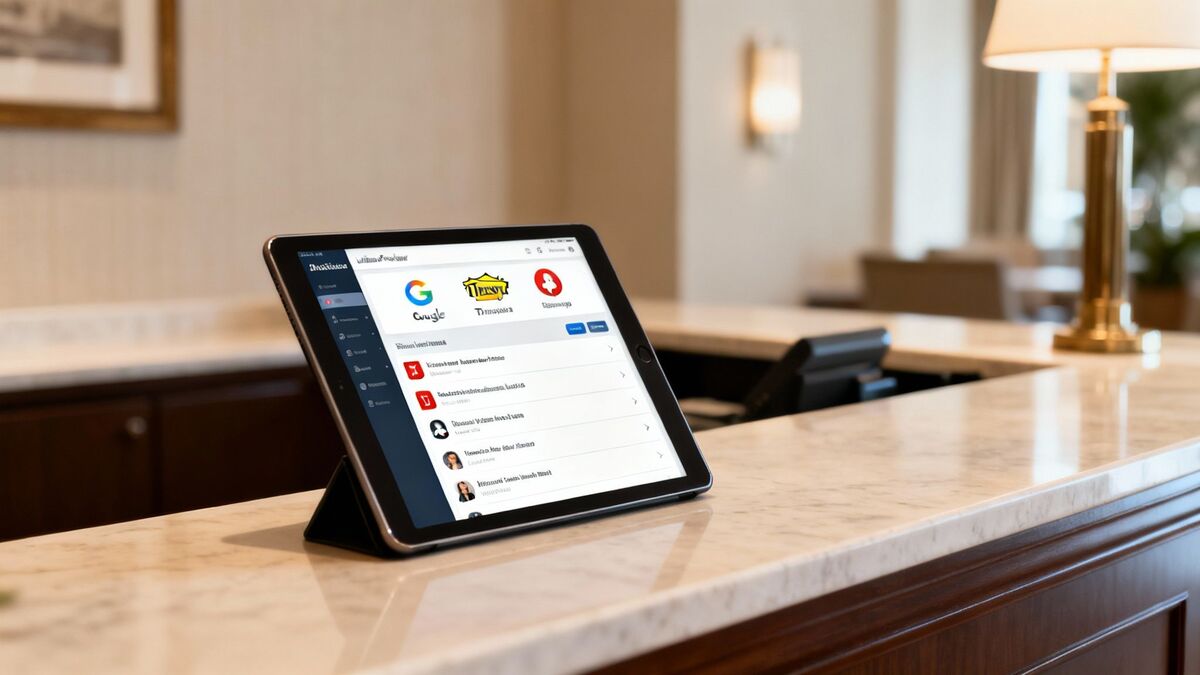
Think of yourself as a feedback detective. Your guests are already talking about you, but their opinions are scattered everywhere—Google reviews, TripAdvisor, social media comments, and private surveys. Juggling all these platforms isn't just inefficient; it gives you a fractured, incomplete picture of the guest experience.
From Chaos to Clarity with a Single Dashboard
The first move in reducing churn is to listen smarter by bringing all that scattered feedback into one place. When you see the whole story, patterns emerge that are impossible to spot when you're jumping between browser tabs. This is where a true Feedback Operating System becomes your most valuable employee.
Imagine instantly seeing a recurring complaint about slow check-in times. It appears on Google, gets mentioned in a Facebook comment, and pops up in three of your internal surveys—all in the same week. That's no longer an isolated incident; it's a clear, actionable trend.
This is exactly why we built Radar, our unified review intelligence feature. Radar acts as your central command center, pulling every piece of guest feedback from across the web into one intuitive dashboard. Instead of reacting to individual reviews, you can proactively diagnose problems with a bird's-eye view.
The goal isn't just to collect feedback; it's to connect the dots. A unified view transforms random comments into a roadmap for improvement, showing you exactly where to focus your efforts for the biggest impact on guest loyalty.
By consolidating feedback, you move from guesswork to precision. You can finally answer critical questions like:
Is the "lumpy mattress" complaint a one-off issue or a problem across all third-floor rooms?
Are guests consistently praising our new menu but criticizing the bar service?
Does sentiment dip on weekends when a specific manager is on duty?
This holistic approach is the foundation of an effective omnichannel customer experience, ensuring you hear what guests are saying no matter where they say it.
Stop Juggling and Start Diagnosing
Manually tracking reviews and social mentions is a reactive, time-consuming task. To get a handle on what’s being said about your brand online, exploring free social listening tools can be a great starting point. But a dedicated system designed for hospitality takes this a step further.
A true feedback operating system doesn't just show you what people are saying; it helps you understand why. It organizes unstructured comments into clear themes, tracks sentiment over time, and alerts you to critical issues before they escalate.
For example, with a unified dashboard, you can filter all feedback related to "cleanliness" or "staff attitude" in seconds. This lets you drill down into specific operational areas and identify the friction points that are quietly driving your guests to competitors.
This is the first, most crucial step: collect smarter so you have the clear intelligence needed to act faster and grow stronger. It turns the noise of online chatter into a clear signal, pointing directly to the opportunities that will most effectively reduce customer churn.
Turn Negative Feedback into Your Greatest Advantage
A complaint isn’t an attack—it’s a critical opportunity wrapped in frustration. How you respond to a bad experience has the power to transform a guest who was halfway out the door into one of your biggest fans.
This is the art of rapid service recovery. It all comes down to two things: speed and empathy. When you make a guest feel heard and valued right after something goes wrong, you can completely rewrite their story with your brand.
The High Cost of a Poor Response
Ignoring or mishandling a complaint is one of the fastest ways to lose a customer for good. In fact, poor customer experience is a massive driver of lost business, with global losses reaching an estimated $4.7 trillion.
The numbers don't lie. Research shows a staggering 80% of customers would switch to a competitor after negative service interactions. For 43%, just one bad experience is enough to make them leave. You can dig into more of these eye-opening customer service statistics on nextiva.com.
This means every negative interaction is a high-stakes moment. A slow, generic, or defensive reply only confirms the customer's frustration and solidifies their decision to never return. But a fast, personal, and proactive response shows you genuinely care and are committed to making things right.
From Manual Apologies to Automated Recovery
Let’s be realistic. In a busy hotel or restaurant, personally handling every single piece of negative feedback the moment it arrives is next to impossible. Staff are stretched thin, and managers are often putting out other fires. This is exactly where automation becomes your secret weapon.
Imagine a system that not only flags negative feedback but immediately takes the first step to resolve it for you. This isn't about replacing the human touch; it's about scaling it so no one slips through the cracks.
This is the core idea behind our Resolutions Engine, an automated service recovery system designed for immediate, intelligent action. It turns service recovery from a reactive scramble into a proactive strategy.
Your goal is to shorten the time between a guest's problem and your solution. The faster you can close that gap, the more likely you are to save the relationship. Automation is the key to doing this at scale.
Here’s how it works in a real-world scenario:
A guest completes a post-stay survey and leaves a two-star rating, mentioning a "noisy air conditioner" that ruined their sleep.
The Resolutions Engine instantly identifies the low score and negative sentiment.
Within minutes, it automatically triggers a pre-configured workflow, sending a personalized email to the guest.
The email offers a sincere apology, acknowledges the specific issue ("We're so sorry the noisy AC unit disrupted your rest"), and includes a targeted offer, like a 15% discount on their next stay, to encourage them to give you another chance.
This immediate, empathetic outreach proves you're listening and that you value their business. You’ve addressed the problem, shown you care, and offered a tangible reason to return—all before that guest has a chance to post a one-star review on TripAdvisor. It rebuilds trust when it matters most.
Mastering the Art of the Follow-Up
An effective response is more than just an apology; it's a conversation. For a deeper dive into crafting the perfect reply, check out our guide on how to respond to customer complaints.
By automating the critical first step, you free up your team to focus on the follow-up. They can spend their time on high-touch resolutions for more complex issues, confident that no unhappy guest is ever left hanging. This proactive approach turns negative feedback from a threat into your single greatest advantage for cutting churn and building loyalty that lasts.
Stop Bad Reviews Before They Happen
Why wait for a scathing one-star review on Google to find out something went wrong? The smartest hospitality owners treat public forums as the last resort for a complaint, not the first. The secret is creating a private, direct line to guests the moment their experience is over.
This isn't just about being proactive; it's about building a feedback loop that intercepts problems before they ever see the light of day. It puts you back in control of the story and gives you a golden opportunity to make things right—protecting both your reputation and your bottom line.
Give Unhappy Guests a Direct Line to You
When a guest has a bad experience, they want one thing above all else: to be heard. If you don't offer an easy, immediate way for them to talk to you, they'll find a public platform that will listen. A well-timed, private feedback request is the single most effective way to cut down on churn caused by unresolved issues.
This is where technology can do the heavy lifting for you. We built our Prompt to Survey feature to make this process completely seamless. Instead of relying on busy staff to remember to ask for feedback, the system does it for them with perfect timing.
The goal is to make giving you private feedback easier than leaving a public review. When you offer a direct, frictionless channel, you capture the raw, honest truth and earn the chance to recover the relationship.
By creating this private channel, you completely change the dynamic. You're no longer playing defense against online reviews; you're actively managing the guest experience behind the scenes. Our guide to online reputation management tips digs deeper into why this proactive stance is so critical for long-term success.
Automate Feedback with Smart Integrations
The real magic of this strategy is in the automation. Manually sending surveys is a drag—it’s time-consuming and easy to forget. But when your feedback system plugs directly into your core operational software, the whole thing runs on autopilot.
This is exactly why integrations are so important. FeedbackRobot connects with the point-of-sale (POS) and property management systems (PMS) you already use every single day, like Toast and Mews.
For Restaurants: Imagine integrating with your Toast POS. The instant a diner pays their bill, Prompt to Survey can fire off a simple feedback request via SMS or email. "How was your meal with us tonight?" It's that simple.
For Hotels: Connect with your Mews PMS. As soon as a guest is officially checked out, a survey is automatically triggered. "Thanks for staying with us! Tell us about your experience."
This timed automation is everything. You're reaching guests while the experience is still fresh in their minds, which skyrockets both the quality and quantity of the feedback you get. You gather honest insights privately, giving your team the perfect chance to resolve problems and show guests you actually care.
This is how you collect smarter and act faster. You're not just preventing bad reviews; you're gathering the critical intelligence needed to fix the underlying operational hiccups that cause guests to churn in the first place. This direct line of communication is your best defense against silent departures and your most powerful tool for building a business that gets stronger with every piece of feedback.
Use AI to Discover What Guests Truly Want
You have a goldmine of data sitting in your reviews and survey responses. But as a busy owner, who has time to manually read hundreds of comments to find the real story? It's impossible.
This is where you stop working harder and start working smarter with artificial intelligence.
AI lets you instantly analyze guest sentiment at scale, giving you a clear picture of what truly drives satisfaction and what causes people to leave. It moves you from anecdotal evidence—like that one guest who complained about the coffee—to data-driven certainty.
From Reading Reviews to Understanding Trends
The old way of managing feedback involved hours spent scrolling through TripAdvisor, Google, and survey results, trying to connect the dots. The new way takes seconds.
This is the power of a true Feedback Operating System.
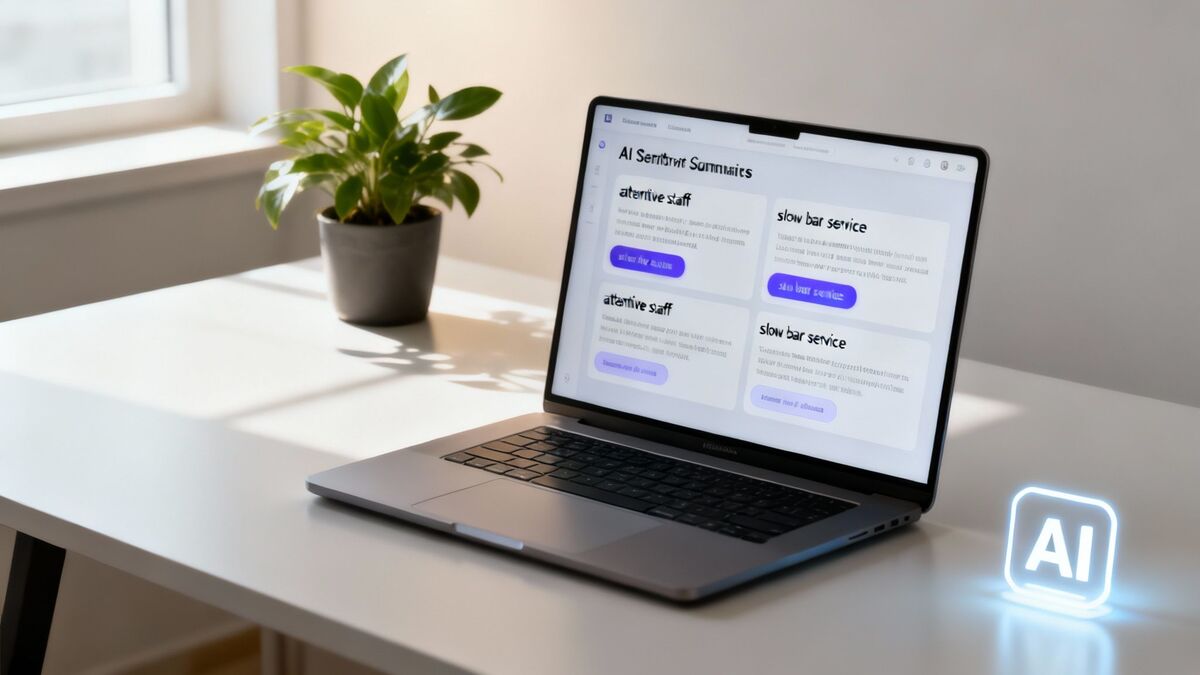
Instead of drowning in feedback, you can use tools that do the heavy lifting for you. We designed our AI Summaries to provide instant insights & sentiment analysis for exactly this reason. Our AI acts like a dedicated analyst, digesting every single piece of feedback and delivering clear, actionable summaries.
The goal is to spend less time reading and more time acting. AI doesn't just show you what guests said; it tells you what they meant, revealing the underlying trends that impact your bottom line.
You no longer have to guess what matters most. The AI immediately surfaces the critical themes. You can see at a glance if guests are raving about your "attentive staff" and "spotless rooms" or if there are growing complaints about "slow bar service" and "outdated decor."
Pinpoint Your Biggest Opportunities
Understanding guest priorities is critical, especially in an industry with high turnover. Customer retention rates vary wildly by sector, which really highlights the need for targeted strategies.
While industries like media and professional services enjoy high retention rates of around 84%, the hospitality, travel, and restaurant sectors face a much tougher reality. Their average retention is only 55%, meaning nearly half of all customers churn annually. You can find more detail on these customer retention benchmarks at explodingtopics.com.
This is why pinpointing the right problems to fix is so crucial. AI-driven insights allow you to confidently prioritize improvements that will have the biggest impact on the guest experience and, ultimately, your retention rate.
Imagine these two scenarios:
Without AI: You overhear two complaints about parking this week and decide to invest in a new validation system.
With AI Summaries: The AI analyzes 500 reviews and reveals that only 3% of guests mention parking, while 28% mention "slow check-in" with negative sentiment.
Suddenly, your priorities are crystal clear. You can now focus your resources on streamlining your check-in process—a fix that will positively affect a much larger portion of your guests and directly help to reduce customer churn.
This is how you collect smarter, act faster, and grow stronger. By letting AI find the signal in the noise, you ensure every decision you make is backed by real guest data, not just guesswork.
Build Your Guest Retention Flywheel
Reducing churn isn’t a one-time project you just check off a list. It’s more like a flywheel—a continuous cycle that actually gains momentum the more you work on it. Every piece of feedback you gather, every problem you solve, and every little improvement you make adds energy, making it that much easier to keep your best guests coming back.
The tactics we’ve covered—unifying feedback, recovering from bad experiences, and using AI to spot trends—are all individual parts of this flywheel. When you weave them into your daily operations, you're not just fixing problems; you're building a powerful, self-sustaining system for growth. The goal is to create a culture where every single person on your team has the insights they need to make the guest experience better.
This isn't about some impossible quest for perfection. It's about making small, consistent improvements that add up over time. You’re building a business that learns, adapts, and gets a little bit stronger with every guest interaction.
Set Clear Retention Goals
You can't improve what you don't measure. The very first step in getting this flywheel spinning is to set clear, tangible goals for retention. Vague ideas like "let's reduce churn" are nice, but they aren't actionable. You need specific targets your entire team can get behind.
First, you need a baseline. What’s your current churn rate? How many guests return within a 12-month period? Once you know where you stand, you can set realistic goals for improvement.
Example 1: Increase our repeat guest rate from 25% to 30% over the next six months.
Example 2: Reduce negative mentions of our "check-in process" by 50% in the next quarter.
Example 3: Improve our overall guest satisfaction score from a 4.2 to a 4.5 within the year.
These specific KPIs (Key Performance Indicators) give you a North Star. They turn retention from a fuzzy concept into a concrete objective that everyone on your team, from the front desk to housekeeping, can actually contribute to.
Empower Your Team with Actionable Insights
Your team is out there on the front lines, every single day. They’re the face of your brand, and they have the biggest, most direct impact on how guests feel. The most effective way to fuel your retention flywheel is to give them the real-time feedback they need to make smarter decisions in the moment.
This is where your Feedback Operating System becomes the heart of your culture. Instead of feedback getting stuck in a manager's inbox, you get it into the hands of the people who can act on it.
When your team starts seeing guest feedback as a tool for improvement rather than a report card, everything changes. They become proactive problem-solvers who are genuinely invested in creating great experiences because they can see the direct impact of their work.
Imagine your front desk manager seeing a real-time summary from AI Summaries that highlights praise for a specific team member's warm welcome. They can immediately share that positive reinforcement, which boosts morale and encourages everyone to follow that example. On the flip side, if Radar flags a new trend of complaints about the room temperature on the second floor, your maintenance team can jump on it before it ruins another dozen stays.
Make Data-Driven Operational Decisions
Finally, your flywheel really picks up speed when you use the unified data from your feedback system to inform bigger, more strategic decisions. To make a real dent in churn, you need a solid grasp of how to retain customers and build real loyalty, and that comes from listening to what they're telling you. The insights you gather should guide everything from where you spend money to how you train your staff.
Isolate Problem Areas: Are negative reviews consistently mentioning outdated bathrooms? Your AI-powered feedback analysis gives you the hard data you need to make the business case for prioritizing that renovation.
Optimize Staffing: Does guest sentiment tend to dip during certain shifts? The data might show you need more training for the evening crew or an extra person on hand during peak hours.
Refine Your Offerings: Are guests constantly raving about a specific dish but complaining that there aren't enough vegetarian options? Suddenly, your menu development isn't based on guesswork anymore.
By connecting feedback directly to your operations, you complete the loop. You collect smarter with tools that unify and analyze what guests are saying, you act faster with automated recovery and empowered teams, and you grow stronger by making strategic moves that build loyalty that lasts.
Ready to put these ideas into practice? Start your Free 14-Day Trial to see the full Feedback Operating System in action, or check out our new Spotlight: Feedback Wall launch to learn how you can turn your best reviews into powerful social proof.
Common Questions We Hear About Reducing Churn
When you're running a busy hotel or restaurant, you don't have time for fluff. You just want to know what works. Here are the straight answers to the questions we get asked most often about keeping customers coming back.
What’s a Good Customer Retention Rate for a Hotel or Restaurant?
Honestly, it varies. But if you're hitting above 60%, you're in a healthy spot.
Hospitality will always have lower retention than a subscription business—that's just the nature of the industry. Don't get hung up on hitting an "ideal" number. Instead, benchmark where you are today and focus on small, consistent improvements. Even a tiny lift can make a huge difference to your bottom line.
How Can I Actually Measure Churn Accurately?
The simplest way is to use this formula: (Lost Customers ÷ Total Customers at Start of Period) x 100.
The tricky part is defining a "lost customer." For most hospitality businesses, it's someone who hasn't visited in their typical cycle, maybe six to twelve months. Your PMS or CRM is your best friend here—it can automate this tracking so you always have a clear, up-to-date number.
What's the Fastest Way to Improve Guest Loyalty?
This might surprise you: get really, really good at fixing problems.
The single quickest way to build fierce loyalty is through excellent service recovery. When you respond to a guest's issue quickly and with real empathy, you can turn a negative experience into one they'll remember for all the right reasons. In many cases, you'll create a more loyal advocate than if nothing had gone wrong in the first place.
Ready to put these ideas into practice? Our Feedback Operating System gives you the tools to listen better, act faster, and build a more resilient business.
What is the 'Early Warning System' for customer churn?
Sentiment analysis is your best predictor. A drop in a regular customer's private survey scores is a clear signal that they are at risk of leaving for a competitor.
How can I save a customer who is about to leave?
Speed is the key. When a negative sentiment is detected, use an automated 'Resolutions' workflow to reach out with a personal apology and an incentive to give you one more chance.
Why is the 'Silent Majority' the biggest churn risk?
Most unhappy customers don't complain; they just leave. Automated surveys capture these 'quiet' issues, giving you a chance to fix them before the guest disappears.
Does improving service speed reduce churn?
In hospitality, yes. 'Wait time frustration' is a top 3 reason for churn. Mapping your guest journey helps you find and fix these bottlenecks.
Can AI predict which customers are most likely to churn?
Yes. By analyzing frequency of visits alongside feedback scores, AI can flag 'At-Risk' customers so your team can proactively reach out with a 'We Miss You' offer.
Stop reading about it. Let your agent handle it.
25 free AI actions · no credit card required
Start Free