Best Multi-Channel Customer Feedback Tools (2026)

As a hospitality or service owner, you know feedback is gold. But when it's scattered across Google reviews, social media DMs, email surveys, and in-person comments, managing it feels impossible. You're left guessing which issues matter most and which opportunities are slipping away. The chaos isn't just stressful—it's costly. Unheard complaints lead to churn, missed trends stall growth, and slow responses damage your reputation. The question isn't whether you should listen, but how you can act on it—fast.
This guide answers the critical question: which tools are best for managing multi-channel customer feedback? We'll cut through the noise to show you the platforms that unify conversations, automate actions, and deliver the insights you need to collect smarter, act faster, and grow stronger. From dedicated reputation management systems to comprehensive service desks, we've evaluated the top solutions that bring all your customer voices into one clear, actionable view.
While consolidating feedback is crucial, understanding *where* that feedback originates is equally important for a comprehensive strategy. Exploring the most effective platforms for gathering customer input can significantly enhance the value derived from tools like FeedbackRobot. Learn more about the best feedback collection channels for your business to ensure you're capturing insights from every possible touchpoint.
1. FeedbackRobot
FeedbackRobot is the Feedback Operating System, engineered specifically for busy hospitality and service owners who need to turn customer feedback into measurable growth. It’s not just another listening tool; it’s an end-to-end system designed to help you collect smarter, act faster, and grow stronger. It excels at centralizing feedback from every channel—online reviews, social media, and direct surveys—and gives you the tools to take immediate, intelligent action, making it a powerful choice for managing multi-channel customer feedback.
While many tools focus on aggregating digital feedback, don't overlook the power of physical touchpoints. Implementing a well-designed QR code for customer feedback can seamlessly integrate in-person or physical product interactions into your digital feedback loop. This strategy not only captures valuable real-time opinions but also enhances customer engagement by making feedback easily accessible.
Learn more about creating an effective QR code feedback system
FeedbackRobot excels in processing this data, regardless of its origin, to drive actionable insights and automated responses.
Its core strength lies in its ability to automate the entire feedback lifecycle. Instead of just showing you data on a dashboard, FeedbackRobot helps you understand it instantly and respond effectively, ensuring no customer voice goes unheard and no opportunity for improvement is missed.
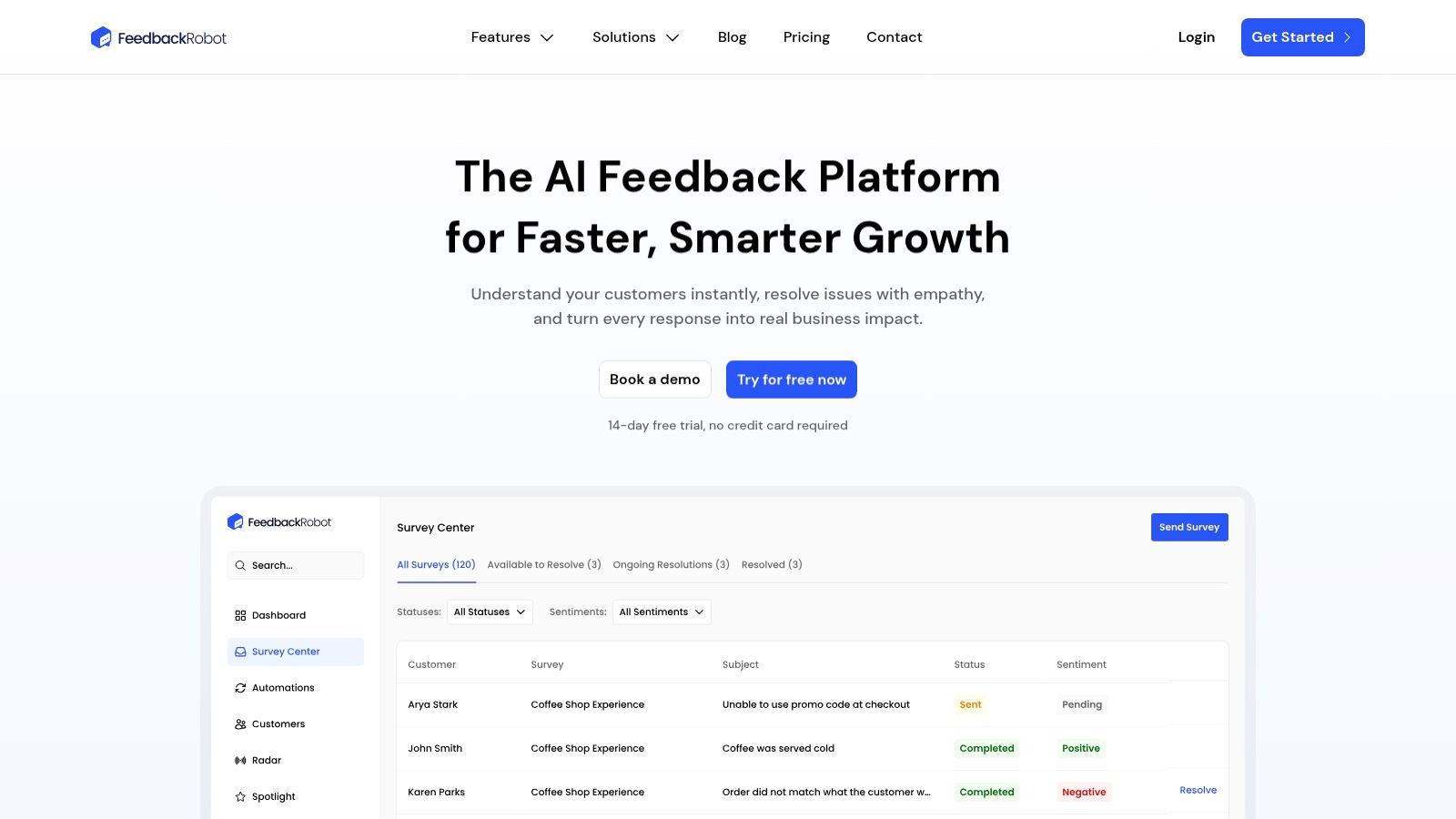
Key Features and Use Cases
FeedbackRobot integrates four powerful components into one seamless system:
Prompt to Survey: This AI-powered feature simplifies survey creation. Just type a prompt like "Create a 3-question survey for post-stay hotel feedback," and the AI generates a ready-to-deploy survey. You can then collect responses through email & sms surveys, embed your survey on your website, or print a branded QR code for on-premise feedback at your front desk or on tables.
Radar: This is your unified review intelligence hub. Radar monitors major review sites (like Google, TripAdvisor, Yelp) and social media, pulling all mentions and reviews into a single dashboard. This allows you to track brand sentiment and spot trends across platforms without manually checking dozens of sites. It even integrates with systems like Mews or Toast to tie feedback directly to operational data.
AI Summaries: Drowning in comments? Get instant insights & sentiment analysis. As feedback flows in, our AI provides real-time summaries, identifying key themes and flagging urgent issues. You’ll know exactly what customers are praising and what needs fixing, without reading every single word.
Resolutions Engine: This is your tool for automated service recovery. The Resolutions Engine turns negative experiences into opportunities. It can automatically draft an empathetic reply to a poor review, create a follow-up task for your manager, or even issue a discount to a dissatisfied guest, turning detractors into loyal advocates before they churn.
Who Is It Best For?
This platform is ideal for hospitality (hotels, resorts), restaurants, multi-location retail, healthcare clinics, and professional service agencies. Its focus on operationalizing feedback makes it particularly valuable for businesses where customer experience directly impacts revenue and reputation. For instance, a hotel manager can use Radar to track reviews across booking sites and use the Resolutions Engine to automatically offer a complimentary stay for a verified poor experience.
Pricing and Access
FeedbackRobot offers scalable pricing to fit different business sizes.
A 14-day free trial is available without a credit card, making it easy to test its impact.
Website: https://www.feedbackrobot.com
2. Zendesk
Zendesk is a powerhouse in the customer service world, evolving from a simple help desk to a comprehensive omnichannel suite. For businesses, especially in retail or professional services, it excels at consolidating customer conversations from disparate sources like email, live chat, social media messaging, and phone calls into a single, unified ticketing system. This makes it one of the most established tools for managing multi-channel customer feedback when that feedback arrives through support interactions.
What sets Zendesk apart is its mature, extensive ecosystem. Its marketplace features hundreds of integrations, allowing you to connect it to virtually any part of your tech stack. This is crucial for larger teams needing a central hub that plays well with other systems. While its core strength is reactive support, its robust analytics and reporting tools can be configured to track feedback trends, resolution times, and agent performance, providing valuable operational insights. The user interface is clean and relatively intuitive for agents, which helps reduce training time.
Key Considerations
Best For: Medium to large businesses, particularly in e-commerce and B2B services, that need a scalable, all-in-one customer service platform with deep integration capabilities.
Pricing: Plans are priced per agent, per month, starting from $55 for their Suite Team plan. Advanced AI features, quality assurance, and workforce management are available as paid add-ons, so costs can escalate for larger teams needing the full feature set.
Implementation Tip: Start by mapping your primary customer communication channels (e.g., support email, website chat) and integrate them one by one. Use Zendesk's Service Level Agreement (SLA) features from day one to set clear internal benchmarks for responding to customer feedback and inquiries.
Pros:
Vast marketplace with extensive third-party integrations.
Scalable architecture that can grow with your business.
Mature and reliable ticketing and reporting system.
Cons:
Per-agent pricing can become expensive for large teams.
Can be overly complex if you only need a dedicated feedback tool.
Some of the most powerful AI and analytics features require higher-tier plans or add-ons.
Website: https://www.zendesk.com/pricing/
3. HubSpot Service Hub
HubSpot Service Hub is a powerful choice for businesses that want their customer feedback and service data tightly integrated with their sales and marketing efforts. Built on the HubSpot CRM platform, its strength lies in creating a single source of truth for every customer interaction, from a prospect's first marketing touchpoint to a long-term client's support ticket. This makes it a standout tool for managing multi-channel customer feedback when that feedback needs to inform the entire customer lifecycle, not just the support department.
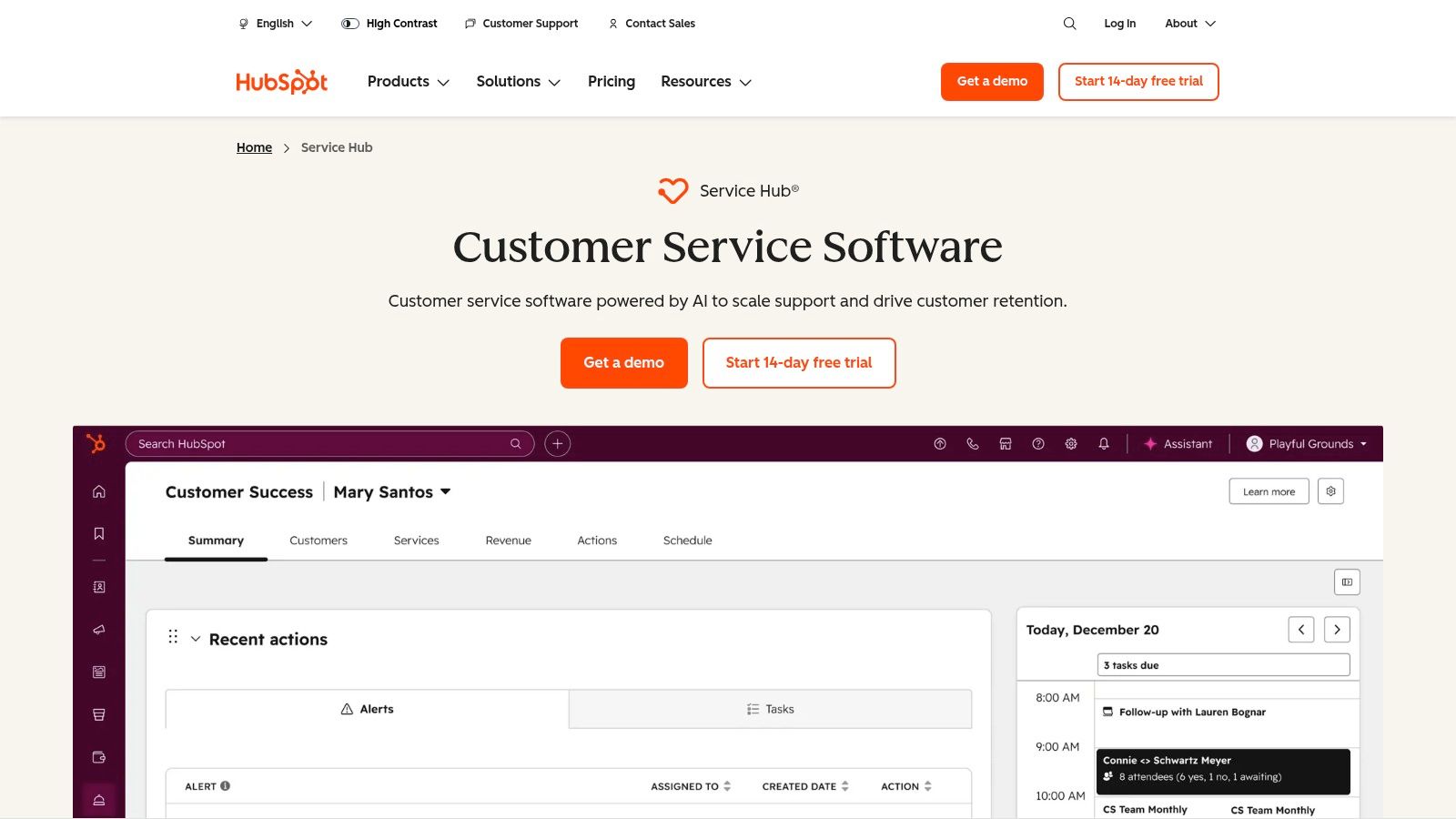
What makes Service Hub unique is its native connection to a comprehensive marketing and sales automation engine. You can trigger workflows based on survey responses, create support tickets from live chat conversations, and analyze service data alongside deal pipelines. It includes native tools for creating and sending NPS, CSAT, and CES surveys, ensuring feedback collection is seamless. For teams already invested in the HubSpot ecosystem, this eliminates data silos and provides unparalleled context for every customer conversation.
Key Considerations
Best For: Businesses of all sizes, especially those in B2B or professional services, already using or planning to use the HubSpot CRM for marketing and sales.
Pricing: Offers a free tier with basic tools. Paid plans start at $45/month for the Starter plan, which includes 2 paid seats. More advanced automation and reporting are in Professional and Enterprise tiers, which can have significant onboarding costs.
Implementation Tip: Begin by connecting your primary shared inbox (e.g., support@yourcompany.com) to the conversations tool. Then, build a simple customer feedback survey and use a workflow to create a follow-up task for your team based on low scores, creating an initial closed-loop feedback process.
Pros:
Provides a unified view of customer data across marketing, sales, and service.
Flexible seat model includes free view-only seats for broader team visibility.
Powerful reporting and dashboard capabilities that leverage the entire CRM.
Cons:
Can be expensive, with enterprise-level onboarding fees for larger rollouts.
The most powerful automation and reporting tools are reserved for higher-priced tiers.
May be overly complex if you only need a standalone feedback or ticketing tool.
Website: https://www.hubspot.com/products/service
4. Intercom
Intercom positions itself as an AI-first helpdesk, making it a compelling choice for businesses that prioritize modern, conversational support. It excels at consolidating customer interactions from web chat, mobile apps, email, and social messaging into a sleek, unified inbox. For teams in retail or B2B tech, this approach transforms standard support channels into an ongoing dialogue, making it one of the more forward-thinking tools for managing multi-channel customer feedback.
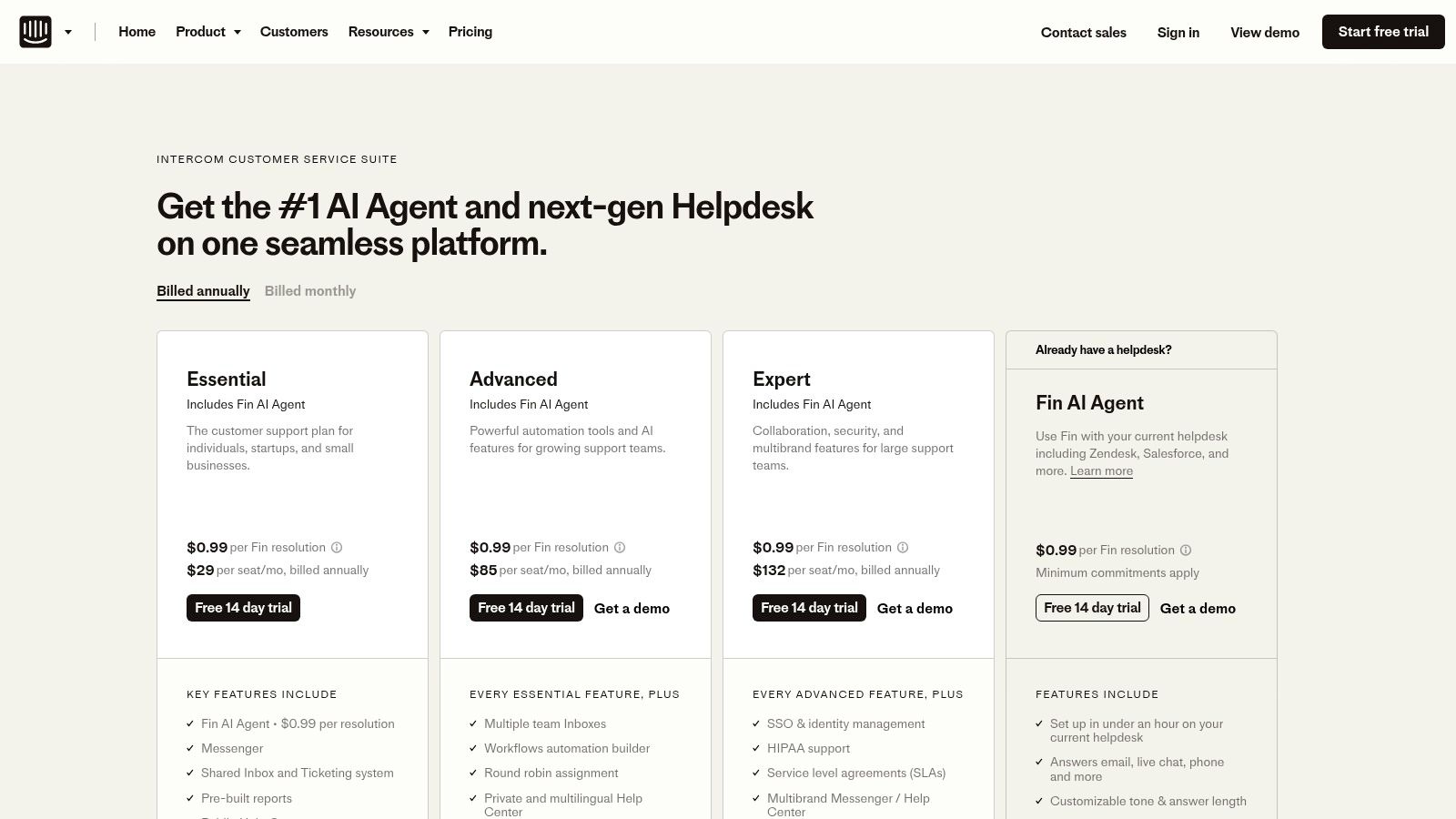
What makes Intercom stand out is its deep integration of AI, particularly its "Fin AI Agent," into the core user experience. This isn't just a chatbot; it’s designed to resolve issues autonomously, drawing from your knowledge base and conversation history. Its automation builder is also highly intuitive, allowing teams to create sophisticated workflows without extensive coding. This focus on AI-driven resolution and a clean, messenger-style interface provides a user experience that feels less like a traditional ticketing system and more like a continuous conversation.
Key Considerations
Best For: Tech-forward businesses, particularly SaaS and e-commerce companies, that want to leverage AI for instant resolutions and prefer a modern, messenger-based customer communication style.
Pricing: Starts with Essential, Advanced, and Expert plans with per-seat pricing. Its unique AI model charges per resolution, offering transparency. However, usage-based channels like SMS, WhatsApp, and phone are add-ons that can increase the total cost.
Implementation Tip: Begin by building out a comprehensive knowledge base. The effectiveness of Intercom's Fin AI Agent is directly tied to the quality of the content it can access. Once that's solid, configure the live chat messenger on your primary user-facing platform to start deflecting common inquiries automatically.
Pros:
Modern, intuitive messenger-based user experience.
Transparent, resolution-based pricing for its AI agent.
Powerful and user-friendly automation capabilities.
Higher-tier plans include valuable "lite" seats for non-support staff.
Cons:
Pricing can become complex and costly with usage-based channel add-ons.
Best suited for reactive and proactive messaging; less focused on aggregating third-party reviews.
Advanced proactive messaging and analytics features are often part of higher plans or add-ons.
Website: https://www.intercom.com/pricing
5. Freshdesk (Freshdesk Omni)
Freshdesk positions itself as a powerful and value-oriented omnichannel customer service solution, making it a strong contender for businesses looking to centralize feedback without the enterprise-level price tag. Through its Freshdesk Omni product, it unifies conversations from channels like email, phone, live chat, SMS, and social messaging into a single agent workspace. This makes it one of the more accessible tools for managing multi-channel customer feedback, particularly for teams who need robust ticketing and reporting features from the get-go.
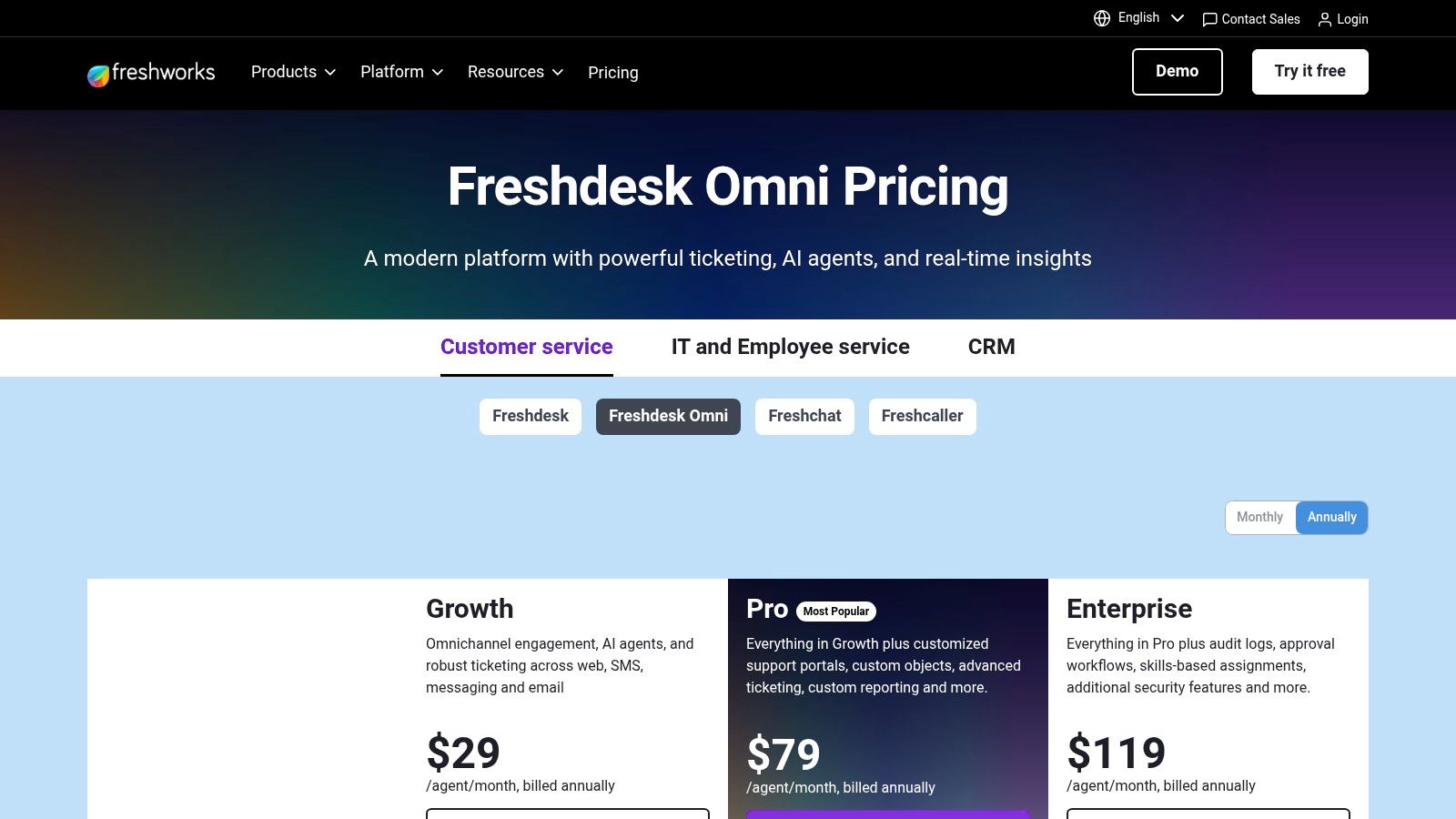
What makes Freshdesk stand out is its balance of comprehensive features and competitive pricing, powered by its "Freddy AI" for agent assistance and self-service automation. The platform is designed to streamline agent workflows with a unified knowledge base and intelligent skill-based routing, ensuring feedback gets to the right person quickly. While some of its most advanced AI analytics and custom dashboards are reserved for higher tiers, its core offering provides a solid foundation for service-focused businesses in retail, hospitality, or professional services.
Key Considerations
Best For: Small to medium-sized businesses looking for a cost-effective, all-in-one omnichannel support desk with built-in AI capabilities and a clear upgrade path.
Pricing: Omnichannel plans are priced per agent, per month, starting at $35. Note that certain Freddy AI features and contact center minutes may be usage-based or require add-ons, impacting the total cost.
Implementation Tip: Leverage the unified knowledge base from day one. Populate it with answers to common feedback topics and questions to power both your agent responses and customer self-service portals, reducing repetitive inquiries.
Pros:
Competitive omnichannel pricing offers significant value.
Clear plan differentiation makes it easy to choose and get started.
Good balance of essential features and AI-powered assistance.
Cons:
Some key AI analytics and reporting features are locked in Pro/Enterprise tiers.
Usage-based pricing for certain AI functions can make costs less predictable.
Can feel more like a support tool than a dedicated feedback analysis platform.
Website: https://www.freshworks.com/freshdesk/omni/pricing/
6. Medallia
Medallia is an enterprise-grade Experience Management (XM) powerhouse designed for large organizations that need to capture and analyze customer signals at scale. It moves beyond traditional surveys by ingesting feedback from a vast array of sources including speech, social media, digital interactions, and even video. For enterprises in sectors like hospitality, healthcare, or retail, Medallia excels at unifying these disparate signals into a single, cohesive view of the customer journey, making it a top-tier choice for managing multi-channel customer feedback.
What truly distinguishes Medallia is its sophisticated AI and analytics engine applied to both structured and unstructured data. Its text and speech analytics can automatically identify themes, sentiment, and effort from thousands of open-ended comments or call recordings, providing deep operational insights. This is all unified under its Experience Data Record (EDR) model, which focuses on tracking experiences rather than charging per user. This allows organizations to grant platform access to everyone from the frontline to the C-suite without a per-seat cost penalty, fostering a customer-centric culture.
Key Considerations
Best For: Large enterprise organizations, particularly in regulated or complex industries like finance, healthcare, and telecommunications, that require a powerful, unified platform for holistic experience management.
Pricing: Medallia’s pricing is based on its Experience Data Record (EDR) model and is provided via a custom quote from their sales team. There is no public, self-service pricing available.
Implementation Tip: Begin by identifying your most critical customer journeys. Focus on integrating the feedback signals (e.g., post-call IVR, website interactions, social mentions) from one complete journey first to demonstrate value and build a scalable framework before expanding across the organization.
Pros:
Unlimited user access under its EDR pricing tiers fosters widespread adoption.
Powerful, unified AI analytics across diverse structured and unstructured data.
Robust enterprise-grade security, governance, and administrative capabilities.
Cons:
Pricing is opaque and designed for enterprise budgets, making it inaccessible for smaller businesses.
Can be overly complex and feature-rich for teams needing a more straightforward feedback tool.
Implementation is a significant undertaking requiring dedicated resources.
Website: https://www.medallia.com/pricing/
7. Qualtrics XM for Customer Experience
Qualtrics is a heavyweight in the experience management (XM) space, offering an enterprise-grade suite that goes far beyond simple feedback collection. It excels at combining operational data (like purchase history) with experience data (like survey responses) to provide a holistic view of the customer journey. For large organizations in sectors like healthcare or hospitality, Qualtrics provides the research-grade tools needed to conduct deep analysis across every touchpoint, from contact center calls to in-person interactions.
Its platform is engineered for deep dives. The AI-powered analytics can dissect text and voice feedback to uncover nuanced sentiment, effort, and intent, making it a powerful choice when you need to understand the complex "why" behind customer behavior. This makes it one of the top-tier tools for managing multi-channel customer feedback when scientific rigor and deep analytical capabilities are non-negotiable.

Key Considerations
Best For: Enterprise-level organizations and large corporations that require a comprehensive, research-backed platform for customer, employee, and brand experience management at scale.
Pricing: Qualtrics uses custom pricing models, often based on interactions or the specific suite of products you need. You will need to contact their sales team for a quote, as pricing is not publicly listed.
Implementation Tip: Begin with a specific business objective, such as reducing customer churn in a key segment. Use Qualtrics to map the relevant touchpoints for that journey and deploy targeted listening posts (surveys, digital feedback) to gather actionable data, rather than attempting to monitor everything at once.
Pros:
Powerful, research-grade analytics for deep text and sentiment analysis.
Highly scalable architecture designed for global enterprise deployment.
Integrates operational data with experience feedback for a complete picture.
Cons:
Pricing is enterprise-level and can be a significant investment.
Can be overly complex and feature-rich for small to medium-sized businesses.
Requires dedicated expertise to fully leverage its advanced capabilities.
Website: https://www.qualtrics.com/pricing/
8. Sprinklr Service
Sprinklr Service is an enterprise-grade platform designed for large organizations that view customer service as a core part of their brand experience. It excels at unifying a vast array of modern and traditional channels, from live chat and email to social media comments, DMs, and messaging apps like WhatsApp and Apple Messages for Business. For complex, global brands, Sprinklr offers a single source of truth for all customer feedback arriving through care and social interactions.
What truly differentiates Sprinklr is its deep integration of social listening with customer service. This allows teams not only to react to direct feedback but also to proactively identify and engage with unsolicited mentions and conversations happening across the social web. Its unified agent workspace is powered by AI that assists with routing, provides knowledge base suggestions, and automates common tasks. This makes it one of the best tools for managing multi-channel customer feedback when social media is a primary support and engagement channel.
Key Considerations
Best For: Large, global enterprises, especially in telecommunications, finance, or retail, that require a powerful, unified platform for social media engagement, listening, and customer service with strict governance.
Pricing: Sprinklr offers a self-service tier starting at $249 per user per month (billed annually). Custom enterprise-level pricing is available for its more advanced CCaaS and social listening suites, which is where the full power of the platform is unlocked.
Implementation Tip: Begin by integrating your highest-volume social media and messaging channels. Leverage the platform's automation and routing rules to triage incoming feedback effectively, distinguishing between urgent support requests and general brand mentions to ensure the right teams are alerted.
Pros:
Broad channel coverage with a strong emphasis on social and modern messaging.
Combines customer care with robust social listening and engagement tools.
Enterprise-level AI, automation, and CCaaS capabilities for large-scale operations.
Cons:
Can be overly complex and expensive for small to medium-sized businesses.
Self-serve pricing is at a premium compared to other tools.
The most powerful features are often locked behind custom enterprise packages.
Website: https://www.sprinklr.com/
9. Sprout Social
Sprout Social is a leading social media management platform that doubles as a powerful tool for managing multi-channel customer feedback, particularly when that feedback is public and highly visible. It excels at consolidating interactions from social networks like X (formerly Twitter), Facebook, Instagram, and LinkedIn, along with major review sites, into a unified Smart Inbox. This is invaluable for retail, hospitality, and restaurant brands whose reputations are heavily influenced by their social presence and online reviews.
What makes Sprout Social stand out is its sophisticated listening and analytics capabilities. Beyond just responding, you can track brand keywords, monitor sentiment, and benchmark performance against competitors, all within one dashboard. For teams that need to prove the ROI of their social engagement, Sprout's reporting is top-tier. Its AI Assist features can also help teams draft on-brand replies more efficiently, ensuring that no public comment or direct message goes unanswered. This makes it one of the best tools for managing multi-channel customer feedback when your primary channels are social media and public review platforms.
Key Considerations
Best For: Brands in hospitality, retail, and food and beverage where social media and public reviews are primary feedback channels. It's ideal for marketing and community management teams.
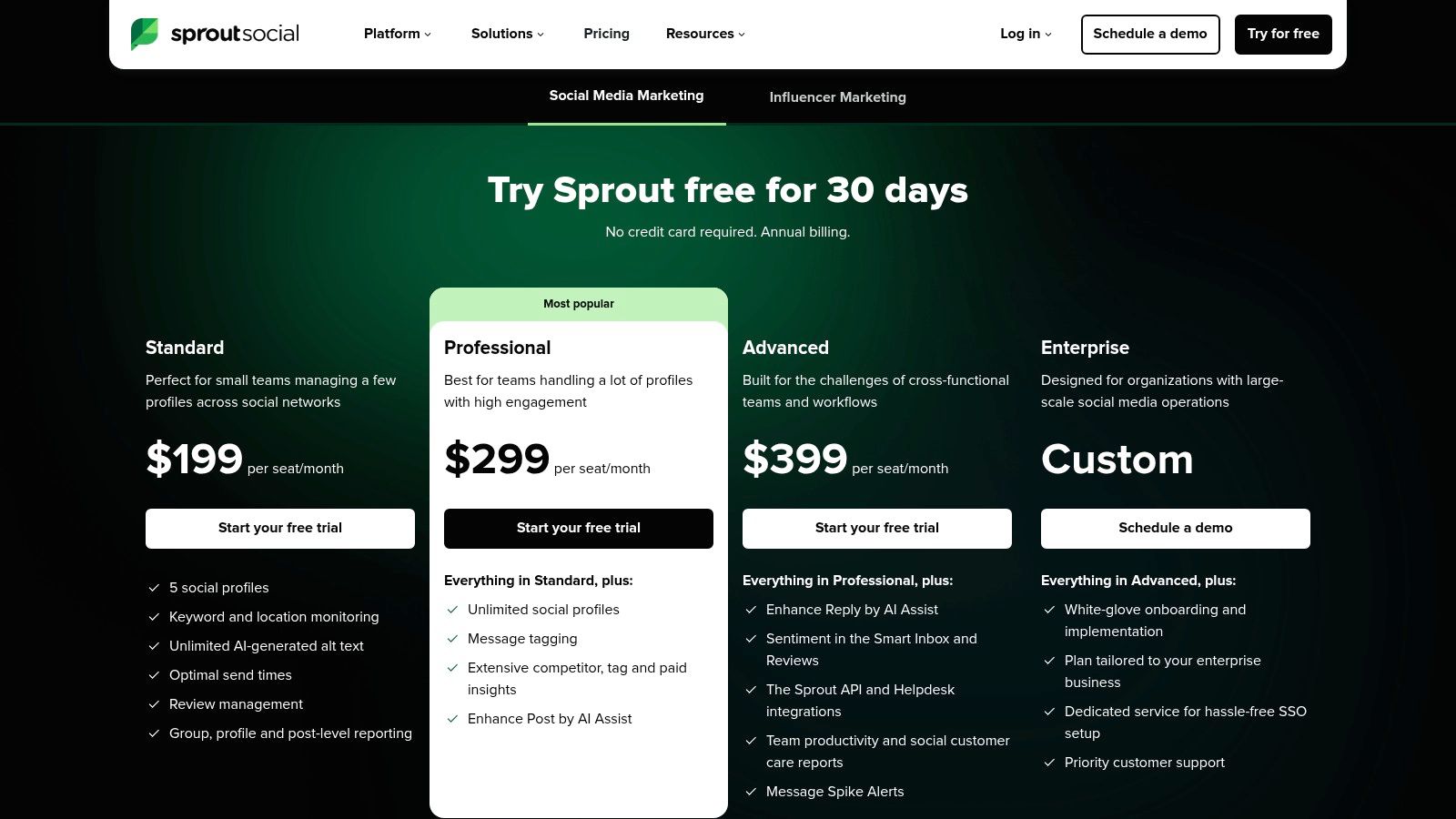
Pricing: Plans are priced per user, per month, starting at $249 for the Standard plan when billed annually. Advanced listening and premium analytics are available in higher-tier plans or as add-ons.
Implementation Tip: Begin by connecting your highest-volume social and review profiles. Use the keyword monitoring tools to track not only your brand name but also common customer pain points or popular product names to catch unsolicited feedback.
Pros:
Excellent reporting and competitor analysis features.
Unified Smart Inbox for social media and review management.
Transparent per-user pricing model (though it can be costly).
Cons:
Per-user costs can quickly add up for larger teams.
Focus is primarily on public social and review channels, not direct feedback like surveys.
Core functionality is social media management, so it may be overkill if you only need a feedback tool.
Website: https://sproutsocial.com/pricing/
10. Birdeye
Birdeye is a comprehensive customer experience platform designed for multi-location businesses, making it a powerful choice for managing multi-channel customer feedback across a distributed enterprise. It excels at consolidating feedback from public review sites like Google and TripAdvisor, social media channels, and private surveys into a unified dashboard. For industries like hospitality, healthcare, and retail, this centralization is critical for maintaining brand consistency and monitoring local performance from a single source of truth.
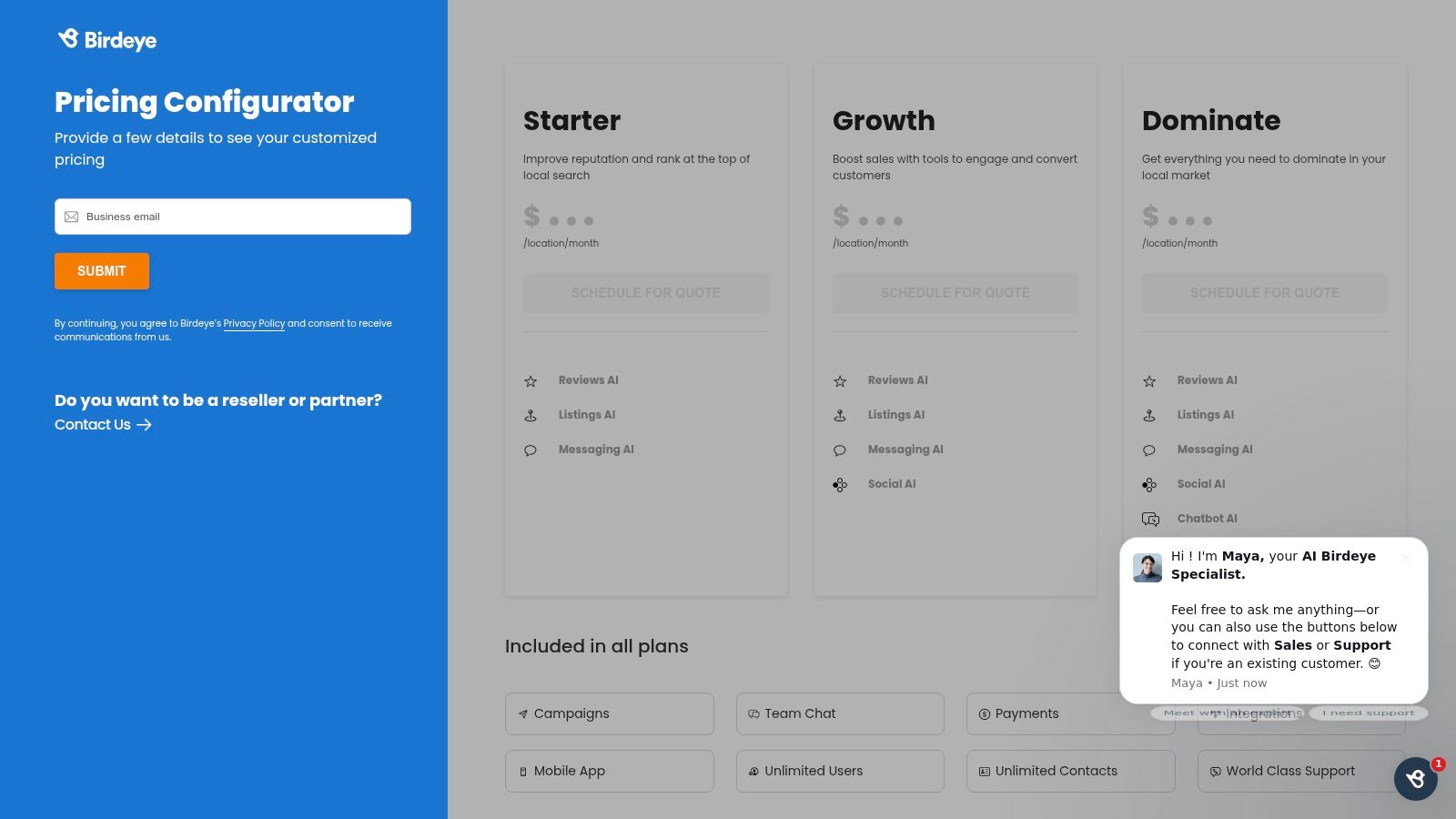
What makes Birdeye stand out is its per-location pricing model, which includes unlimited users and contacts. This makes it highly scalable and cost-effective for brands with numerous physical locations and large teams. The platform combines reputation management with powerful communication tools, including web chat, mass texting, and social media management. Its built-in AI helps analyze review sentiment and categorize feedback, allowing managers to quickly identify trends without manually sifting through thousands of comments.
Key Considerations
Best For: Multi-location businesses in sectors like hospitality, healthcare, retail, and home services that need to manage online reputation and customer communications at scale.
Pricing: Pricing is customized and provided via a quote based on the number of locations and required features. There are no public pricing tiers listed on their website.
Implementation Tip: Start by connecting your key business listings (Google Business Profile, Facebook) for each location. Use the review generation campaigns to build social proof and leverage the unified inbox to streamline responses, ensuring no customer comment goes unaddressed.
Pros:
Per-location pricing model is ideal for multi-site brands.
Unlimited users and contacts are included in all plans.
Comprehensive suite of local SEO and review management tools.
Cons:
Pricing is not transparent and requires a custom quote.
Advanced AI for social listening and chatbot functionality is reserved for higher-tier plans.
May be too focused on public reviews if your primary need is private survey feedback.
Website: https://birdeye.com/pricing/
11. Podium
Podium is an "interaction management" platform laser-focused on local businesses, particularly in sectors like home services, automotive, and retail. It centralizes customer communications, but with a strong emphasis on SMS messaging. Its core function is to convert website visitors into text conversations, manage online reviews, and facilitate payments, all through a single, text-friendly inbox. This makes it a unique tool for managing multi-channel customer feedback, as it captures sentiment from the channels where local consumers are most active: Google reviews and direct text messages.
What sets Podium apart is its tight integration of communication and revenue generation. A business can seamlessly transition from answering a customer's texted question to sending them a payment link or a review request. For industries where quick, direct communication drives business, this is a powerful workflow. The platform is built around the idea that the fastest, most convenient channel wins, and for many local services, that channel is SMS. It provides specialized onboarding and guidance for industries it serves, including help with carrier regulations like 10DLC for US businesses.
Key Considerations
Best For: Local service businesses (e.g., HVAC, auto repair), multi-location retail, and healthcare practices that rely heavily on local search, online reviews, and direct text-based communication with customers.
Pricing: Podium does not offer public pricing plans. You must request a custom quote based on your business size, industry, and feature requirements. This tailored approach means pricing is specific to your needs.
Implementation Tip: Immediately connect Podium to your Google Business Profile. Prioritize setting up the webchat-to-text feature on your website and create automated templates for review requests to be sent via SMS after a service is completed or a product is purchased.
Pros:
Excellent for SMS-centric workflows and driving fast customer responses.
Combines reviews, messaging, and payments in one unified inbox.
Offers industry-specific onboarding and US-carrier compliance guidance.
Cons:
Pricing is not transparent and requires a custom quote.
Its strength in SMS may not be ideal for businesses where email or social media are primary feedback channels.
Bulk messaging capabilities are often limited to higher-tier plans.
Website: https://www.podium.com/
12. Reputation (Reputation.com)
Reputation is an enterprise-grade platform built specifically for multi-location businesses that need to manage online presence and customer feedback at scale. It consolidates data from public reviews, business listings, surveys, and social media into a single dashboard, making it an excellent tool for managing multi-channel customer feedback across dozens or even hundreds of locations. The platform excels at providing executive-level insights and benchmarking individual locations against each other or competitors.
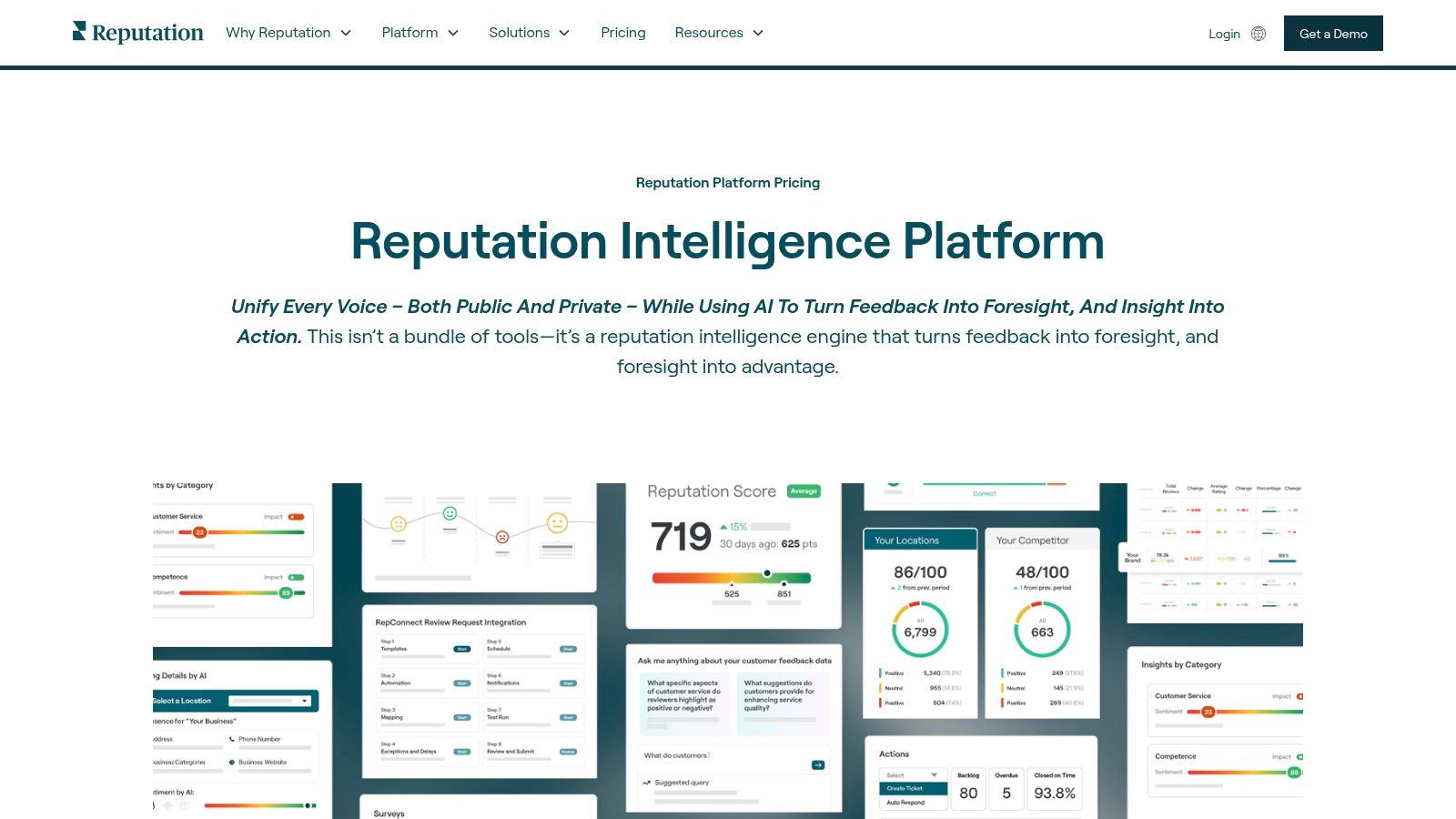
What makes Reputation unique is its proprietary "Reputation Score," a metric that gamifies and quantifies online performance for each business location. This score helps regional managers quickly identify underperforming sites. Its powerful review and survey management tools are complemented by an "Actions & Ticketing" add-on, which enables teams to create and assign tasks to close the feedback loop directly, ensuring that negative comments receive prompt attention and resolution. This makes it a strong contender for brands in hospitality, healthcare, and retail.
Key Considerations
Best For: Large, multi-location enterprises in sectors like automotive, healthcare, retail, and hospitality that require centralized control and location-level performance benchmarking.
Pricing: Offers transparent per-location pricing for core bundles. Advanced features like competitive intelligence and social media management are typically sold as add-ons. A formal quote is required.
Implementation Tip: Begin by focusing on getting your business listings (e.g., Google Business Profile) accurate across all locations. This foundational step maximizes the impact of your review collection and management efforts within the platform.
Pros:
Executive-ready dashboards provide excellent high-level and location-specific insights.
Strong specializations and features tailored for healthcare, retail, and hospitality.
The "Reputation Score" offers a clear, actionable KPI for location managers.
Cons:
Can be overly complex and expensive for small businesses or single-location operators.
Implementation requires dedicated effort to integrate data sources for the best results.
Core functionality for closing the loop, like ticketing, is often a paid add-on.
Website: https://www.reputation.com/pricing
Top 12 Multi-Channel Customer Feedback Tools Comparison
Product | Core features | UX & quality metrics | Pricing / Value | Target audience | Unique selling points |
|---|---|---|---|---|---|
FeedbackRobot | AI Prompt-to-Survey, sentiment & theme analysis, shared team inbox, automations, Radar dashboards, Spotlight widgets, QR/embeds, API (Scale) | Fast responses, empathetic auto-replies, real-time summaries, centralized workflows | Starter, Growth (Most Popular), Scale; 14-day free trial, ~15% yearly discount | Hospitality, restaurants, retail/e‑commerce, healthcare, professional services, multi-location SMBs | AI end-to-end survey→resolution, review amplification (Spotlight), cross-platform trends (Radar) |
Zendesk | Omnichannel (email/chat/voice/social), ticketing, SLAs, marketplace integrations, AI add-ons | Mature ecosystem, robust SLAs & analytics, enterprise controls | Per-agent pricing, published add-on rates (add-ons may raise TCO) | Mid-market to enterprise support teams, US-centric buyers | Wide integrations & marketplace, clear add-on structure |
HubSpot Service Hub | Ticketing, shared inbox, knowledge base, native NPS/CSAT/CES, workflows | Unified CRM + service data, strong dashboards & reporting | Tiered (free → paid); enterprise onboarding costs for large rollouts | Teams needing tight CRM+service alignment, marketing/sales/service collaboration | Native CRM integration, view-only seats, cohesive reporting |
Intercom | Live chat, shared inbox, knowledge base, AI agent, automation builder | Modern messenger UX, conversational support, resolution-based AI pricing | Seat pricing + usage-based channel add-ons (SMS/phone/WhatsApp) | Product-led teams, conversational support-first organizations | Modern conversational UX, transparent AI resolution pricing |
Freshdesk (Freshdesk Omni) | Unified agent workspace, Freddy AI, knowledge base, routing, SLAs | Value-oriented omnichannel UX, balanced feature set for price | Competitive omnichannel pricing; clear tiers & trials | Cost-conscious omnichannel support teams | Freddy AI for agents, strong price-to-feature balance |
Medallia | Multi-signal ingestion (surveys, speech, digital, social, video), AI text & speech analytics, case mgmt | Unified analytics across structured/unstructured data, enterprise security | Experience Data Record (EDR) pricing via sales (no instant checkout) | Large enterprises and organisations with complex XM needs | Enterprise-grade multi-signal analytics, unlimited users under EDR tiers |
Qualtrics XM | Research-grade surveys, advanced AI analytics, closed-loop workflows, interaction-based pricing | Deep analytics & research capabilities, scales across departments | Custom pricing via sales | Enterprises needing advanced research and CX analytics | Research-grade tooling, flexible XM suites across functions |
Sprinklr Service | Unified agent workspace, routing, knowledge base, care automation, social listening, WFM | Broad channel & social coverage, quality management & governance | Premium per-user or enterprise packages; self-serve tier available | Large enterprises needing social+care+governance | Strong social listening + care at enterprise CCaaS scale |
Sprout Social | Social inbox, publishing, monitoring, review management, AI Assist, reporting | Strong social reporting & competitor insights, unified inbox | Transparent seat-based pricing (add-ons increase cost) | Teams where feedback mainly from social networks & reviews | Best-in-class social reporting and competitor analysis |
Birdeye | Reviews, listings, messaging, surveys, campaigns, payments, mobile app | Centralized local reputation, unlimited users & contacts per plan | Per-location pricing; custom quotes | Multi-location local businesses (hospitality, healthcare, retail) | Per-location model, comprehensive local SEO & review tooling |
Podium | SMS/webchat messaging, review requests, payments via text, unified inbox | Fast text-driven workflows, industry-specific onboarding & success | Custom quotes; messaging caps unless upgraded | Local businesses (retail, home services, healthcare, auto) | Messaging-first platform with payments & industry programs |
Reputation (Reputation.com) | Reviews & surveys management, listings accuracy, closed-loop ticketing, Reputation Score | Executive-ready dashboards, benchmarking, location reporting | Transparent per-location pricing for core bundles; upgrades extra | Multi-location operators needing executive insights | Proprietary Reputation Score, benchmarking and location-based packages |
Stop Managing Feedback. Start Operating On It.
Navigating the landscape of customer feedback tools can feel overwhelming. You've seen a dozen powerful platforms, but the core takeaway is that the "best" tool isn't a one-size-fits-all answer. It's a strategic choice that aligns with your specific industry, operational scale, and, most importantly, your commitment to action.
The central question you must answer when deciding which tools are best for managing multi-channel customer feedback for your business is this: Do you need another dashboard to monitor, or do you need an engine to drive improvement? The former leads to data paralysis. The latter, to growth. For busy hospitality, retail, and service operators where every interaction counts, simply collecting data isn't enough. The goal is to create a closed-loop system where you collect smarter, act faster, and grow stronger.
From Collection to Operation: The Decisive Shift
Choosing your tool requires a clear-eyed assessment of your current capabilities and future ambitions.
For Businesses with Established Service Teams: If you already have a robust support infrastructure built around platforms like Zendesk or HubSpot Service Hub, leveraging their native feedback features might be the most efficient path. The deep integration with your existing ticketing and CRM systems creates a unified agent and customer experience.
For Reputation-Centric Local Businesses: Brands in hospitality, restaurants, and retail live and die by their public perception. Tools like Birdeye, Podium, and Reputation excel at consolidating reviews from dozens of sites and using SMS to drive more positive ones. Their strength lies in reputation management and local SEO.
For Organizations Seeking Deep CX Insights: For those who need to conduct complex journey mapping and sophisticated market research, enterprise solutions like Qualtrics and Medallia offer unparalleled analytical depth. They are designed for large teams dedicated to mining vast datasets for strategic insights.
The ultimate goal is to find a platform that doesn't just centralize feedback but makes it immediately actionable. This is the difference between a simple aggregator and a true Feedback Operating System. The right tool should feel less like a filing cabinet and more like a co-pilot, actively guiding your team toward better decisions and faster resolutions.
Implementing Your System: Beyond the Software
Once you've made your choice, remember that technology is only half the equation. Successful implementation hinges on your operational strategy. Design clear workflows for how feedback is triaged, who is responsible for responding, and how insights are shared with frontline staff and leadership. Set measurable goals, such as reducing response times for negative reviews or increasing your Net Promoter Score by a specific target.
The most successful businesses treat customer feedback not as a series of isolated complaints but as a continuous, real-time stream of mission-critical business intelligence. This is the modern path to building a resilient, customer-centric brand. By choosing a tool that aligns with this operational mindset, you empower your team to stop just managing feedback and start winning with it.
Ready to transform your feedback from a liability into your greatest asset? FeedbackRobot is the only Feedback Operating System designed specifically for service businesses to collect smarter, act faster, and grow stronger. See how our unified intelligence and automated recovery tools can give your team the power to operate on feedback, not just manage it. Check out our latest launch, the Spotlight: Feedback Wall, to see how you can amplify your best customer voices.
Is 'Multi-channel' the same as 'Omni-channel'?
In feedback, yes. It's about a seamless experience. If a customer starts a complaint on SMS, they should be able to continue it via email without repeating themselves.
What is the biggest challenge of managing multiple channels?
Response consistency. A multi-channel tool solves this by providing 'Saved Replies' and AI-drafted responses that maintain your brand voice everywhere.
How do I choose between the top feedback platforms?
Look at 'Integration Depth.' If you use Shopify, Zendesk, or Toast, your feedback tool MUST talk to those systems to be truly effective.
Can I manage international feedback on multiple channels?
The best tools offer automated translation. This allows a US-based manager to understand and respond to feedback left in Spanish or French across any channel.
Do multi-channel tools support 'Video Feedback'?
Some do. Video is a growing channel that captures raw emotion and tone that text simply can't match, providing a powerful marketing asset for your brand.