
Guide
Restaurant Review Management Software: The 2026 Guide for Multi-Unit Groups
Escape the manager's office trap. Discover the best restaurant review management software for multi-unit groups in 2026.

May 23, 2026 · 8 min read
Free tool
AI Survey Generator
Describe what you want to learn and get a ready-to-send survey in seconds.
For multi-unit restaurant groups, effective review management is no longer a marketing task—it's a core operational function critical to brand integrity and profitability. Traditional, manual approaches where general managers spend hours responding to reviews create a dangerous bottleneck, leading to inconsistent brand voice, slow guest recovery, and significant revenue leakage. The definitive solution in 2026 is specialized restaurant review management software, an AI-powered system that acts as a digital floor manager. This technology automates the entire feedback lifecycle, from real-time monitoring of platforms like Google and Yelp to drafting personalized, on-brand responses for rapid approval. By centralizing control and leveraging AI for resolution, these platforms eliminate the manual burden, protect brand reputation at scale, and transform customer feedback from a liability into a strategic asset for growth.
Why "Manual" is the Most Expensive Word in Hospitality
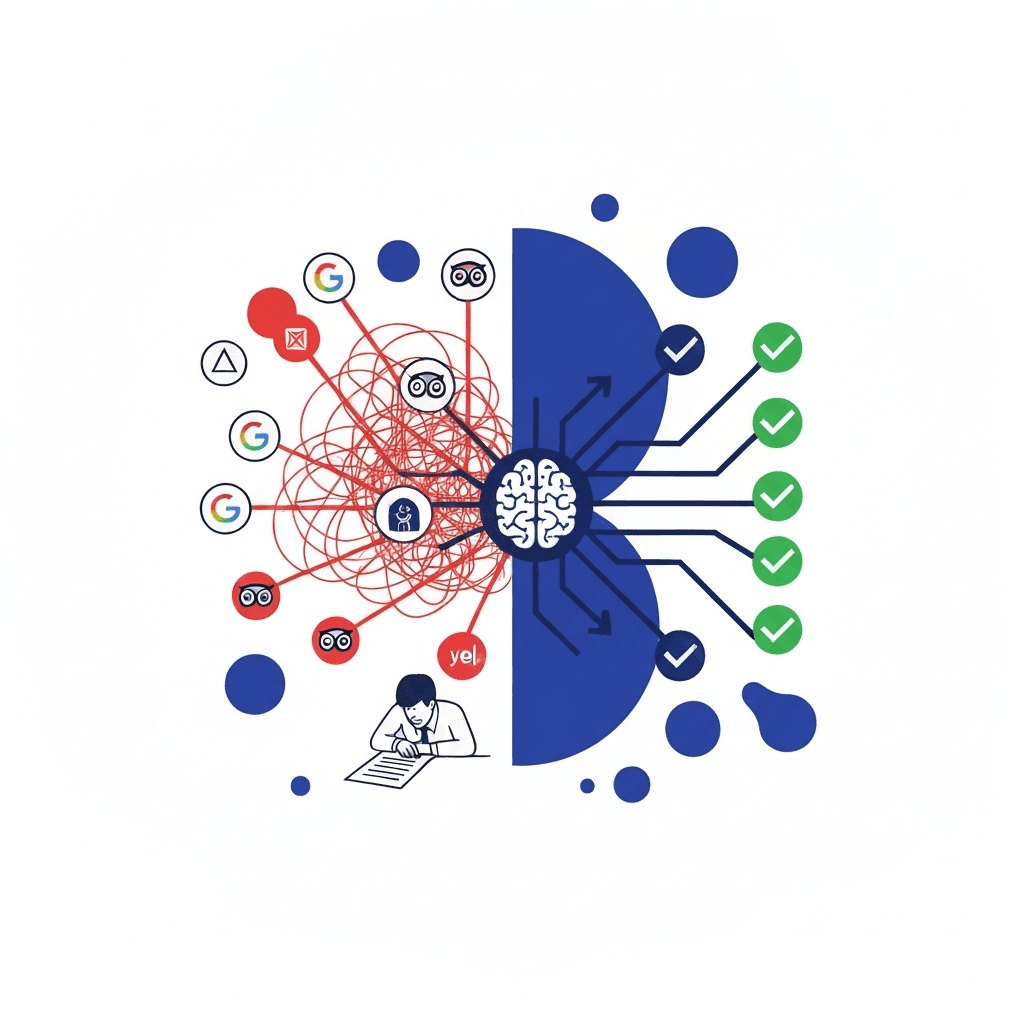
The image is a familiar one for any regional director: a talented General Manager, the heart of their restaurant's front-of-house, is trapped. Not by a rush on a Saturday night, but by the quiet tyranny of a keyboard on a Tuesday morning. They are caught in the "Manager’s Office Trap," spending two to three hours manually logging into Google, Yelp, TripAdvisor, and OpenTable, painstakingly crafting responses to the weekend's feedback. This scene isn't just inefficient; it's a catastrophic misallocation of your most valuable asset: leadership.
Every minute a GM spends on reactive review management is a minute they aren't training new servers, quality-checking plates leaving the kitchen, or engaging with guests on the floor. This manual bottleneck has a direct, calculable cost in labor, but the indirect costs are far greater: service standard erosion, decreased staff morale, and missed opportunities for real-time guest recovery. In 2026, the most critical KPI for guest satisfaction isn't your star rating alone; it's your "Resolution Velocity." How fast can you identify,
address, and resolve a negative guest experience to ensure they return? Manual processes inherently fail this test. The solution is a paradigm shift, moving from passive monitoring to an active, automated system designed not just to report problems, but to resolve them at scale.
The Compounding Cost of Inaction: Quantifying the Table-to-Kitchen Gap
The "Table-to-Kitchen Gap" represents the critical window between a guest's experience and the moment management becomes aware of it. When this gap is measured in days, the damage compounds exponentially. A single, unanswered 1-star review about a cold steak isn't just one lost customer; it's a public-facing digital billboard that actively deters new patrons. Industry data consistently shows that a 0.5-star drop in aggregate ratings can depress peak-hour reservations by over 15%, a devastating blow to any restaurant's P&L.
For multi-unit groups, this problem is magnified. Without a centralized system, brand voice becomes a lottery. A well-meaning but stressed GM in one location might offer a boilerplate apology, while another might over-promise a resolution, creating brand inconsistency that erodes customer trust. This lack of a unified strategy is death by a thousand cuts. The true cost of inaction isn't just the few guests who complain publicly; it's the silent majority who had a mediocre experience, saw that feedback was ignored, and simply chose your competitor for their next occasion. The right software closes this gap, ensuring that every piece of restaurant customer feedback becomes an opportunity for immediate recovery and operational improvement.
The Core Pillars of Modern Restaurant Review Management Software
Not all software is created equal. Basic tools that simply aggregate reviews are a relic of the past. True enterprise-grade solutions for restaurant groups are built on four operational pillars designed to drive efficiency, protect the brand, and increase revenue.
Pillar 1: Centralized Monitoring (The Digital Radar)
Your brand's reputation is being discussed across dozens of platforms simultaneously. A modern system acts as a high-speed command center, pulling in every mention, review, and rating from Google, Yelp, TripAdvisor, OpenTable, and even social media into a single, actionable dashboard. The key here is velocity. A real-time alert about a 1-star review that posts during the dinner rush allows a manager to potentially identify and recover the guest before they've even left the parking lot. This is the difference between active reputation management and passive brand archaeology.
Pillar 2: AI-Powered Resolution Engine (The Digital Floor Manager)
This is the engine that breaks the manual bottleneck. The fear of AI has always been robotic, impersonal responses. Sophisticated 2026 systems have moved far beyond that. By integrating with your brand guidelines and even your POS data, the AI Resolution Engine drafts personalized, empathetic, and on-brand responses for approval. For example, it can ingest a review mentioning "overcooked risotto," cross-reference it with your brand's preferred recovery language for culinary issues, and draft a response that sounds exactly like your most seasoned Floor Manager wrote it. The GM's role shifts from writer to editor—a 10-second approval process on their phone, not a 10-minute typing exercise at a desk. This is the core of an effective automatic restaurant feedback system.
SME Insight: The goal of AI isn't to replace the manager; it's to arm them. By providing a 90% complete, brand-perfect draft, the software frees up the GM's cognitive load to focus on the operational fix, not the semantic construction of the apology.
Pillar 3: Sentiment Analysis & Operational Insights
A constant stream of reviews is a goldmine of business intelligence. Top-tier software uses sentiment analysis to move beyond individual complaints and identify systemic trends. The dashboard shouldn't just tell you that you got a bad review; it should tell you that 30% of negative reviews from Location #12 in the last month mention "long wait times" or "inattentive service." This transforms a marketing tool into an indispensable operations platform, flagging issues that require staff retraining, process adjustments, or even equipment maintenance before they escalate into a crisis.
Pillar 4: Automated Marketing Spotlight (Turning Raves into Revenue)
Effective reputation management is a two-sided coin. While mitigating negative feedback is crucial for brand defense, amplifying positive feedback is essential for brand offense. The best platforms include a "Spotlight" engine that automatically identifies your most glowing, descriptive, "Foodie" reviews. It can then convert these testimonials into professionally designed social media graphics, ready to be scheduled and pushed to your social feeds. This provides a constant stream of authentic user-generated content that drives foot traffic, especially for historically slow periods like Tuesday and Wednesday nights.
The Operational Shift: From Reactive Damage Control to Proactive Guest Recovery
Implementing powerful software is only half the battle. To truly leverage its potential, restaurant groups must shift their entire culture from reactive damage control to proactive guest recovery. This involves creating a standardized playbook that the software can execute flawlessly across all locations.
Building Your "Resolution Velocity" Playbook
This playbook operationalizes your response strategy, ensuring speed and consistency.
Define Triage Rules: Configure the software's alert system. For example, all 1- and 2-star reviews trigger an immediate push notification to the on-duty GM and the Regional Manager. 3-star reviews can be handled within 12 hours, while 4- and 5-star reviews can be batched for a daily response.
Calibrate the AI Tone & Voice: This is a critical one-time setup process. You'll feed the AI engine with your brand's communication guidelines, examples of ideal responses, and key phrases to use (or avoid). This ensures every AI-drafted response reflects your unique hospitality philosophy.
Establish the Approval Workflow: The default path should be an AI draft sent to the local GM for a one-click approval. For severe issues (e.g., allegations of food safety problems), the workflow can be configured to automatically escalate the ticket to a corporate or legal team for review before any public response is posted.
Connect Feedback to Operations: Use the software's tagging system. A review mentioning a specific dish can be tagged "Menu Feedback." A comment about a server can be tagged with their name for private coaching. This creates a closed-loop system where digital feedback directly informs front-of-house hospitality review management and operational improvements.
Evaluating Software for Multi-Unit Restaurant Groups: A Buyer's Checklist
When assessing the crowded market of restaurant reputation management tools, regional directors and corporate leadership should use a rigorous checklist to separate the comprehensive platforms from the simple monitoring tools.
Scalability and Hierarchy: Can the software provide a corporate-level dashboard with drill-down capabilities for each region and individual location? Does it allow for role-based permissions (e.g., GM, Regional Manager, Corporate Marketing)?
AI Sophistication: Ask for a demo. Does the AI generate generic, repetitive text, or can it reference specific details from the review? Can it be trained on your brand's unique voice?
Brand Consistency Controls: Does the platform allow corporate to lock in specific response templates or phrases for sensitive topics (like allergies or legal complaints) while still allowing local GMs to personalize other responses?
Integration Capabilities: Can the system connect with your POS, reservation system, or CRM? This provides the AI with richer context (e.g., guest's order history, visit frequency) for crafting more personalized and effective resolutions.
Reporting & Analytics: Does it provide robust reporting that compares location performance, tracks response times by manager, and identifies cross-brand operational trends? The data must be actionable, not just informational.

Choosing the right platform is a strategic decision. A deep dive into restaurant review management solutions will reveal which ones are truly built for the complexity of a multi-unit operation.
Beyond Software: Fostering a Feedback-First Culture
The ultimate goal is to create a virtuous cycle. The right software is the catalyst, but the culture is the engine that drives compounding growth. When GMs are freed from the manager's office trap, they can use the insights from the software to lead more effectively. A trend of negative reviews about wait times on Friday nights becomes the agenda for the pre-shift huddle. A glowing review naming a specific server is read aloud to the team as a celebration of excellence.
This is how you transform reputation management from a defensive chore into the central nervous system of your hospitality operation. The process becomes: Better Software -> Faster Resolutions -> Actionable Insights -> Improved Staff Training -> Better On-Floor Service -> Higher Star Ratings -> More Positive Reviews -> Powerful Marketing Assets -> Increased Revenue. This closed-loop system is the foundation of a modern, resilient, and beloved restaurant brand. The most actionable restaurant reputation management strategy is one where technology empowers, rather than replaces, your people.
The End of the Manager's Office Trap
For too long, the hospitality industry has accepted a flawed operational model where its most important leaders are chained to administrative tasks. The manual management of online reviews is a relic of a past era, an expensive and ineffective strategy that damages brand consistency and burns out top talent. In 2026, failing to adopt an automated, AI-driven approach is no longer a strategic choice; it is an operational failure.
Modern restaurant review management software serves as a Digital Floor Manager, working 24/7 to protect the brand, empower local managers, and turn every piece of guest feedback into a tool for growth. It enables guest recovery at the speed of the market and provides the operational insights needed to build a truly feedback-first culture. The future of hospitality leadership isn't about working harder in a back office; it's about being empowered by smarter technology to spend more time on the floor, where they belong.
What is the significance of "Resolution Velocity" in 2026, and why should multi-unit groups prioritize it over simple star ratings?
Resolution Velocity measures the speed at which a hospitality team identifies, addresses, and resolves a negative guest experience. While star ratings are a lagging indicator of past performance, Resolution Velocity is a leading indicator of guest retention and brand resilience. In a digital-first market, manual response recovery is too slow; by the time a General Manager logs in to address a complaint, the "Table-to-Kitchen Gap" has already widened, potentially alienating the guest and thousands of prospective patrons. High-velocity resolution, powered by automation, ensures that a negative experience is mitigated before it can permanently damage the brand's digital reputation.
How does the "Manager’s Office Trap" specifically erode the operational standards of a high-volume restaurant?
The "Manager’s Office Trap" refers to the two to three hours a General Manager wastes each week on administrative drafting and manual platform monitoring. This is a catastrophic misallocation of leadership talent. When a GM is chained to a keyboard, they are absent from the floor, leading to service standard erosion, a lack of real-time server coaching, and diminished kitchen quality control. Utilizing an AI Resolution Engine shifts the GM’s role from a content creator to a final editor, reducing a ten-minute writing task to a ten-second approval and allowing leadership to focus on the front-of-house excellence that prevents negative reviews in the first place.
In what ways does an AI-powered resolution engine move beyond generic, robotic templates to maintain an authentic brand voice?
Modern enterprise systems utilize a calibration process where the AI is ingested with a brand’s unique communication guidelines, preferred hospitality philosophy, and even POS data. Instead of boilerplate apologies, the software drafts contextual responses that reference specific details—such as a specific dish or a named server. By providing a 90% complete draft that reflects the brand’s "Digital Floor Manager" persona, the technology ensures that every response sounds human and empathetic while maintaining a unified voice across fifty or a hundred different locations.
How can regional directors use sentiment analysis to drive systemic operational improvements across multiple locations?
Sentiment analysis transforms a mountain of qualitative feedback into quantitative business intelligence. Rather than viewing reviews as isolated complaints, the software identifies clusters of friction—such as a specific location showing a 30% spike in mentions of "long wait times" or "inattentive service." This allows regional directors to move from reactive damage control to proactive intervention. It highlights specific needs for staff retraining, equipment maintenance, or process adjustments before these operational lapses manifest as a significant drop in the group’s overall P&L.
What specific "Brand Consistency Controls" are necessary when deploying review management software at the enterprise level?
A robust platform must offer a tiered hierarchy that balances local personalization with corporate oversight. Essential controls include the ability to "lock in" mandatory, legally-vetted language for sensitive triggers—such as allegations of food safety or allergens—while allowing GMs the flexibility to personalize responses for general feedback. This ensures that while the local manager provides the personal touch, the corporate team maintains a safety net that protects the brand from inconsistent promises or liability-inducing remarks across the entire multi-unit portfolio.
Put this on autopilot
Review Management
A ready-made FeedbackRobot automation that runs this for you — deploys free in under 5 minutes.
Stop reading about it. Let your agent handle it.
25 free AI actions · no credit card required
Start Free