
Guide
Real-Time Feedback Resolution Software: A 2026 Guide
Discover how real-time feedback resolution software helps you act faster and grow stronger. A complete 2026 guide for hospitality and service businesses.

Apr 18, 2026 · 16 min read
Free tool
AI Survey Generator
Describe what you want to learn and get a ready-to-send survey in seconds.
A guest checks into your hotel after a delayed flight. The room is clean, but the AC rattles, the hallway is noisy, and the front desk is slammed. They say nothing in the moment. Later that night, they leave a public review describing the whole stay as frustrating.
That delay is where service businesses lose money.
The same thing happens in restaurants. A cold coffee, a missed modifier, a long wait for the bill. Most owners don't have a service problem as much as a timing problem. By the time the feedback arrives, the guest has left, the shift has changed, and the team can only apologize after the damage is already public.
Turn Customer Feedback into Your Greatest Asset
The operational win comes from catching issues while the customer is still on-site, still reachable, and still open to a fix.

A modern service business can't treat feedback like a suggestion box anymore. Feedback has to work like an alert system. If a guest reports a dirty bathroom, a broken lamp, a rude interaction, or a delayed meal, the right person needs that signal immediately. Then the team needs a simple way to respond, document the fix, and learn from the pattern.
That is what real-time feedback resolution software is supposed to do. Not just collect comments. Resolve problems in the moment.
Practical rule: If feedback arrives after checkout, after payment, or after the review is posted, you're managing reputation late instead of managing experience early.
This shift is why the category is growing. The market for real-time feedback software was valued at USD 5.1 billion and is projected to grow at a 9.3% CAGR through 2031, driven by instant communication tools and data-driven decision-making in service industries seeking an edge, according to this market outlook on real-time feedback software.
Why owners should care
Most owners don't need another dashboard. They need fewer preventable complaints, faster service recovery, and clearer visibility into what keeps repeating across shifts and locations.
That's why it helps to think beyond a single tool. The stronger approach is a Feedback Operating System. One connected setup that helps you collect smarter, act faster, and grow stronger.
A complete operating system does four jobs well:
Captures feedback at the right moment so guests can speak up before they post publicly
Organizes signals from multiple channels so your team isn't checking five platforms all day
Shows what matters quickly so managers don't have to read every line manually
Triggers action so service recovery happens while the outcome can still change
When owners get this right, feedback stops being a pile of comments and starts becoming an operational asset.
Moving Beyond Surveys to Immediate Action
Traditional surveys still have a place. They help with benchmarking, periodic reviews, and broad trend checks. But for day-to-day operations, they're too slow.
A yearly survey is like a physical exam. Useful, but limited. You get a snapshot after the fact. Real-time feedback resolution software works more like a heart rate monitor. It tells you when something is going wrong now, not weeks later.
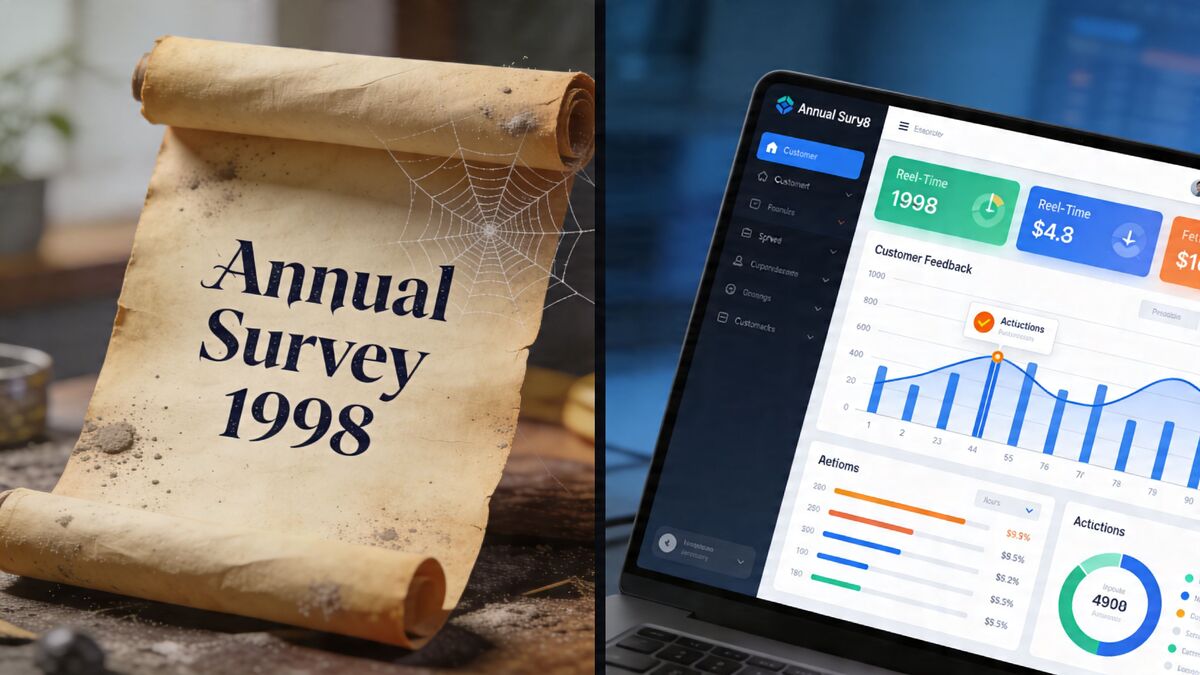
That difference changes how managers work. Instead of reading a monthly summary that says guests complained about check-in delays, the front desk lead gets a same-shift alert that wait times are becoming a problem. Instead of learning later that diners were unhappy with order accuracy, the floor manager sees the issue while those tables are still seated.
What the old model misses
The biggest weakness in traditional feedback isn't effort. It's coverage.
Real-time feedback analytics can capture and analyze 100% of customer interactions as they occur, while traditional surveys often get response rates of only 25% to 35%, leaving teams to make decisions from a narrow and often skewed sample, as explained in this comparison of real-time feedback analytics and traditional survey tools.
That matters in hospitality because silent dissatisfaction is common. Guests often won't flag a problem directly. They'll just shorten the stay, skip dessert, avoid returning, or leave a low-rating review later.
What immediate action looks like
A useful platform closes the gap between sentiment and response. In practice, that means:
A guest submits feedback quickly through QR, SMS, kiosk, web form, or review site
The system interprets urgency so a serious issue doesn't sit in a queue
The right team gets notified with enough context to act
The action is tracked so owners know whether the problem was resolved
If you're tightening your process before choosing software, this practical guide on how to collect customer feedback effectively is worth reading because it focuses on timing, channel choice, and reducing friction for the customer.
A lot of owners get stuck on the collection part. Collection isn't the hard part. Resolution is.
The winning workflow isn't "send survey, wait, review comments later." It's "capture signal, route issue, recover service, learn from trend."
That's also why automation matters more than survey templates. If you want to see what that looks like in day-to-day operations, this breakdown of feedback resolution automation shows how teams move from passive listening to actual service recovery.
A simple way to judge the category
Ask one question. Does the tool help your team fix the problem before the customer leaves?
If the answer is no, it's probably a reporting tool, not real-time feedback resolution software.
Core Components of a Modern Feedback Platform
Most products in this category sell one feature. Surveys. Review monitoring. Sentiment analysis. Ticketing. That creates a familiar mess for operators. Data in one place, alerts somewhere else, and actions handled manually by whoever happens to see the message first.
A real operational setup works better as a Feedback Operating System. The point isn't to buy four separate tools. The point is to connect capture, analysis, and action so your team can move without delay.
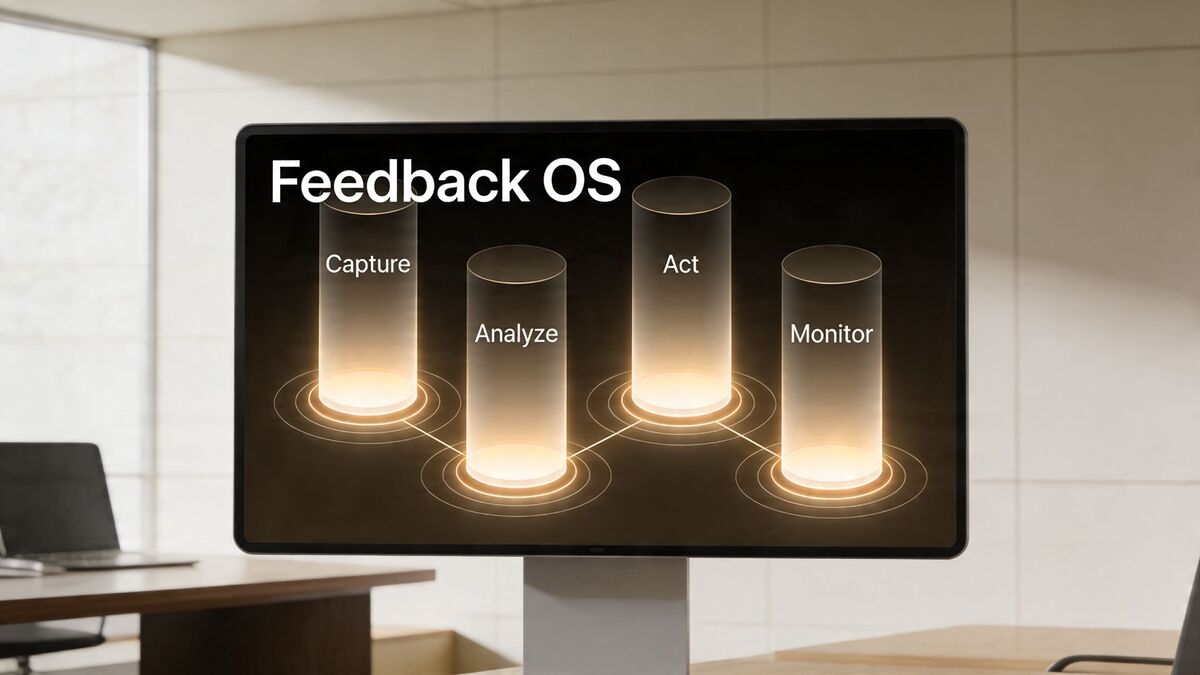
The four pillars that actually matter
Radar for unified review intelligence
Owners don't need more tabs open. They need one place to see what guests are saying across Google, Yelp, TripAdvisor, direct surveys, and other channels.
Radar is the unified review intelligence layer. It pulls those signals into one working view so managers can spot patterns without jumping between platforms. In a hotel group, that might reveal the same housekeeping complaint at multiple properties. In a restaurant brand, it might show that one location keeps getting praised for speed while another gets hit for slow service at lunch.
Without unified review intelligence, feedback stays fragmented. Fragmented feedback creates slow responses and weak accountability.
Prompt to Survey for faster capture
Survey launches often face delays because their creation takes time. The questions get debated, the wording gets revised, and the rollout keeps slipping.
Prompt to Survey fixes that by turning a simple text prompt into a ready-to-use survey. That's useful when a hotel wants a quick QR code at the front desk, or when a clinic wants a post-visit SMS check-in without a long setup process.
Good capture has one job. Make it easy for the guest to tell you what happened while the moment is still fresh.
Analysis has to reduce manager workload
AI Summaries for instant insights and sentiment analysis
Raw feedback is noisy. Busy operators don't have time to read every review, every text response, and every comment thread.
AI Summaries turn that volume into instant insights and sentiment analysis. Instead of forcing a GM or regional manager to scan hundreds of entries, the platform highlights recurring issues, positive themes, and urgent complaints that need attention now.
Modern feedback platforms can detect emerging issues with 90% to 95% accuracy, and automations tied to those signals can reduce customer issue response times by as much as 70%, according to this review of feedback analytics software and AI-driven sentiment analysis.
That kind of analysis is only useful if it helps someone decide what to do next. Summary without action is just cleaner reporting.
Resolutions Engine for automated service recovery
The final pillar is where most systems fall short.
Resolutions Engine handles automated service recovery. That can mean triggering an alert to the duty manager, drafting an empathetic reply, routing a complaint to housekeeping or maintenance, or sending an approved make-good when the issue meets your rules.
The category becomes operational instead of analytical. A guest says the shower isn't working. The platform doesn't just log sentiment. It starts the response.
Good service recovery isn't random generosity. It's a repeatable workflow with clear triggers, assigned owners, and fast follow-through.
Why the full system matters
A single feature can help. A connected operating system changes behavior.
Here's how the four parts work together in practice:
Component | Core function | Operational effect |
|---|---|---|
Radar | Unified review intelligence | Gives leaders one source of truth across channels |
Prompt to Survey | Fast survey creation and launch | Helps teams capture feedback at the right moment |
AI Summaries | Instant insights and sentiment analysis | Cuts reading time and surfaces patterns quickly |
Resolutions Engine | Automated service recovery | Turns complaints into assigned action, not backlog |
One option in this category is FeedbackRobot's AI feedback analysis tool, which combines survey creation, review intelligence, AI summaries, and automation in a single workflow. That's the operating-system model many service businesses need because disconnected tools usually create handoff problems.
If you're evaluating vendors, don't ask only whether a platform can collect feedback. Ask whether it can help your team capture, interpret, and resolve the issue before it becomes a reputation problem.
How Service Leaders Win with Instant Feedback
The best way to understand real-time feedback resolution software is to watch how it behaves in ordinary service failures. Not in a product demo. In the messy middle of a real shift.
Hospitality with Mews in the loop
A guest checks into a hotel and scans a QR code in the room after hearing a loud AC rattle. They select the room issue option, add a short note, and hit submit.
The system routes the complaint to the front desk and maintenance. Because the hotel ties the workflow into its PMS, such as Mews, the front desk can see the guest record, confirm room availability, and offer a room move if engineering can't fix it quickly.
That matters because the guest doesn't need to hunt down a manager or wait until checkout. The hotel addresses the issue during the stay, while recovery is still possible. The owner also gains a useful operational signal. If that room type keeps generating the same complaint, it's no longer an isolated anecdote.
Restaurants and F&B with Toast
A diner receives the wrong order, and the server is busy handling a rush. Instead of waiting for the check and venting online later, the customer opens a table QR code, flags the issue, and writes a short note.
The floor manager gets the alert on a tablet linked to Toast. They comp the affected item, refire the dish, and stop by the table before frustration hardens into a public complaint.
Restaurants benefit from speed more than almost any other category because the service window is short. If the problem is fixed quickly, the guest often remembers the recovery more than the mistake. If it drags, the whole meal gets defined by one failure.
In restaurants, minutes matter. A recovery made during the meal can still save the experience. A recovery offered after the review usually can't.
Retail on the sales floor
A shopper walks into a fitting room area that hasn't been reset after a busy afternoon. The floor looks messy, hangers are scattered, and no staff member is nearby.
At the exit kiosk, the shopper flags cleanliness. The supervisor receives the signal immediately and sends an associate to fix the area. The problem doesn't sit until closing, and the manager now has a timestamped record of when floor standards started slipping.
Retail teams often think of feedback as a brand or e-commerce issue. In-store feedback is more operational. It tells you where the customer journey breaks in physical space. Cleanliness, wait time, signage, stock confusion, and staff availability are all fixable if the signal reaches the right person fast enough.
Healthcare after the visit
A patient leaves a clinic and receives a post-visit SMS asking for quick feedback. They note that the wait felt too long and that communication at check-in was unclear.
The system sends an empathetic acknowledgment, routes the issue for review, and includes the theme in the administrator's morning summary. The clinic can follow up, adjust staffing patterns, or coach the front desk on expectations and scripts.
Healthcare leaders often underestimate how useful summaries are in this setting. They don't just surface one complaint. They separate one-off frustration from repeated friction, which is what administrators need if they want to improve the experience without drowning in comments.
What these examples have in common
The industries differ, but the pattern is consistent:
The customer reports the issue quickly through a low-friction channel
The feedback reaches the correct team without manual forwarding
The business responds while the experience is still active
Leadership gets trend visibility so recurring problems aren't treated as isolated incidents
This is why service leaders don't treat real-time feedback resolution software as a survey app. They use it as an operating layer for service recovery.
An Evaluation Checklist for Busy Owners
Most software demos look polished. That's not the hard part. The hard part is whether the tool still works on a packed Friday night, during a front desk shift change, or across multiple locations with older systems in the mix.
Use the checklist below before you sign anything.
Can the team use it without a long rollout
If managers understand it but frontline staff avoid it, adoption will stall. The interface has to be simple enough for a host, front desk agent, clinic coordinator, or shift lead to use under pressure.
Ask vendors to show the exact workflow for these moments:
Low rating received: What does the manager see first, and how fast can they act?
Issue assignment: Can staff route a complaint without opening multiple systems?
Guest follow-up: Can the team respond with empathy without writing every reply from scratch?
If the demo relies on a power user, the rollout will be harder than it looks.
Does it connect to the systems you already run
Many pilot programs falter. In hospitality and retail, integration problems with legacy systems are a major hurdle. Industry analysis shows up to 60% of pilot programs are abandoned due to disjointed workflows, and ROI can drop by 40% without integrated connections to existing POS and PMS systems, according to this analysis of misunderstandings around on-site real-time feedback solutions.
If you use Mews, Toast, an older PMS, a clinic scheduling platform, or a custom reporting setup, don't accept vague promises. Ask what is native, what requires middleware, and what still needs manual work.
A practical evaluation table helps here:
Question | Good answer | Warning sign |
|---|---|---|
Does it integrate with my stack? | Clear explanation of supported workflows | "We can probably connect that later" |
Can it route issues by location or department? | Rules by property, shift, topic, or urgency | One shared inbox for everyone |
Can I launch quickly? | QR, SMS, embed, and review capture are straightforward | Long setup before first feedback goes live |
Are the automations actually useful
A lot of platforms say "automation" when they mean email notifications. That's not enough.
Look for automation that can classify the issue, assign ownership, trigger follow-up, and keep a clear resolution trail. If your GM still has to read every alert and manually decide what happens next, the platform isn't reducing operational load.
The right automation doesn't replace your standards. It enforces them consistently.
Can it unify all feedback in one view
Owners need one command center. Not one tool for surveys, another for reviews, and another for internal notes.
A unified dashboard should help you answer basic questions fast. Which location is slipping? Which issue keeps repeating? Which complaints were resolved and which are still open? If the product can't answer those without exporting data, it won't help much in practice.
How does it handle multilingual feedback
This point gets overlooked, especially by multi-location groups in travel, retail, and urban healthcare markets.
If a platform interprets non-English feedback poorly, it can trigger the wrong response. It may mark a nuanced complaint as neutral, send an unnecessary make-good, or miss a sensitive issue that should have reached a manager. Ask whether the vendor audits sentiment quality across languages, how human review fits in, and whether teams can override automation easily.
That isn't a niche concern. It's a frontline service issue.
From Happier Customers to a Healthier Bottom Line
Owners rarely need convincing that customer experience matters. What they do need is a clean line between faster resolution and financial impact.
That line is easier to see than many teams realize.

Where the return actually shows up
The first return is retention. Saving one unhappy guest, diner, patient, or client before they churn is often more valuable than chasing a brand-new one. Real-time resolution gives you more chances to save that relationship because the issue surfaces while the person is still engaged.
The second return is reputation protection. A problem resolved privately on-site is less likely to become a damaging public review. A strong experience, handled well, is also easier to turn into social proof through tools like a feedback wall or review showcase.
The third return is labor efficiency. Managers waste time when they have to read scattered messages, hunt for context, and manually coordinate responses. A tighter workflow reduces that drag. If you want to think through the retention side with your own business inputs, the free Customer Churn Calculator is a practical place to start.
A simple ROI thought exercise
Use your own numbers and ask:
How many at-risk customers do we lose because we hear about issues too late?
What is one repeat guest, regular diner, or returning patient worth over time?
How much manager time goes into chasing complaints across inboxes and review sites?
How often do we offer make-goods without a clear rule for when they are justified?
The value of real-time feedback resolution software usually sits across all four, not in one line item.
One caution that affects profit
Multilingual feedback quality has direct financial consequences. Sentiment misclassification can be as high as 25% for non-English languages, and flawed resolutions can cost businesses up to 15% in unnecessary discounts or escalations, according to this analysis of AI customer feedback tools and multilingual bias.
That means ROI isn't only about speed. It's also about accuracy.
If your guest base or patient mix is multilingual, a platform that acts quickly but interprets badly can create waste. Teams end up overcompensating, escalating the wrong issues, or missing the tone behind what was said. That's one reason many operators now look more closely at customer feedback automation through the lens of guardrails, review rules, and human oversight instead of pure speed.
Fast action is valuable only when the action fits the situation.
When you connect retention, review protection, and manager efficiency, the category starts to make business sense. Not as a nice-to-have. As an operational system that protects revenue already walking through your door.
Going Live with Real-Time Feedback in One Week
Most owners assume implementation will be technical and slow. It doesn't have to be. The fastest rollouts start narrow, prove value quickly, and expand once the team trusts the workflow.
Day 1 and Day 2
Pick one business goal. Improve low ratings. Catch service issues before checkout. Increase private feedback volume before guests post publicly. Keep it tight.
Then launch one capture point using Prompt to Survey. For a hotel, that may be a front desk or in-room QR code. For a restaurant, it may be a receipt or table prompt. For a clinic, a post-visit text often works better because the patient can answer without feeling rushed.
Day 3 and Day 4
Build one automation in the Resolutions Engine. Keep it simple. If feedback comes in negative, notify the duty manager and route the issue to the right department.
Then hold a short team huddle. Show staff what guests will see, who receives alerts, and what good follow-up sounds like. The point isn't deep training. It's clarity.
Day 5 through Day 7
Review your first AI Summaries and look for patterns. Are guests confused at one touchpoint? Is one shift producing more complaints than another? Are certain issues being resolved quickly while others sit too long?
Then tighten what you learn:
Refine the survey prompt: Make it easier for guests to answer quickly
Adjust the routing rules: Send room issues to maintenance, billing issues to front desk, food complaints to the floor manager
Spot and amplify praise: Use positive feedback as proof, not just internal morale
If you want a practical way to test this approach, start small and use a trial period to build one live workflow your team will use. Once you have wins coming through, add a public proof layer like Spotlight: Feedback Wall so your strongest feedback starts helping marketing as well as operations.
If you're ready to collect smarter, act faster, and grow stronger, start with FeedbackRobot. Use the free trial to launch one live feedback channel, one automation, and one resolution workflow this week. If you already have strong customer praise coming in, pair that rollout with Spotlight: Feedback Wall so the feedback you're earning also helps drive new business.
What is the 'Resolutions Engine'?
It’s our proprietary system that flags negative feedback the second it happens. It moves the issue from a 'data point' to a 'task' for your manager, ensuring no guest leaves unhappy.
How much can real-time resolution save in lost revenue?
On average, resolving a complaint before the guest leaves saves the cost of a refund and preserves the 'Lifetime Value' of that customer, which is often worth thousands of dollars.
Does the software alert me via mobile?
Yes. Real-time software should send push notifications or SMS alerts to the manager on duty, allowing for instant intervention while the guest is still on-site.
Can I track the 'Resolution Time' of my managers?
Yes. The software tracks how long it takes from a low score submission to a manager 'closing the loop,' allowing you to monitor and improve your team's service speed.
What is the 'Service Recovery Paradox' in real-time software?
It's when a guest's loyalty increases *because* you fixed their problem so quickly and professionally on-site. Real-time software makes this paradox a regular occurrence for your business.
Stop reading about it. Let your agent handle it.
25 free AI actions · no credit card required
Start Free