

Guide
Food Review Sentiment Analysis: The Definitive 2026 Guide
How food review sentiment analysis turns customer feedback into decisions — the tools, the techniques and a step-by-step process for 2026.

Apr 30, 2026 · 8 min read
Free tool
Review Sentiment Analyzer
Paste your reviews or survey responses and get an instant sentiment breakdown with themes.
The Digital Echo of Every Meal
The weekend rush is over, but the work is far from finished. Now begins the battle on the digital front lines: Yelp, Google Reviews, DoorDash, TripAdvisor, and a dozen other platforms where customers share their dining experiences. For every rave review that makes your team proud, there's a critical one that stings. Manually sifting through this flood of feedback is a monumental task. You might spot a few trends, but the sheer volume makes it impossible to grasp the full picture. What if a dish is consistently described as "bland"? Or if weekend service is always flagged as "slow"? These are the subtle, business-altering trends buried in the noise. This is where food review sentiment analysis moves from a technical concept to an essential business tool. It's the process of using technology, primarily artificial intelligence, to systematically understand the emotion, topics, and intent behind every piece of customer feedback. This isn't just about collecting stars; it's about extracting actionable intelligence to refine operations, sharpen marketing, and build unshakeable customer loyalty. The process is a fundamental part of a larger strategy for success. Our complete guide on Sentiment Analysis for Restaurant Reviews: Drive Growth details how to convert these powerful insights into tangible business results.
Why Manual Review Analysis Fails at Scale
For a new restaurant with a handful of reviews, a manager can personally read each one and get a feel for customer sentiment. But as the business grows, this manual approach quickly becomes a liability. It’s not just inefficient; it's fundamentally flawed for several key reasons.
The Problem of Human Bias
We are all susceptible to negativity bias. A single, scathing one-star review detailing a terrible experience can occupy a manager's mind for days, overshadowing twenty positive four- and five-star reviews. This can lead to knee-jerk reactions...
and changes based on an outlier rather than a genuine trend. Conversely, a manager might dismiss legitimate criticism if it's phrased politely, failing to see a recurring issue. An automated system has no ego; it simply reports the data as it is.
The Time and Resource Drain
Consider the real cost. If a general manager spends even two hours a week reading and categorizing reviews across five platforms, that's over 100 hours a year. That’s more than two full work weeks that could have been dedicated to staff training, menu development, or improving front-of-house operations. As you scale to multiple locations, this problem multiplies, becoming an unsustainable operational bottleneck.
Inconsistency in Interpretation
How do you categorize a review that says, "The ambiance was great, the food was okay, and the service was terrible"? One manager might classify it as negative overall. Another might focus on the positive ambiance. This subjectivity makes it impossible to track performance consistently over time. An AI-driven system applies the same logic every time, classifying each aspect of the review independently to provide a nuanced, consistent analysis.
Inability to Spot Gradual Trends
The most dangerous issues are often not the sudden disasters but the slow burns. A human is unlikely to notice if mentions of "cold food" increase by 15% over a three-month period. Our brains aren't wired to compute these subtle statistical shifts from unstructured text. An automated sentiment analysis system, however, is built for exactly this. It can flag these creeping problems before they escalate into review-bombing events that can seriously damage a brand's reputation.
The Core Components of Food Review Sentiment Analysis
To truly appreciate its power, you need to understand what's happening under the hood. Modern sentiment analysis goes far beyond a simple positive or negative score. It dissects language to provide a multi-layered understanding of customer feedback.
1. Polarity Detection: The Overall Vibe
This is the most basic level of analysis. The system assigns a score to the review, classifying it as Positive, Negative, or Neutral. While a good starting point, it's often the least useful metric on its own for a complex business like a restaurant.
Positive: "The spicy margarita and the carnitas tacos were absolutely phenomenal! Best meal I've had all year."
Negative: "We waited 45 minutes for a table despite having a reservation. The entire experience was a disappointment."
Neutral: "The restaurant is located downtown and offers valet parking." (This is a factual statement, not an opinion).
2. Aspect-Based Sentiment Analysis (ABSA): The Critical 'Why'
This is where sentiment analysis becomes a game-changer for the food and beverage industry. ABSA identifies specific topics (aspects or entities) within the review and assigns a sentiment score to each one individually. This tells you not just *that* a customer was unhappy, but precisely *why*.
Common aspects for a restaurant include:
Food Quality: Taste, temperature, presentation, portion size.
Service: Staff friendliness, attentiveness, speed, order accuracy.
Ambiance: Decor, noise level, cleanliness, music.
Value: Price, portion-to-price ratio.
Logistics: Wait times, reservations, parking, location.
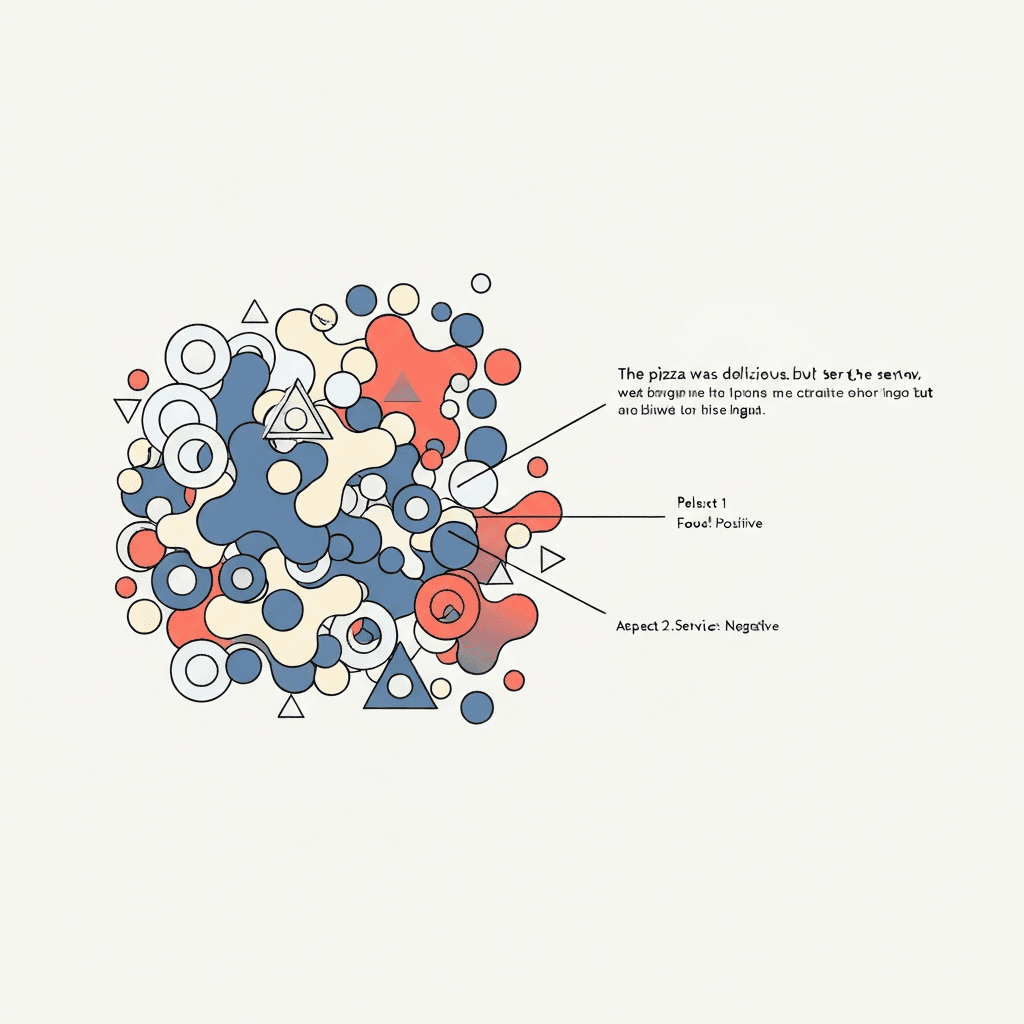
Consider this review: "The steak was cooked to perfection and the wine pairing was divine, but our server was distracted and we had to ask for the check three times."
Overall Polarity: Mixed/Neutral
ABSA Breakdown: Food (Positive), Service (Negative)
This level of granularity allows you to pinpoint specific areas of excellence and opportunities for improvement with surgical precision.
3. Emotion and Intent Detection: The Human Element
The most advanced systems can go even further by detecting the underlying emotions in the text. Was the customer merely dissatisfied, or were they angry? Were they just happy, or were they delighted? Understanding the emotional intensity helps prioritize responses. A review expressing deep disappointment warrants a more urgent and personal intervention than one with a minor suggestion. This layer helps you connect with the human on the other side of the screen, informing a more empathetic and effective customer service strategy.
How to Implement a Food Review Sentiment Analysis System: A Step-by-Step Guide
Putting this technology to work for your business is more accessible than ever. Here’s a practical framework for getting started.
Step 1: Aggregate All Your Feedback Channels
Your first task is to break down the data silos. Customer feedback is scattered across Google Maps, Yelp, social media comments, OpenTable, and delivery apps. You need to pull all of this unstructured data into a single, centralized location. While you could attempt this manually with spreadsheets for a very small operation, it's not scalable. The best approach is to use a platform with APIs that automatically consolidate reviews from all relevant sources into one dashboard.
Step 2: Choose Your Analysis Tool
You have two main paths for analyzing the aggregated data:
Option A: Off-the-Shelf AI Platforms (The Recommended Path): This is the most practical and effective solution for over 99% of businesses. Platforms like FeedbackRobot are specifically designed for this purpose. Pros: They offer a quick setup, come with AI models pre-trained on millions of industry-specific reviews, and provide intuitive dashboards and automated reporting. They handle the complex data science so you can focus on the insights. Cons: They typically come with a monthly subscription fee.
Option B: Build a Custom Solution (The Expert Path): This involves hiring data scientists and developers to build a proprietary sentiment analysis model using natural language processing (NLP) libraries like Python's NLTK or Hugging Face Transformers. Pros: It offers ultimate customization. Cons: It is incredibly expensive, time-consuming, and requires ongoing maintenance and model retraining. This path is only viable for large enterprise chains with dedicated data science teams.
Step 3: Define and Customize Your Aspects
Once you've chosen a tool, the next step is to tailor the analysis to your specific business. Don't settle for generic categories. Get granular. Instead of a single "Food" category, break it down by your most important menu items: "Burgers," "Pizza," "Sushi," "Cocktails," "Desserts." Instead of just "Service," create sub-categories like "Host Stand Experience," "Server Knowledge," and "Speed of Service." This level of detail is what allows you to derive truly specific, actionable insights.
Step 4: Analyze, Visualize, and Act
With your system in place, the focus shifts to interpreting the data. Your dashboard should make this easy. Look for:
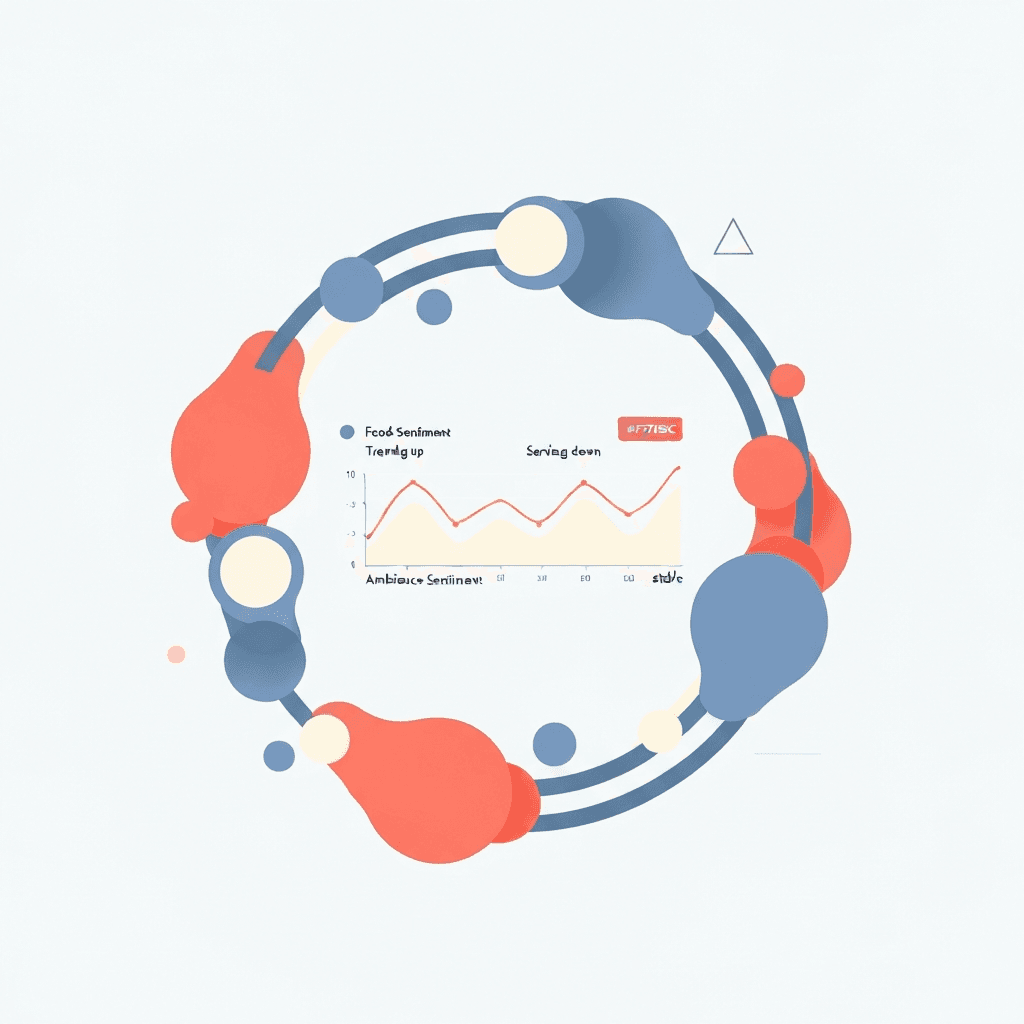
Trend Lines: Is sentiment for "cleanliness" trending down over the last quarter? This could indicate a need for a process review with your cleaning crew.
Sentiment by Platform: Are reviews on DoorDash consistently more negative about "delivery speed" than on Grubhub? This might point to an issue with a specific delivery partner.
Aspect Correlations: Do positive mentions of your "live music" nights correlate with higher sentiment for "ambiance" and "cocktails"? That's a powerful marketing insight.
From Data Points to Dining Excellence
Collecting and analyzing data is meaningless without action. The ultimate goal of food review sentiment analysis is to create a powerful feedback loop that drives continuous improvement across your entire operation.
Refine Your Operations
The insights from your analysis should directly inform your operational decisions. A consistent stream of negative sentiment around the "scallop risotto" is a clear signal to the executive chef that the recipe or its preparation needs to be re-evaluated. If "wait times" are a constant point of frustration on Friday nights, it’s data-driven evidence that you need to adjust your staffing levels or reservation system.
Amplify Your Marketing
Sentiment analysis is also a marketing goldmine. Identify your most-loved dishes and features. If customers constantly rave about your "espresso martinis," feature them in your next social media campaign. Use a tool like FeedbackRobot to automatically identify your best 5-star reviews and generate branded graphics to share online. This turns positive customer feedback into powerful, authentic marketing content that builds social proof and attracts new customers.
Empower Your Team
Share the insights with your staff. Use specific, anonymized feedback as coaching tools. Celebrating wins—"Guests consistently mention how much they appreciate Sarah's recommendations"—boosts morale. Addressing challenges—"We're seeing a trend in comments about tables not being cleared quickly during the dinner rush"—provides concrete, data-backed opportunities for training and improvement.
For a full comparison of platforms, our guide to the best sentiment analysis tools ranks 12 options by integration depth, AI accuracy, and pricing — a practical shortlist for any team evaluating their options.
For restaurants tracking sentiment across review platforms, FeedbackRobot's Yelp integration surfaces every new review and generates response copy automatically — so negative sentiment gets addressed before it compounds.
Conclusion: Stop Guessing, Start Knowing
In the competitive landscape of 2026, the restaurants that thrive will be the ones that listen to their customers most effectively. Food review sentiment analysis transforms the chaotic, subjective world of customer feedback into a clear, objective roadmap for excellence. It moves your strategy from reactive damage control to proactive, data-driven enhancement. Stop guessing what your customers are thinking and feeling. Start knowing. Automating this process gives you the 24/7 intelligence needed to protect your reputation, delight your guests, and grow your business with confidence.
Why is manual review analysis considered a liability for scaling hospitality businesses despite the intuition of experienced managers?
While manual oversight feels personal, it is fundamentally compromised by "negativity bias," where a single scathing outlier can distort operational priorities and lead to knee-jerk changes. Human interpretation is also inherently subjective; two different managers may categorize the same mixed review inconsistently, rendering long-term data tracking unreliable. Automating this process ensures every piece of feedback is evaluated against a fixed logic, removing ego and highlighting subtle statistical shifts—such as a 15% rise in "cold food" complaints over three months—that the human brain is not wired to detect across thousands of words of unstructured text.
How does Aspect-Based Sentiment Analysis (ABSA) provide more actionable data than traditional star ratings or general polarity scores?
Star ratings and basic polarity scores only indicate if a customer was satisfied, whereas ABSA identifies exactly why. By dissecting a single review into specific entities—such as food quality, server knowledge, or ambient noise—the system assigns independent sentiment scores to each component. This allows an operator to recognize that while a guest may have rated their meal as "Neutral" because of a long wait, they actually described the "spicy margarita" as phenomenal. This level of granularity enables management to target specific operational failures, like host stand efficiency, without questioning the quality of the bar program.
For an enterprise-level restaurant group, what are the primary trade-offs between building a custom NLP solution versus utilizing a platform like FeedbackRobot?
Developing a proprietary solution offers total customization but carries a prohibitive price tag, requiring a dedicated team of data scientists and constant maintenance of NLP libraries like Hugging Face or NLTK. For 99% of businesses, the "Off-the-Shelf" path is superior because platforms like FeedbackRobot are pre-trained on millions of industry-specific data points. These tools provide immediate access to sophisticated dashboards and automated reporting without the "Expert Path" overhead, allowing leadership to focus on implementing insights rather than managing a complex software development lifecycle.
In what ways can sentiment analysis be used as a high-level coaching tool for front-of-house and back-of-house staff?
Effective consultants use sentiment data to replace anecdotal criticism with objective, data-backed evidence for staff development. By sharing anonymized trends—such as recurring praise for a specific server's recommendations—you can boost morale through authentic recognition. On the technical side, if the data reveals a "slow burn" trend regarding the temperature of a specific entree, the executive chef can use that information to re-evaluate kitchen line flow or plate heating procedures. This shifts the management culture from reactive damage control to a proactive, continuous feedback loop.
How can sentiment analysis insights be leveraged to amplify a restaurant's digital marketing and social proof?
Sentiment analysis functions as a 24/7 focus group that identifies your most "marketable" assets based on real guest experiences. When the system flags that customers are consistently "delighted" by a specific signature cocktail or a "live music" night, these elements should become the focal point of your next social media campaign or ad spend. Furthermore, by using tools to automatically convert these high-sentiment, 5-star reviews into branded social graphics, you transform authentic customer advocacy into powerful marketing content that carries far more weight than standard promotional materials.
Put this on autopilot
Review Sentiment Analysis
A ready-made FeedbackRobot automation that runs this for you — deploys free in under 5 minutes.
Stop reading about it. Let your agent handle it.
25 free AI actions · no credit card required
Start Free