
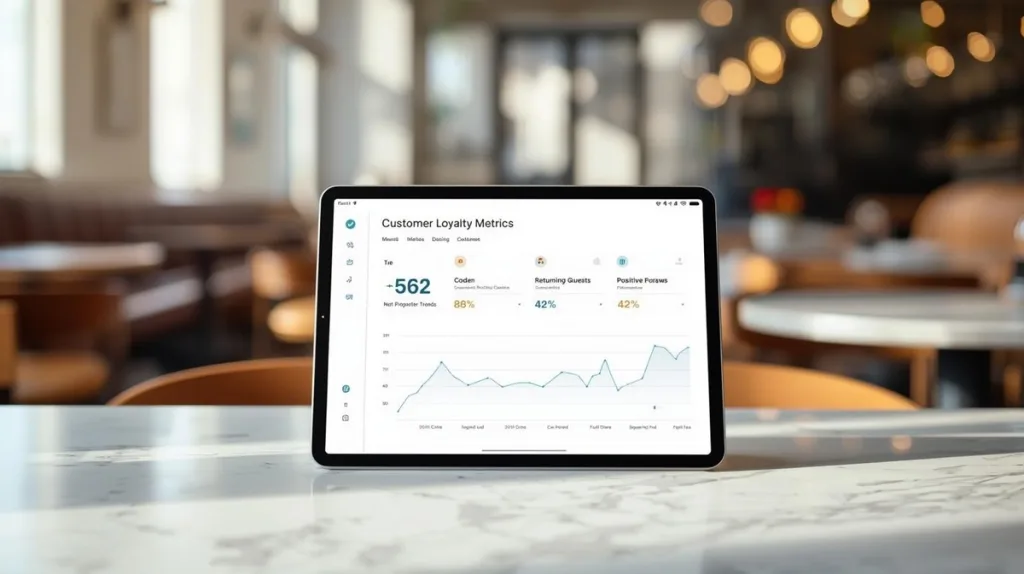
Guide
Measure Customer Loyalty: 3 Metrics Beyond Repeat Visits (2026)
Measure true customer loyalty with three metrics that go beyond repeat visits — NPS, CLV and CRR — with 2026 benchmarks and real examples.

Mar 9, 2026 · 16 min read
Free tool
AI Survey Generator
Describe what you want to learn and get a ready-to-send survey in seconds.
Stop guessing what makes your best customers come back. Start measuring it. As a busy hospitality or service owner, you know loyalty is the bedrock of a strong business. But true loyalty isn't just a feeling; it's a number you can track, understand, and improve.
To get an actionable picture, you need to blend two types of data: what your customers do (their repeat business) and what they think (their feedback). This shift takes you from vague hunches to hard facts, showing you exactly where to focus your efforts to collect smarter, act faster, and grow stronger.
Moving Beyond Guesswork in Customer Loyalty
For owners in hospitality and services, "customer loyalty" often feels like an abstract goal. You see familiar faces, get a few nice comments, and assume everything is on the right track. But this kind of guesswork is a recipe for wasted marketing dollars and missed opportunities. Without real data, you can't be sure if your new menu, updated hotel rooms, or extra service training is actually making a difference.
This guide cuts through the noise. It’s time to move from instinct to insight.
While repeat visits offer a quantitative look at loyalty, understanding the 'why' behind customer behavior requires direct input. Gathering this qualitative data can illuminate areas for improvement and new opportunities. To effectively capture these insights, consider implementing targeted post-purchase surveys, which provide a direct line to customer sentiment and satisfaction.
Learn more about crafting effective surveys by exploring essential post-purchase survey questions designed to drive business growth.
A data-driven approach isn't just for giant corporations. It's a non-negotiable strategy for any modern restaurant, hotel, or service business that wants to do more than just survive. Learning how to measure customer loyalty is the first step toward building a resilient business that people genuinely love.

Why a Data-First Approach Is Critical
Relying on gut feelings is risky. A single bad online review can send your team into a panic, while a handful of happy regulars can mask a bigger, silent churn problem. A data-first mindset gives you the clarity to act with confidence.
When you consistently track loyalty, you can finally:
Validate Your Efforts: Prove that your investments in the customer experience are actually paying off with measurable lifts in retention and spending.
Identify At-Risk Customers: Spot declining engagement or negative feedback early, giving you a chance to step in before a loyal customer leaves for good.
Pinpoint Your Strengths: Discover exactly what your best customers love about you, so you can double down on it to attract more people just like them.
Our Core Value in Action: This is what we mean by collect smarter, act faster, and grow stronger. You stop reacting to anecdotes and start proactively shaping the customer experience based on reliable, organized data.
The foundation for all this is understanding a few core metrics. Things like Net Promoter Score (NPS), Customer Lifetime Value (CLV), and Customer Retention Rate aren't just buzzwords—they are the vital signs of your business's health.
Mastering them is essential for any owner who is serious about building a business that lasts. This guide will show you exactly how.
Your Essential Loyalty Measurement Toolkit
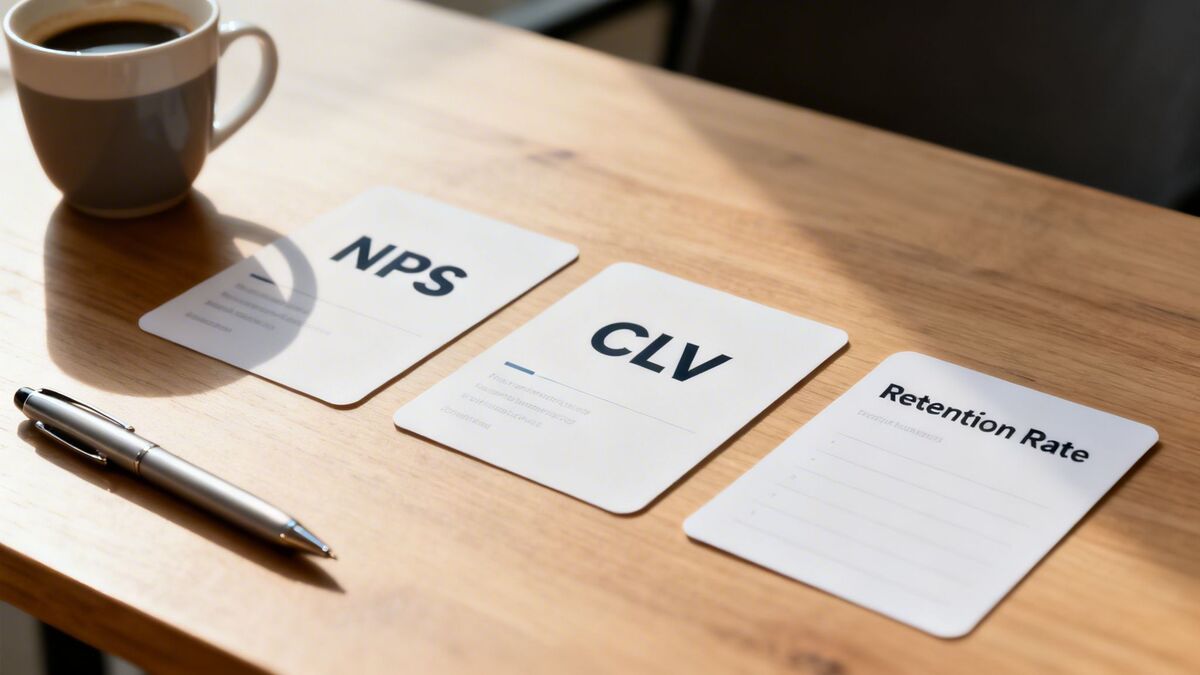
To really get a grip on customer loyalty, you can't just look at a single number. You need a handful of core metrics that work together to give you the full picture.
For busy owners in hospitality, food and beverage, or other service industries, the "Big Three" are Net Promoter Score (NPS), Customer Lifetime Value (CLV), and Customer Retention Rate (CRR). Let's break down what they are, why they’re so important, and how you can calculate them without needing a data science degree.
Here's a quick reference table to get you started.
Key Customer Loyalty Metrics at a Glance
Metric | What It Measures | Simple Formula |
|---|---|---|
Customer Retention Rate (CRR) | The percentage of customers who stay with you over a period. |
|
Customer Lifetime Value (CLV) | The total revenue a single customer is expected to generate. |
|
Net Promoter Score (NPS) | Customer willingness to recommend your business. |
|
Now, let's dig into what each of these really tells you.
Customer Retention Rate (CRR)
Customer Retention Rate is the most direct measure of loyalty you have. It answers a straightforward question: What percentage of my customers are sticking around? A high CRR means your experience is so good that people aren't even tempted to look elsewhere.
This metric is the bedrock of a stable business. It's far cheaper to keep a customer than to find a new one, and even a small boost in retention can have a massive impact on your bottom line.
How to Calculate CRR:
The formula is pretty simple. Just pick a time frame—like a quarter or a full year.
CRR = [ ( # of Customers at End of Period - # of New Customers Acquired ) / # of Customers at Start of Period ] x 100
Real-World Scenario: Imagine your cafe's loyalty program started the year with 200 members. Over that year, you signed up 50 new people, and you ended with a total of 210 members.
Customers at End (E): 210
New Customers (N): 50
Customers at Start (S): 200
Your math looks like this: [ (210 - 50) / 200 ] x 100 = 80%. That means you successfully retained 80% of your original customer base. Not bad at all.
Customer Lifetime Value (CLV)
Customer Lifetime Value (CLV) shifts your focus from one-off transactions to the entire long-term relationship. It helps you predict the total amount of money you can realistically expect from a single customer over time.
Knowing your CLV helps you make much smarter calls on marketing spend, service improvements, and retention efforts.
Think about it: if you know the average loyal guest is worth $1,500 to your hotel over their lifetime, spending $100 on a service recovery gesture to fix a bad experience becomes a no-brainer.
How to Calculate a Simple CLV:
You don't need a complex model to get started. A basic calculation can give you a powerful baseline.
CLV = Average Purchase Value x Average Purchase Frequency x Average Customer Lifespan
Real-World Scenario: Let's say a guest at your boutique hotel spends an average of $500 per visit. They usually stay with you twice a year and tend to be a loyal customer for about three years.
Your quick calculation is: $500 x 2 x 3 = $3,000. That means the average loyal guest brings $3,000 in revenue to your hotel.
Net Promoter Score (NPS)
NPS is famous for measuring satisfaction and loyalty with one powerful question: "On a scale of 0-10, how likely are you to recommend our business to a friend or colleague?" It's a fantastic leading indicator of growth because word-of-mouth is still one of the most effective marketing channels out there.
Based on their score, customers fall into one of three buckets:
Promoters (9-10): These are your champions. They'll actively bring you new business.
Passives (7-8): They're happy enough, but not enthusiastic. They can be easily swayed by a competitor's offer.
Detractors (0-6): These are unhappy customers who can actively harm your brand with negative reviews and bad word-of-mouth.
NPS isn't just a number to slap on a report; it's a tool for driving action. This is where features like FeedbackRobot’s Prompt to Survey come in handy. This feature turns any interaction into a feedback opportunity, making it effortless to collect a steady stream of NPS data.
How to Calculate NPS:
NPS = % of Promoters - % of Detractors
The final score will be somewhere between -100 and +100. Anything above 0 is good, a score over 50 is excellent, and hitting 70 or more is considered world-class. An effective customer experience dashboard can help you visualize these trends easily.
By tracking these three core metrics, you stop guessing and start knowing. You get a clear, multi-dimensional view of loyalty that helps you collect smarter, act faster, and grow stronger.
Turning Raw Feedback into Actionable Insights
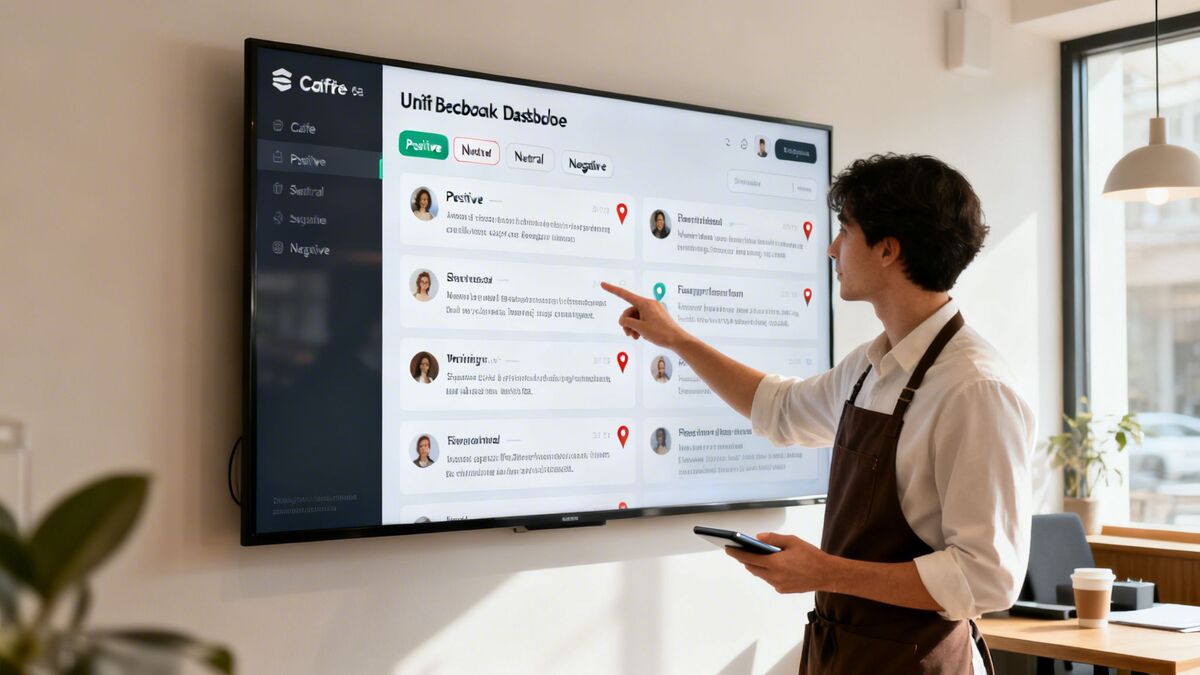
The loyalty metrics we've walked through are essential. But they're just numbers on a dashboard until you connect them to what your customers are actually saying. That's where the real magic happens.
Raw feedback—from reviews, survey comments, and social media—is messy. It’s a disorganized flood of opinions, complaints, and praise coming at you from a dozen different directions. To act on insights faster, you have to bring all that feedback into one place first.
Centralize Your Customer Feedback
Your customers are leaving feedback on Google, sending DMs on Instagram, mentioning you on TripAdvisor, and filling out your surveys. Each piece is a single dot, and you need a system to connect those dots into a clear picture of customer loyalty.
This is exactly why we built Radar, our unified review intelligence feature. Instead of juggling ten different logins, Radar pulls all your public and private feedback into a single dashboard. This gives you a complete, real-time view of what’s being said about your brand everywhere, instantly.
Stop letting valuable feedback slip through the cracks. When you can see everything in one place, you can finally move from reactive firefighting to proactive strategy.
This unified view is the foundation for turning scattered data points into a clear story about your customers.
Find the Signal in the Noise with AI
Once your feedback is all in one place, the next hurdle is making sense of it at scale. You don’t have time to personally read thousands of reviews every month just to spot trends. But what if you could get the key takeaways in seconds?
This is where our AI Summaries feature comes in, providing instant insights & sentiment analysis. Our AI automatically reads and interprets every customer comment, identifying recurring themes, pinpointing the mood behind the words (positive, negative, or neutral), and boiling it all down into a simple, digestible summary.
For instance, AI Summaries might tell you that:
25% of negative reviews last month mentioned "slow service" at your downtown location.
Positive comments about your new "vegan brunch menu" have jumped by 40%.
Sentiment around "room cleanliness" at your hotel has dropped by 15 points in the last quarter.
This is the kind of insight that helps you spot critical trends you would have otherwise missed. It’s like having an analyst on your team working 24/7, tirelessly flagging opportunities and potential problems so you can act before small issues become loyalty-killers. To get a better sense of how this works, check out our guide on AI survey analysis techniques.
Dig Deeper into Qualitative Data
While our AI is great for spotting the "what" and "how many," the rich, detailed stories often hide in open-ended responses. To truly understand the "why" behind the numbers, you need to get comfortable with the stories in your customer comments and interviews.
This is where it pays to master qualitative research analysis methods. These techniques help you categorize free-text feedback and extract the nuanced reasons driving customer sentiment.
By combining the speed of AI with the depth of qualitative analysis, you build a powerful system for understanding and improving loyalty. You get the full picture—the what, where, and why—allowing you to make targeted operational changes that directly impact satisfaction and retention. This is how you build a business that not only listens but also learns and grows stronger with every piece of feedback.
Using NPS to Predict and Drive Business Growth
Net Promoter Score (NPS) is far more than just another satisfaction survey. Think of it as a crystal ball for your future growth. Its power lies in its simplicity. You ask one single question: "On a scale of 0-10, how likely are you to recommend our business to a friend or colleague?"
That one question sorts your entire customer base into three groups you need to know about:
Promoters (9-10): These are your champions, leaving five-star reviews and driving word-of-mouth sales.
Passives (7-8): They’re content, but not enthusiastic. They could easily switch to a competitor with a slightly better offer.
Detractors (0-6): These are your unhappy customers, representing a real risk to your reputation.
Your final NPS is calculated by subtracting the percentage of Detractors from the percentage of Promoters. The result is one clear number that tells you exactly how healthy your customer relationships are.
From a Passive Score to an Active Growth Engine
Just knowing your NPS isn't enough. The real magic happens when you turn that score into immediate, targeted action. You need a system that not only gathers the data but helps you respond to it in real time.
First, you have to make giving feedback easy. Our Prompt to Survey feature does exactly that. It can turn any customer interaction—like checking out of a hotel or paying for a meal—into an automated feedback request sent via email or SMS, guaranteeing a steady stream of insight while the experience is fresh.
Activating Your Promoters, Passives, and Detractors
With scores flowing in, you can start segmenting your responses and building a specific game plan for each group. This is where you directly influence growth.
Leverage Your Promoters
When someone gives you a 9 or a 10, it's a golden opportunity. Don't just send a generic "thank you." Mobilize them. Set up an automated workflow that instantly invites them to share that great experience on Google, TripAdvisor, or your social media pages.
Engage Your Passives
Passives are your biggest opportunity for improvement. They're on the fence, and a little proactive attention can easily turn them into loyal Promoters. Dig into their feedback to figure out what's holding them back. An automated follow-up asking, "What could we have done to make your experience a 10?" can give you the exact insights you need to improve.
Win Back Your Detractors
A low score is actually a gift—a bright, flashing signal telling you exactly where a problem is. This is where FeedbackRobot's Resolutions Engine becomes your secret weapon for automated service recovery. This feature lets you create rules that instantly trigger alerts and workflows when a bad score arrives. For example, a score of 4 or below could automatically send a personalized apology from a manager along with a discount for their next visit. That rapid response can turn an angry Detractor into a fan for life.
This entire process embodies our core philosophy: collect smarter with targeted surveys, act faster with automated workflows, and grow stronger by building bulletproof relationships and preventing churn.
The numbers back this up. The Antavo Global Customer Loyalty Report 2026 found that 9 out of 10 loyalty program owners who measure performance see a positive ROI. You can dig into more findings about the financial impact of loyalty programs.
By using tools to automate these actions, you close the feedback loop at scale. If you want to dive deeper, check out our guide on what is a good Net Promoter Score for your industry. It's not just about measuring loyalty anymore; it's about actively building it, one customer interaction at a time.
Closing the Loop from Action to Growth
Measuring customer loyalty is just the starting line. The real win comes from turning those numbers into tangible improvements that fuel your growth. This is what we call "closing the loop"—connecting the dots between the feedback you collect and the operational changes you make every day.
For a modern hospitality or service business, this means breaking down the walls between your feedback data and your core operations. This is why deep integrations are so important. When your feedback platform talks directly to your Property Management System (PMS) like Mews or your Point of Sale (POS) system like Toast, you create a powerful, automated cycle of improvement.
Automate Service Recovery and Build Trust
A negative review or a low NPS score isn’t a failure—it’s an opportunity. But that opportunity has a short shelf life. Your ability to respond quickly and effectively is what separates a customer you lose forever from one who becomes even more loyal.
That's why we built the Resolutions Engine, our feature for automated service recovery. Think of it as your always-on service manager, ensuring no unhappy customer ever feels ignored.
Here’s a real-world example of how it works:
IF a guest leaves a 2-star review on Google mentioning a "dirty room"...
THEN the Resolutions Engine can automatically send a personalized apology from the hotel manager and a 15% discount for their next stay.
IF a diner gives an NPS score of 4 and their comment includes the phrase "long wait"...
THEN the system can instantly email them a voucher for a free appetizer on their next visit.
This isn't just damage control; it's about systematically turning bad experiences into loyalty-building moments. You show customers you're listening and that you care enough to make things right, instantly and without fail.
This proactive approach embodies our core value: you act faster on insights to grow stronger customer relationships.
Showcase Your Success with Powerful Social Proof
Once you have a system for delighting customers, you’ll quickly find yourself with a growing collection of fantastic reviews. Don't let that positive feedback just sit on third-party sites. Put it to work for you.
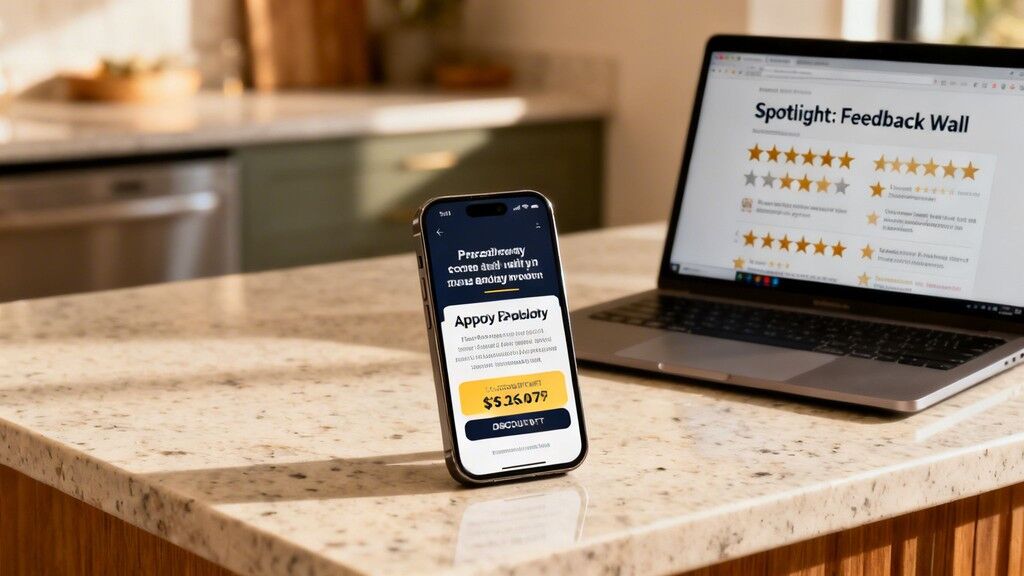
To make this effortless, we're launching our new Spotlight: Feedback Wall. This feature automatically curates and displays your best reviews directly on your website. You can set rules to showcase feedback that meets specific criteria—for example, only showing 5-star reviews from Google or positive comments that mention "friendly service."
The Feedback Wall transforms your happy customers into your most convincing sales team. It provides a constant stream of proof that you deliver an outstanding experience, which can directly influence booking decisions and improve ecommerce conversion rate.
Create Your Continuous Improvement Cycle
By combining automated feedback collection, intelligent analysis, and swift operational action, you create a self-sustaining growth engine:
Collect Smarter: You gather targeted feedback at key moments using Prompt to Survey and centralize it all with Radar.
Act Faster: You use AI Summaries to spot trends and the Resolutions Engine to automatically fix problems and reward promoters.
Grow Stronger: You showcase your wins with the Spotlight: Feedback Wall, attracting new customers and reinforcing loyalty.
This complete system moves you beyond just measuring loyalty and into a mode of continuous improvement. You're no longer just reacting to feedback; you're building a resilient business that learns, adapts, and gets stronger with every single customer interaction.
Ready to close the loop and turn your customer feedback into your biggest growth asset? Start your free 14-day trial of FeedbackRobot today. You'll get instant access to our entire platform and be one of the first to try the new Spotlight: Feedback Wall when it launches.
Frequently Asked Questions
You're running a business, not a data science lab. When it comes to customer loyalty metrics, it's easy to get bogged down in questions. Let's cut through the noise and answer a few of the most common ones we get from owners just like you.
How Often Should I Measure Loyalty Metrics Like NPS?
The honest answer? It depends on your customer flow.
For a high-traffic hotel or a busy restaurant, you'll want to measure Net Promoter Score (NPS) constantly. Think of it as a real-time pulse on guest happiness. A tool like our Prompt to Survey feature handles this for you, automatically sending a quick feedback request after a checkout or payment.
For bigger-picture metrics like Customer Retention Rate (CRR), a quarterly or bi-annual check-in is plenty. This gives you enough time to see real trends emerge without getting lost in weekly fluctuations. The key is consistency—stick to a schedule so you can spot dips before they become real problems.
What Is a Good Customer Retention Rate for a Restaurant or Hotel?
Benchmarks are a great starting point, but they vary quite a bit across the hospitality world.
Here’s a rough guide to what "good" looks like:
For Restaurants: A solid retention rate usually lands between 30% and 50%. A fast-casual spot will naturally be on the lower end, while a fine-dining restaurant that builds a base of regulars can easily push past that.
For Hotels: The industry average is around 55%. Boutique hotels that nail the personal touch often see much higher numbers because they build genuine connections that keep guests coming back.
The most important benchmark is always your own past performance. Your goal should be steady, quarter-over-quarter improvement.
Can I Measure Loyalty Without Expensive Tools?
You can absolutely start with a simple spreadsheet. But as your business grows, this becomes a huge time-sink. You'll end up spending your valuable hours wrestling with data entry instead of actually using the insights.
This is exactly why we built FeedbackRobot. Our platform brings everything you need into one affordable system built for busy owners.
Radar gives you unified review intelligence, so you can stop jumping between different sites to see what people are saying.
AI Summaries provide instant insights & sentiment analysis, saving you the hours it would take to read and sort through feedback manually.
The Resolutions Engine delivers automated service recovery, letting you respond to a negative experience faster than any human could.
It's all about centralizing your feedback so you can collect smarter, act faster, and grow stronger—without needing a massive budget.
Ready to stop guessing what keeps your customers coming back? FeedbackRobot gives you the tools to turn feedback into your most powerful growth engine.
What are the top metrics for measuring 'True' loyalty?
Look at 'Visit Frequency,' 'Referral Rate,' and 'NPS.' A loyal guest doesn't just visit often; they actively bring new people into your business.
Is a high NPS enough to prove customer loyalty?
NPS is a 'Sentiment' indicator, but you must pair it with 'Behavioral' data (like repeat visits) to get the full picture of true brand loyalty.
How do I measure the loyalty of my 'Silent' customers?
Use 'Sentiment Trends' from their private feedback. If a regular guest's scores start to dip or their language becomes 'neutral' instead of 'excited,' their loyalty is at risk.
Can I measure loyalty through social media engagement?
Yes. Tracking how many of your guests tag you or share your content is a great 'Indirect' measure of their emotional bond with your brand.
What is the 'ROI of Loyalty' and how do I calculate it?
Compare the 'Lifetime Value' (LTV) of a Promoter vs. a Detractor. Loyal guests usually spend 2-3x more over their lifetime, proving that loyalty is your biggest profit driver.
Stop reading about it. Let your agent handle it.
25 free AI actions · no credit card required
Start Free