

Guide
Retail Customer Feedback Software: The 2026 Shift from Data Junkyards to Autonomous Agents
Discover why traditional retail customer feedback software is obsolete. Learn how autonomous agents close the 'response gap,' reduce manual work, and drive store-level dominance at scale.

May 19, 2026 · 7 min read
Free tool
AI Survey Generator
Describe what you want to learn and get a ready-to-send survey in seconds.
Modern retail customer feedback software is no longer about collection; it's about resolution. For years, multi-location brands have been sold platforms that create 'data junkyards'—fragmented dashboards that aggregate reviews but amplify the manual workload on store and regional managers. This antiquated model creates a dangerous 'Response Gap,' where negative sentiment festers, eroding brand trust and customer loyalty. The strategic shift in 2026 is away from passive software tools and towards an autonomous operating system—an AI-powered agent that doesn't just display problems but actively resolves them. This new architecture unifies feedback channels, automates empathetic responses to protect brand reputation, and transforms positive reviews into marketing assets, enabling store-level dominance at scale without increasing headcount.
The Obsolescence of the Central Dashboard: Why Legacy Software Creates More Work
For the last decade, the promise of retail customer feedback software was simple: centralize all your reviews in one place. Directors of CX and VPs of Retail Operations invested heavily in platforms that pulled data from Google, Meta, and dozens of other sources into a single, overwhelming dashboard. The problem? These systems were built for viewing, not for doing. They became digital graveyards where feedback went to die.
This 'Manual Bottleneck' is the single greatest threat to a growing retail brand's reputation. Every new review, whether positive or negative, triggers a cascade of inefficient manual tasks:
A store manager receives an email notification about a 2-star review.
They must stop their floor duties, log into a separate platform, and read the complaint.
They draft a response, often without standardized brand guidelines, hoping it's empathetic and compliant.
For serious issues, they must then log into another system (POS, CRM, or even a spreadsheet) to verify the transaction and potentially issue a credit.
Meanwhile, positive reviews are ignored, representing a massive missed marketing opportunity.
This isn't a system; it's a series of disconnected, time-consuming chores. The
software, meant to provide clarity, only adds another layer of administrative friction. It mistakes data aggregation for a solution, leaving your most valuable on-the-ground personnel drowning in digital paperwork.
SME Insight: The fundamental flaw in legacy feedback software is that it positions your store manager as a customer support agent. Their core competency is running a store and leading a team, not navigating clunky dashboards and drafting crisis communications.

Quantifying the 'Response Gap' Crisis: The Compounding Cost of Delayed Action
The 'Response Gap' is the critical period between a customer posting negative feedback and your brand providing a meaningful resolution. In retail, this gap is measured in hours, not days, and its impact is catastrophic. Every hour a one-star review sits unanswered, it actively damages your brand in three distinct ways:
1. Public Brand Erosion
A negative review is a public broadcast of a service failure. An unanswered negative review is a public broadcast of institutional indifference. Prospective customers see not just the initial problem, but a brand that doesn't seem to care, poisoning the well for future foot traffic and online orders.
2. Customer Churn Amplification
The original dissatisfied customer is watching. A swift, empathetic response can turn a detractor into a loyal advocate. Silence confirms their negative experience and ensures they not only churn but also share their story with their network. The cost isn't just one lost customer; it's the loss of their entire potential referral tree.
3. Operational Blind Spots
Delayed responses mean delayed insights. A recurring issue with a specific product or employee at a certain location might take weeks to bubble up through a manual system. An autonomous system can spot these patterns instantly, flagging operational issues before they escalate into brand-level crises.
Closing this gap isn't a 'nice-to-have'; it's a core operational imperative. To truly solve this, brands must move beyond simple alerts. For a deeper analysis of this challenge, explore our guide to retail review management and the traps of a reactive strategy.
The Architectural Shift: From Passive Tool to Autonomous Operating System
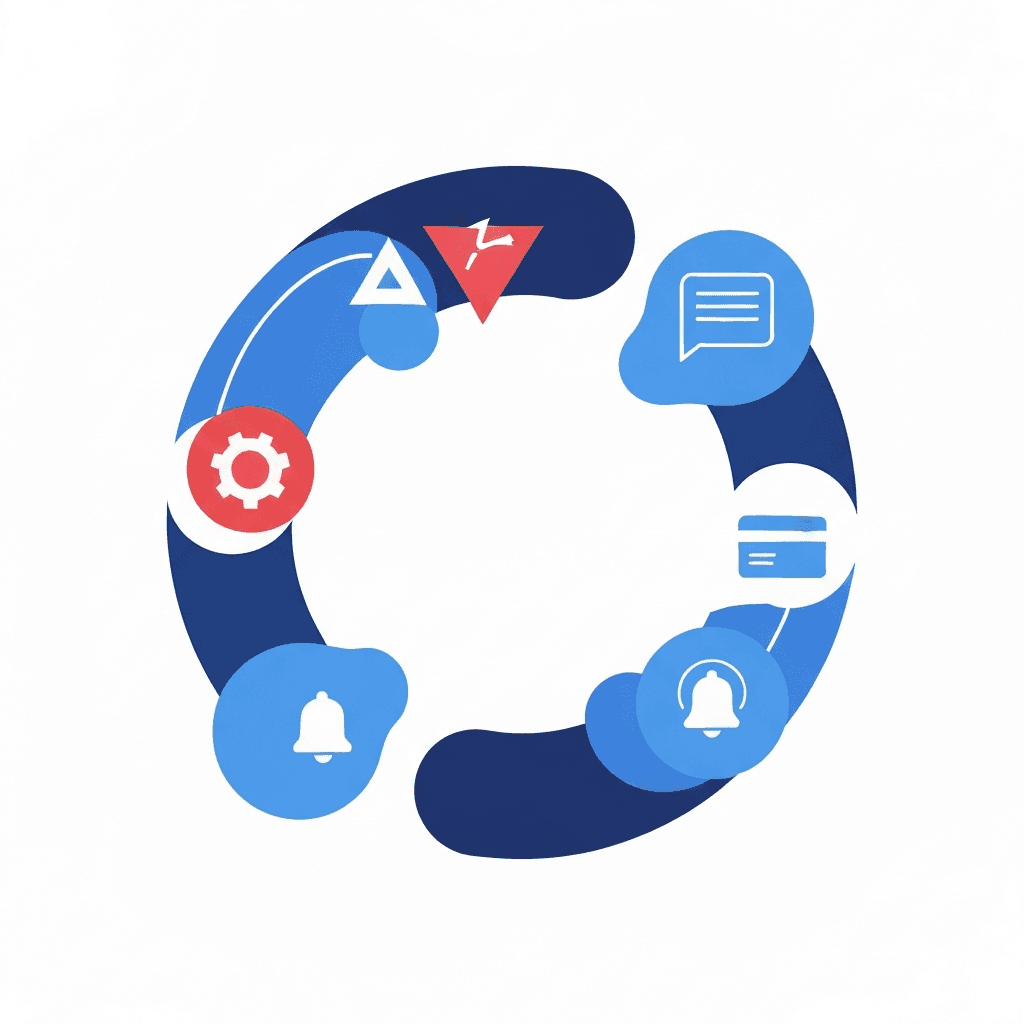
The only way to close the Response Gap at scale is to remove the manual bottleneck entirely. This requires a fundamental category shift from 'software' (a tool you use) to an 'operating system' (a system that works for you). An autonomous agent doesn't just show you what's wrong; it initiates the resolution. This new model is built on three interconnected pillars.
Radar Dashboard: Unified Command & Control
This is the sensory input of the agent. The Radar Dashboard moves beyond simple aggregation by syncing with every conceivable customer touchpoint in near real-time. This includes:
Digital Sources: Google, Meta, Yelp, and over 20 other niche retail platforms.
Physical Sources: In-store QR codes that capture feedback directly at the point of experience.
Internal Systems: Direct API connections to your CRM or POS to link feedback to specific transactions.
The goal isn't just to see everything, but to ingest it into a single, intelligent engine that understands context.
Resolutions Engine: The Autonomous Brain
This is the core of the operating system. When the Radar detects negative sentiment, the Resolutions Engine activates a pre-approved, automated workflow. Instead of just notifying a human, it performs the first three steps of the resolution process in under two minutes:
Sentiment Analysis: It identifies the core issue (e.g., product quality, staff interaction, store cleanliness).
Drafting Response: It generates an empathetic, on-brand, and store-specific reply for human approval. The draft can even reference the store manager's name to maintain a personal touch.
Proposing Resolution: If connected to the POS, it can pre-authorize a store credit or loyalty points, presenting the complete resolution package to the regional manager for a one-click approval.
Spotlight Automation: The Proactive Marketing Machine
An autonomous agent understands that feedback is also your most potent marketing asset. The Spotlight Automation pillar constantly scans for 5-star reviews containing powerful keywords ('life-saver,' 'best service,' 'amazing quality'). When it finds one, it automatically:
Identifies the most compelling sentence or phrase.
Generates professionally designed social media graphics using your brand's templates.
Queues the graphics for posting on the specific location's local social media pages.
This transforms positive customer experiences from passive testimonials into active, localized marketing campaigns, driving social proof where it matters most: at the community level.
How to Escape the Manual Bottleneck: An Operational Playbook
Implementing a feedback operating system redefines the role of your team from reactive problem-solvers to strategic overseers. The goal is to achieve 'Store-Level Dominance at Scale'—a state where all 50, 100, or 500 of your locations maintain a 4.8-star average without overburdening your managers.
Step 1: Unify Your Ingestion Channels
Connect your agent to every digital and physical feedback source. The system's effectiveness is directly proportional to the completeness of its data. This initial 30-minute setup eliminates the need for managers to ever log into multiple platforms again.
Step 2: Calibrate the Resolutions Engine
Define your brand's rules for engagement. Set the tone for AI-drafted responses, establish the criteria for offering store credit, and configure the approval workflows. This one-time strategic setup governs millions of future interactions.
Step 3: Empower Managers with 'Approval, Not Creation'
Shift your managers' daily task from 'drafting a response' to 'approving a solution.' A regional manager can now review and approve 20 fully-formed resolutions in the time it used to take to manually handle one. This is the essence of retail customer feedback automation—leveraging technology to multiply human effectiveness.
Strategic Pro-Tip: The future of multi-location management is exception handling. Your team's time should be reserved for the 5% of complex cases that require human nuance, while the agent handles the 95% of common issues autonomously.
Step 4: Activate and Monitor
Once live, the system works 24/7. Your role becomes one of high-level monitoring, tracking sentiment trends across regions, and identifying systemic operational improvements surfaced by the agent. You move from fighting fires to preventing them.
This is how elite brands escape the dreaded 4-star trap. By automating the mundane, they free up their teams to perfect the customer experience itself. For a detailed exploration of this strategy, see our guide on The Autonomous Retail Review Engine.
See the full retail and e-commerce reputation management guide for store-specific strategies and platform recommendations.
FeedbackRobot: The Only True Feedback Operating System
The market is flooded with tools that promise to help you 'manage' your reviews. They present data, send alerts, and ultimately, add to your workload. They are products of a bygone era. FeedbackRobot was designed as the world's first Autonomous Reputation Agent, built on the principle that software should resolve issues, not just report them.
Our Resolutions Engine closes the Response Gap for good. Our Spotlight Automation turns your customers into your most effective marketing team. Our entire platform is engineered to reduce manual work, protect your brand around the clock, and give you the operational leverage to scale excellence across every single location.
If you're tired of data junkyards and manual bottlenecks, it's time to upgrade from a tool to an operating system. To see how FeedbackRobot stacks up against legacy platforms, we've prepared a comprehensive buyer's guide featuring the best customer review management platforms for retail. See for yourself why an autonomous agent isn't just a better option—it's the only option for serious retail brands in 2026.
How does the "Autonomous Operating System" model differ fundamentally from the legacy feedback dashboards currently used by most multi-location retail brands?
The core distinction lies in the transition from data aggregation to active resolution. Legacy software functions as a "data junkyard," merely pulling reviews into a central view that still requires manual labor to address. In contrast, an autonomous operating system acts as a functional agent; it doesn't just surface a problem—it initiates the workflow to solve it. By shifting the store manager’s role from a customer support agent who drafts responses to a strategic overseer who simply approves pre-generated resolutions, the system eliminates administrative friction and ensures brand consistency at scale.
What are the specific operational risks associated with the "Response Gap," and why is it considered a critical threat to brand equity?
The Response Gap is the elapsed time between a customer’s negative post and a meaningful brand intervention. In a high-velocity retail environment, silence is perceived as institutional indifference, which publicly poisons the well for prospective foot traffic. Beyond the immediate loss of a customer, a prolonged Response Gap amplifies churn by failing to arrest the "referral tree" of negative word-of-mouth. Furthermore, it creates operational blind spots, as recurring systemic failures—such as specific product defects or staff issues—fester for weeks before a manual reporting system can identify the pattern.
How does the Resolutions Engine integrate with internal retail infrastructure to facilitate financial or loyalty-based recoveries?
The engine utilizes direct API connections to the brand’s Point of Sale (POS) and CRM systems to bridge the gap between sentiment and transaction. When a negative review is detected, the AI performs a sentiment analysis and, if appropriate, cross-references the customer's history. It then presents a complete "resolution package"—which may include an on-brand draft response and a pre-authorized store credit or loyalty point injection—to a manager. This allows for a one-click approval process that resolves the grievance in under two minutes, maintaining high-touch service without the high-touch workload.
In what way does Spotlight Automation transform passive feedback into a localized marketing asset?
While traditional systems leave positive reviews to sit dormant, Spotlight Automation actively mines 5-star feedback for high-impact keywords like "amazing quality" or "best service." The system autonomously extracts these testimonials, applies them to pre-approved brand templates to create professional social media graphics, and queues them for posting on specific location-based social pages. This creates a perpetual cycle of social proof that is hyper-local, driving community-level trust without requiring a dedicated marketing team for each storefront.
What does "Store-Level Dominance at Scale" look like for a regional manager after implementing a feedback operating system?
Operationally, the regional manager moves from a reactive state of "firefighting" to a proactive state of "exception handling." Instead of spending hours drafting individual replies for 50 or 100 locations, their workflow is distilled into reviewing high-level sentiment trends and approving the 5% of complex cases that require human nuance. The agent handles the 95% of standard feedback autonomously, ensuring every location maintains a high-tier star rating (e.g., a 4.8-star average) while freeing the field team to focus on store operations and team leadership.
Stop reading about it. Let your agent handle it.
25 free AI actions · no credit card required
Start Free