Best Feedback Collection Software (2026): Ranked
10 feedback collection tools ranked by channel coverage, AI analysis, and pricing — from free QR surveys to enterprise automation. Updated for 2026.

Dec 16, 2025 · 18 min read
Free tool
Business Reputation Calculator
Get an instant score of your online reputation across all major review platforms.
If you're a busy hospitality or service owner, you know feedback is gold. But you're probably buried under reviews from a dozen different sites, comment cards, and random emails. It’s time to stop drowning in data and start winning with it.
Modern feedback collection software isn't just another tool—it’s a command center for your customer conversations. It’s built to help you collect smarter, act faster, and grow stronger by turning every piece of feedback into your greatest asset.
Why Your Business Needs a Feedback Operating System

You’re constantly juggling operations, staffing, and trying to keep customers happy. The last thing you have time for is manually checking TripAdvisor, then Google, then Yelp, then your email inbox just to piece together what people are saying. That scattered approach means you miss opportunities, and small problems fester until they become one-star reviews.
This is where a Feedback Operating System comes in. Think of it less like another piece of software to manage and more like the central brain of your entire service operation. It’s a strategic shift—moving from a reactive, time-sucking process to a proactive system that saves you hours and actually drives revenue. It’s about turning all that chaotic noise into a clear path to growth.
Beyond Simple Collection to Actionable Intelligence
Let's be honest: traditional feedback methods are broken. They leave you with a pile of raw data but no clear path to actually doing anything with it. A modern system automates the entire lifecycle of feedback, from the moment it's collected to the moment it's resolved.
This isn't just a convenience; it's a competitive necessity. The market for these tools is projected to rocket from $10.11 billion to $28.04 billion by 2032. Why the massive jump? Because businesses are realizing they can't afford to ignore their reputation, especially when 92% of consumers read reviews before making a purchase. In fact, companies that use a unified system to listen and respond have seen their response rates jump to 70%, which often leads to a 20-30% lift in conversions. You can read more about the feedback software market on verifiedmarketresearch.com.
The table below breaks down the shift from the old, manual way of handling feedback to a modern, systemized approach.
Manual Feedback Management vs A Feedback Operating System
Challenge | The Old Way (Manual Methods) | The New Way (Feedback Operating System) |
|---|---|---|
Data Collection | Manually checking 5+ sites (Google, Yelp, etc.) daily. | All reviews from every channel pull into one inbox, automatically. |
Analysis | Guesswork based on a few standout reviews. | AI spots trends, sentiment, and keywords across all feedback. |
Response Time | Slow, inconsistent replies. Often days later, if at all. | Instant alerts and automated workflows allow for responses in minutes. |
Team Collaboration | Forwarding screenshots via email; no clear ownership. | Assigning feedback to specific team members with due dates and tracking. |
Reporting | No real data; just a "gut feeling" about customer happiness. | Dashboards show CSAT, NPS, and sentiment trends over time. |
This isn't just about saving time. It’s about building a smarter, more resilient business that learns from every single customer interaction.
What This Means for You
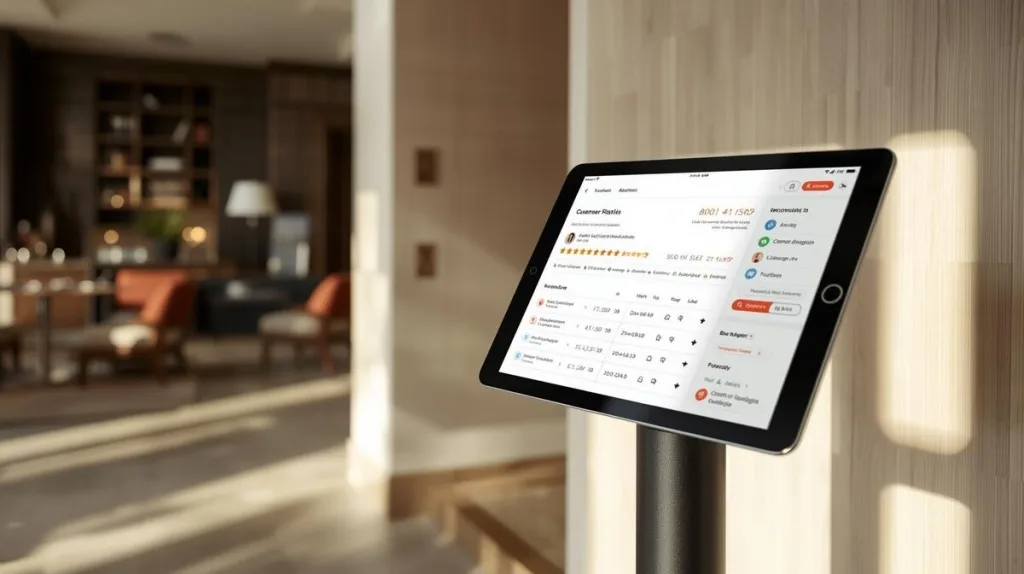
Instead of starting your morning piecing together a puzzle of customer opinions, you get a single, clear dashboard showing you exactly where you stand. You can spot trends ("Hey, why are people mentioning 'slow service' on Saturdays?"), fix problems before they blow up, and double down on what your team is doing right.
This allows you to:
Collect smarter by automatically gathering feedback from every important channel without lifting a finger.
Act faster with instant alerts and automated workflows that ensure nothing falls through the cracks.
Grow stronger by making data-driven decisions that improve the customer experience and boost your bottom line.
A true Feedback Operating System moves you from playing defense to playing offense, turning the customer's voice into a reliable engine for continuous improvement.
How a Feedback Operating System Actually Works
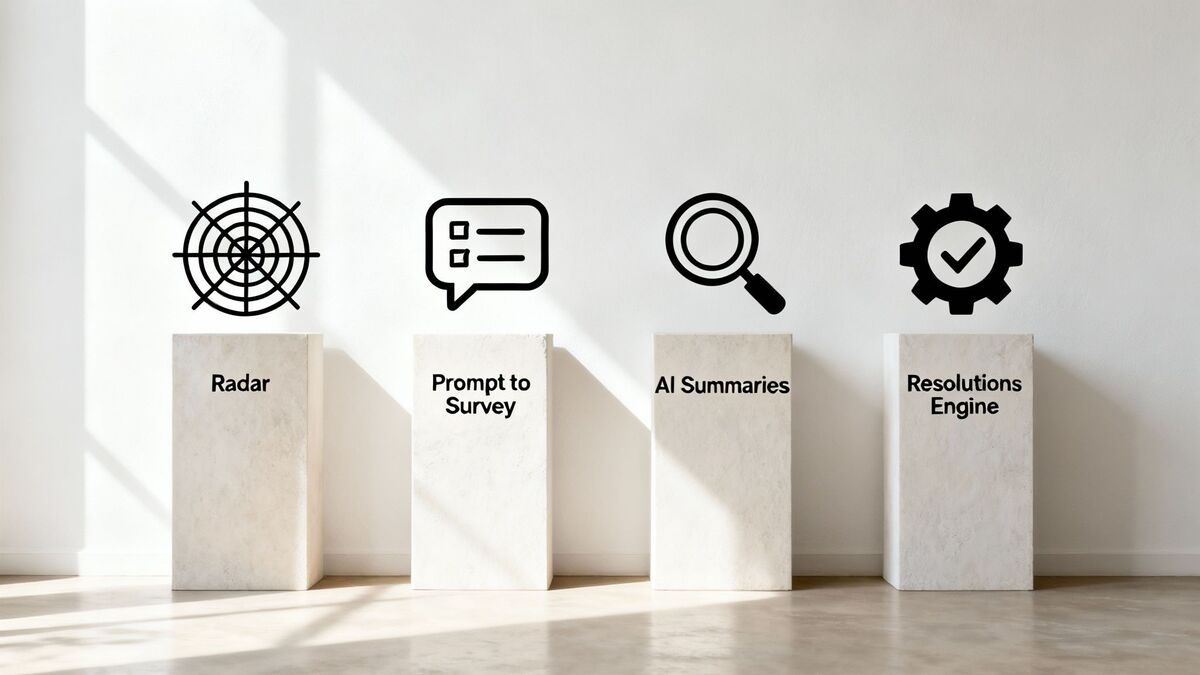
Let's get practical. A true Feedback Operating System isn't just another dashboard you have to check. It’s a set of interconnected tools built to work together, powering our core philosophy: collect smarter, act faster, and grow stronger.
Think of it like a highly efficient kitchen brigade. Each station has a specific job, but they all communicate in harmony to create the perfect dish. This system is built on four essential pillars, each designed to automate a critical part of the feedback loop.
Pillar 1: Radar for Unified Review Intelligence
The first challenge is just seeing everything in one place. You’re probably wasting precious time jumping between Google Maps, TripAdvisor, Yelp, and social media. All that tab-switching is a recipe for missed comments and burnout.
That's where Radar comes in. Radar is your unified review intelligence hub, pulling feedback from every corner of the internet into one clear, prioritized view. It’s like an air traffic controller for your reputation, organizing all incoming signals so you can see the complete picture at a glance. No more manual searching or finding a surprise one-star review that’s been sitting unanswered for days.
Pillar 2: Prompt to Survey for Deeper Insights
What happens when a customer leaves a great four or five-star review? Usually, not much. You might say "thanks," but that’s a massive missed opportunity to learn exactly what you did right. Understanding how a feedback system works is key, and that includes learning the effective methods to collect customer feedback that drives growth.
This is where Prompt to Survey changes the game. This feature automatically turns a positive public review into an invitation for a more detailed internal survey. For instance, when a guest leaves a 5-star Google review, the system can send a follow-up asking specific questions about their stay—the check-in process, room cleanliness, or the quality of the breakfast. This is how you capture rich, private insights from your happiest customers, the very people who can tell you how to replicate that success.
Pillar 3: AI Summaries for Instant Analysis
You don’t have time to read hundreds of reviews every week, let alone analyze them for trends. But hidden in that text are the critical insights you need—like repeat mentions of a "noisy air conditioner" in Room 301 or constant praise for a specific server.
Our AI Summaries provide instant insights and sentiment analysis, doing the heavy lifting for you. The system reads every single comment and immediately tells you what customers love and what needs fixing. It flags key themes and even gauges the emotional tone, so you understand the why behind your scores without reading a single word-for-word review.
Imagine logging in and immediately seeing a summary: "Positive sentiment is up 15% this week, driven by mentions of 'friendly staff' and 'quick service.' However, negative sentiment is concentrated around 'wait times' on Friday nights." That's actionable intelligence, delivered in seconds.
Pillar 4: The Resolutions Engine for Automated Service Recovery
A bad experience is bound to happen sometimes, but losing that customer doesn't have to be. The speed of your response makes all the difference. Manually tracking complaints and delegating follow-ups is slow and leaves room for human error, letting frustration build.
The Resolutions Engine is your automated service recovery powerhouse. It automatically triggers workflows to fix problems before they escalate. For example, a review mentioning "cold food" can instantly create a task for the kitchen manager and send an automated apology with a discount code to the customer. This turns a bad experience into a chance to prove you care, transforming unhappy guests into loyal advocates. By automating these critical touchpoints, you ensure every issue is handled swiftly and consistently, a core principle we explore further in our guide to customer feedback automation.
Each of these pillars works in concert, creating a powerful, self-improving loop that turns raw feedback into real business growth.
See Feedback Software in Action Across Industries
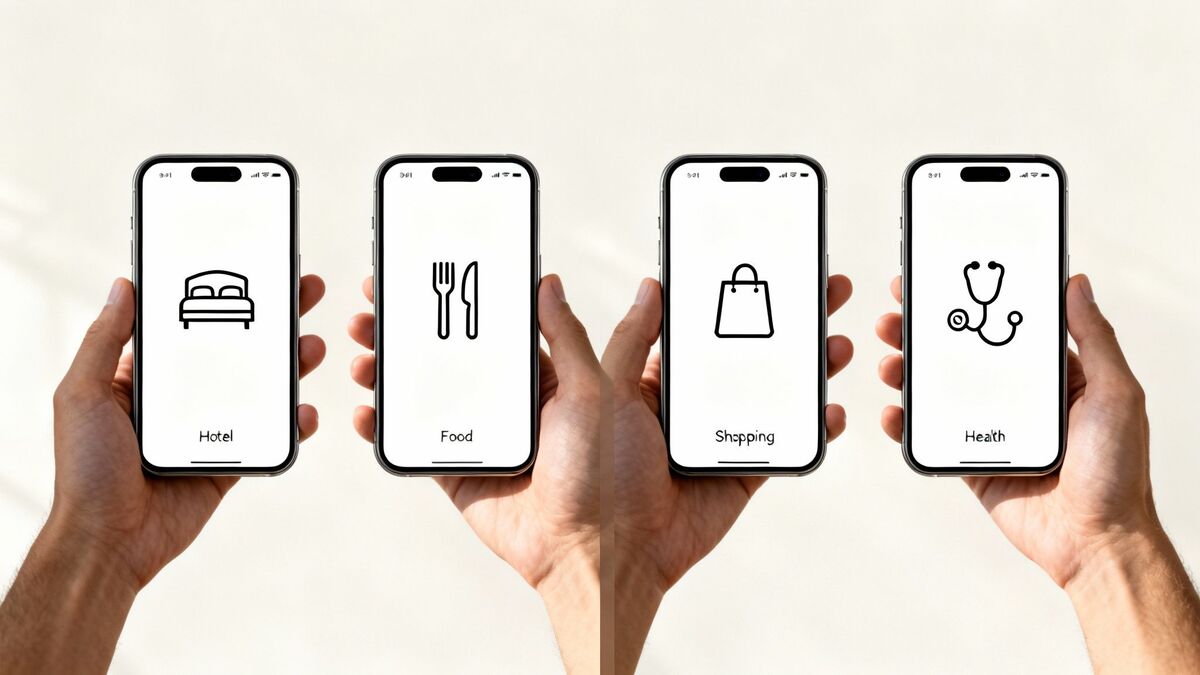
Features on a screen are one thing, but how does this software actually work in the real world? For a busy owner, this isn't about collecting data for its own sake. It’s about solving the day-to-day headaches, protecting your hard-earned reputation, and finding those golden opportunities to make a customer’s day.
Let’s get specific and see how a Feedback Operating System delivers real value across different service industries.
The proof is in the numbers. The global market for this software is on track to hit $5.97 billion by 2035. Why? Because businesses using these tools are seeing up to a 25% jump in customer satisfaction and cutting customer churn by an average of 15-20%. It’s not just a nice-to-have; it’s a strategic advantage. You can explore more research on the feedback management market to get the full picture.
For the Hotelier on the Go
Picture this: you're a hotel manager, juggling check-ins and staff schedules. Suddenly, your phone buzzes. It's an alert—a guest just left a review mentioning a "dirty bathroom." Before that comment can poison your online ratings, the system is already working.
The Resolutions Engine automatically creates a high-priority task for your head of housekeeping and pings the front desk. Minutes later, the issue is fixed. An automated—yet personalized—apology lands in the guest's inbox with a small gesture, like a complimentary drink voucher. That’s how you act faster and turn a potential one-star disaster into a five-star recovery.
Want to learn more? Check out how our feedback software is used in the hospitality industry.
For the Restaurateur Perfecting the Menu
Running a great restaurant means constantly tweaking your menu and service. But are those tweaks based on gut feelings or actual customer data? This is where feedback software becomes your secret ingredient.
By using AI Summaries to scan a month's worth of feedback, a restaurant owner could spot a recurring theme. While everyone loves the new pasta dish, there are consistent complaints about "slow drink service" on weekends. That insight is pure gold. They can schedule an extra bartender for peak shifts, instantly improving the guest experience and boosting high-margin drink sales.
Want to learn more? Check out how our feedback software is used in the food & beverage industry.
For the Multi-Location Retailer
Consistency is everything in retail. A customer should get the same fantastic experience whether they're in your downtown flagship or a suburban outlet. But how do you keep an eye on all locations from HQ?
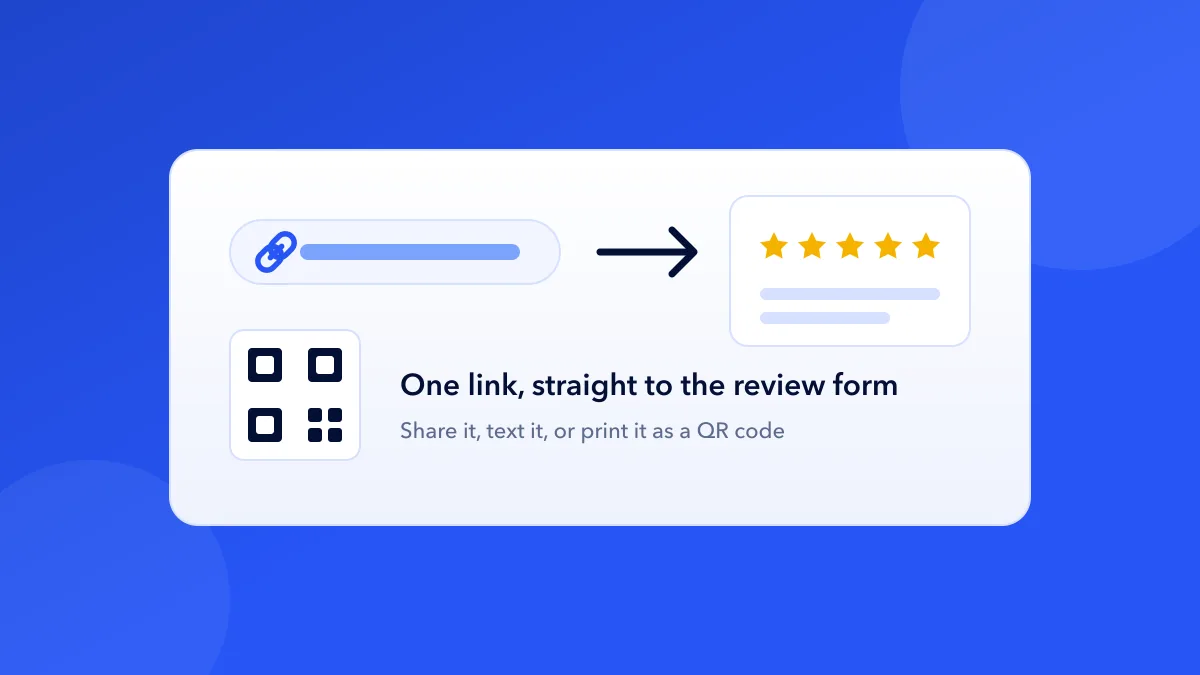
It's simple. Place QR codes at checkout or on receipts to invite quick, in-the-moment feedback.
That data streams right into your dashboard, letting you compare performance across every store. You can quickly see if one location is struggling with long checkout lines or if another is getting rave reviews for its amazing staff. This is how you collect smarter and manage quality at scale.
Want to learn more? Check out how our feedback software is used in the retail & e-commerce industry.
For the Agency Managing Multiple Brands
If you're an agency handling the online reputation for ten different clients, logging into a dozen different platforms every morning is a huge time sink. A single, unified dashboard isn't a luxury; it's a necessity.
This is where a tool like Radar comes in. Radar is our unified review intelligence feature that provides a high-level, color-coded view of every client's reputation on one screen.
You can see at a glance who needs attention, track sentiment trends over time, and create beautiful, data-rich reports in minutes, not hours. It cleans up your workflow, proves your value, and helps you grow stronger by delivering strategic insights to every single client.
Choosing and Integrating Your New System
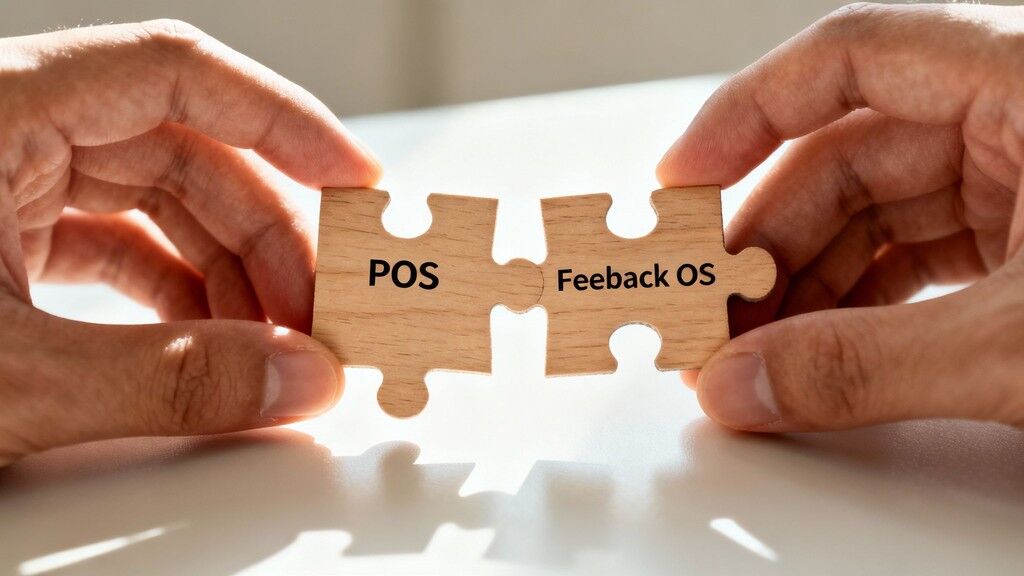
Picking the right feedback software can feel like just one more thing on an already endless to-do list. As a busy owner, you don't need another complicated tool. You need something that works out of the box and starts delivering value from day one.
The trick is to look past the flashy features and ask two simple questions: "Will this fit into how we already work?" and "How fast will we see a return?"
The best software doesn't force you to change your entire operation; it makes what you already do even better. It should feel less like a new program to learn and more like a smart upgrade to the tools you rely on every single day. This is where integrations stop being a "nice-to-have" and become non-negotiable.
The Power of a Connected Tech Stack
Think of your business operations like a well-oiled machine. Your Point of Sale (POS) system, like Toast, handles every transaction. Your Property Management System (PMS), like Mews, manages guest stays. Each part has its job, but they often work in their own separate worlds.
A true Feedback Operating System acts as the connective tissue, linking these silos into an intelligent, responsive network. When your feedback software can talk to your POS or PMS, you unlock a whole new level of awareness.
For example, imagine a negative comment about a meal comes in. An integration can automatically pull the guest's check from your Toast system. All of a sudden, you have context: what they ordered, who their server was, and how much they spent. This isn't just data; it's the specific information you need to fix the problem with precision and speed. That's what a truly connected system does for you.
To help you decide what's essential, here’s a quick checklist of features to look for when you're comparing options.
Essential Features for Your Feedback Software
Feature | Why It Matters for Your Business | Must-Have or Nice-to-Have? |
|---|---|---|
Multi-Channel Collection | Gathers feedback from where your customers are—email, SMS, QR codes, and online review sites. | Must-Have |
Real-Time Alerts | Notifies you instantly about negative feedback, so you can address issues before they escalate into bad reviews. | Must-Have |
Unified Dashboard | Brings all your reviews and feedback into one central place, saving you from logging into multiple sites. | Must-Have |
Direct POS/PMS Integration | Links feedback to actual transactions (like with Mews or Toast) for context-rich service recovery. | Must-Have |
AI-Powered Sentiment Analysis | Automatically flags the mood (positive, negative, neutral) in open-ended comments to help you spot trends faster. | Nice-to-Have |
Automated Task Assignment | Creates and assigns service recovery tasks to the right team members based on feedback triggers. | Nice-to-Have |
This table should give you a solid starting point. The goal is to find a tool that doesn't just collect data but helps you use it to make smarter, faster decisions.
Your Quick-Start Implementation Plan
Getting started with powerful software shouldn't require an IT degree or weeks of training. A modern platform is built for speed, helping you collect smarter and act faster from the moment you sign up.
Here’s a simple, three-step plan to get you up and running in no time:
Connect Your Profiles (30 Minutes): The first step is linking your accounts—Google Business Profile, TripAdvisor, Yelp, and any other review sites you're on. This immediately turns on Radar, our unified review intelligence feature, pulling all your feedback into one dashboard.
Set Up Your Alerts & Automations (15 Minutes): Next, you define the rules. Create alerts for reviews below a certain star rating or ones that contain specific keywords like "unclean" or "rude." This is also where you activate the Resolutions Engine to automatically create tasks for your team based on feedback.
Train Your Team (15 Minutes): Show your managers how to check the dashboard and respond to reviews. The interface is designed to be super intuitive, so this is usually just a quick walkthrough focused on assigning tasks and closing the loop on guest issues.
In less than an hour, you can have a fully working system that centralizes your feedback, automates your responses, and empowers your team to handle service recovery like pros. It’s built to save you time, not eat up more of it.
Choosing the Right Partner
The market for feedback tools is booming, and it's expected to hit $6.8 billion by 2032, all driven by an intense focus on the customer experience. A huge part of this growth is the rise of cloud-based platforms and easy integrations, which have enabled 45% of small and medium-sized businesses to compete on service quality. For businesses in retail and finance, connecting feedback analytics has even led to 30% gains in Net Promoter Scores.
When you're adopting new software, how well it connects with your existing tools is make-or-break; it's worth checking out different platforms, like screenask's integration options, to see how they handle connectivity. Ultimately, choosing the right software is about finding a partner who gets the fast-paced nature of the service industry and gives you tools that make your life easier, not more complicated.
How to Measure Success and Prove ROI
Any new software has to earn its keep, but proving the ROI on something like feedback management can feel a little fuzzy. You know happy customers are good for the bottom line, but how do you actually draw a straight line from a five-star review to your profit and loss statement?
The trick is to look past the vanity metrics and zero in on the operational wins that directly impact your finances. It’s not about chasing a higher overall rating. It’s about turning customer sentiment into a measurable asset. With the right feedback software, you can track specific KPIs that show exactly how your investment is paying off, so you can report on your success with total confidence.
Key Performance Indicators That Matter
Forget vague goals. To prove your feedback system's worth, you need to track real, tangible improvements in how your business runs day-to-day. These are the numbers that show you’re not just collecting feedback—you’re using it to build a stronger company.
Here are the top three KPIs to watch:
Reduction in Negative Review Volume: Catching a problem before it explodes into a public, one-star rant is a massive win. Keep an eye on the number of one and two-star reviews you get each month. If that number is steadily dropping, it’s a clear sign your proactive service recovery is working.
Increase in Positive Review Volume: When you make it easy for your happy customers to share their experiences, your online reputation and local SEO get a serious boost. Monitor the growth in four and five-star reviews as a direct result of your efforts.
Faster Ticket Resolution Times: When a customer is upset, speed is everything. An unhappy customer who gets a quick, helpful response is far more likely to come back than one who feels ignored.
Our Resolutions Engine is a game-changer for these metrics. This feature automatically creates and assigns service recovery tasks the moment negative feedback comes in, ensuring no complaint ever slips through the cracks. By automating the follow-up, you can slash your resolution times and stop small issues from turning into big PR headaches.
Connecting Operational Wins to Financial Outcomes
Okay, now let’s connect those operational improvements directly to your revenue. This is how you build a rock-solid business case for your feedback collection software.
The goal is to show a clear path from faster responses to bigger profits. For a deeper look at how this works, check out our guide on using an AI feedback analysis tool to uncover these hidden connections.
Here’s a simple framework to tie your KPIs to financial results:
Calculate the Cost of a Bad Review: A single negative review can scare off dozens of potential customers. By cutting down on these reviews, you’re directly protecting future revenue.
Measure the Impact on Repeat Business: Keep a close watch on your customer retention rate. Faster resolutions and better experiences create loyal customers who keep coming back. A mere 5% increase in customer retention can boost profitability by a staggering 25% to 95%.
Quantify the Increase in Customer Lifetime Value (CLV): Happy, loyal customers don't just return—they tend to spend more over time. By tracking CLV, you can prove how better service directly fuels long-term financial growth.
Ultimately, measuring the ROI of your feedback efforts comes down to this: you collect smarter to get ahead of problems, act faster to solve them, and grow stronger by building a loyal customer base that drives sustainable revenue.
Your Questions About Feedback Software Answered
Jumping into a new system always brings up a few questions, especially when you’re already juggling a dozen other things. You need straight answers that get right to the point. Here are the most common questions we hear from busy owners, answered with the day-to-day realities of your business in mind.
Is Feedback Software Really Worth the Cost for a Small Business?
Absolutely. For a small or independent business, your reputation is your marketing. It’s better to think of this software not as a cost, but as an investment in your brand’s insurance and its growth engine.
A good system automates the tedious, time-consuming tasks that would otherwise eat up your day—like checking five different review sites every morning. The ROI shows up fast. It comes from stopping even one scathing review from going viral by using a tool like our Resolutions Engine. This feature is built for automated service recovery, instantly turning a complaint into a trackable task for your team, so you can act faster and fix the problem before the guest even leaves.
We Already Get Plenty of Feedback. Why Do We Need Software?
Getting feedback is easy; using it is the hard part. A flood of comments without a system to organize it all is just noise. It’s impossible to spot the subtle but critical patterns when feedback is scattered across Google, TripAdvisor, and private emails.
This is where a true Feedback Operating System shines. Software like ours brings order to the chaos.
Radar: Think of this as your unified review intelligence hub. It pulls every single public review and private comment into one organized dashboard so you can see everything at a glance.
AI Summaries: Instead of reading every single comment, you get instant insights and sentiment analysis. The system reads all the text and tells you what’s trending—like multiple guests mentioning "slow check-in" or praising a specific bartender by name.
This transforms random comments into a powerful source of business intelligence. You move from guessing what’s wrong to making data-backed operational decisions that directly improve your guest experience.
How Long Does It Take to Set Up and See Results?
You can be up and running in under an hour. We designed the entire process for busy owners who don’t have an IT department on standby. The initial setup is as simple as connecting your existing review profiles, like your Google Business Profile and TripAdvisor page.
From the moment you connect your accounts, you’ll start seeing immediate value. Our Radar feature will begin pulling in all your historical and current reviews, giving you a complete, centralized view of your reputation from day one.
You’ll see real results within the first few weeks. As you start responding faster and more consistently, you’ll notice an improvement in your response time metrics. More importantly, you'll see a positive trend in your overall review scores, proving that when you collect smarter and act faster, you truly do grow stronger. The goal is rapid value, not a long, drawn-out project.
For SaaS and subscription businesses, the moment after a payment is one of the highest-signal feedback touchpoints. FeedbackRobot's Stripe integration fires a survey automatically after payments, renewals, or invoices — capturing sentiment at the exact moment customers evaluate value.
Ready to Turn Feedback into Your Strongest Asset?
You’ve seen what a modern Feedback Operating System can do. It flips your business from reactive to proactive, turning customer feedback into a real engine for growth.
Stop letting valuable insights slip through the cracks or sit unused in a spreadsheet. It’s time to collect smarter, act faster, and grow stronger with a system built for busy owners like you.
With the right tools, you finally get full control over customer conversations and your online reputation. You can move from just putting out fires to building a business that actually learns, adapts, and improves with every single comment it receives.
The power to turn what your customers are saying into your biggest advantage is right here. Ready to see how it works for your business?
Take the next step with FeedbackRobot. Launch your IT Support Provider User Feedback Tool.
What is the difference between 'Free' and 'Pro' collection software?
Free tools often lack automation, advanced analysis, and branding. Pro software like FeedbackRobot provides 'White-Label' forms, POS integrations, and AI-driven sentiment tracking.
Can I collect feedback from offline customers?
Yes! QR codes on signage, tables, or receipts are the best way to capture 'Offline' feedback and bring it into your digital dashboard in real-time.
Does the software work on all devices?
Modern collection software is 'Device-Agnostic,' meaning your surveys will look and function perfectly on iPhones, Androids, Tablets, and Desktops.
How do I prevent 'Spam' or duplicate entries?
Professional software uses IP-tracking and unique 'Transaction Tokens' to ensure that one person can only give feedback once per visit, protecting your data integrity.
Can I integrate feedback collection into my mobile app?
Yes. Many platforms offer SDKs or 'Embed Codes' that allow you to put a feedback button or pop-up directly inside your existing app or website.
Stop reading about it. Let your agent handle it.
25 free AI actions · no credit card required
Start Free