
What Is a Pulse Survey? Guide & Sample Questions
What a pulse survey is, when to use one, and how to write questions that get responses — including sample questions for hospitality and service businesses.

Feb 14, 2026 · 16 min read
Free tool
Likert Scale Generator
Generate custom rating scales and survey questions tailored to your feedback needs.
Updated for 2026: Because nobody has time for a 20-minute questionnaire anymore—especially not your guests. In 2026, the "annual physical" for your business is out, and the "continuous heartbeat" is in. Read on to see how the most resilient hospitality brands are using pulse surveys to listen smarter, act faster, and leave the guesswork behind.
A pulse survey is a short, frequent ‘check-up’ on your business’s health, designed for busy hospitality and service owners like you. Think of it not as a once-a-year ordeal, but as a continuous conversation that captures a real-time snapshot of guest satisfaction or employee morale. This approach is built to help you collect smarter, act faster, and grow stronger.
Moving Beyond the Annual Survey That Nobody Answers
Let's be honest: those long annual surveys feel like a relic. You spend weeks crafting them, beg customers for a response, and weeks later, you might get a handful of replies—long after the feedback is stale and irrelevant.
In the fast-moving hospitality world, this slow pace means you’re always reacting to yesterday's problems. There’s a much better way to stay connected.
This is where the pulse survey changes the game. It’s not an exhaustive annual physical for your business; it's a regular heartbeat monitor. It's just a quick, focused set of questions sent at key touchpoints, like right after a guest checks out or a diner pays their bill.
The Agile Approach to Feedback
Instead of asking 20 questions once a year, a pulse survey might ask just three questions every month. This agile approach respects your customers' time, which dramatically increases the chances they'll actually respond.
More importantly, it provides a continuous stream of fresh data. This allows you to spot trends as they emerge, celebrate wins with your team, and fix issues before they escalate into negative online reviews.
From Data Points to Actionable Insights
This frequent check-in has a powerful impact. Pulse surveys, typically featuring just 3-6 questions, have revolutionized how businesses like hotels and restaurants stay in tune with their guests and teams. The results speak for themselves.
Organizations that run pulse surveys just twice a year report 35% higher employee retention and 28% improved customer satisfaction scores. By deploying these quick surveys via QR codes at check-in or through post-meal prompts, restaurants have boosted response rates to over 50%. That’s a massive jump from the typical 20-30% seen with longer, traditional surveys.
Ultimately, the goal isn't just to collect data—it's to act on it. A pulse survey gives you immediate, relevant feedback you can use to make smarter decisions, faster. When you know exactly how a guest felt about their stay this morning, you can address their concerns or praise your team in a way that has a real impact.
It’s all about shifting from a reactive mindset to a proactive one, strengthening your operations one piece of feedback at a time. For more on this, check out our guide on automated feedback surveys.
Why a Real-Time Business Pulse Matters More Than Ever
In hospitality, guest sentiment can turn on a dime. A slow check-in or a cold meal can snowball into a dozen negative reviews before you’ve even had your morning coffee. The pace is relentless.
Waiting for an annual review to tell you what went wrong last quarter is like trying to drive while only looking in the rearview mirror. You absolutely need to know what’s happening right now to stay ahead. A real-time business pulse isn't a nice-to-have; it's a critical survival tool.
Pulse surveys give you exactly that—an ongoing EKG for your business’s health. Instead of a single, outdated snapshot from months ago, you get a continuous stream of fresh data. This lets you spot small issues before they become major problems, track trends as they happen, and make smart decisions on the fly. You can see if that new menu is a hit, if the front desk is getting overwhelmed during peak hours, or if a specific team member is consistently delighting your guests.
Get started fast: Download our 7 best Customer Feedback Survey Templates for 2026.
The Power of In-the-Moment Feedback
One of the biggest wins with pulse surveys is their ability to capture honest, immediate reactions. Think about it: when you ask a guest about their dining experience right after they’ve paid the bill, their memory is crystal clear and their feedback is specific. They can tell you exactly what they loved about the service or what disappointed them about their dish.
This "in-the-moment" capture gives you a few key advantages:
Higher Response Rates: Nobody wants to fill out a 15-minute questionnaire. Pulse surveys are short and convenient—often just a few questions via a QR code or text. Because you’re only asking for 30 seconds of their time, guests are far more likely to respond.
More Authentic Insights: Feedback collected on the spot is less filtered. It reflects a person's genuine emotional response, giving you a much clearer picture of what truly matters to your customers.
Improved Employee Engagement: This isn’t just for guests. A real-time pulse is crucial for your workforce. It allows you to implement proactive employee engagement strategies that make a real difference. When your team feels consistently heard, their morale and performance climb.
Ultimately, this process is about shifting from a reactive mode—always putting out fires—to a proactive cycle of continuous improvement. It’s about building a business that learns and adapts every single day.
Making Real-Time Feedback Effortless
Of course, the idea of sending frequent surveys might sound like another task on your full plate. This is where the right tools make all the difference, helping you collect smarter without the headache. Our Feedback Operating System was built for this.
A pulse survey turns feedback from an event into a process. It embeds listening into your operational DNA, making it possible to act faster and strengthen your business from the inside out.
With FeedbackRobot, we’ve made this process incredibly simple. One of our core features is Prompt to Survey, which uses AI to build ready-to-send surveys in seconds. You simply type a command like "Create a 3-question survey about our hotel checkout process," and the system generates it for you. This tool removes all the friction, so you can launch a quick pulse check-in whenever the need arises and get back to running your business. You act faster, and you grow stronger.
Designing Pulse Surveys That Actually Get Responses
The point of a pulse survey is to get a quick, honest answer. But if your survey is confusing, too long, or asks irrelevant questions, it’s just as likely to be ignored. A great pulse survey feels less like a test and more like a quick chat.
The secret is in the design. It must be short, sharp, and ridiculously easy to answer on a phone in under a minute. Picture your guests in the lobby after a long flight or your staff wrapping up a chaotic shift; you only have their attention for a brief moment. You have to make it count.
Keep It Short And Simple
The golden rule of pulse surveys is brevity. Stick to 3 to 6 questions maximum. The second you go over that, completion rates plummet. Your goal isn’t to gather every piece of data possible; it’s to get a clear snapshot of one specific experience.
Use simple, direct language. No industry jargon or corporate-speak. Instead of, "How would you rate the efficacy of our service delivery?" just ask, "How was the speed of your service today?" It’s direct, simple, and gets you the exact answer you need.
Bottom line: every single question should have a clear purpose. If you can't explain what action you’d take based on the answer, that question doesn’t belong on your survey.
Mix Your Question Types
To get the most valuable insights, use a smart combination of question types. This keeps the survey from feeling repetitive and gives you both hard numbers (quantitative) and the stories behind them (qualitative). A solid mix usually includes:
Rating Scales: Questions like "On a scale of 1-5, how clean was your room?" give you a simple metric you can track over time. They’re fast to answer and even easier to analyze.
Multiple-Choice: These are perfect for pinpointing specific issues or highlights. Think, "What was the best part of your dining experience?" with options like "The Food," "The Service," or "The Ambiance."
A Single Open-Ended Question: This is your gold mine for truly actionable feedback. After a rating question, ask something simple like, "Is there anything else you'd like to share about your experience?" This gives people a chance to tell you what’s really on their minds.
Make It Easy To Access
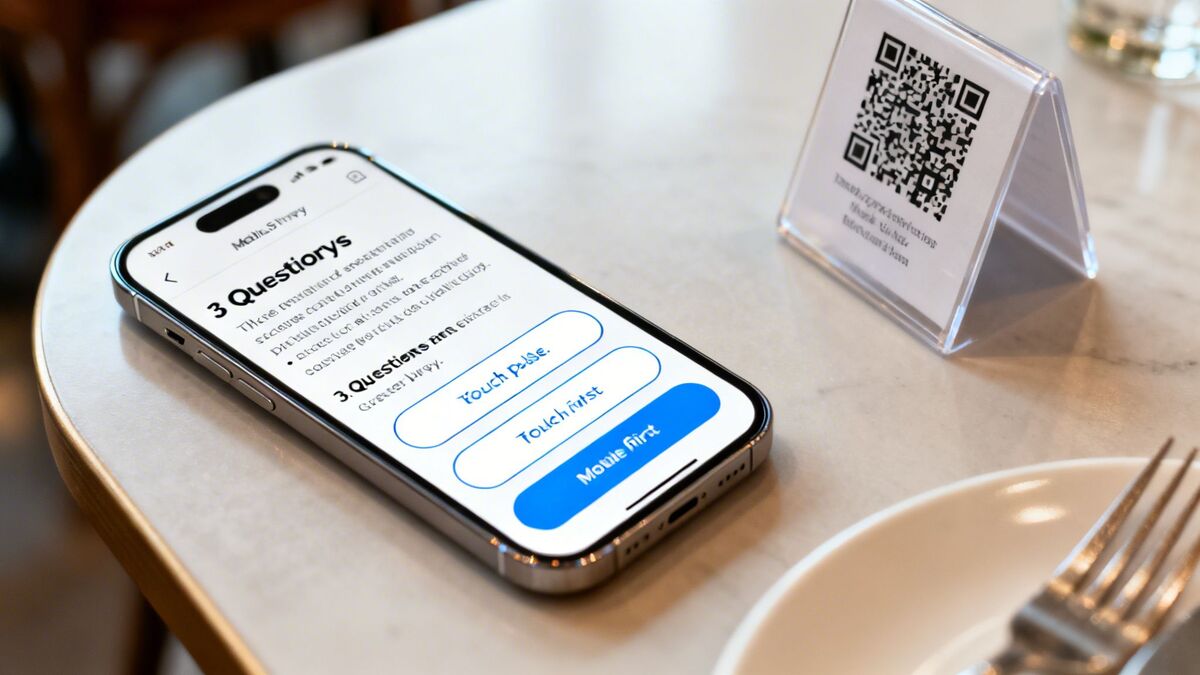
Your survey must be incredibly easy to find and complete at the perfect moment. You have to meet your customers and employees exactly where they are, and that means being mobile-first.
A well-designed pulse survey isn't just about the questions you ask; it's about how easy you make it for people to answer them. The lower the friction, the higher the response rate.
This is where channels like QR codes and SMS are so powerful. Put a QR code on a receipt, a table tent, or right at the check-out counter. Send a quick SMS link moments after an interaction. These methods capture feedback while the experience is still fresh, which is when it’s most accurate and valuable. FeedbackRobot fully supports these channels, making it simple to deploy surveys that get seen and answered.
Sample Questions For Hospitality
Crafting the right questions is everything. They need to be specific, relevant, and focused on things you can actually control. For a deeper dive, check out our complete guide on the best practices for survey design.
To get you started, here are a few ready-to-use question examples for different touchpoints in hospitality. These are designed to help you collect smarter feedback right away.
Sample Pulse Survey Questions for Hospitality
Touchpoint | Sample Question (Rating) | Sample Question (Open-Ended) |
|---|---|---|
Post Check-In | How easy was your check-in process today? (1-5 scale) | Is there anything we could have done to make your arrival better? |
Post-Dining | Please rate the quality of your meal. (1-5 stars) | Do you have any feedback for our chef or service team? |
Employee End-of-Shift | How supported did you feel by your team today? (1-5 scale) | What is one thing that would have made your shift better today? |
These examples are straightforward and get right to the point. They give you a number to track and an open field for the context you need to make meaningful changes.
Turning Quick Feedback into Fast Action
Collecting feedback is only half the battle. Its real value comes when you act on it—quickly. For busy owners in hospitality, real growth happens when you can turn a guest's comment from this morning into a better experience for this evening's customers.
This is where you move from just listening to actively solving. The goal is to close the feedback loop so fast that your guests and employees feel heard almost instantly. This rapid response doesn't just fix individual problems; it builds a powerful reputation for customer care and strengthens loyalty.
From Raw Data to Instant Insights
Imagine getting dozens of open-ended responses every day. Manually reading each one is a huge time-sink. You need a way to see the big picture in seconds. This is precisely what FeedbackRobot’s Feedback Operating System was built for.
Our AI Summaries do the heavy lifting for you. This feature instantly analyzes all your open-ended feedback, performs sentiment analysis to see if it's positive or negative, and pulls out key themes. In one simple dashboard, you'll see what guests are raving about ("staff friendliness") and what common issues are causing friction ("room cleanliness")—all without reading a single full response unless you want to. This is how you collect smarter, getting clear, prioritized insights that tell you exactly where to focus.
Automating Your Response and Resolution
Once you’ve spotted an issue, speed is everything. A guest who reports a cold meal doesn't want an apology a week later. They want to know you're on it now. Trying to manage this manually is a recipe for negative reviews.
This is where you act faster with our Resolutions Engine. This feature provides automated service recovery, turning feedback into immediate action and making sure nothing slips through the cracks. It’s like having a digital manager on duty 24/7.
The magic of a well-oiled feedback system isn't just in what you hear; it's in how consistently and quickly you prove you're listening. Automation makes that consistency possible at scale.
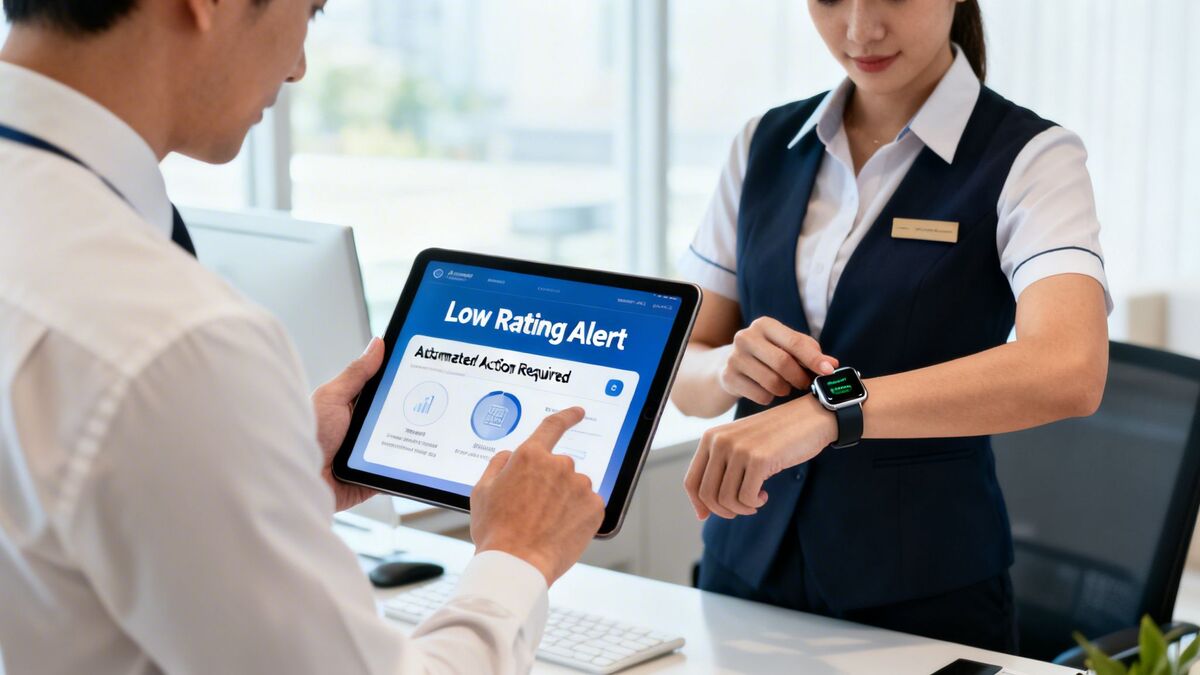
You can build powerful rules to handle any situation. For example, create a workflow that triggers automatically when a guest leaves a rating of 2 stars or less:
Instant Alert: The shift manager immediately receives an SMS notification.
Log the Issue: A ticket is automatically created and assigned to housekeeping.
Close the Loop: The guest automatically receives a personalized email apologizing and offering a discount on their next visit.
This entire process happens in minutes. By operationalizing your feedback with systems that integrate directly into your workflow, like our connections with Mews or Toast, you ensure that every piece of feedback helps you grow stronger.
Seeing the Bigger Picture Beyond Your Surveys
Your customers' needs and the market are always in motion. While pulse surveys are a secret weapon for agility, they only give you one piece of the puzzle: what your customers are willing to share with you directly.
But what about the conversations happening on Google, TripAdvisor, or Yelp when you're not asking? Relying only on direct feedback is like listening with one ear covered. You're missing the full context and subtle trends that only surface in public forums.
To make genuinely informed decisions, you need to connect the dots between what guests tell you in private and what they share in public. This complete view ensures you never miss an opportunity or a threat.
Unifying Your Feedback Intelligence
This is where you need a system that can see everything at once. You need to combine the immediate, targeted insights from your pulse surveys with the broad, unfiltered sentiment from across the web. This unified approach gives you a complete, 360-degree understanding of your brand's reputation.
Imagine seeing a slight dip in your pulse survey scores for "service friendliness." At the same time, you notice three new Google reviews mentioning "rushed staff." Separately, these data points are concerning. Together, they paint a crystal-clear picture of an emerging issue that needs immediate attention. That’s the power of unified intelligence.
We built the Radar feature in FeedbackRobot specifically for this. Radar is our unified review intelligence engine that scours major platforms like Google and TripAdvisor, pulling all your public reviews into a single, easy-to-read dashboard. By bringing your direct pulse feedback and public reviews together, you can finally see how different feedback channels influence each other, spot patterns, and confirm successes with a much higher degree of confidence.
Connecting Insights to Stay Ahead of Trends
This comprehensive view isn't just about managing your reputation; it's about proactively adapting to market shifts before your competitors even see them coming. Spotting an emerging trend early is a massive competitive advantage.
In the fast-moving world of retail and e-commerce, pulse surveys are often used as a secret weapon to identify these shifts. For instance, a beverage company that started using semi-annual market trends pulse surveys quickly pinpointed a 40% surge in demand for low-sugar options among millennials. This insight led directly to a new product line that captured 12% more market share within its first year.
Across major markets in the US and EU, companies adopting this pulse-driven approach report being 32% more adaptable to new trends. You can read more about how businesses leverage these insights to stay ahead.
By combining the direct, focused questions of a pulse survey with the wide-angle view of your online reputation from a tool like Radar, you create a powerful feedback operating system. You collect smarter by gathering data from every source, act faster by seeing the connections instantly, and grow stronger by making decisions based on the complete story.
How Top Hospitality Brands Use Pulses to Grow Stronger
Theory is great, but let's talk results. For busy hospitality owners, the proof is in the numbers—less turnover, happier guests, and a healthier bottom line. It all boils down to a simple, powerful loop: collect smarter, act faster, and grow stronger.
Let's look at this in action. A hotel chain struggling with high staff turnover started sending bi-weekly employee pulse surveys asking pointed questions about workload and management support.
The feedback quickly flagged a huge burnout risk among housekeeping staff, all thanks to messy scheduling. Armed with this insight, management tweaked the shift patterns and cross-trained teams to help during peak hours. The result? They reduced employee turnover by 22% in just six months, saving a fortune in hiring and training costs.

From Inconsistent Service to Five-Star Ratings
Here’s another one. A growing restaurant group was dealing with inconsistent service across its locations. They rolled out simple post-dining pulse surveys using QR codes on every table.
The data poured in instantly. They didn't have to read every comment because FeedbackRobot's AI Summaries did the heavy lifting, providing instant insights and sentiment analysis. The system immediately highlighted that customers at struggling locations mentioned the same two things: "long wait times for the check" and "inattentive servers."
That clarity was a game-changer. It allowed them to create targeted training focused specifically on end-of-meal service. Within one quarter, their average guest rating across all locations climbed by a full star. This is a perfect example of how to collect feedback from guests and turn it directly into better operations.
Amplify Your Wins with Social Proof
Pulse surveys are fantastic for fixing problems, but they also shine a light on what you’re doing right. When you get that glowing feedback, don’t just file it away. That positive comment is a powerful marketing tool.
Great Place to Work found that top companies aim for over a 50% response rate on their pulses, making sure the feedback is a true reflection of their team. In hospitality, hotel groups using post-shift pulses saw turnover drop by 22% because they could spot and fix issues like 'poor team communication' before they got out of hand.
With FeedbackRobot, you can instantly turn your best feedback into compelling social proof. Our Spotlight Feedback Wall lets you showcase verified positive comments and high ratings right on your website. This builds trust with potential customers before they even walk through the door, attracting new business and cementing your reputation for excellence. It’s the final piece of the growth loop: using real customer voices to strengthen your brand.
Still Have Questions About Pulse Surveys?
Even with a solid plan, a few questions always pop up. Let's walk through the most common ones we hear from busy owners and managers.
How Often Should I Send a Pulse Survey?
The right cadence depends on your goal. For guest satisfaction, the best time is right after a key moment—like check-out or after the bill is paid. This is when feedback is fresh and most honest.
For employee engagement, a monthly or quarterly rhythm is usually the sweet spot. It's consistent enough to spot trends in morale over time without overwhelming your team.
Will Sending Surveys So Often Annoy My Customers?
Not if you do it right. A quick, relevant, two-question survey that takes 30 seconds feels helpful, not like a chore. It shows you care.
The key is to respect your customer's time—the complete opposite of those long annual surveys everyone dreads. With a tool like FeedbackRobot, you can also set rules to avoid sending too many surveys to the same person, which keeps the experience positive.
What's the Difference Between a Pulse Survey and NPS?
That’s a great question. The easiest way to think about it is that Net Promoter Score (NPS) is a specific type of pulse survey. It’s designed to measure customer loyalty with just one question: "How likely are you to recommend us?"
A pulse survey, on the other hand, is the broader method. You can absolutely include an NPS question, but you can also ask about cleanliness, service speed, or how friendly your staff was. This gives you a much more detailed, operational snapshot of what’s really happening.
How Do I Actually Get My Team to Act on the Feedback?
You have to make it incredibly easy for them. When feedback is scattered across emails and sticky notes, it’s not going to get acted on. The first step is getting everything into one centralized place.
Our AI Summaries give your team instant insights without forcing them to read every comment. But more importantly, our Resolutions Engine can automatically create and assign follow-up tasks based on survey answers.
When your team sees a clear, automated workflow that goes directly from feedback to action, they're far more likely to jump in and help you get stronger.
Ready to turn quick feedback into fast action? FeedbackRobot gives you the tools to collect smarter, act faster, and grow stronger. Generate your Boutique Hotel Guest Experience Survey.
What is a 'Pulse Survey' and how is it different from a traditional survey?
A pulse survey is short (1-2 questions), frequent, and focused on a specific 'vibration' of the business (like a new menu launch). Traditional surveys are long and happen annually or quarterly.
Why are pulse surveys better for fast-moving businesses?
They provide 'Real-Time' data. A hospitality owner can see if a change made on Monday is working by Wednesday, rather than waiting six months for a formal report.
How often should I send a pulse survey to my customers?
Monthly or even weekly for specific segments. Because they are so short (taking less than 15 seconds to finish), they don't cause the 'Survey Fatigue' associated with longer forms.
Can I use pulse surveys for my staff too?
Yes! Pulse surveys are excellent for measuring 'Staff Morale' during busy seasons, allowing you to catch burnout or operational issues before they lead to turnover.
What is the best way to distribute a pulse survey?
SMS is the gold standard for pulse checks. It has a nearly 100% open rate and allows the guest to tap an answer in seconds while they are on the go.
Put this on autopilot
Pulse Survey
A ready-made FeedbackRobot automation that runs this for you — deploys free in under 5 minutes.
Stop reading about it. Let your agent handle it.
25 free AI actions · no credit card required
Start Free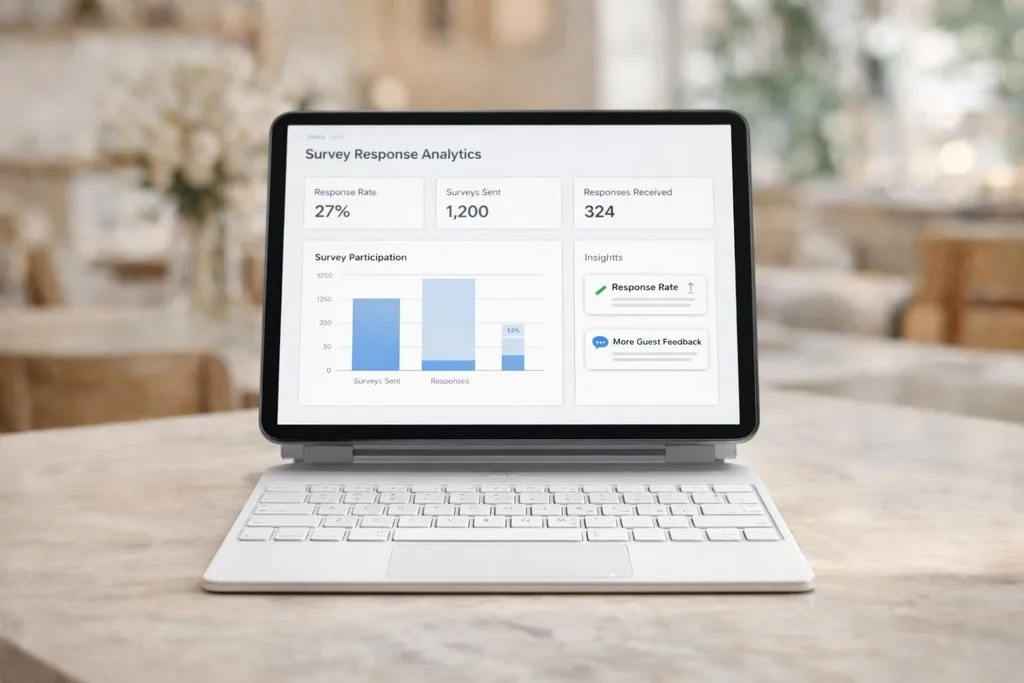

![How to Measure Customer Satisfaction Without Surveys [10 Methods]](/images/legacy/HZ9HoLgQGt0VJJpCMqdS6vtTcAE.webp)