Voice of Customer Surveys: Boost Growth with AI & Automation
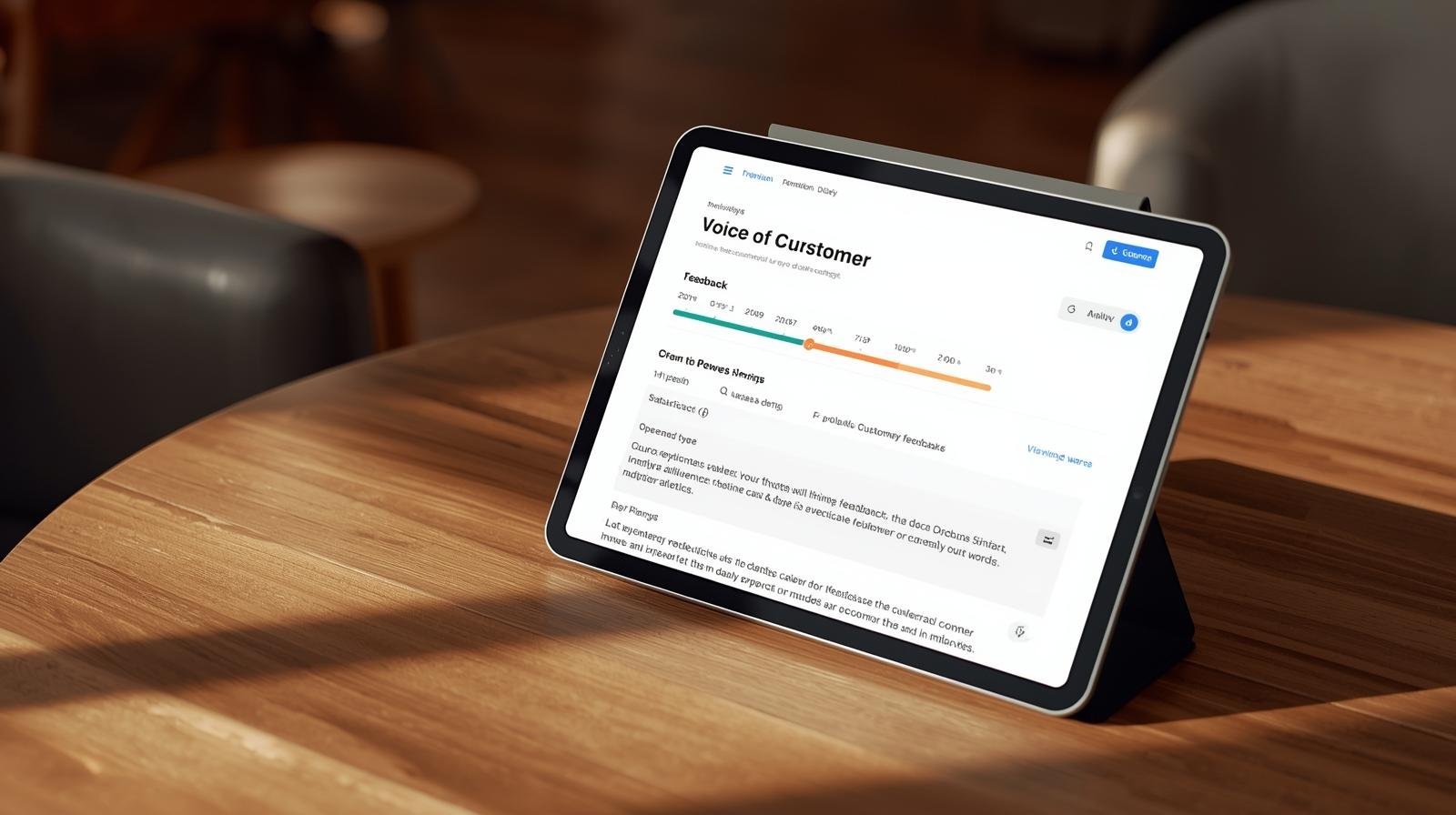
Voice of Customer (VoC) surveys are your direct line to understanding what guests and clients truly experience. This isn't just about sending out another questionnaire. For a busy hospitality or service owner, a real VoC program is a complete strategy to stop guessing, listen to what your customers are telling you, and use their own words to build a stronger business. It's how you collect smarter, act faster, and grow stronger.
Stop Guessing and Start Listening
Are you staring at confusing satisfaction scores? Dealing with unpredictable online reviews? Missing out on growth opportunities that feel just out of reach?
In the service industry, you can't afford to operate on assumptions. The gap between what you think customers want and what they actually experience is where revenue leaks and reputations are damaged.
This is exactly the problem VoC surveys solve. They replace guesswork with clear, actionable data straight from the source. The biggest hurdle for most busy owners, though, is the time it takes to design the right questions and launch a survey.
Making Feedback Effortless
We believe collecting feedback should be simple. That’s why we built Prompt to Survey, a core feature inside the Feedback Operating System. It’s an AI tool that turns a simple idea—like ‘check-in experience feedback’ or ‘post-dinner satisfaction’—into a professional, ready-to-send survey in seconds.
By eliminating the friction of survey creation, you can start gathering valuable insights immediately. This is the first step to our core value: collect smarter, so you can act faster and grow stronger.
But collecting feedback is only half the battle. A recent Forrester report highlighted a critical challenge: a staggering 70% of customer experience teams struggle to make a convincing business case for their initiatives. Teams still relying on old-school surveys often fail to get the rest of the organization to act on what they find.
The way businesses gather feedback is changing fast. The old methods were slow and often led to insights that were already out of date. Today, modern VoC platforms give you a live, dynamic view of what’s happening in your business.
From Traditional Feedback to Modern VoC
Aspect | The Old Way (Traditional Method) | The New Way (Modern VoC) |
|---|---|---|
Speed | Manual surveys sent quarterly or annually. | Automated, real-time feedback triggered by events. |
Data | Static scores and limited open-ended comments. | Dynamic sentiment, emotion, and keyword trends. |
Action | Delayed reports that are hard to act on. | Instant alerts and automated workflows. |
Scope | One-off campaigns with low response rates. | Continuous listening across multiple channels. |
This shift means you’re no longer just collecting data for a report; you’re building an active system that helps you run a better business every single day.
Beyond formal surveys, customer feedback often comes through direct interactions. Learning how to spot the nuances in these conversations, like those detailed in a guide to the modern IT service desk, can reveal priceless insights. This guide will show you how to systematically capture that crucial information and put it to work. You can also explore our deeper article on the many benefits of customer feedback to see just how big of an impact these insights can have on your bottom line.
Designing Surveys That Actually Get Responses
The secret to a great Voice of Customer survey isn't just about collecting feedback—it’s about collecting the right feedback. That means asking the right questions, at the right time, through the right channels. If your survey is too long, hits at the wrong moment, or is a pain to access, even your most loyal customers will ignore it.
Think of it like this: you wouldn't ask a hotel guest about their entire stay while they're scrambling to check out. You'd ask about the check-in experience right after it happens or the meal quality just after dinner. The goal is to meet customers where they are with questions that make sense in that exact moment.
This is how you build a process to collect smarter. Instead of one generic survey, you create a series of targeted, timely touchpoints. It respects your customer's time and, in return, gives you far more accurate insights.
Choosing the Right Survey for the Moment
Different goals demand different surveys. Sending a 20-question survey after someone buys a cup of coffee is a surefire way to get zero responses. The key is to match the survey type to the specific interaction you want to understand.
Here are three essential survey types every service and hospitality business should know:
Net Promoter Score (NPS): Measures long-term loyalty by asking how likely a customer is to recommend you. It's best used periodically—say, quarterly or after a completed hotel stay—to get a pulse on your overall brand health.
Customer Satisfaction (CSAT): This is all about in-the-moment feedback. A quick "How was your meal today?" or "How satisfied were you with check-in?" gives you immediate, actionable data on a specific service touchpoint.
Customer Effort Score (CES): Asks how easy it was for a customer to get something done, like booking a table or resolving an issue. A high-effort experience is a major reason customers leave, making this a critical metric to watch.
The most effective VoC programs don't just pick one; they use a mix. CSAT and CES give you the granular, operational feedback you need to fix immediate problems, while NPS tracks the long-term health of your customer relationships.
Meeting Customers Where They Are
Once you know what to ask, you need to figure out how and where to ask it. The best channel is always the one that’s most convenient for your customer. For busy hospitality and service environments, speed and accessibility are everything.
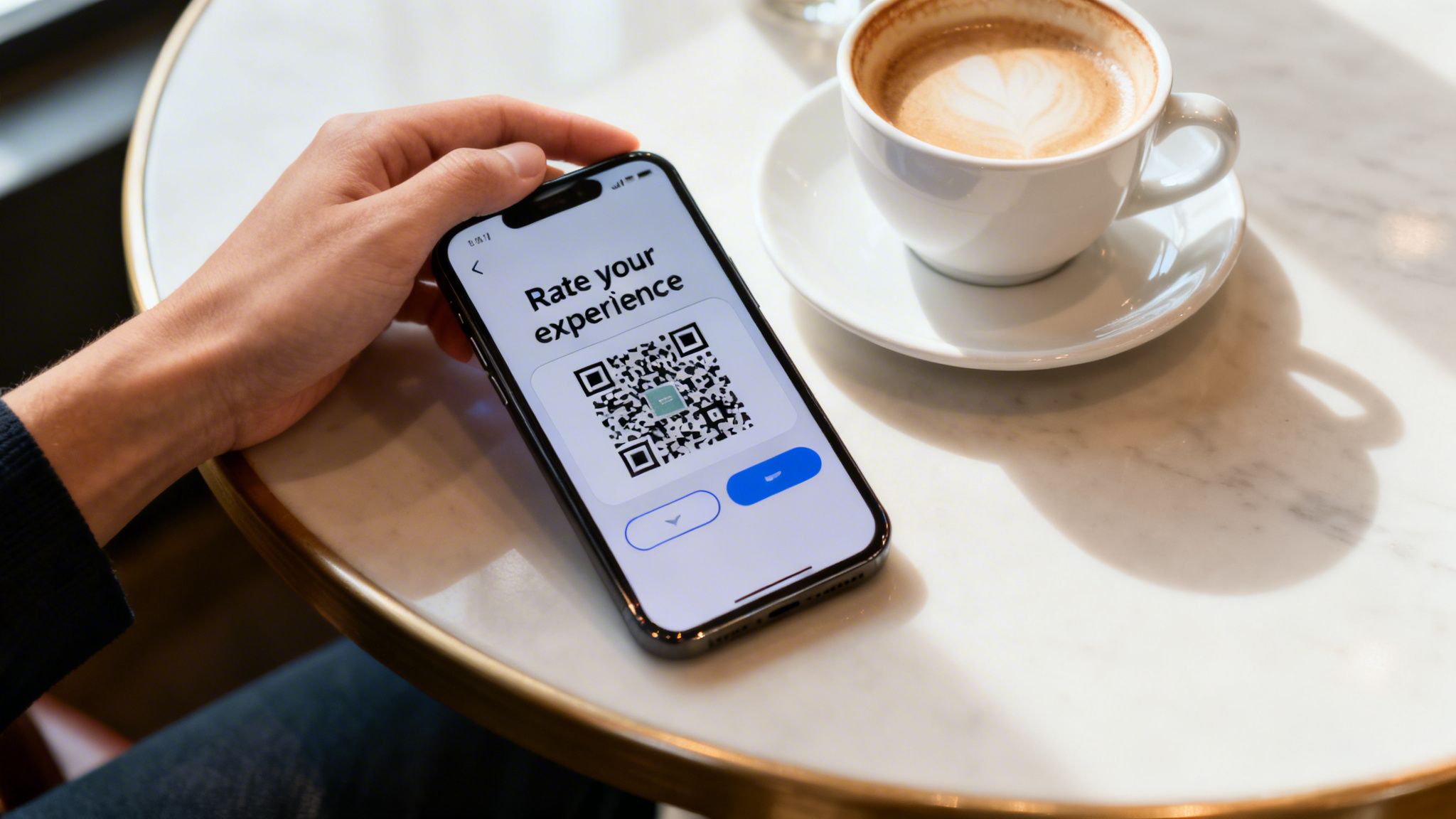
Common channels include:
QR Codes: Put them on receipts, tables, or at the front desk for instant, on-site feedback.
Email & SMS: Automate these to send after a key event, like a hotel checkout. They work great for slightly longer surveys like NPS.
Website Pop-ups: Catch feedback from people browsing your site and ask about their online experience.
Manually creating and sending unique surveys for every channel is a huge time-sink. This is where automation is your best friend. With Prompt to Survey, you can instantly generate a survey for any scenario. Just type "post-checkout survey for my hotel" or "restaurant service feedback," and our AI creates the right questions for that context, ready to go.
This approach removes the grunt work, making it easy to create a repeatable process for gathering high-quality feedback. For more tips on writing questions that get results, check out our guide on the best practices for survey design.
Turning Raw Feedback Into Actionable Insights
Collecting feedback is just step one. The real magic happens when you turn that mountain of raw data—all the comments, scores, and ratings—into clear directions for your business.
For most busy owners, this feels like the hardest part. You don't have a team of analysts to spend weeks digging through spreadsheets. You need insights, and you need them now. The goal isn't just to look at data; it's to understand what it means for your operations so you can make smarter decisions tomorrow.
This shift toward instant, usable intelligence is why the global Voice of the Customer market is projected to skyrocket from USD 1.7 billion to over USD 4.6 billion by 2030. This explosive growth shows that VoC is no longer a nice-to-have. It’s a core business function, especially as platforms get better at pulling feedback from every channel into one easy-to-use dashboard.
From Text Overload to Instant Clarity
Let’s be honest: the most valuable feedback often comes from open-text answers. It’s where customers tell you, in their own words, what they loved or hated. But reading through hundreds of those comments is impossible for a small team.
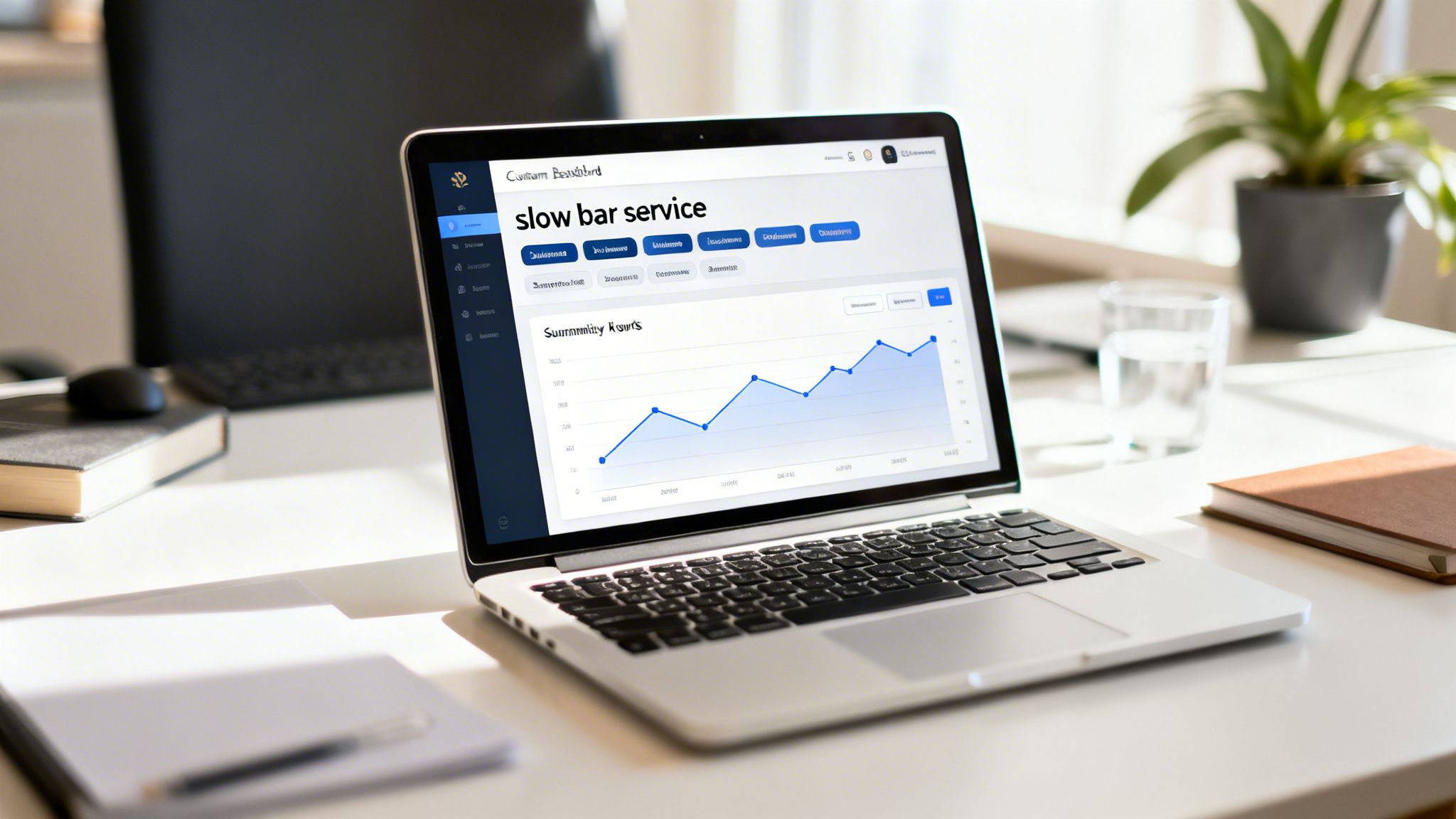
That's where our Feedback Operating System does the heavy lifting for you. We use AI Summaries to give you instant insights. Think of it as a tireless analyst that reads every comment, identifies the critical themes, and analyzes the sentiment (positive, negative, or neutral) automatically.
Instead of a wall of text, you see clear, simple tags like:
slow bar service(Negative)friendly staff(Positive)clean rooms(Positive)confusing menu(Negative)
What used to take hours of manual work now becomes a five-minute check-in. You can immediately spot what’s working and what’s broken, letting you fix problems before they snowball. This is how you act faster.
Seeing the Complete Picture
Your own VoC surveys are vital, but they don't tell the whole story. Customers are also talking about you on public review sites like Google, TripAdvisor, and Yelp. To make truly informed decisions, you need to see all of this feedback in one place.
Your brand's reputation isn't just what you hear in private surveys; it's the sum of every public review and comment. Managing it requires a single source of truth.
This is exactly why we built Radar, your unified command center for customer intelligence. Radar is a powerful feature in our Feedback Operating System that provides unified review intelligence, pulling in not just your survey responses but also all your public reviews into one simple, holistic view of your brand reputation.
With Radar, you can:
Spot Cross-Channel Trends: Notice if the 'slow service' complaint from your internal surveys is also popping up in Google reviews.
Benchmark Performance: See how your ratings on public sites change over time as you make operational improvements.
Make Faster Decisions: Stop jumping between different websites and spreadsheets. Get the full context you need in a single dashboard.
By combining direct, solicited feedback with unsolicited, organic feedback from across the web, you get an unmatched view of the customer experience. This allows you to connect the dots and act with confidence. For a deeper dive into making sense of your data, check out our guide on the analysis of survey data.
Turning Negative Feedback Into Your Biggest Opportunity
Let's be honest, negative feedback can sting. But while praise feels good, criticism is where the real growth is hiding. Every piece of negative feedback from your voice of customer surveys is a golden opportunity—a chance to fix a broken relationship and solve a problem before it affects dozens of other customers.
For busy hospitality owners, the real challenge is speed. A slow response to a complaint almost guarantees you’ll lose that customer and earn a one-star review. But a fast, empathetic, and effective response? That can turn your biggest critic into your most vocal advocate.
This is where you stop just collecting data and start actively managing the customer experience. The goal is simple: act faster and, in turn, grow stronger.
A Framework for Effective Service Recovery
Responding to criticism requires a delicate balance of speed, empathy, and a genuine solution. A canned "we're sorry for the inconvenience" often feels worse than getting no response at all. Your customers need to feel heard and see you taking real action.
A simple but powerful framework for your response has just three steps:
Acknowledge and Apologize: Immediately thank the customer for their feedback and offer a sincere apology.
Validate Their Concern: Show them you understand the specific issue. Don't just say, "we're sorry about your meal." Instead, say, "we're so sorry to hear your food was served cold."
Make It Right: Offer a clear, tangible solution, like a refund, a discount on their next visit, or a direct call from a manager.
This process turns a negative moment into a positive interaction. It proves you value their business and are committed to getting it right.
Automating Empathy at Scale
Manually tracking every negative comment and trying to respond personally is an impossible task. Sooner or later, critical feedback will slip through the cracks. This is the exact problem we built our Resolutions Engine to solve.
Our Resolutions Engine is your automated service recovery specialist, working 24/7 to catch issues and kickstart solutions the moment they happen.
Instead of you hunting for problems, the Resolutions Engine brings them directly to you with a pre-packaged solution. This frees up your team to focus on high-value interactions while the system handles the immediate response.
So, how does it work? Let's walk through a real-world example for a busy restaurant.
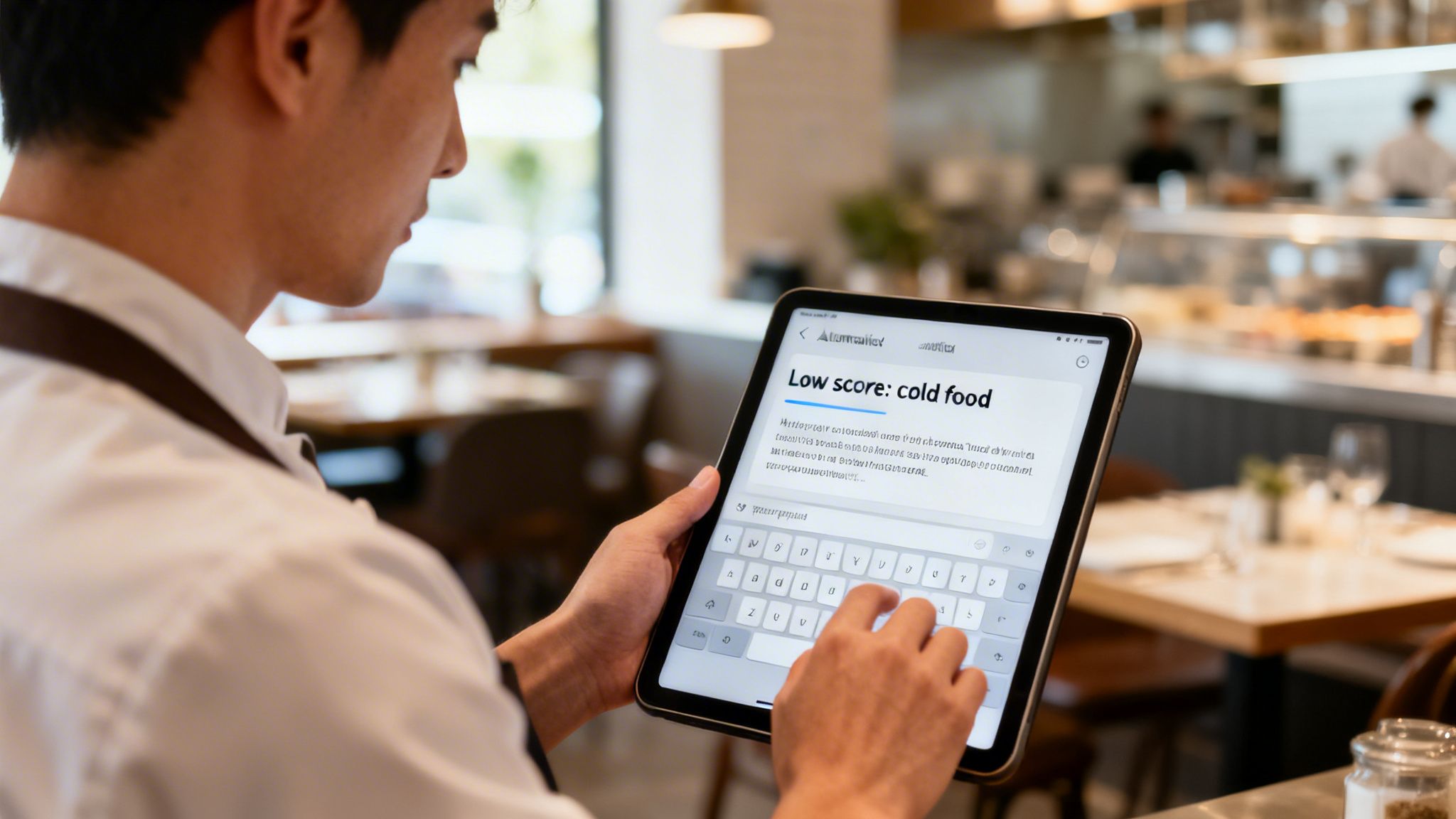
The Trigger: A customer fills out a QR code survey after their meal and gives a low score, mentioning their food was "cold."
The Automation: The Resolutions Engine instantly detects the low score and the negative keywords. It doesn’t wait for a human to read the comment.
The Action: The engine immediately executes a pre-defined workflow:
An instant alert is sent to the on-duty manager's phone with the full details.
An issue is automatically logged in your system to track the complaint and help you spot patterns.
A personalized, empathetic email is sent to the customer, acknowledging their specific complaint and offering a voucher for 20% off their next meal.
In under a minute, the system has acknowledged the problem, alerted the right person, and taken a concrete step to win back the customer. This automated workflow turns a potential one-star Google review into a second chance. It's the ultimate tool to act faster and build a resilient, customer-first operation.
Put Your Best Feedback on Display
Once you've turned frustrated customers into fans and collected amazing feedback from the happy ones, it's time to let that positivity do the heavy lifting. The most powerful marketing doesn't come from your team; it comes from your customers. Turning their genuine praise into social proof is the final step in building a growth engine that runs itself.
Think of every positive comment from your VoC surveys as more than just a pat on the back—it's a marketing asset. When potential customers see real people raving about your service, it creates instant trust.
Introducing Spotlight: Feedback Wall
Manually collecting, designing, and updating testimonials on your website is a huge pain. It's a tedious task that almost always gets pushed to the bottom of the list. We wanted to fix that.
That’s why we built Spotlight: Feedback Wall, a beautifully designed website widget that automatically showcases your best customer testimonials and reviews.
Spotlight: Feedback Wall pulls your top feedback from surveys and public review sites, creating a dynamic, always-fresh stream of social proof right where it matters most—your website. It's built to give potential clients that final nudge of confidence when they're deciding whether to book or buy.
This tool is more than a widget; it’s a direct signal that you listen to your customers. And the data is clear: businesses that listen and respond keep their customers.
A recent global consumer trends report from Qualtrics revealed that 62% of consumers are more likely to buy again from brands that respond to feedback with empathy within 24 hours. The report also found that businesses ignoring VoC risk losing up to 25% of their customers to competitors who simply offer better service. You can learn more about how empathy drives repurchase decisions by reading the full 2023 CX trends report.
Turn Praise into a Growth Engine
By embedding a live feed of positive experiences, you’re letting your customers tell your story for you. It's not about bragging with five-star ratings; it's about showcasing authentic stories in your customers' own words, which is far more powerful.
Here’s how Spotlight: Feedback Wall helps you grow stronger:
Automated Curation: The system automatically finds and displays your best feedback, saving you hours of manual work.
Builds Instant Trust: It provides unbiased, third-party validation that is way more convincing than any marketing copy.
Boosts Conversion: Placing social proof right on your booking or service pages reduces hesitation and encourages new customers to take action.
Ultimately, this completes the feedback loop. You gather smarter insights, act fast to fix problems, and then showcase your wins to bring in new business. It’s how you take your Voice of Customer program from a simple data-gathering exercise and turn it into a powerful, continuous growth machine.
VoC Survey FAQs: Your Questions Answered
If you're in hospitality or a service-based business, you probably have a few questions about starting a Voice of Customer program. Let's get straight to the practical answers.
How Long Should My Voice of Customer Surveys Be?
The golden rule? Keep them short and to the point. No one has time for a long-winded questionnaire.
For on-the-spot feedback—like right after a meal or a completed service—just 1-3 questions is perfect. If you're following up after a hotel stay, you can stretch that to 5-7 questions. The goal is always to respect your customer's time while still getting the insights you need.
Our Prompt to Survey feature helps you nail this by generating concise, high-impact surveys for any scenario, so you never overwhelm your audience. It's all about how you collect smarter.
What’s the Difference Between VoC and a Standard Survey?
This is a great question. A standard survey is usually a one-off tool to measure a single metric, like customer satisfaction. It gives you a snapshot, but not the whole story.
A true Voice of Customer (VoC) program is a complete strategy. It’s about listening to your customers everywhere they’re talking. It involves pulling together feedback from multiple channels, digging deep to find the why behind the numbers, and actually using those insights to make real changes in your business.
That’s why our platform is a full VoC system. It combines what you learn from direct surveys with what people are saying publicly using Radar (which tracks public reviews) and helps you fix problems automatically with the Resolutions Engine.
How Do I Get My Team to Actually Use the Feedback We Collect?
Getting your team on board is everything. The trick is to make it visible, digestible, and directly tied to action.
Here’s how successful businesses do it:
Put It All in One Place: Use a single dashboard like Radar where everyone sees the same customer data—from internal surveys to the latest Google reviews.
Make It Easy to Understand: In team huddles, use AI Summaries to quickly talk about the week's wins and opportunities. It gets everyone right to the point.
Automate the Action: This is the game-changer. Set up alerts with the Resolutions Engine to automatically assign specific issues to the right person. When your front desk manager gets a notification about a check-in issue and can resolve it immediately, your team starts to see feedback as a tool, not a chore.
Can Your Platform Integrate With My Existing Systems?
Absolutely. A VoC program that doesn't connect to your other tools creates more manual work. Integration is what makes the feedback loop seamless.
Our platform is built to connect with the systems you’re already running, like your property management system (Mews) or your restaurant's point-of-sale system (Toast).
Once integrated, you can automatically trigger a survey the moment a guest checks out or a customer pays their bill. This gets you timely, relevant feedback without anyone on your team lifting a finger. This level of automation is how you act faster and make your entire feedback operation incredibly efficient.
Ready to turn customer feedback from a simple score into your biggest driver for growth? FeedbackRobot helps you collect smarter insights, act faster on issues, and build the kind of loyalty that strengthens your business.