Feedback Survey Questions: 10 Types for 2026 (Examples)
10 survey question types with copy-paste examples for 2026 — rating, open-ended, multiple choice, NPS and more, with guidance on when to use each.

Jan 22, 2026 · 19 min read
Free tool
Likert Scale Generator
Generate custom rating scales and survey questions tailored to your feedback needs.
In the hospitality and service world, you don't have time for guesswork. Every decision you make—from staffing levels to menu updates and service protocols—needs to be backed by smart, actionable feedback directly from your customers. But the challenge isn't just collecting feedback; it's asking the right questions to get insights you can act on immediately. If you're building your first survey, start with our bank of basic survey questions to ask — demographics, rating scales, and Likert items you can copy directly.
Many businesses are still designing surveys as if customer feedback lives solely in structured questionnaires. The reality in 2026 is that the most candid insights often arrive unprompted, scattered across reviews, social mentions, and direct interactions. The real challenge now isn't just asking the right questions, but building an always-on intelligence pipeline that captures every piece of customer sentiment, whether volunteered or solicited, to genuinely boost retention and reputation.
Think of each survey as a direct conversation with your guest. The right questions turn that conversation into a powerful engine for your business. By asking smarter questions, you can leverage tools like FeedbackRobot's AI Summaries to instantly analyze sentiment and identify key themes without sifting through hundreds of responses. A negative comment can automatically trigger a workflow in our Resolutions Engine, enabling your team to perform service recovery in real time. This is your blueprint to stop guessing and start making data-driven decisions. It’s how you collect smarter, act faster, and grow stronger.
1. Net Promoter Score (NPS) Questions
Net Promoter Score (NPS) is your go-to metric for measuring customer loyalty with a single, direct question. It gauges how willing a customer is to recommend your hotel, restaurant, or service to friends and colleagues. For busy owners, it's a simple yet powerful predictor of business growth and overall brand health.
The core of NPS is its 0-10 scale, which segments customers into three clear groups:
Promoters (9-10): Your most loyal advocates who drive repeat business.
Passives (7-8): Satisfied but not loyal, easily swayed by competitors.
Detractors (0-6): Unhappy customers who can damage your brand with negative reviews.
Your final NPS score is calculated by subtracting the percentage of Detractors from the percentage of Promoters.
Strategic Application & Actionable Tips
NPS is more than a score; it’s a system for operational improvement. A hotel can send an NPS survey right after check-out via an integration with their PMS like Mews. If a guest leaves a Detractor score (e.g., a 4), FeedbackRobot’s Resolutions Engine, our automated service recovery feature, can instantly trigger a workflow. This alerts the manager to follow up and resolve the issue before a negative review appears on TripAdvisor.
To make NPS truly actionable, always pair the rating question with an open-ended follow-up like, "What is the primary reason for your score?" The qualitative feedback here is gold. Using FeedbackRobot’s AI Summaries, our instant insights & sentiment analysis tool, you can analyze thousands of these open-ended responses to pinpoint specific drivers of loyalty or dissatisfaction—like service speed, room cleanliness, or staff friendliness—without any manual work.
This approach gives you a clear path to enhancing the customer experience. To dive deeper into interpreting these results, explore our guide on survey data analysis.
2. Customer Satisfaction (CSAT) Questions
Customer Satisfaction (CSAT) questions measure a customer's happiness with a specific interaction, product, or service. Unlike NPS, which gauges overall loyalty, CSAT gives you immediate, transactional feedback. It asks customers to rate their satisfaction on a scale, typically from 1 (Very Unsatisfied) to 5 (Very Satisfied).
This focused approach is crucial for pinpointing operational strengths and weaknesses at key moments. The core question is direct and simple, such as, "How satisfied were you with your checkout experience today?"
The responses are typically converted into a percentage score. You calculate it by taking the number of satisfied customers (those who rated 4 or 5) and dividing it by the total number of responses, then multiplying by 100.
Strategic Application & Actionable Tips
CSAT is a powerful tool for real-time service improvement. A restaurant using a Toast POS system can place a QR code on the receipt that links to a quick CSAT survey about the dining experience. If a diner leaves a low score (e.g., a 2), FeedbackRobot’s Resolutions Engine can automatically create a case, notify the on-duty manager, and even send the guest an automated apology with a discount for their next visit, turning a poor experience into a recovery opportunity.
To get the most out of these survey questions examples, deploy them immediately after a key touchpoint while the experience is fresh. Use branching logic to ask dissatisfied customers a follow-up question like, "We're sorry to hear that. What could we have done better?"
By feeding this data into FeedbackRobot’s Radar, our unified review intelligence dashboard, you can monitor CSAT trends in real time across different locations or departments. This allows you to spot performance dips instantly and identify specific training opportunities, ensuring consistent service quality everywhere. For a deeper look at different scales, see our guide on the Likert scale.
3. Multiple Choice / Likert Scale Questions
Multiple Choice and Likert Scale questions are the workhorses of your survey, presenting respondents with a predefined set of answers. The Likert scale, in particular, asks respondents to rate their level of agreement with a statement on a 5 or 7-point scale, from "Strongly Disagree" to "Strongly Agree." This format turns subjective opinions into hard, quantifiable data, making it easy to track trends and benchmark performance.
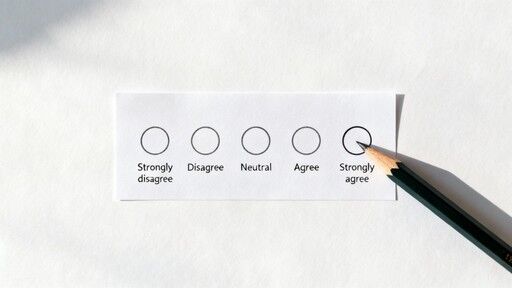
These survey questions examples are perfect for measuring specific attributes of your service with precision. For instance, a hotel can use a 5-point scale to assess room cleanliness, while a restaurant can measure food quality, staff friendliness, and value for money. Key benefits include:
Standardization: Easily compare responses across different locations, time periods, or customer segments.
Ease of Use: Respondents can answer these questions quickly, which reduces survey fatigue and boosts completion rates.
Clear Analysis: The numerical data is perfect for spotting correlations and significant trends.
The clarity and structure of these questions make them essential for any serious feedback strategy.
Strategic Application & Actionable Tips
Likert scale questions give you the granular detail to understand why a customer gave a particular NPS score. If a restaurant guest gives a low NPS, their ratings on specific Likert scale questions like "The speed of service was satisfactory" can immediately pinpoint the operational breakdown.
Inside FeedbackRobot, these ratings become powerful automation triggers. For instance, if a hotel guest rates "Room Cleanliness" as a 1 or 2, the Resolutions Engine can automatically open a ticket for the housekeeping manager, ensuring immediate action is taken to fix the issue and prevent it from happening again. Furthermore, our AI Summaries can analyze thousands of Likert scale responses alongside open-ended comments to highlight recurring themes, like a consistent issue with "Checkout Speed" on Fridays. This lets you move from data collection to targeted operational improvements in minutes, not weeks.
For a deeper dive into building effective surveys with these question types, review our guide on how to create a questionnaire.
4. Open-Ended / Text Response Questions
Open-ended questions invite your customers to give you detailed, unfiltered feedback in their own words. Unlike multiple-choice questions, they don’t box customers into pre-defined answers, allowing you to capture unexpected insights, emotional context, and the specific details you need to understand the "why" behind their scores.
These qualitative survey questions examples are powerful because they give your customers a voice, making them feel heard. The responses provide rich, contextual data that numbers alone can't offer. Some common examples include:
Restaurant: "What is one thing we could do to make your next visit even better?"
Hotel: "Was there anything that made your stay particularly memorable?"
Retail: "What other products would you like to see us offer?"
These questions transform a simple survey into a valuable conversation.
Strategic Application & Actionable Tips
The true power of open-ended questions is unlocked when you can analyze the responses at scale. A restaurant that asks "Describe your dining experience" might get hundreds of unique replies. Manually reading them all is impossible for a busy owner. This is where FeedbackRobot's AI Summaries become your secret weapon. Our AI instantly analyzes all text responses to identify key themes like "slow service," "loud music," or "amazing steak," complete with sentiment analysis, so you get the insights without the work.
To get the most actionable data, pair these questions strategically with rating scales. If a customer gives a low CSAT score, use survey logic to trigger a follow-up question like, "We're sorry to hear that. What was the main reason for your score?" This gives you immediate context for service recovery. You can then use the Resolutions Engine to automatically create a task for the manager to follow up on any response that mentions a specific issue, turning negative feedback into a retention opportunity.
5. Post-Interaction/Post-Transaction Questions
Post-interaction surveys are deployed immediately after a specific customer touchpoint, like a purchase, a hotel check-out, or a support call. Their power is in their timing. By capturing feedback while the experience is fresh, you gather highly accurate and detailed data that’s crucial for monitoring operations and resolving issues on the spot.
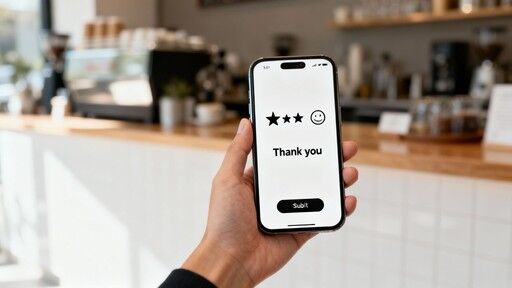
These surveys are typically short and focused, making them perfect for mobile delivery via SMS or a QR code. The goal isn't a deep dive but a quick pulse check on a specific event. Common examples include:
A hotel sending a check-out survey via SMS as a guest is leaving.
A restaurant triggering a feedback request 10 minutes after payment.
A retail store sending an email immediately following an online purchase.
A healthcare clinic asking for feedback before a patient leaves the facility.
This immediacy allows for rapid service recovery and gives you a clear view of how your team is executing at every touchpoint.
Strategic Application & Actionable Tips
The true value of post-transaction surveys is their ability to trigger immediate, automated actions. For instance, a quick-service restaurant can use FeedbackRobot’s Prompt to Survey feature to automatically send a short survey via SMS after a transaction is completed through their Toast POS system. If a customer gives a low score for "Food Quality," the Resolutions Engine can instantly create a ticket for the on-duty manager.
This automated workflow turns negative feedback into an opportunity for immediate service recovery—often before the customer even leaves. To make this work, keep surveys to 2-4 questions maximum to optimize for mobile completion. You can also use FeedbackRobot's AI Summaries to analyze responses in real-time, identifying if a specific location is consistently getting poor feedback about a particular menu item or staff member.
This targeted approach provides direct, actionable insights that empower your teams to fix problems on the fly. To get more ideas for your own surveys, find inspiration from these proven post-purchase survey question examples.
6. Relationship/Loyalty Questions
Beyond single transactions, relationship and loyalty questions measure the depth of a customer’s connection to your brand. They assess repeat purchase intent, brand affinity, and how likely they are to choose you over competitors. These survey questions examples are essential for understanding customer lifetime value and the real drivers of retention.
These questions move beyond a simple satisfaction score to gauge true commitment. For instance, a hotel can ask, "How likely are you to choose our hotel for your next visit to this city?" The answer reveals more about long-term loyalty than a simple post-stay satisfaction rating. These metrics are particularly valuable for hospitality and membership-based businesses where repeat custom is the foundation of success.
The insights from loyalty questions help distinguish between a customer who had one good experience and one who is a true, long-term advocate.
Strategic Application & Actionable Tips
Relationship questions are your compass for retention strategy. A restaurant chain can use a post-dining survey asking, "How likely are you to visit us again in the next 30 days?" Paired with a customer’s profile from your POS or CRM, this creates powerful segmentation opportunities.
By tracking these responses over time, you can spot shifts in customer sentiment before they hit your bottom line. If a segment of long-time customers shows a declining intent to return, FeedbackRobot's Radar dashboard can alert you to this trend. You can then dig deeper, correlating this loyalty dip with recent operational changes—like a menu update or a new service policy—to pinpoint the root cause.
Combine these loyalty metrics with a follow-up question, such as, "What is the one thing that would make you more likely to return?" FeedbackRobot's AI Summaries can instantly process these open-ended answers, highlighting common themes like "more menu variety" or "faster check-in." This gives you a clear, data-backed roadmap to strengthen customer bonds and build a more resilient business.
7. Competitive Comparison Questions
Competitive comparison questions are designed to find out your specific market positioning by asking customers to directly compare your business against your rivals. These questions go beyond general satisfaction to reveal why customers choose you over alternatives, highlighting your unique strengths and pinpointing competitive weaknesses.
By framing questions around key attributes like price, quality, service, or convenience, you get a clear picture of how you stack up in the customer's mind. This insight is invaluable for strategic planning, marketing, and operational adjustments that give you an edge.
Strategic Application & Actionable Tips
Understanding your competitive edge isn't just about what you do well; it's about what you do better than anyone else. A restaurant can ask, "How does our value for money compare to other casual dining spots in the area?" The responses directly inform your pricing strategies and marketing messages.
To get the most out of these survey questions examples, limit comparisons to 2-3 key attributes to avoid overwhelming the respondent. Combine a multiple-choice comparison with a follow-up "Why did you give that rating?" question. FeedbackRobot's AI Summaries can then analyze these open-ended responses to instantly identify recurring themes, such as "faster service" or "friendlier staff," that define your competitive advantage. This tells you precisely which strengths to double down on in your marketing and training.
Furthermore, segmenting this data by customer type (e.g., new vs. loyal) reveals different competitive priorities. With FeedbackRobot's Radar dashboard, you can track how your competitive perception evolves over time and in response to market changes, ensuring your business stays ahead of the curve.
8. Employee/Staff Performance Questions
Your staff are the face of your business, and their performance directly shapes the customer experience. Employee performance questions are designed to evaluate the courtesy, knowledge, and efficiency of your team. These survey questions examples provide critical insights into training effectiveness, help you identify top performers, and highlight coaching opportunities.
These questions move beyond general satisfaction to assess specific, observable behaviors. Examples include:
Hotel: "How would you rate the friendliness of our front desk staff?"
Restaurant: "How knowledgeable was our server about the menu items?"
Healthcare: "Did your nurse listen carefully and explain your care plan clearly?"
Retail: "Was our team member able to provide helpful product recommendations?"
By asking about concrete actions, you get objective feedback that is far more useful than a vague "How was the service?" question.
Strategic Application & Actionable Tips
Staff performance feedback is one of the most actionable data points you can collect. A restaurant can include a question about the server's attentiveness in a post-dining survey. If a customer provides a low score, FeedbackRobot’s Resolutions Engine can automatically create a task for the floor manager to follow up, while also flagging a potential coaching moment for that team member.
To empower your team, make this feedback visible. Use FeedbackRobot to create team dashboards that share positive comments and high scores directly with staff, fostering a culture of recognition. Combine specific performance questions with an optional "Who assisted you?" field. Our AI Summaries can then analyze feedback linked to individual employees, revealing trends that inform your training programs and help you identify future leaders.
This focused approach turns customer feedback into a powerful tool for employee development.
9. Product/Service Feature Questions
Product or service feature questions dive into the details of your offering. They are designed to assess specific attributes and qualities, helping you understand which features customers value most, which ones fall short, and where you can innovate. This focused feedback is critical for guiding product development, optimizing service delivery, and making smart business decisions.
These questions move beyond general satisfaction to provide specific, actionable data. A hotel might ask about bed comfort and WiFi speed, while a restaurant could inquire about menu variety and food presentation. This specificity allows you to pinpoint exact areas for improvement.
The goal is to collect detailed feedback on the components that make up the overall customer experience. Examples include:
Hospitality: Please rate the following room amenities: bed comfort, shower pressure, WiFi speed.
Restaurants: How would you rate the quality and portion size of your main course?
Retail: On a scale of 1-5, how satisfied are you with the durability of this product?
Strategic Application & Actionable Tips
Detailed feature feedback is your blueprint for creating a superior service. For instance, a hotel can use these survey questions examples to identify that "room design" is highly rated, but "WiFi speed" consistently gets low scores. This signals a clear priority for your next capital investment.
To take this a step further, combine feature rating questions with an open-ended follow-up. Using FeedbackRobot’s AI Summaries, you can instantly analyze thousands of comments about specific features to uncover hidden trends. The AI might reveal that "slow connection in corner rooms" is the top reason for low WiFi scores, providing your team with an immediate and specific fix.
Furthermore, you can use FeedbackRobot to correlate feature satisfaction with overall loyalty. The system can automatically identify which specific features—like fast restaurant service or high-quality hotel linens—are the biggest drivers of Promoter scores. This allows you to protect and invest in the attributes that matter most to your best customers.
10. Demographic and Segmentation Questions
Demographic and segmentation questions collect key characteristics about your respondents, like age, visit frequency, or customer type. By gathering this data, you can group feedback into meaningful segments, revealing how different groups experience your business. This is critical for moving beyond generic feedback to understand specific pain points and preferences.
Understanding who is providing feedback is just as important as what they are saying. For instance, discovering that first-time visitors consistently report lower satisfaction than repeat customers signals a problem with your initial experience. Segmentation allows you to pinpoint these issues and develop targeted improvements.
The core idea is to enrich your survey data with context, enabling more personalized service and optimized strategies for your most important customer groups.
Strategic Application & Actionable Tips
Segmentation transforms raw data into a strategic asset. A multi-location restaurant chain can use demographic questions to see if satisfaction with a new menu item varies by location or by customer type (e.g., families vs. business diners). If families consistently rate it lower, the business can investigate if it's a pricing, portion, or taste profile issue for that specific group. To effectively segment your audience and tailor your offerings, you can leverage various 10 B2B SaaS Customer Segmentation Strategies.
To make these survey questions examples effective, place them at the end of your survey to avoid early drop-off and keep them brief. When possible, sync with your CRM or POS (like Mews or Toast) to pre-populate known data and avoid asking repeat customers information you already have.
Within FeedbackRobot, you can use Radar to filter and compare feedback across segments instantly. For example, create a view that shows only feedback from "business travelers" who stayed in a "king suite." This allows you to analyze trends and sentiment for your most valuable customer personas, ensuring your action plans are focused where they will have the greatest impact.
Comparison of 10 Survey Question Types
Survey Type | Implementation Complexity | Resource Requirements | Expected Outcomes | Ideal Use Cases | Key Advantages |
|---|---|---|---|---|---|
Net Promoter Score (NPS) Questions | Low — single question but needs follow-up processes | Minimal to moderate — simple survey; analytics and follow-up workflows | Benchmarkable loyalty score; trend and growth prediction | Overall loyalty tracking, benchmarking across locations | Simple, predictive of CLV, easy to automate |
Customer Satisfaction (CSAT) Questions | Low — transaction-specific and short | Low — frequent triggers and basic analytics | Immediate satisfaction per interaction; quick issue identification | Post-service feedback (checkout, appointments) | Fast feedback, actionable for rapid improvement |
Multiple Choice / Likert Scale Questions | Low–Medium — careful wording and scale choice required | Moderate — survey design and quantitative analysis | Quantified attitudes on specific attributes; comparable metrics | Measuring specific service attributes (cleanliness, courtesy) | Structured, easy to analyze and compare |
Open-Ended / Text Response Questions | Medium–High — simple to ask, complex to analyze | High — manual coding or AI for theme extraction | Rich qualitative insights; emotional context and unexpected issues | Understanding "why" behind scores; product ideas | Depth of insight; captures customer voice and nuance |
Post-Interaction/Post-Transaction Questions | Medium — requires event triggers and timing optimization | Moderate — integrations with POS/CRM and mobile optimization | Real-time, memory-fresh feedback enabling immediate recovery | Immediate recovery in hospitality, retail, support | High response rates; timely, context-specific feedback |
Relationship / Loyalty Questions | Medium — needs longitudinal tracking and cadence | Moderate to high — repeated measurement and cohort analysis | Predicts retention, churn risk, and customer lifetime value | Subscriptions, membership programs, retention strategies | Identifies long-term value and retention priorities |
Competitive Comparison Questions | Medium — requires reference framing and clarity | Moderate — segmentation and market context needed | Insights on market positioning and perceived differentiators | Strategic positioning, pricing, competitive analysis | Reveals relative strengths and market gaps |
Employee / Staff Performance Questions | Low–Medium — role-specific questions; optional staff IDs | Moderate — dashboards, recognition/coaching workflows | Identifies training needs, top performers, morale issues | Service industries where staff impact experience | Targets coaching and recognition; improves service quality |
Product / Service Feature Questions | Medium — requires feature-specific design and matrices | Moderate — user familiarity and importance/satisfaction analysis | Prioritized feature improvements and gap identification | Product development, feature roadmaps, retail assortment | Guides development priorities and reduces wasted effort |
Demographic and Segmentation Questions | Low–Medium — brief but sensitive design | Moderate — sample sizes, privacy safeguards, CRM linking | Segment-specific drivers and targeted actionability | Personalization, targeted marketing, resource allocation | Enables tailored strategies and identifies high-value segments |
Turn Your Answers into Action with a Feedback Operating System
We've covered a full arsenal of survey questions examples, from the precision of NPS and CSAT to the rich detail of open-ended inquiries. You now have the blueprints for crafting questionnaires that uncover crucial insights across every touchpoint of your hotel, restaurant, or service business.
However, even the most brilliant questions are only the start. A list of questions is like a recipe; it has potential, but it doesn't cook the meal. The real power lies not in asking, but in systematically acting on the answers. This is where busy owners often get stuck, letting valuable feedback die in spreadsheets or unread inboxes. The goal is to move from passive data collection to a dynamic feedback loop that drives real growth.
Beyond the List: Operationalizing Your Insights
To truly leverage guest feedback, you need more than a survey tool. You need a centralized command center—a Feedback Operating System designed to help you collect smarter, act faster, and grow stronger. This system turns raw data from your surveys into fuel for operational excellence, guest loyalty, and a healthier bottom line.
Think about the examples we covered. A post-checkout survey is useful. But what happens when a guest gives a low score for cleanliness at 3 AM? A traditional system leaves that insight to be discovered the next morning. A Feedback Operating System, however, can instantly flag that negative sentiment, alert the head of housekeeping, and trigger an automated, empathetic apology to the guest before they post a negative review online. That is the difference between passive data collection and active reputation management.
The FeedbackRobot Advantage: From Answers to Automated Action
This is precisely where FeedbackRobot transforms your process. We built our platform to be the engine that powers your feedback strategy, turning the potential energy of your survey answers into the kinetic energy of business improvement.
Here’s how our core features make this happen:
Radar (Unified Review Intelligence): Imagine insights from your surveys sitting right next to your live reviews from Google and TripAdvisor. Radar is our unified review intelligence feature that consolidates all public and private feedback into a single dashboard. This gives you a 360-degree view to spot overarching trends you can't get from isolated data sets.
Prompt to Survey & AI Summaries (Instant Insights & Sentiment Analysis): Our Prompt to Survey feature uses AI to generate a targeted, effective survey from a simple command. As responses pour in, AI Summaries do the heavy lifting, instantly analyzing thousands of open-ended comments to pinpoint key themes, track sentiment shifts, and deliver actionable insights without hours of manual reading.
Resolutions Engine (Automated Service Recovery): This is where action becomes immediate. A low NPS score or a negative CSAT response is a critical moment. Our Resolutions Engine automatically detects this detractor feedback and initiates a service recovery workflow. It can instantly create a task for a manager, log the issue, and deploy a personalized apology with a make-good offer, turning a service failure into a powerful display of customer care.
The journey doesn't end with finding the right questions. It begins there. The goal is to build a business that listens, adapts, and responds in real-time. By embedding these powerful feedback mechanisms directly into your daily operations, you create a culture of continuous improvement that keeps you ahead of the competition and earns you customers for life.
Ready to transform your survey questions examples into a powerful engine for growth? See how FeedbackRobot automates insight and action to help you build a stronger, more customer-centric business. Launch your IT Support Provider User Feedback Tool.
What are some examples of high-impact hospitality survey questions?
Focus on actionable items: 'Was your table ready on time?' or 'Was the server knowledgeable about the menu?' These specific questions provide clearer paths for improvement than a general 'How was your stay?'
Should I use open-ended or closed-ended questions?
A mix is best. Closed-ended (1-10 scales) provide the data for your dashboard, while open-ended questions like 'What is one thing we could have done better?' provide the context and 'color' your team needs.
How do I phrase a question to measure 'Likelihood to Return'?
The industry standard is the NPS style: 'On a scale of 0-10, how likely are you to recommend us to a friend or colleague?' This is the single best predictor of your business's future growth.
Are 'Multiple Choice' questions effective for menu feedback?
Yes. Listing 3-4 specific dishes and asking for a rating is much more effective than asking 'How was the food?' as it helps you identify exactly which menu items are winners or losers.
What is a 'Negative Intent' question example?
Ask: 'Was there any point during your visit where you felt frustrated?' This directly invites the customer to share friction points that they might otherwise keep to themselves until they get to Yelp.
Stop reading about it. Let your agent handle it.
25 free AI actions · no credit card required
Start Free