
Guide
8 Essential Post Purchase Survey Questions for Growth
Stop guessing. Get 8 essential post purchase survey questions to collect smarter feedback, act faster, & grow your business. Find templates for any industry.

Apr 17, 2026 · 19 min read
Free tool
Likert Scale Generator
Generate custom rating scales and survey questions tailored to your feedback needs.
Are you asking the right questions after a sale?
You see a 3-star review pop up. The comment is vague: “The experience was just okay.” You’re stuck with the worst kind of feedback. It signals a problem, but it doesn’t tell you where to look. Was it the booking flow, the handoff at the front desk, the meal timing, the packaging, or the follow-up after something went wrong?
That’s why strong post purchase survey questions matter. They turn guesswork into specifics. They help you collect smarter feedback so your team can act faster and grow stronger.
This guide gives you a practical question bank you can use across hotels, restaurants, ecommerce stores, retail shops, and healthcare or service businesses. What's more, it shows how to turn those answers into action instead of letting them die in a spreadsheet. That’s where a Feedback Operating System changes the game.
While collecting feedback is essential, the true measure of a business's commitment to its customers lies in how it responds to issues. Effectively resolving complaints can transform a negative experience into an opportunity for building stronger customer loyalty. To learn more about this critical aspect of customer service, dive into our guide on mastering the 'issue resolved' reply.
While a well-crafted survey is crucial, its effectiveness can be amplified by leveraging specialized tools. For Shopify users, integrating a dedicated post-purchase survey system streamlines the entire process, from collection to analysis. Explore how a tailored Post Purchase Survey for Shopify can enhance your customer insights and drive growth.
1. Overall Satisfaction Rating NPS Style Question
What’s the fastest way to tell whether a guest, diner, patient, or shopper would come back or warn others away?
Start with a 0 to 10 recommendation question. It gives you a quick read on overall sentiment while the experience is still fresh, and it works across hotels, restaurants, clinics, retail, and ecommerce. A hotel using Mews can send it at checkout. A restaurant group can compare scores by location and shift. A clinic can track whether one provider or service line consistently creates stronger loyalty.
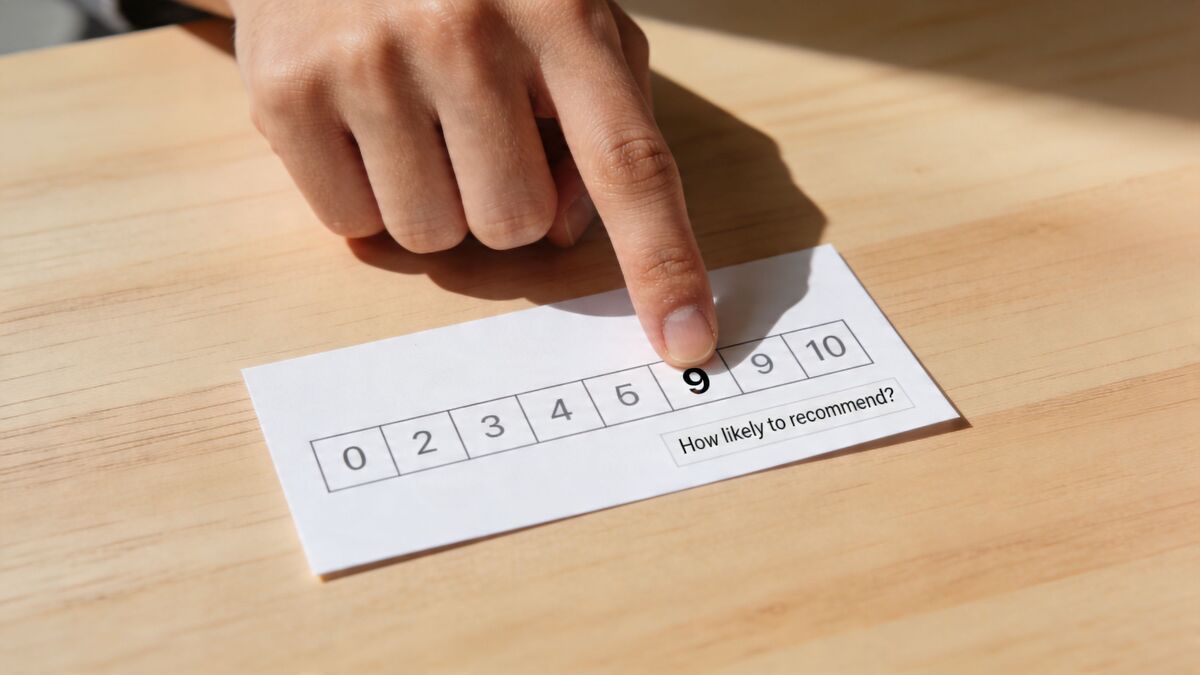
The score is only the triage signal.
The follow-up question performs the essential work: “What’s the main reason for your score?” That single open text response turns a vague rating into something a manager can assign, fix, and track. In practice, I’d rather have one clear reason behind a 6 than a dashboard full of averages with no context.
Practical rule: If you only have room for two questions, ask for the rating and then ask why.
Examples that work:
Hotels: “How likely are you to recommend our hotel to a friend or colleague?”
Restaurants: “How likely are you to recommend this location to someone nearby?”
Retail: “How likely are you to recommend our store after this purchase?”
Healthcare: “How likely are you to recommend our practice to family or friends?”
Used well, this question helps you prioritize. Used badly, it becomes a vanity metric. If a location’s score drops, your team still needs to know whether the issue came from wait times, room readiness, order accuracy, billing confusion, or staff tone. That’s why an AI-powered Feedback Operating System matters. It can collect the score automatically, summarize the comments by theme, flag urgent detractors, and route service recovery to the right person before the complaint turns into a public review.
Track results by location, shift, service category, and team. That’s how you separate a one-off bad day from a repeat operational issue. If you want benchmarks, this guide on what is a good net promoter score gives useful context, and a simple NPS survey template can help you launch quickly.
The trade-off is simple. A broad satisfaction question is fast and easy to trend, but it won’t tell you what broke unless you pair it with a reason field and a response workflow. Busy operators don’t need more survey data. They need a system that turns low scores into follow-up tasks, service recovery, and clearer priorities for the team.
2. Product Service Quality Assessment Question
How often does a customer leave happy with the purchase process, then get disappointed by the thing they bought or experienced?
That gap is where quality questions earn their place. They separate checkout friction from product problems, service delivery issues, and expectation gaps. For hospitality and service operators, that distinction matters because the fix usually sits with ops, not marketing.
A retailer might ask, “Did the product match the description and images?” A restaurant might ask, “Was your meal prepared to the quality you expected?” A clinic might ask, “Did the treatment meet your expectations?” A hotel might ask, “Was the room in the condition you expected on arrival?” Each version points to something a team can improve, whether that is prep standards, supplier consistency, listing accuracy, housekeeping, or service execution.

Good quality questions are specific
Broad wording gets vague feedback. Ask about observable details the customer can judge.
Examples that work well:
Ecommerce: “Did the product match the photos and description?”
Retail: “Does the product feel durable and well made?”
Restaurants: “Was your food fresh, accurate, and prepared as expected?”
Hotels: “Was the room in the condition you expected on arrival?”
For delivery-heavy businesses, add a condition question. “Did the package and contents arrive in good condition?” often reveals whether the problem came from fulfillment, packaging, or the carrier. That saves time because your team can assign the issue to the right owner instead of arguing over whether the complaint was about the product itself.
Turn low scores into root causes
A low quality score is only the start. Follow it with, “What specific aspect fell short?” That is where you hear the operational truth: “portion size was smaller than expected,” “the room photo didn’t match reality,” “the item felt flimsy,” or “the treatment felt rushed.”
An AI-powered Feedback Operating System makes this useful at scale. It can collect responses after the customer has had enough time to judge quality, group comments by theme, detect frustration, and route issues to the team that can fix them. Housekeeping should see room-condition complaints. Kitchen leads should see accuracy and temperature issues. Ecommerce ops should see packaging damage and listing mismatch patterns.
If you need to tighten the timing and collection piece, use an automated post-purchase feedback email and SMS workflow so requests go out after delivery, after check-in, or after the service is completed, not before the customer has enough context to answer.
Quality feedback should route to the people who can change the outcome, not sit with marketing.
There is a trade-off here. Ask too early and you get shallow answers. Ask too late and response rates drop or the memory gets fuzzy. The right send time depends on the experience. A restaurant can ask the same day. A hotel should ask after check-out. A skincare brand may need to wait longer because the customer has not formed a fair opinion yet.
3. Purchase Experience and Convenience Question
How easy was it for the customer to buy, book, or check in?
That question catches problems that quality scores miss. A guest can like the room and still hate the booking flow. A diner can enjoy the meal and still get annoyed by a clunky order and payment process. A patient can be happy with the care and still decide not to return because scheduling took too long.
Ask about the journey before the experience starts. For ecommerce, that usually means site search, product discovery, checkout, and payment. For restaurants, it often means online ordering, wait time, and bill pay. For hotels, focus on booking, confirmation, and pre-arrival communication. For clinics and service businesses, ask about scheduling, reminders, and front-desk check-in.
Good questions are specific:
Hotels: “How easy was it to book your stay?”
Restaurants: “How easy was it to place your order and pay?”
Healthcare: “How convenient was scheduling and check-in?”
Retail or ecommerce: “How easy was it to find what you needed and complete your purchase?”
Then add one follow-up question: “Which step took the most effort?”
That second question does the essential work. It tells you whether the issue sits in mobile checkout, reservation forms, payment options, confirmation messages, or arrival instructions. If you only ask about the “overall process,” you get a score without a fix.
This is also one of the best places to use an AI-powered Feedback Operating System. It can tag comments by touchpoint, detect repeated friction points, and route them to the right owner. Booking complaints should go to revenue or front office teams. Checkout issues belong with ecommerce or POS owners. Reminder and confirmation problems usually sit with operations, not marketing.
If you want reliable response volume, send this survey right after the transaction or service handoff using an automated post-purchase email and SMS feedback workflow. Timing matters here because customers remember friction clearly when it just happened.
The trade-off is simple. Broad convenience questions are faster to ask, but they produce vague answers. Touchpoint-level questions take a little more planning, but they give your team a list of fixes you can ship. For busy operators, that difference matters.
4. Value for Money and Pricing Satisfaction Question
You can deliver a technically good experience and still lose the customer if the price feels off.
That doesn’t always mean your prices are too high. It often means the value wasn’t clear enough. A premium hotel may get lower value scores if check-in felt cold. A restaurant may hear pricing complaints when portions don’t match expectations. A service business may run into trouble when the outcome was acceptable but not memorable.
Ask value without leading the answer
The cleanest version is simple: “How would you rate the value for money of your purchase?” It doesn’t suggest that pricing was unfair. It invites the customer to make the call.
Use versions like:
Hotels: “Did the experience justify the room rate?”
Restaurants: “Was the meal worth the price you paid?”
Retail: “Did you receive good value for the price?”
Subscription or service brands: “Did the service provide value for the cost?”
Then ask, “What would have made this feel like better value?” That’s where customers tell you whether the problem was quality, speed, amenities, communication, or surprise fees.
Where operators often get this wrong
Many teams treat value feedback as pricing feedback only. That’s too narrow. Customers often judge value through the whole experience. A smooth check-in, clear communication, and proactive support can make a premium price feel justified. A messy handoff can make a fair price feel expensive.
A practical way to use this data is to compare first-time customers against repeat customers, or discount buyers against full-price buyers. You’re not just looking for low scores. You’re looking for where the perception gap lives.
If customers consistently say the product or service is good but the value feels weak, the issue is usually positioning, packaging, or experience design.
Positive value feedback also has a second use. With permission, it can shape stronger messaging on your website, menus, or sales materials because it tells you what buyers believe is worth paying for.
5. Delivery Speed or Service Timeline Question
Did you deliver on the timeline you promised?
That is the question customers are really answering. They rarely judge speed by an abstract standard. They judge whether your timing matched the expectation you set at checkout, on the booking page, over the phone, or at the host stand.
Ask the question in a way that ties directly to that promise:
Ecommerce: “Did your delivery arrive when we said it would?”
Restaurants: “Was your order ready within the time we promised?”
Hotels: “Was your room ready when you were told it would be?”
Healthcare: “Did your appointment start close to the scheduled time?”
This question does more than measure impatience. It helps you separate an operations problem from a communication problem. A 20-minute wait feels very different when you promised 15 minutes versus 45. If timing scores are weak, check both the actual delay and the promise that created the expectation.
That distinction matters in hospitality and service businesses. Guests may forgive a delay if updates are clear and the recovery is handled well. They are less forgiving when nobody acknowledges the delay, nobody explains what changed, and nobody takes ownership.
An AI-powered Feedback Operating System is useful here because timing complaints are easy to route and act on. If a customer selects a low score on a delivery or timeline question, the system can tag the issue by type, kitchen delay, room readiness, queue backup, appointment overrun, courier handoff, then send it to the right owner fast. That turns survey data into service recovery instead of a report someone reads next week.
A practical setup looks like this:
Trigger an alert for low timing scores within minutes
Route the issue to the department that can fix it
Send a recovery message that acknowledges the missed timeline
Review timing themes weekly by location, shift, or service type
Keep one more rule in place. Separate speed from quality in your reporting. Fast service with mistakes needs a different fix than accurate service that runs late. If you combine them, your team will struggle to find the cause.
And avoid the common operator mistake of promising aggressive timelines just to win the sale. A realistic timeline you consistently hit builds more trust than an ambitious one you miss half the time.
6. Staff Interaction and Customer Service Quality Question
One great employee can save a shaky experience. One poor interaction can wipe out everything else you got right.
That is why your staff question needs to measure observable behavior, not a vague impression. If a guest says service was poor, you need to know whether the problem was attitude, responsiveness, product knowledge, ownership, or follow-through. Each issue needs a different fix.
Ask about behavior customers actually noticed
Use wording tied to actions customers can judge:
Hotels: “Were our staff friendly, attentive, and helpful?”
Restaurants: “How would you rate the service you received from our team?”
Healthcare: “Did our staff treat you with courtesy, respect, and clear communication?”
Retail: “Was our staff available when needed, and were they knowledgeable?”
This gives managers something they can coach. “Friendly” points to tone. “Helpful” points to effort. “Knowledgeable” points to training. “Attentive” points to staffing levels, handoff quality, or whether employees are distracted during service.
Timing matters here too. Ask this soon after the interaction, while names, moments, and details are still fresh. That makes service recovery faster and the feedback more useful.
Turn service feedback into action, not just scorekeeping
This is one of the best places to use an AI-powered Feedback Operating System. Staff feedback tends to arrive as messy text. Guests mention names, shifts, locations, and specific moments. If you leave that in an inbox, managers miss patterns. If you structure it, you can act on it.
A practical setup looks like this:
Tag comments by issue type, such as friendliness, professionalism, product knowledge, responsiveness, or unresolved complaint
Detect named employees or teams when customers mention them
Trigger fast follow-up for low scores that suggest a service failure
Roll up themes by location, shift, manager, or role so coaching is based on patterns
That last point matters. A single rude-server complaint may be an outlier. Repeated comments about inattentive front desk service on the evening shift usually signal a staffing, training, or supervision problem.
Use praise and criticism differently
Positive feedback should be shared quickly and specifically. It shows your team what good service looked like in a real customer interaction. “Sarah explained the menu clearly and checked back at the right time” is more useful than “great job team.”
Negative feedback needs a different path. Keep it private, review it with context, and look for repeat behavior before you turn it into a performance issue. Busy operators get into trouble when they overcorrect based on one angry comment or ignore recurring complaints because each one seems minor on its own.
The primary value of this question is operational. It helps you spot who needs recognition, where coaching is slipping, and which service failures need recovery today, not at next month’s review.
7. Likelihood to Repurchase or Repeat Visit Question
Recommendation and repeat intent are related, but they’re not the same.
A guest might say your hotel is recommendable for business travel and still choose a different property next time because the booking flow was easier elsewhere. A diner might enjoy the meal but not plan to return if parking was painful. That’s why a direct repeat-intent question matters.
Ask the revenue question directly
Use clear wording:
Hotels: “Would you stay with us again?”
Restaurants: “Are you likely to visit us again?”
Ecommerce: “How likely are you to shop with us again?”
Healthcare: “Would you return to us for future care?”
Keep it on a simple scale or use a direct yes-likely-unsure structure if you want easier routing. Then ask, “What would increase the chance you come back?” That second response is often more useful than the score itself.
Micro-surveys on platforms like Shopify apps can produce response rates above 50 percent at the post-purchase moment, according to Okendo’s lifecycle survey guide. That makes repeat-intent a practical question to ask because you can capture it while engagement is still high.
This is where churn prevention gets practical
For service businesses, unresolved post-purchase issues can carry a heavier retention cost than many owners realize. In service-heavy sectors, unresolved post-purchase service issues are linked with higher churn than one-off transactional businesses, as discussed in Knocommerce’s piece on underrated post-purchase survey questions.
That’s why low repeat-intent responses should trigger action, not just reporting. Use the Resolutions Engine to send a recovery message or route the issue to a manager. Ask what would change the customer’s mind. Sometimes it’s a service apology. Sometimes it’s a process fix. Sometimes it’s a simple acknowledgment that someone listened.
What doesn’t work is blasting these customers with a generic win-back discount before you understand the reason. If the issue was trust, a coupon won’t solve it.
8. Open Ended Feedback and Improvement Suggestions Question
What are customers trying to tell you that your score questions miss?
Open-ended feedback lets customers tell you what you did not think to ask. It reveals friction, emotion, and small operational failures that never show up in a rating alone. For hospitality and service teams, that matters because the fix is often specific. A slower check-in line, a confusing handoff, a room detail that looked minor internally but felt careless to the guest.
End with one question customers can answer in their own words
Use one prompt at the end of the survey. Keep it broad enough to surface the unexpected, but focused enough to produce usable answers.
Strong versions include:
Hotels: “Please share any additional comments about your stay.”
Restaurants: “What was your favorite part of the meal, and what could we improve?”
Ecommerce: “Is there anything else you’d like us to know about your purchase experience?”
Healthcare: “Do you have any suggestions for improving your experience?”
The true value is not the comment itself. The value comes from what your team does next.
In an AI-powered Feedback Operating System, open text should trigger workflows, not sit in a spreadsheet. AI Summaries can group comments into themes like wait time, cleanliness, billing confusion, or staff praise. Radar can compare private survey comments with public reviews so you can spot patterns across channels. Resolutions Engine can route serious issues for service recovery while the experience is still fresh.
That combination turns a vague comment into an operational decision. If survey responses mention “check-in felt chaotic” and reviews mention “front desk was disorganized,” you have a clear staffing or process problem. If comments praise the service but complain about pricing surprises, the issue is expectation-setting, not hospitality.
For stronger phrasing, use this guide on how to write effective survey questions.
The best open-ended question is often the simplest one. “What should we improve?” works because customers usually know exactly where the friction was.
Keep the trade-off in mind. One open-text question gives you insight without exhausting the customer. Five open-text questions create survey fatigue, lower completion rates, and leave your team with a pile of comments nobody has time to review. One strong final prompt is usually enough.
8-Question Post-Purchase Survey Comparison
Item | Implementation complexity | Resource requirements | Expected outcomes | Ideal use cases | Key advantages |
|---|---|---|---|---|---|
Overall Satisfaction Rating (NPS-Style Question) | Very low, single 0–10 question | Minimal: survey tool + basic follow-up automation | Loyalty metric; promoter/passive/detractor segmentation | All business types; immediate post-purchase | Quick to collect; predictive of churn and growth |
Product/Service Quality Assessment Question | Medium, customizable attribute questions | Product teams, specification mapping, follow-up logic | Identifies defects, missing features, quality gaps | E‑commerce, manufacturing, F&B, healthcare | Actionable product insights for roadmap and QC |
Purchase Experience and Convenience Question | Medium, multi-touchpoint breakdown | UX analytics, cross-department coordination | Reveals friction points; conversion and UX improvements | E‑commerce, hospitality, restaurants, services | Targets operational fixes that boost conversions |
Value for Money and Pricing Satisfaction Question | Low–medium, simple phrasing but needs segmentation | Pricing analytics, customer segmentation, competitor context | Perceived value insights; pricing strategy signals | All businesses; premium/luxury; pricing tests | Informs pricing, positioning, and discount strategies |
Delivery, Speed, or Service Timeline Question | Medium, requires promised vs actual tracking | Logistics/fulfillment data integration, SLAs tracking | Concrete on‑time performance metrics; ops fixes | E‑commerce, restaurants, hospitality, healthcare | Objective, actionable measure of fulfillment performance |
Staff Interaction and Customer Service Quality Question | Low–medium, requires staff attribution | Staff mapping, training programs, HR coordination | Training needs, recognition, service improvements | Hospitality, retail, healthcare, professional services | Directly influences loyalty; usable for coaching/rewards |
Likelihood to Repurchase or Repeat Visit Question | Low, single intent question | CRM, retention workflows, follow-up campaigns | Predicts repeat revenue and churn risk | Subscriptions, retail, hospitality, recurring services | Directly tied to future revenue and retention actions |
Open-Ended Feedback and Improvement Suggestions Question | Low to high, simple to ask, complex to analyze | Human review or AI/NLP for analysis at scale | Deep qualitative insights, unexpected issues, ideas | All businesses; innovation and continuous improvement | Rich context and ideas; uncovers nuance missed by ratings |
The fastest way to automate post-purchase surveys for Shopify stores is a direct integration. FeedbackRobot's Shopify post-purchase survey integration fires a survey automatically after every order — capturing feedback while the experience is fresh and flagging unhappy customers before they post a public review.
From Questions to Growth Your Action Plan
Good post purchase survey questions give you visibility. A working system gives you growth.
That’s the gap many teams miss. They collect feedback, maybe review it in a meeting, and then move on. The businesses that improve faster do something different. They build a loop. They collect smarter, act faster, and grow stronger.
Start small. Pick one business priority and match the questions to it. If your pain is inconsistent service, focus on staff interaction and overall satisfaction. If refunds, complaints, or no-shows are rising, prioritize quality, timing, and repeat-intent questions. If you operate hotels, restaurants, clinics, or retail stores with multiple locations, keep the survey short and segment results by site, team, or shift so patterns are obvious.
Then automate what happens next.
Use Prompt to Survey to generate a survey from a plain-English goal instead of writing every question from scratch. Use AI Summaries to spot recurring complaints and positive themes without reading every response manually. Use Radar as your unified review intelligence layer so you can compare internal feedback with what customers say publicly on review platforms. And use the Resolutions Engine to automate service recovery when someone flags a bad experience, so your team can step in while the issue is still fixable.
This is especially important for service businesses because timing affects whether feedback becomes loyalty or churn. In healthcare, restaurants, hotels, and other service-heavy categories, operators need more than a survey tool. They need a way to route issues, respond quickly, and learn from the pattern across channels.
If you want a practical rollout, use this sequence:
Week one: Launch one short survey tied to one operational goal.
Week two: Review themes, not just averages.
Week three: Build one automated recovery path for unhappy responses.
Week four: Compare internal survey feedback against public review themes in Radar.
You don’t need a giant research program. You need a reliable operating rhythm.
Ready to stop guessing and start growing? Feedback becomes powerful when it’s connected to action. That’s why the right platform matters as much as the right questions. If you’re also tightening your broader customer response process, these effective review management strategies are a useful companion read.
Start your 14-day free trial today and begin collecting actionable feedback in minutes. Or, if you want to turn positive customer voice into social proof, explore the launch of Spotlight: Feedback Wall. Before you go, estimate your likely survey volume with FeedbackRobot’s free Survey Response Rate Calculator.
If you’re ready to collect smarter, act faster, and grow stronger, try FeedbackRobot. You can launch AI-generated surveys, centralize feedback, trigger service recovery, and surface review trends across channels without adding more manual work to your team.
Why is an NPS score considered a "triage signal" rather than a complete diagnostic tool for a hospitality or healthcare operator?
An NPS score functions as a lagging indicator of general sentiment, but it lacks the granularity required for operational intervention. In a high-stakes environment like a clinic or a luxury hotel, a high average score can often mask systemic friction points—such as billing inconsistencies or staff tone—that haven't yet triggered a full detractor response. To move beyond mere "vanity metrics," operators must treat the numerical rating as a prompt for the "essential work": the qualitative follow-up that identifies the root cause, allowing a manager to assign, fix, and track the specific issue.
How does the FeedbackRobot "Resolutions Engine" fundamentally change the traditional post-purchase feedback loop?
Traditional feedback often stagnates in static spreadsheets, resulting in lost opportunities for service recovery. The Resolutions Engine transforms this passive data into an active operational workflow by automatically detecting frustration and routing it to the specific department head—such as housekeeping for room-readiness issues or the kitchen lead for meal accuracy. This real-time intervention allows a team to acknowledge a failure and recover an unhappy customer before the grievance escalates into a permanent churn or a damaging public review.
In terms of service delivery, why is it more critical to measure "expectations met" rather than abstract "speed"?
Customer frustration is rarely born from an absolute timeline; it is the result of a discrepancy between the promise made and the experience delivered. A patient may perceive a twenty-minute wait as acceptable if they were prepared for a thirty-minute window, whereas a ten-minute wait feels like a failure if the expectation was immediate service. By asking questions that tie directly to the promised timeline—such as room readiness at check-in or delivery windows at checkout—operators can determine if they have a fundamental logistics problem or simply a communication gap in their guest messaging.
What is the strategic advantage of using "Radar" to compare internal survey data against public review platforms?
Radar acts as a unified intelligence layer that reconciles private sentiment with a brand’s public-facing reputation. It allows leadership to identify whether a recurring complaint in private surveys—like "chaotic check-in"—is also manifesting as a trend on public sites, which directly impacts new customer acquisition. This cross-channel analysis ensures that operational improvements are prioritized based on what is actually driving public ratings, rather than just reacting to the loudest individual voice in an inbox.
Why does the article suggest that "value for money" feedback is an indicator of experience design rather than just pricing strategy?
Many operators incorrectly view low value scores as a signal to cut prices, but these scores often reflect a failure in the service handoff or the perceived "packaging" of the experience. A premium price point feels justified when the customer journey—from booking convenience to staff attentiveness—is frictionless; conversely, a fair price feels expensive if the check-in is cold or a meal arrives with poor presentation. Analyzing value feedback helps consultants and owners identify where the perception gap lives, allowing them to refine the experience design to match the premium being charged.
Put this on autopilot
Post-Purchase Survey
A ready-made FeedbackRobot automation that runs this for you — deploys free in under 5 minutes.
Stop reading about it. Let your agent handle it.
25 free AI actions · no credit card required
Start Free