How to Collect Open-Ended Feedback: Scripts & Examples
Use our proven scripts and templates to collect open-ended feedback. Move beyond ratings to understand the 'why' behind customer behavior. Explore the guide.

Jan 31, 2026 · 17 min read
Free tool
Likert Scale Generator
Generate custom rating scales and survey questions tailored to your feedback needs.
Open-ended surveys are your secret weapon for understanding the why behind customer ratings. As a busy hospitality or service owner, you know a simple star rating doesn't tell the whole story. Open-ended questions invite guests to share their experiences in their own words, moving beyond a "yes" or "no" to give you honest, detailed feedback you can actually act on. They work best alongside a foundation of basic survey questions that give your data structure.
Taking open-ended questions further? See our qualitative research questionnaire guide with 7 free templates.
This is how you collect smarter, so you can act faster and grow stronger.
Beyond Ratings: Hearing the Real Customer Story
You already know a 4-star rating is a mystery. Was the meal incredible but the service painfully slow? Was the hotel room spotless but the check-in process a complete mess? These are the critical details that a single number will always miss.
Closed-ended questions give you the what—the score. It's the open-ended surveys that deliver the why—the full story. They take you beyond simple metrics to truly hear your customers' voices, uncovering the specific moments that create delight or disappointment.
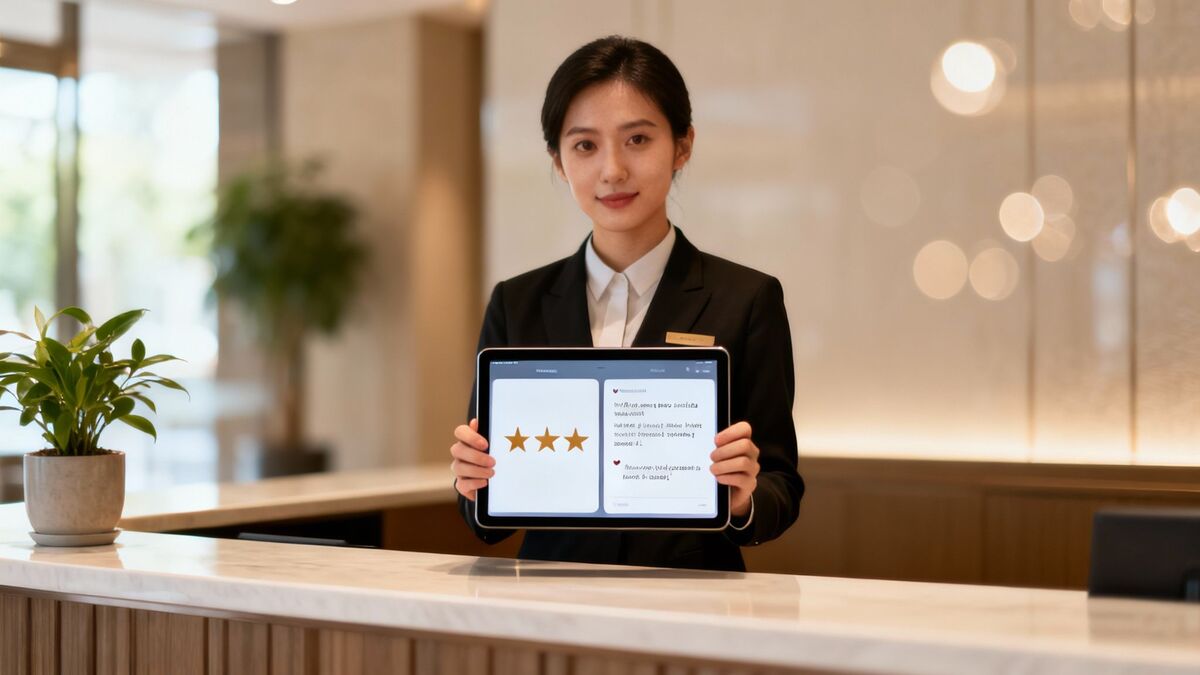
Uncovering the Hidden Narrative in Feedback
Think of your business as a story being told by your customers. A rating is just the headline, but the real plot unfolds in the comments. That's where you find the actionable insights—the small details that lead to big improvements.
This guide is built for busy owners like you. We'll cut through the jargon and show you how to ask the right questions, analyze the answers, and make confident decisions that build loyalty and drive real growth.
The goal is to move from guessing what a rating means to knowing exactly what needs to be fixed or celebrated. This is how you collect smarter feedback to act faster and grow stronger.
Why Every Business Needs Both Question Types
Relying only on star ratings is like trying to navigate with just a compass—you know the general direction, but you’re missing the map. For a complete picture, you need both quantitative data (the numbers) and qualitative data (the stories).
This quick table shows how these two question types work together to give you the full picture.
Closed-Ended vs Open Ended Surveys At a Glance
Aspect | Closed-Ended Questions (e.g., Star Ratings) | Open Ended Questions (e.g., 'Tell us more...') |
|---|---|---|
Data Type | Quantitative (numbers, scores) | Qualitative (text, stories, emotions) |
Purpose | Measures satisfaction and tracks trends | Explains the "why" behind the numbers |
Insight Level | High-level, easy to benchmark | Deep, specific, and actionable |
Owner Action | Identifies that a problem exists | Reveals exactly what the problem is |
By pairing a simple rating question with a follow-up like, "What was the best part of your experience today?" you transform a simple data point into a powerful business tool. You get the metric and the meaning, all in one quick interaction.
What Exactly Are Open-Ended Surveys?
Think about the difference between a multiple-choice test and a real conversation. One forces you into predefined boxes, while the other invites you to share what’s actually on your mind. A closed-ended question is that test. An open-ended one is like asking a friend, "So, what did you really think?"
Open-ended surveys are simply tools designed to capture that conversational, unstructured feedback at scale. Instead of asking, "Rate our service from 1-5," you ask something like, "What’s one thing we could do to make your experience better?" That small shift unlocks a goldmine of insights you’d otherwise never hear.
Your customers already expect to be heard. They’re sharing detailed opinions in their own words on Google, Yelp, and social media. Open-ended surveys let you bring that conversation in-house, giving you direct access to the feedback before it becomes a public review.
From Conversation to Actionable Data
This approach is all about understanding the why behind customer behavior and catching problems early. You're not just collecting comments; you're gathering raw, honest intelligence. The big challenge, of course, has always been figuring out what to do with all that text.
Let's be real—no busy owner has time to manually read and sort hundreds of free-text responses. Thankfully, what used to be hours of spreadsheet drudgery can now be handled in seconds with AI. That's a good thing, since this kind of unstructured data makes up a staggering 80-90% of all data generated globally. One study on job switches found that analyzing 1,200 open-ended responses pinpointed 'work-life imbalance' as the top reason for 38% of people leaving their jobs—a critical insight that was completely hidden in plain text. You can dive deeper into how to analyze survey responses over at Caplena.
This is where a modern Feedback Operating System becomes your most valuable player. It does the heavy lifting so you don't have to.
The real power isn't just in asking the question. It's in having a system that can instantly understand the answer and tell you what to do next. This is how you move from just collecting feedback to using it as a growth engine.
Turning Words into Growth Opportunities
Imagine knowing, right now, that 15% of your dinner guests mentioned "slow drink service" last week. That's not just a complaint; it’s a specific, fixable operational issue. Or what if you discovered that dozens of hotel guests praised a front-desk employee, Sarah, by name? That's a clear signal for recognition and a model for team training.
FeedbackRobot’s AI Summaries is built for this. It acts as your instant data analyst, delivering instant insights & sentiment analysis on every response.
Sentiment Analysis: It immediately tells you if the customer's tone is positive, negative, or neutral.
Thematic Grouping: It automatically sorts comments into themes like ‘food quality,’ ‘staff friendliness,’ or ‘cleanliness.’ No manual tagging needed.
Trend Spotting: It surfaces recurring issues or praise over time, so you can see patterns as they emerge.
By automating the analysis of your open-ended surveys, you stop drowning in raw data and start seeing clear, actionable priorities. This lets you collect smarter feedback and, more importantly, equips you to act faster on the insights that truly move the needle.
Crafting Questions That Get You Real Answers
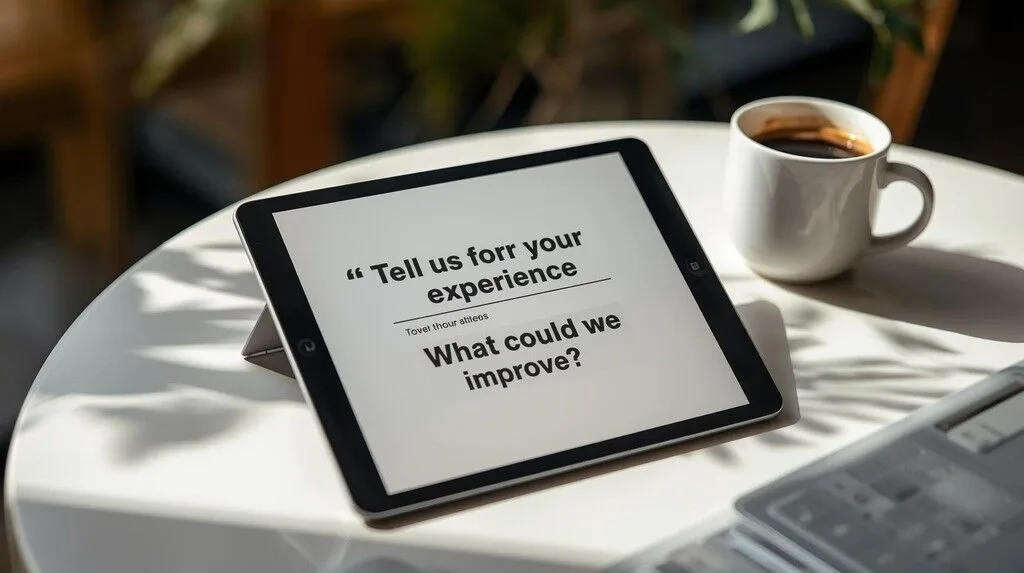
The quality of your feedback lives and dies by the quality of your questions. A lazy question like, "How was everything?" almost always gets a lazy, useless answer like, "Fine." If you want smarter feedback, you have to ask smarter questions—ones that make customers pause, think, and share something real.
This is where the art of framing comes in. You need to be specific enough to guide them, but broad enough to let their actual story come out. It’s the difference between asking "Did you like your stay?" and "What was the most memorable part of your visit with us?" One gets you a yes or no. The other uncovers the magic you can build a business on.

Asking the Right Questions at the Right Time
Timing is everything. Bombarding a customer with five open-ended questions right at the start of a survey is a guaranteed way to make them close the tab. A much better approach is to place them strategically where they’ll have the most impact without causing survey fatigue.
Start with a simple, closed-ended question—like a star rating—to get a quick read. Then, follow up with a single, powerful open-ended question to dig into the "why" behind their score.
An open-ended question is your invitation for a customer to tell you what's really on their mind. Make that invitation clear, specific, and easy to accept.
Best Practices for Powerful Questions
To make sure your open-ended surveys actually work, keep a few key principles in mind. First, avoid leading the witness. A question like, "What did you love about our amazing new menu?" biases the response before they even start typing.
Instead, stay neutral and focused. Here are a few proven templates that work wonders for service businesses:
To find your bright spots: "What is one thing that stood out to you during your experience today?" This helps you pinpoint what your team is doing right so you can double down on it.
To uncover quick wins: "If you could change one thing about your visit, what would it be?" This is direct, actionable, and gets straight to the heart of what needs fixing.
For forward-looking ideas: "What could we do to make your next visit even better?" This frames feedback constructively, focusing on future loyalty instead of dwelling on past mistakes.
In market research, this "less is more" approach is delivering richer insights, faster. This "big qual" method gathers natural language from thousands of responses, revealing themes that structured questions totally miss. One study, for instance, found that 35% of retail shoppers mentioned 'personalization gaps' without ever being prompted.
To really get good at this, check out these 10 open-ended questions for sales teams that help uncover deeper customer needs. For even more ideas, take a look at our guide on powerful survey question examples. Asking the right questions is the first step in turning customer feedback into your most valuable asset.
Turning Raw Text into Actionable Insights with AI
You did it. You collected hundreds, maybe thousands, of detailed text responses from your open-ended surveys. But now what?
For a busy owner, the idea of manually reading, sorting, and categorizing every single comment is a complete non-starter. It’s a mountain of raw data, and climbing it would take days you simply don’t have.
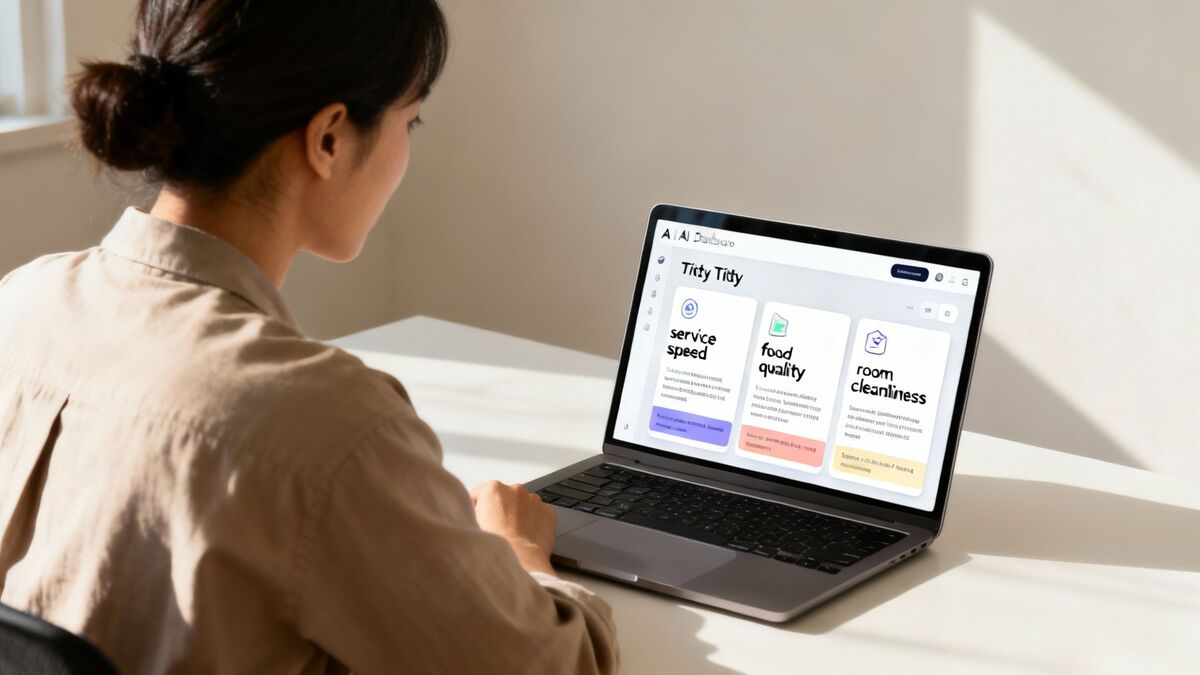
This is where modern tools completely change the game. Forget spending hours lost in a spreadsheet trying to tally up mentions of "cold coffee" or "friendly staff." Technology now lets you turn that mountain of text into a clear, actionable dashboard in just minutes. It's the critical difference between collecting data and actually using it.
From Manual Coding to Instant Clarity
The old way of making sense of open-ended feedback was manual coding. This meant someone had to read each response and assign it a tag, like "Service Issue" or "Product Quality." While thorough, this process is painfully slow, prone to human error, and nearly impossible to scale. As your business grows, the feedback piles up, and this approach quickly becomes unsustainable.
The new way is AI-powered analysis. Instead of a person doing the tedious work, smart algorithms read and understand the text for you, instantly. This shift is happening everywhere; even economic research has seen a surge in open-ended surveys because AI can analyze thousands of responses for subtle patterns that multiple-choice questions miss. You can learn more about this trend and how it's revealing deeper insights.
For your business, this means you get the same depth of understanding without all the manual labor. It's about working smarter, not harder.
How AI Unlocks the Story in Your Data
The FeedbackRobot Feedback Operating System is designed to make this whole process effortless. At its core is our AI Summaries feature, which acts as your personal data analyst, working 24/7 to deliver instant insights & sentiment analysis.
Here’s how it transforms your raw feedback into clear intelligence:
Real-Time Sentiment Analysis: The second a response comes in, the system knows if the customer is happy, frustrated, or neutral. This gives you an immediate emotional pulse-check on your entire customer base.
Automatic Theme Detection: Our AI reads the comments and automatically groups them into key themes for your business. You’ll see clusters around topics like 'service speed,' 'food quality,' or 'room cleanliness' without ever creating a tag yourself.
Instant Trend Spotting: The dashboard visualizes all this data, showing you exactly what customers are talking about, how they feel, and which topics are trending up or down over time.
You no longer have to guess what matters most. Instead of drowning in a sea of individual comments, you get a clean, organized view of your customers' collective voice.
Act Faster with Smarter Insights
Imagine seeing a sudden spike in negative comments tagged "check-in process." With a traditional approach, you might not spot that trend for weeks. With AI Summaries, you see it in real-time.
This lets you jump on the problem, fix it, and prevent it from affecting dozens more guests and showing up in public reviews.
This is the heart of what we believe in: collect smarter, act faster, and grow stronger. By automating the most time-consuming part of handling open-ended feedback, you free yourself up to focus on what truly matters—making improvements that strengthen your business and build lasting customer loyalty. For a deeper dive, check out our guide on using a feedback summary generator to get the most from your data.
Building a System to Act on Feedback Instantly
Insights are useless if they just sit in a report. Having AI analyze your open-ended surveys is a huge step forward, but the real magic happens when you turn what you've learned into concrete improvements customers can actually feel. To do that, you need a system—a smart workflow for putting your feedback into action.
The goal is to create a seamless loop that connects collection directly to action. This is how you stop just listening to feedback and start responding to it, often in real-time. An integrated platform like FeedbackRobot is built for this exact purpose, ensuring no valuable insight ever falls through the cracks.
From Collection to Conversation Instantly
The process should kick off the second a customer's experience ends. Our Prompt to Survey feature lets you instantly send a targeted survey from whatever system you already use.
Imagine a guest checking out of your hotel via your Mews property management system, or a diner paying their bill through your Toast POS. An automated trigger can send them a simple, powerful open-ended survey right then and there.
This timing is everything. You capture feedback while the experience is still fresh, which dramatically increases the quality and detail of the response. It’s a simple, effective way to collect smarter feedback without piling another manual task onto your team.
The best feedback systems don't wait for customers to find a review site. They proactively and intelligently ask for feedback at the peak moment of relevance, turning a simple transaction into a valuable conversation.
Seeing the Complete Picture in One Place
As responses start rolling in, they need a central command center. This is where our Radar feature comes in. As your unified review intelligence hub, Radar pulls in your private survey answers and public reviews from Google, Yelp, and other sites, combining everything into a single, comprehensive dashboard.
This unified view is a game-changer. Suddenly, you can see if the "slow service" mentioned in a private survey is also popping up in your public Google reviews. By connecting the dots between different channels, you get a 360-degree picture of your customer experience, helping you spot widespread issues before they blow up.
Triggering Automated Service Recovery
Now for the most powerful step: closing the loop automatically. When our AI spots a recurring negative theme—like multiple guests mentioning ‘check-in delays’—the Resolutions Engine kicks in. It's the core of your system for acting faster, delivering automated service recovery.
Here’s how it works:
A negative theme is detected: The AI flags a pattern of complaints about "cold food."
The engine triggers an action: It can automatically send a personalized apology email to the affected customers.
A resolution is offered: The email might include a discount voucher for their next visit, turning a bad experience into a reason to return.
Your team is alerted: At the same time, it can notify the kitchen manager so they can fix the operational issue immediately.
By connecting insights directly to automated actions, you fix problems with incredible speed, prevent negative reviews from ever being written, and show customers you're truly listening. Exploring the world of feedback resolution automation can reveal even more ways to strengthen these customer relationships and make every piece of feedback count.
Using Positive Feedback to Build Social Proof
Some of your most powerful marketing assets are probably sitting unseen in a spreadsheet somewhere. I'm talking about the genuine, heartfelt comments from happy customers—the ones that say things like, "the staff made us feel like family."
That kind of praise is far more convincing than any paid ad, but it often stays locked away in private survey responses.
What if you could put those glowing reviews to work? The key is to systematically capture and showcase this feedback to build social proof. This is the simple psychological shortcut where people follow the actions of others. When potential customers see real people raving about their experience, it builds instant trust and makes them far more likely to choose you.
Unlocking Your Best Reviews with the Spotlight Feedback Wall
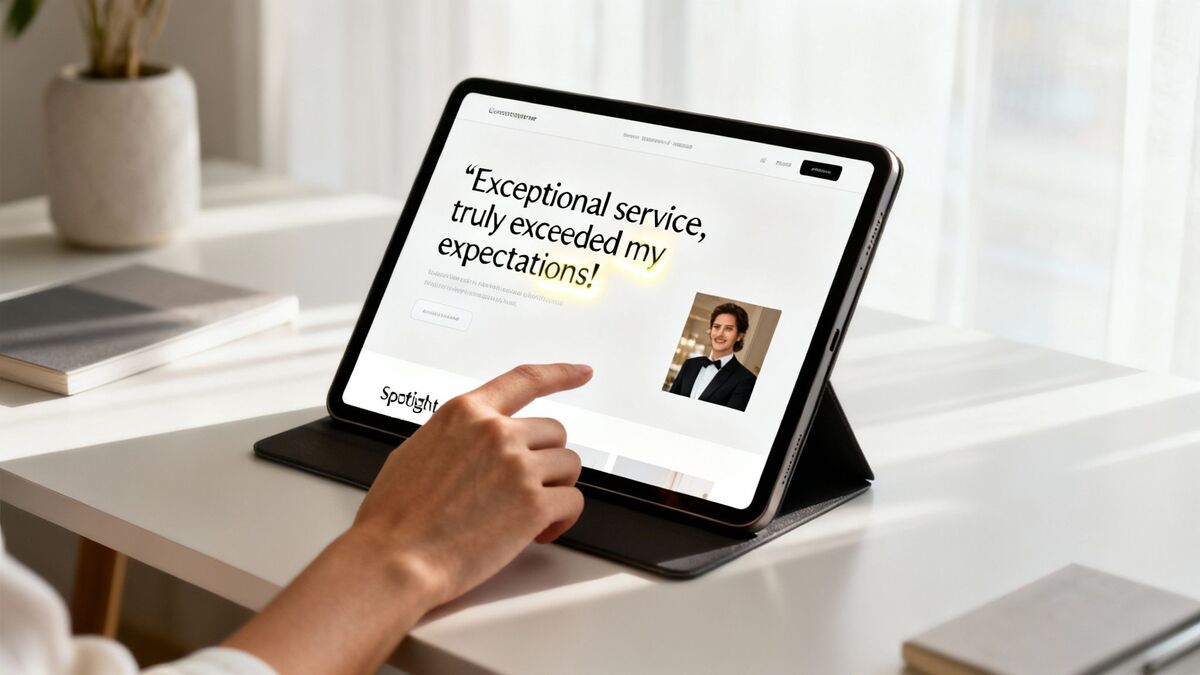
This exact problem is why we built the Spotlight Feedback Wall into our Feedback Operating System. It’s a dead-simple tool designed to help you curate your best survey responses and public reviews, then display them right on your website.
Think of it as your own automated testimonial engine.
When a guest leaves a glowing comment in an open-ended survey about your ‘incredible staff’ or ‘spotless rooms,’ you can showcase it with a single click. This turns your happiest customers into your most effective salespeople, 24/7.
By making your best feedback visible, you’re not just sharing compliments; you're building a public reputation for excellence that attracts new business and reinforces your brand identity.
Authentically Showcasing Customer Stories
Of course, how you present this feedback matters. The goal isn’t to cherry-pick a few perfect comments but to create a living wall of genuine customer experiences.
Here are a few tips to get started:
Always Ask for Permission: When a fantastic survey response comes in, send a quick, personalized email asking if you can share their comments. A simple, "Your feedback made our day! Would you be comfortable with us featuring your comments on our website?" works like a charm.
Credit the Customer: Whenever you can, use the customer's first name and last initial (like "Sarah K."). It adds a layer of authenticity that generic, anonymous testimonials just can't match.
Mix It Up: Don't just stick to private surveys. Pull in public reviews from Google or Yelp, too. Showing a consistent experience across all platforms strengthens your credibility even further.
To see how others harness detailed feedback to build their reputation, check out these powerful guest reviews examples. By transforming your open-ended surveys into a source of compelling social proof, you collect smarter data, act on it faster, and build a stronger, more trusted brand.
Common Questions About Open-Ended Surveys
Even after you’re sold on the idea, getting started with open-ended surveys can feel like a big step. Hospitality and service owners often have practical questions about how to actually make them work.
We hear the same concerns all the time—from designing the survey to analyzing the results and taking action. Here are a few straightforward answers to the questions that come up most often.
How Many Open-Ended Questions Should I Include in a Survey?
When it comes to open-ended questions, less is definitely more. Your goal is to get rich, detailed feedback, not to exhaust your customers. Bombarding them with too many free-text fields is the fastest way to get them to abandon the survey altogether.
A great strategy is to include just one or two well-crafted questions. The perfect spot is often right after a quantitative question (like a star rating) to dig into the "why" behind their score.
A simple and powerful combo is one question at the start to capture top-of-mind thoughts and one at the end, like, "Is there anything else you'd like to share?" This structure gets you maximum insight without causing survey fatigue.
This focused approach respects your customer's time and encourages more thoughtful responses. It's about collecting smarter feedback from the get-go.
Will Customers Actually Take the Time to Answer These?
Yes, they absolutely will—especially when they have a strong opinion, whether it’s overwhelmingly positive or negative. The customers on the margins are the ones most motivated to share their stories, and their feedback is often pure gold.
The key is making the process as frictionless as possible.
Timing is everything: Send the survey at the right moment, like immediately after a guest checks out using your Mews integration or a diner pays via Toast.
Keep it short and focused: A single, powerful open-ended question is far more likely to get an answer than a long, complicated survey.
Show you're listening: People are much more willing to share detailed thoughts when they believe their feedback will actually lead to change.
Make it easy and show them you value their input, and you’ll be surprised at the detailed feedback that comes pouring in.
How Can I Analyze All This Text Data Without It Taking Forever?
This is the single biggest hurdle for busy owners, and it's precisely where modern AI-powered tools become a game-changer. Manually reading, tagging, and trying to categorize hundreds of text responses isn't just time-consuming—it's unsustainable. You can't act fast if you're buried in a spreadsheet.
A platform like FeedbackRobot is built to do this heavy lifting for you. Our AI Summaries feature provides instant insights & sentiment analysis.
It automatically reads every response, identifies the sentiment (positive, negative, neutral), and groups comments into relevant themes for your business—like 'service,' 'ambiance,' or 'price.' Instead of spending hours trying to spot trends, you get an actionable summary in seconds.
What Is the Best Way to Act on the Feedback I Receive?
The most effective way to handle feedback is with a closed-loop system that connects insights directly to action. It’s a simple three-step process to ensure you act faster and more effectively.
Unify Your View: First, use a tool like our Radar feature for unified review intelligence. This combines private survey responses with public reviews from Google and elsewhere, giving you the complete picture.
Automate Your Response: When a problem is spotted—like a spike in negative comments about wait times—our Resolutions Engine triggers automated service recovery.
Close the Loop: This could mean automatically sending a personalized apology with a discount for a future visit or alerting a manager to address the issue on the spot. This shows customers you're listening and actively fixing things, which is how you build lasting loyalty.
Ready to turn customer stories into your biggest strength? FeedbackRobot gives you the tools to collect smarter feedback, act faster on insights, and grow your business stronger.
Why are open-ended questions critical for guest growth?
Scores tell you *how* guests feel, but open-ended questions tell you *why*. These text responses are where you find the specific operational 'Gold' that drives actual business change.
How do I analyze hundreds of open-ended responses efficiently?
Use AI 'Topic Clustering.' It automatically groups similar comments together, showing you at a glance that '20% of people mentioned the lighting,' so you don't have to read every row.
Should I make open-ended questions mandatory?
No. Mandatory text boxes are a major cause of survey drop-off. Keep them optional to respect the user's time while still providing a space for those who want to share detail.
What is a good example of an open-ended feedback prompt?
Instead of 'Any other comments?', try 'If you could change one thing about your visit today, what would it be?' This triggers the guest's brain to find a specific, actionable fix.
Can I use open-ended feedback for my social media marketing?
Absolutely. These 'Social Proof' nuggets are perfect for Instagram. Use the best quotes to show potential guests exactly why people love your business in their own words.
Stop reading about it. Let your agent handle it.
25 free AI actions · no credit card required
Start Free