Using a Feedback Summary Generator to Turn Insights Into Action
Learn how a feedback summary generator turns customer comments into actionable insights, helping you improve service, reduce churn, and drive business growth.

Jan 10, 2026 · 13 min read
Free tool
AI Survey Generator
Describe what you want to learn and get a ready-to-send survey in seconds.
You're buried in customer comments. Trying to manually read every review, survey, and social media mention is impossible. A feedback summary generator is your secret weapon—an AI-powered tool that automatically analyzes mountains of customer feedback and boils it down into simple, actionable insights. For busy hospitality and service owners, it’s how you stop guessing what customers want and start knowing, so you can collect smarter, act faster, and grow stronger.
Why Manual Feedback Analysis Is Costing You Customers
Every unread review, buried survey response, and overlooked social media comment is a missed opportunity. For busy hospitality and service owners, the sheer volume of customer feedback is just overwhelming.
Trying to sift through it all by hand is like trying to hear every single conversation in a packed restaurant at once. It’s impossible. And the most important insights get lost in the noise.
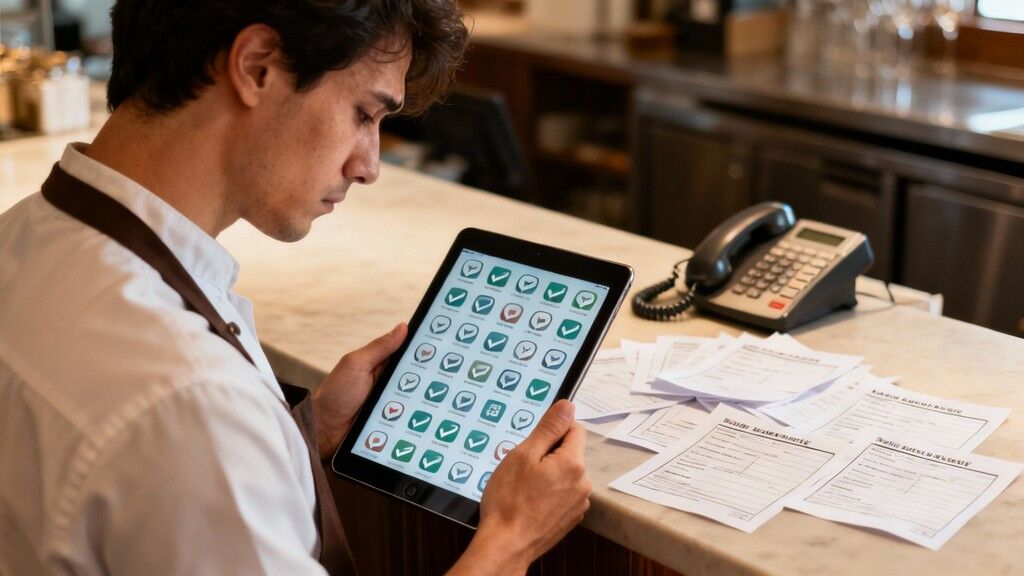
This slow, manual process has hidden costs that hit your bottom line. When you can't spot trends quickly, small service issues fester, brilliant staff members go unrecognized, and great customer ideas are never acted on. You end up making decisions based on gut feelings instead of data—a risky way to run a business.
The True Cost of Inaction
The consequences of this feedback overload are bigger than you might think. It creates a cycle where you're always reacting to problems instead of proactively preventing them.
Delayed Problem Solving: A negative comment about slow service on a Friday night might get buried until Monday. By then, dozens more customers have had the same frustrating experience.
Missed Growth Opportunities: Positive reviews often contain golden nuggets about what you're doing right. Without a system to spot these themes, you miss chances to double down on your strengths.
Decreased Staff Morale: Teams get discouraged when they feel customer complaints go unheard or unresolved, leading to higher turnover and inconsistent service quality.
This challenge is only getting bigger as customer behavior changes. Today, feedback is scattered across more digital channels than ever. In fact, 61% of customers now prefer contacting brands through messaging apps and social media. This trend makes it nearly impossible to manually track and understand the complete customer picture. You can discover more about these customer service statistics and trends to see the full scope.
Ultimately, failing to collect smarter and act faster on this feedback means you can't grow stronger. It's a direct threat to customer retention and your brand's reputation.
How an AI Feedback Summary Generator Actually Works
Imagine trying to listen to thousands of customers talking at once. It would be impossible to catch everything. Now, imagine having an expert analyst on your team who works 24/7, listening to every single customer comment and boiling it down to exactly what you need to know.
That's precisely what a feedback summary generator does. It’s not magic; it’s a powerful, systematic process that turns a chaotic stream of customer voices into a clear, actionable report. It's the engine behind our Feedback Operating System, designed to turn raw data into decisive action.
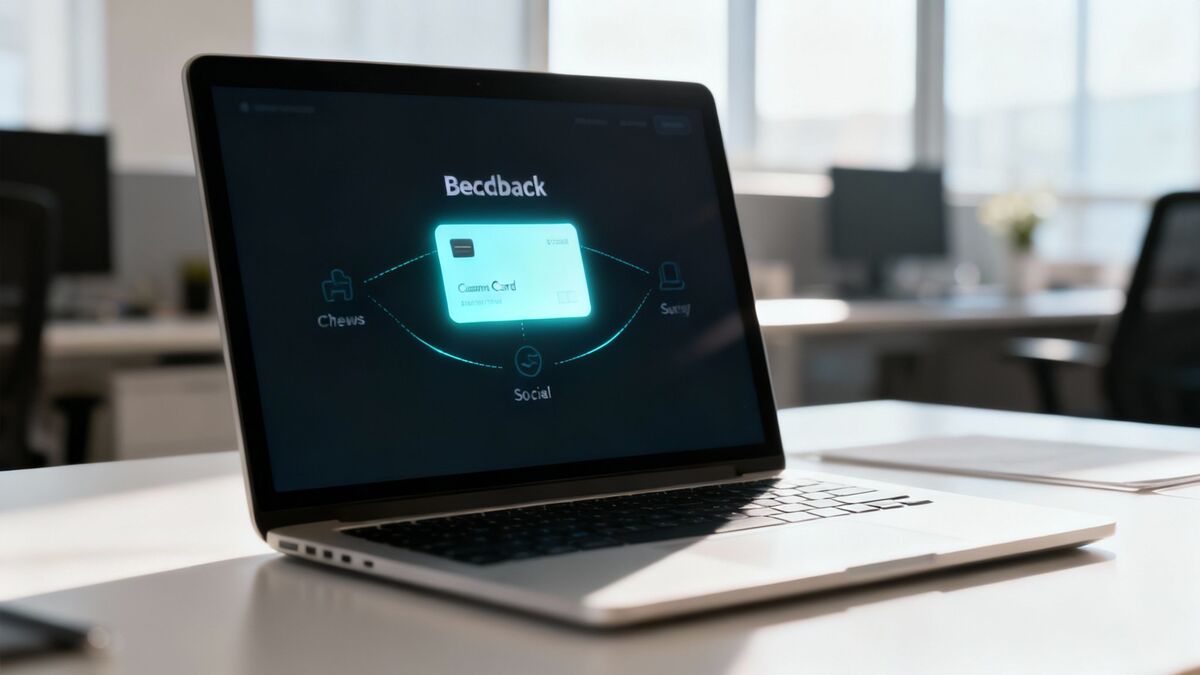
The whole process boils down to three core steps: Aggregation, Analysis, and Synthesis. It's the difference between guessing what your customers want and knowing exactly what they need, helping you collect smarter so you can act faster.
Step 1: Aggregation — Your Central Hub for All Feedback
First, the system needs to gather all your feedback from the countless places it lives, both online and off. Manually jumping between Google Reviews, Yelp, your email inbox, and social media DMs is a recipe for missed signals and wasted time.
This is where the Feedback Operating System begins. Our Radar feature acts as your business's central listening post. Radar provides unified review intelligence, automatically pulling feedback from every channel into one dashboard.
Online Reviews: It connects to platforms like Google, TripAdvisor, and Yelp.
Direct Surveys: It captures responses from your own surveys, whether sent via QR code or email.
Social Media: It monitors mentions and comments across your social channels.
This creates a single source of truth, making sure no customer comment slips through the cracks. It's the foundational step to getting a complete, unbiased view of the customer experience.
Step 2: Analysis — The AI Brain at Work
Once all the feedback is in one place, the real intelligence kicks in. An AI feedback summary generator uses sophisticated algorithms to read and understand text, much like a human would but on a massive scale. If you want to go deeper into the technical side, you can check out an in-depth AI guide.
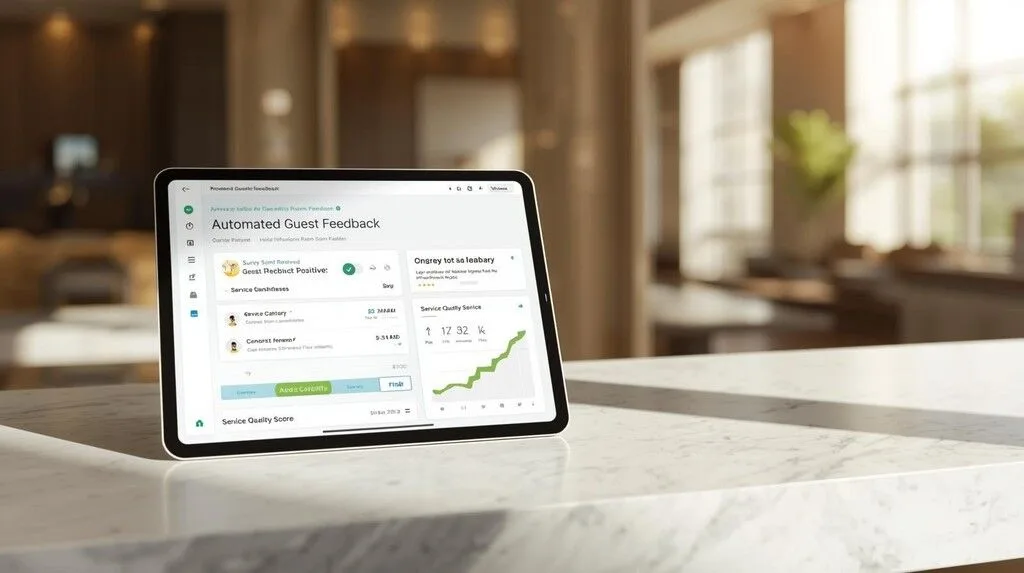
This is where our AI Summaries shine. The feature instantly performs two critical tasks: it provides instant insights & sentiment analysis.
Sentiment Analysis: It figures out the emotional tone of each comment—is it positive, negative, or neutral? This tells you how customers feel.
Theme Detection: It identifies the key topics people are talking about, like "slow service," "cleanliness," or "friendly staff." This tells you what they are talking about.
By analyzing 100% of customer conversations—not just small survey samples—these tools paint a far more accurate picture of reality. This multi-source approach is a huge competitive advantage, especially for businesses where a guest might complain on Instagram, praise staff on Google, and give nuanced suggestions in a post-stay survey.
Step 3: Synthesis — Creating Actionable Insights
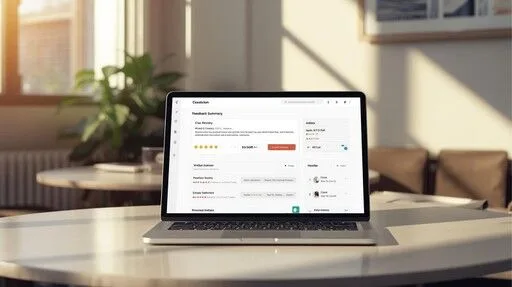
Finally, the generator synthesizes all this analyzed data into a simple, digestible summary. Instead of a 20-page report, you get a concise overview highlighting the most important trends, urgent issues, and standout positives.
You can learn more about how an AI feedback analysis tool makes this happen in our complete guide. This final step is what turns raw data into a clear directive, pointing your team exactly where to focus their efforts for the biggest impact.
From Raw Data to Smarter Business Decisions
Getting an AI-generated summary of your customer feedback is a huge step forward, but it's really just the beginning. The magic happens when you turn those instant insights into real, tangible action. This is where you close the gap between knowing what’s happening and doing something about it.
Think of an AI summary like a diagnostic report from a doctor. It tells you exactly where the pain points are, but you still need a treatment plan to fix them. A feedback summary generator helps you figure out which issues need immediate attention, shifting your team from a reactive, firefighting mode to a proactive, problem-solving one.
When you can instantly spot the most critical or recurring problems—like a "slow check-in process" or "confusing menu descriptions"—you can address the root cause before it frustrates dozens more customers. This isn't just about putting out fires; it's about systematically improving customer satisfaction, building trust, and ultimately, stopping churn in its tracks.
Turning Insights into Automatic Action
This is where a truly integrated system shows its power. You need a way to make your feedback operational, connecting the dots between an insight and a resolution. It’s not enough to just know about a problem; you have to solve it, and solve it fast.
This is exactly why we built the Resolutions Engine right into the FeedbackRobot operating system. It’s the "act faster" part of our "collect smarter, act faster, grow stronger" promise. The Resolutions Engine is designed for automated service recovery, turning negative feedback into a chance to win back a customer.
It uses the insights from AI Summaries to kick off predefined workflows, closing the loop between feedback and follow-up without anyone lifting a finger.
So, how does it work in the real world?
Imagine the system detects strong negative sentiment about a delayed room service order. Instead of you having to manually draft an email, the Resolutions Engine can automatically:
Trigger an immediate response: Send a personalized apology email to the customer who left the feedback.
Offer a resolution: Include a pre-approved discount code for their next visit as a gesture of goodwill.
Alert the right team: Ping the kitchen manager about the recurring issue so they can get to the bottom of the delays.
This level of automation turns a bad experience into a chance to win back a customer, making your insights immediately actionable. By understanding the emotional tone behind comments, you can react with the right level of empathy and speed. To see how this works under the hood, check out our guide on automatic sentiment analysis for reviews.
This process ensures no critical feedback ever falls through the cracks, helping you consistently turn complaints into improvements.
Putting Your AI Feedback Generator to Work
Knowing what a feedback summary generator can do is one thing, but actually wiring it into your daily operations is where the magic happens. This is about moving from theory to practice—creating a seamless flow where customer comments feed directly into your decision-making process. The goal is to make feedback an active, operational part of your business, not just another report you glance at once a week.
The first step is hooking up your key data sources. Think of it as giving your AI analyst eyes and ears everywhere your customers are talking. For a hotel, this might mean integrating your Property Management System like Mews. For a bustling cafe, it means connecting your Point of Sale system like Toast alongside your Google Business Profile and social media DMs. By linking these systems, you create a single source of truth, making sure no valuable comment ever gets lost.

Turning Insights Into Targeted Questions
Once your data is flowing in, you can shift from just passively listening to actively investigating. A good summary will almost always spark new, more specific questions. For instance, your AI might flag a recurring theme of "confusion over the new menu." That's a great insight, but it's also the perfect jumping-off point to dig deeper.
This is where our Prompt to Survey feature becomes so powerful. Instead of guessing what's wrong and launching a broad, generic survey, you can act on the AI's insight instantly. Prompt to Survey lets you deploy targeted micro-surveys based on real-time feedback. With a single click, you can ask recent diners, "What part of our new menu did you find most confusing?"
This agile approach lets you:
Gather specific, contextual feedback while the experience is still fresh in their minds.
Show customers you're actually listening and working to improve their experience.
Avoid survey fatigue by asking short, relevant questions instead of long, generic ones.
This process transforms your feedback loop from a slow, annual review into a dynamic, real-time conversation with your customers.
From Manual Drudgery to Automated Efficiency
The practical difference between a manual workflow and an AI-powered one is staggering. It’s not just about saving time; it’s about gaining a competitive edge by acting on better information, faster.
Across industries like hospitality and retail, this kind of tech is quickly becoming a core part of the customer experience stack. It's no surprise that the broader market for AI in customer service is projected to explode to over USD 83 billion by 2033. This massive growth is a clear signal that real-time, structured insights are the future. You can learn more about the growth of AI in customer service and see why this shift is happening so quickly.
The table below breaks down just how stark the difference is.
Manual Feedback Analysis vs AI-Powered Workflow
Task | Manual Process Without AI | Automated Process With FeedbackRobot |
|---|---|---|
Data Collection | Manually checking 5+ platforms daily (1-2 hours). | Automatically pulls all feedback into one dashboard in real time. |
Trend Analysis | Reading hundreds of reviews to spot themes (4-5 hours/week). | AI Summaries identify themes and sentiment in seconds. |
Reporting | Compiling data into a weekly spreadsheet (2-3 hours). | Generates automated reports and sends alerts for keywords. |
Taking Action | Discussing issues in meetings before acting (Days to weeks). | Use Prompt to Survey to investigate instantly or trigger workflows. |
It’s pretty clear which approach gives your team more time to focus on what actually matters: making improvements and keeping customers happy.
Best Practices for Maximizing Your Feedback ROI
Getting a daily summary of customer feedback is a huge win, but to truly get better, you can't just treat it like another report. It’s the starting gun for a culture of improvement, not the finish line. Knowing there's a problem isn't the same as solving it.
Think of your AI summary as an expert scout returning from the field with crucial intelligence. The scout points you in the right direction—"customers are repeatedly mentioning slow service at checkout"—but it’s your job as the general to investigate, deploy your team, and adjust the strategy. The AI gives you the "what"; your team needs to dig into the "why" and figure out the "how."
Combine Insights for a Complete Picture
An AI summary becomes even more powerful when you pair it with other data you already have. An AI might detect a spike in negative sentiment around wait times, but layering that insight with your operational data tells the full story. For instance, did the negative comments coincide with a day you were short-staffed?
This is where you connect the dots:
Qualitative Trends: What are the themes and feelings in the feedback? AI Summaries hand you this on a silver platter.
Quantitative Data: How do these feelings line up with hard numbers like your CSAT scores, sales data from your Toast POS, or guest check-in times from Mews?
By blending these two types of information, you move from just reacting to feedback to making smarter, data-driven operational decisions every single day.
Act Consistently and Protect Customer Privacy
The single most important best practice is consistency. When customers see you acting on their feedback—whether it’s fixing a broken faucet or rewarding a praised employee—they feel heard. That builds trust faster than any marketing campaign ever could. An insight that isn't acted on is a wasted opportunity.
Remember, a feedback summary generator handles personal, often sensitive, customer opinions. It's essential to treat this data with the utmost respect. Make sure your processes are secure and that you're only using feedback to improve the experience, not to violate guest privacy.
Finally, don't let insights die in a dashboard. Schedule a brief, weekly huddle with your team to discuss the top three positive and negative trends flagged by your AI. This simple habit turns feedback from a passive report into an active, team-wide mission to get better, one small change at a time.
Turn Positive Feedback Into Your Best Marketing Asset
Fixing problems is just one side of the coin. The other, more exciting side is turning your wins into powerful, authentic marketing. A feedback summary generator is brilliant at spotting problems, but it’s just as good at pinpointing exactly what customers love about you and who your biggest fans are.
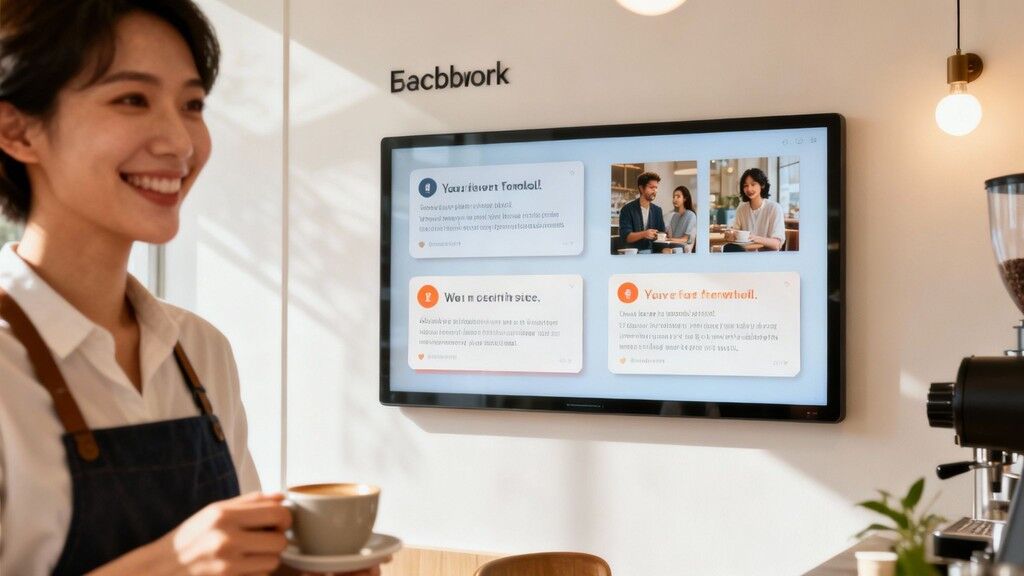
Once you’ve found these glowing reviews, you can amplify them as social proof to bring in new customers. Our AI Summaries make it incredibly simple to find five-star feedback about your “amazing coffee” or a specific team member’s “outstanding service.” This is gold—the raw material for compelling marketing content.
You can even use these insights to build a high-converting testimonials page. If you're looking for guidance on that, we have a complete testimonial landing page template to get you started.
This is exactly why we’re building Spotlight: Feedback Wall, a new tool designed to automatically showcase your best reviews with zero extra work.
Ready to turn your happiest customers into your best marketers? Sign up for a Free Trial to see AI summaries in action, or join the waitlist for the Spotlight: Feedback Wall launch.
Frequently Asked Questions
How Much Technical Skill Do I Need to Set This Up?
Virtually none. Modern platforms like FeedbackRobot are built for busy operators, not IT experts. The whole point is to make this easy.
You can connect sources like your email inbox, Google Reviews, or even systems like Mews and Toast with just a few clicks. The AI does all the heavy lifting—the analysis and summarization—automatically, delivering insights right to your dashboard without any complicated setup.
Can AI Really Understand Nuanced Customer Feedback?
Yes, and with surprising accuracy. Today's AI models are trained on massive amounts of text, so they get the hang of context, sentiment, and even sarcasm pretty well. While it’s always smart to have a human review the big insights, an AI summary generator can chew through thousands of comments in minutes.
Our AI Summaries are designed to spot recurring themes—like 'slow check-in' or 'excellent coffee'—far more efficiently and consistently than any human team ever could. This lets you see the real trends instead of just reacting to the loudest complaints.
How Do I Turn an AI Summary Into Real Business Changes?
Think of the AI summaries as your daily briefing. If a summary from our unified intelligence dashboard, Radar, flags a spike in comments about 'uncomfortable beds,' that’s your signal to investigate. If it praises a specific employee by name, that’s your cue to recognize them.
The key is to close the loop between insight and action. This is where you move from just knowing about a problem to actively solving it, helping you grow stronger with every piece of feedback.
With FeedbackRobot's Resolutions Engine, you can even put actions on autopilot. For example, a summary detecting negative sentiment about long wait times could automatically trigger a workflow to send that customer a discount on their next visit. Just like that, you turn a bad experience into a recovered relationship.
Ready to stop guessing what your customers want and start knowing? FeedbackRobot gives you the tools to collect smarter, act faster, and grow stronger.
What is a 'Feedback Summary Generator' and why do I need one?
It is an AI tool that reads hundreds of guest comments and distills them into 3-5 actionable bullet points. It saves managers hours of manual work and highlights trends that are easy to overlook.
Can an AI generator identify specific 'Operational Gaps'?
Yes. It can tell you, for example, that 'Wait times in the lobby' are mentioned in 15% of negative reviews, giving you a clear, data-backed priority for your next staff meeting.
How does a summary generator handle 'Conflicting' feedback?
It uses sentiment weighting. If 10 people love the music but 2 hate it, the AI will prioritize the 'Majority Sentiment' while still noting the 'Minority Concern' as a side note.
Can I use these summaries for my weekly executive reports?
Absolutely. High-quality generators produce 'Executive Ready' summaries that can be copied directly into slide decks or emails to keep ownership informed with zero extra effort.
Is the AI smart enough to understand my specific industry jargon?
Modern generators are 'Context-Aware.' They know that 'Cold' is bad for a burger but good for a beer, ensuring your summaries are accurate to your specific business niche.
Stop reading about it. Let your agent handle it.
25 free AI actions · no credit card required
Start Free