How to Increase Customer Loyalty: The Modern Playbook for Hospitality Owners
Discover how to increase customer loyalty with proven hospitality tactics. Learn to leverage feedback and technology to build lasting guest relationships.

Nov 30, 2025 · 17 min read
Free tool
AI Negative Review Responder
Turn 1-star reviews into recovery opportunities with AI-crafted responses.
Increasing customer loyalty isn't about punch cards anymore. It's about making your guests feel genuinely heard and valued. The modern playbook for busy hospitality owners boils down to a simple, actionable framework: collect smarter, act faster, and grow stronger.
This guide will show you how to turn guest feedback from a source of anxiety into your most powerful engine for growth.
Building Loyalty on a Foundation of Trust
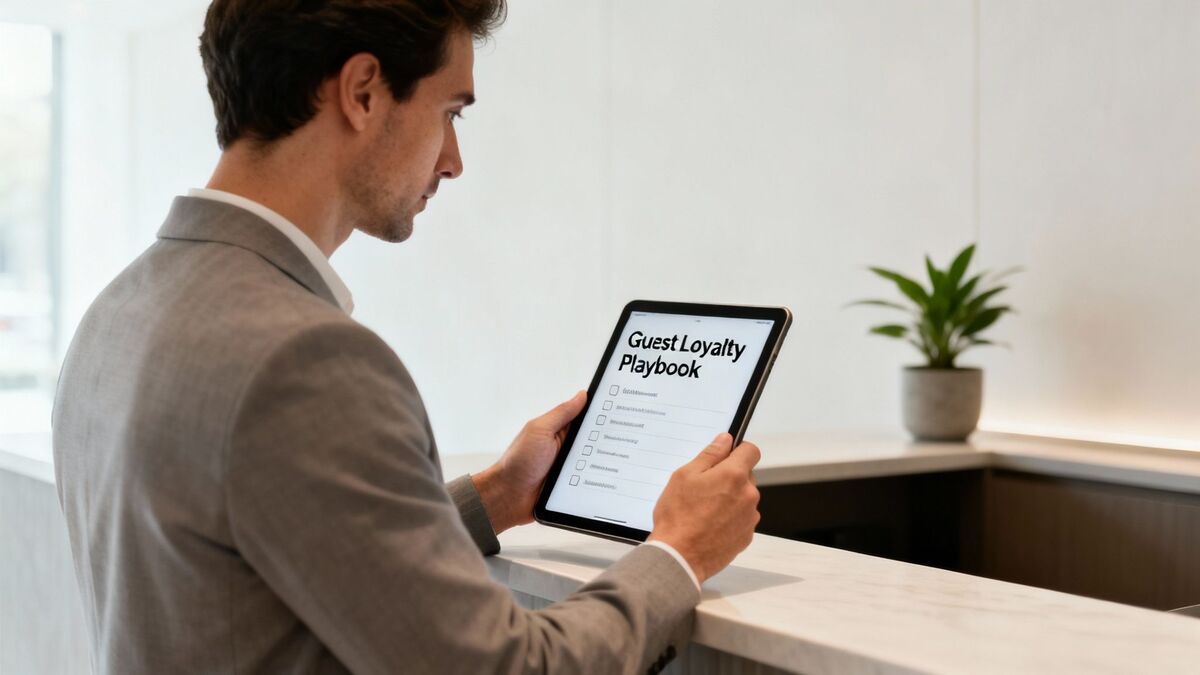
Let's be honest—the old rules of guest loyalty are broken. Today's customers have endless choices, and their loyalty isn't something you can take for granted. It has to be earned with every single interaction, from the moment they book to the final checkout.
At the heart of modern loyalty is one thing: trust.
When guests trust you to deliver a consistently great experience, they have a powerful reason to return. But that trust is fragile. One bad stay, one unresolved complaint, and it can shatter in an instant, sending a once-loyal customer straight to your competition.
The Real Cost of a Bad Experience
The numbers don't lie. Recent research shows that a staggering 52% of consumers stopped buying from a brand after just one bad experience. That's how quickly loyalty can evaporate when trust is broken.
But the upside is just as dramatic. When that trust is solid, customers who believe in your brand are 88% more likely to buy from you again. Even better, a remarkable 62% will shop almost exclusively with providers they trust, turning casual visitors into dedicated advocates.
Trust isn't just a nice-to-have; it's a fundamental pillar of sustainable growth. Building it requires a commitment to listening and responding across every single touchpoint.
This guide is your new playbook. It’s designed specifically for busy hospitality owners who need practical strategies that actually work, not just generic advice.
A Modern Framework for Loyalty
To build lasting relationships, you need a system that operates seamlessly in the background, making every guest feel important. This means moving beyond reactive problem-solving and embracing a proactive approach. The key components of this strategy include:
Proactive Data Collection: Gathering feedback at the right moments, before issues escalate into public complaints on review sites.
Automated Service Recovery: Implementing workflows that ensure no guest concern goes unresolved, turning potential detractors into your biggest fans.
An Omnichannel Presence: Creating a consistent and connected guest journey across all platforms is essential. You can learn more about crafting a seamless omnichannel customer experience in our detailed guide.
Leveraging Social Proof: Using the positive experiences of your happy guests as your most authentic and effective marketing.
By focusing on these core areas, you create a powerful feedback loop. It's a system that fuels continuous improvement and builds a loyal customer base that not only comes back but champions your brand to others.
Collect Smarter: Capture Guest Feedback Before It Hits the Internet
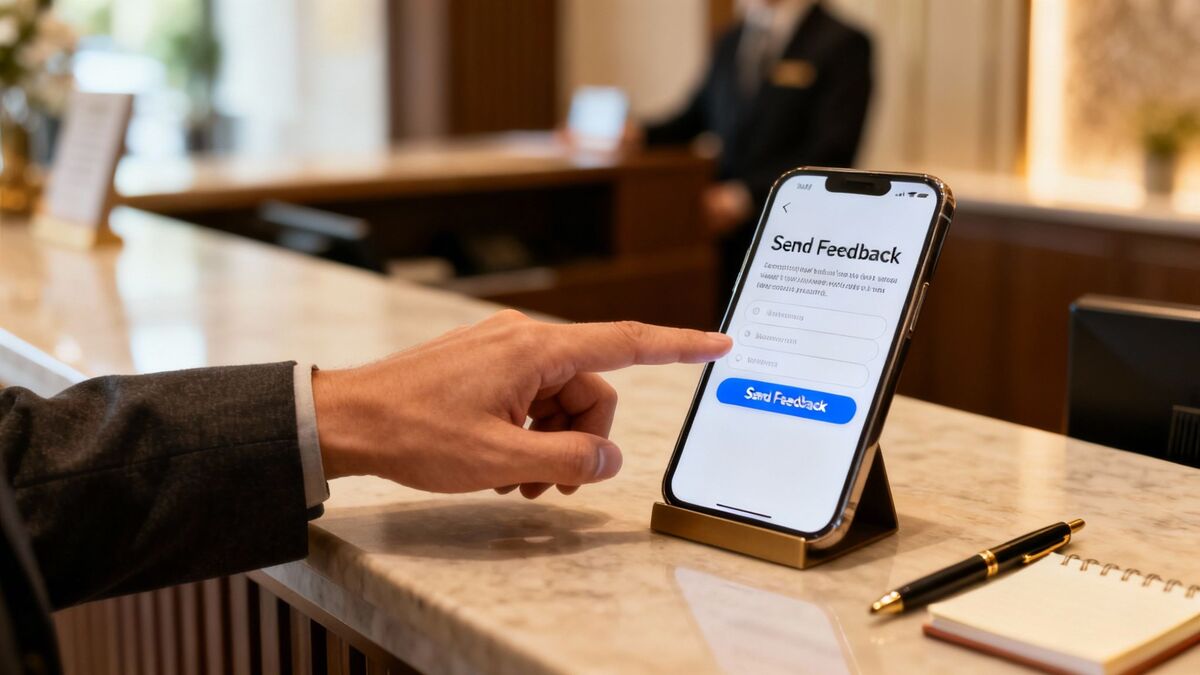
The first rule of modern loyalty is to get ahead of the conversation. Waiting for a negative review to pop up on Google or TripAdvisor means you’re already playing defense. The real opportunity is in creating a proactive system that intercepts feedback before it becomes public, giving you the chance to resolve issues and reinforce what you do well.
This is the essence of collecting smarter. It’s not just about asking for feedback; it’s about asking at the perfect moment when the experience is still fresh. Timing is everything. A survey sent a week after checkout is an afterthought, but a request sent moments after a meal or service can capture raw, honest sentiment.
This proactive approach fundamentally changes the dynamic. Instead of reacting to public criticism, you're inviting a private dialogue. You're showing guests that their opinion matters to you first. That simple act can be the difference between a one-star review and a repeat booking.
Unifying Your Intelligence Sources
Collecting feedback from various channels is essential, but it can quickly become overwhelming. Juggling Google reviews, social media DMs, internal surveys, and third-party booking sites creates data silos. You end up with a fragmented picture of the guest experience, making it impossible to spot the real trends that drive loyalty.
This is where a unified intelligence dashboard becomes non-negotiable. With a tool like Radar, you can pull every piece of feedback into a single, clean interface.
Radar’s Function: Radar acts as your central command center for unified review intelligence. It aggregates reviews and feedback from dozens of sources, including Google, TripAdvisor, and your own internal surveys, giving you a true 360-degree view of your business performance. You stop wasting time logging into multiple platforms and start spending that time on what actually matters—understanding your guests.
By seeing all your feedback in one place, you can instantly identify recurring issues, celebrate team members who are consistently praised, and understand the nuanced differences in feedback across different platforms.
Digging Deeper with Smart Surveys
Not all feedback is created equal. A five-star rating is great, but it doesn't tell you why the experience was so good. To truly understand what drives loyalty, you need to uncover the specific details behind the praise. This is where you can turn happy customers into your most valuable source of operational insights.
A positive review is an invitation to learn more. It’s your chance to discover the 'magic moments' in your guest experience that you need to replicate every single day.
One of the most effective ways to do this is with triggered surveys. For example, the Prompt to Survey feature automates this process.
Prompt to Survey’s Function: When a guest leaves a positive review or a high NPS score, the system automatically sends them a follow-up survey with more detailed questions. This lets you ask targeted questions like, "What was the most memorable part of your stay?" or "Which team member made your experience special?" You uncover deep, actionable insights you would otherwise miss.
This targeted approach transforms a simple positive rating into a detailed report on what your team is doing right. It provides the specific, positive reinforcement your staff needs and gives you a clear roadmap of what to double down on.
For a more comprehensive look at different methods, explore our guide on how to collect customer feedback effectively. By implementing a smarter collection strategy, you build a powerful foundation for loyalty, one conversation at a time.
Act Faster: Turn Raw Feedback into Actionable Business Insights
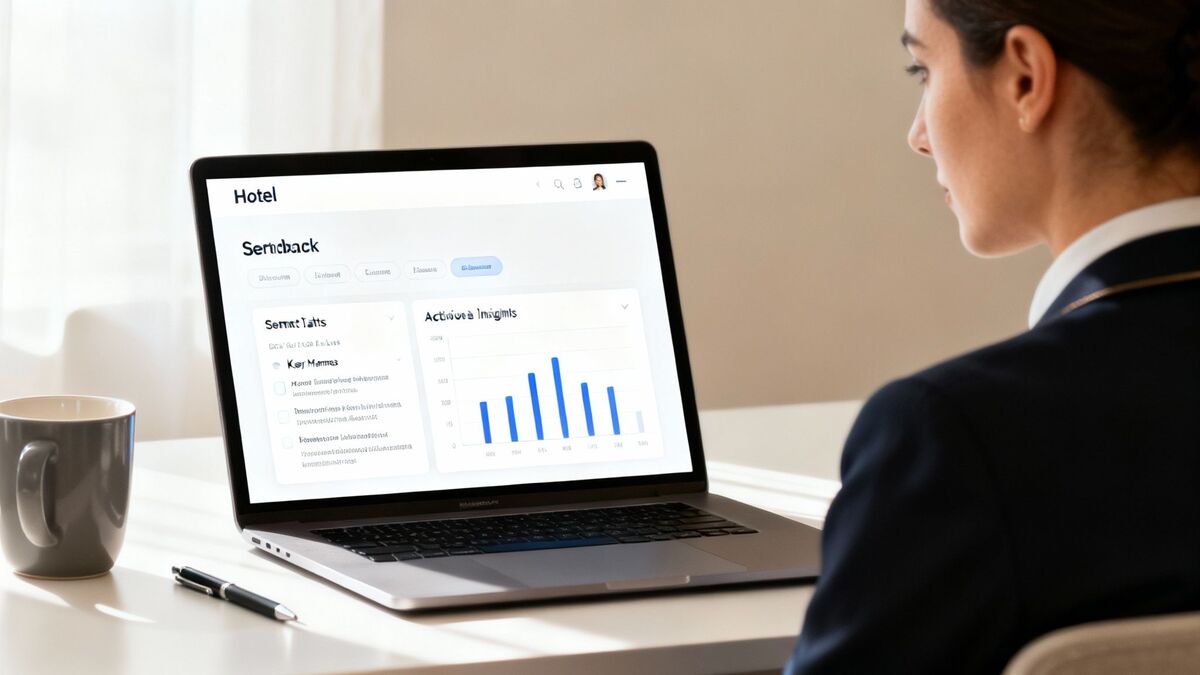
Collecting feedback is a great start, but let's be honest—it’s only half the battle. If all that valuable information just sits in a spreadsheet or a cluttered inbox, it's not doing a thing to help you build loyalty. You’re just left drowning in data, unable to connect the dots and make meaningful changes.
This is where you learn to act faster. Instead of spending hours manually sifting through hundreds of reviews, you can use technology to do the heavy lifting, instantly transforming raw comments into a clear roadmap for improvement. The goal is to get from data collection to decisive action in minutes, not days.
That speed is critical. Customer expectations move at a dizzying pace, and the ability to spot and fix a friction point before it becomes a widespread complaint is what separates good operators from great ones. By turning feedback into intelligence, you empower your team to make specific, data-driven changes that directly improve the guest experience.
From Data Overload to Instant Clarity
Imagine trying to personally read every single comment from Google, TripAdvisor, your internal surveys, and social media. It’s an impossible task for any busy owner or manager. You might catch a few high-level themes, but the subtle, recurring issues—the ones that slowly chip away at loyalty—will almost always slip through the cracks.
This is exactly the problem that artificial intelligence solves. Instead of just gathering data, it interprets it for you.
With a tool like FeedbackRobot's AI Summaries, this entire process becomes automated.
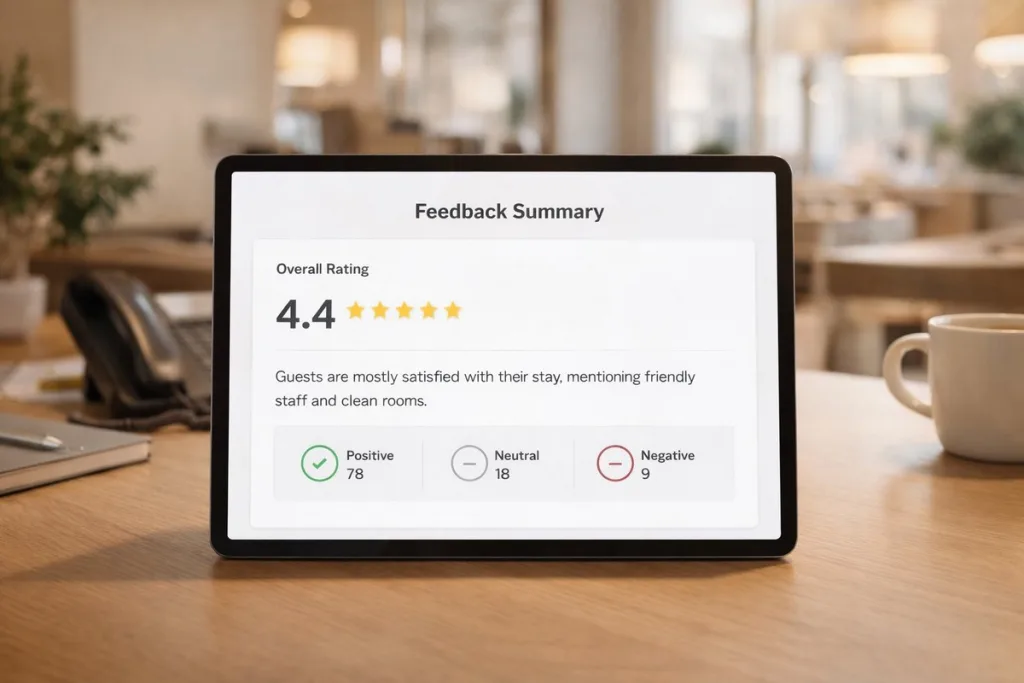
AI Summaries’ Function: Think of it as a dedicated analyst who reads through thousands of guest comments in seconds to identify what truly matters. It delivers instant insights and sentiment analysis, pinpoints recurring keywords and themes (like ‘slow check-in’ or ‘amazing cocktails’), and highlights emerging trends you might have otherwise missed.
This allows you to stop guessing what your guests want and start knowing. You get a clear, unbiased view of your strengths and weaknesses, straight from the people whose opinions matter most.
A Real-World Scenario in Action
Let's make this practical. A hotel manager notices a slight dip in their weekend satisfaction scores but can't figure out why. Reading through reviews one by one is time-consuming and prone to personal bias.
Instead, they turn to AI Summaries. Within moments, the system analyzes all recent weekend feedback and surfaces a powerful insight: the phrase "disappointing breakfast" appears 40% more often in reviews from Friday to Sunday compared to weekdays. The sentiment analysis confirms these comments are overwhelmingly negative.
By transforming qualitative feedback into quantitative data, you can pinpoint the exact source of a problem and allocate your resources effectively. It’s about making smarter decisions, faster.
Armed with this specific insight, the manager can take immediate, targeted action. They can investigate the weekend breakfast service, talk to the kitchen staff, and adjust the menu or staffing levels. This isn't a shot in the dark; it's a precise, data-driven change that addresses a known issue, directly impacting guest satisfaction and fostering the kind of reliability that builds true loyalty.
Pinpointing Themes to Drive Operational Excellence
Beyond just identifying problems, AI-driven analysis helps you understand what you're doing right. It’s just as important to know what to double down on as it is to know what to fix.
AI Summaries helps categorize feedback into actionable themes, giving you a high-level dashboard of your operational performance.
Celebrate the Wins: Discover that your front desk team is consistently praised for being "friendly and welcoming." This gives you specific, positive reinforcement to share with your staff, boosting morale and encouraging that great behavior.
Spot Training Opportunities: Notice a recurring theme of "confusing parking." This isn't a major crisis, but it's a persistent friction point you can now solve. You can create better signage or simply update your pre-arrival email to address it proactively.
Track Competitor Mentions: The system can even flag when guests mention your competitors, giving you direct insight into why they chose you or what they feel another local spot does better.
By organizing feedback this way, you create a continuous improvement loop. Every piece of guest commentary becomes a lesson that helps you refine your operations, train your team, and ultimately deliver an experience so consistently excellent that guests have no reason to go anywhere else.
Act Faster, Part 2: Master Service Recovery and Win Back Unhappy Guests
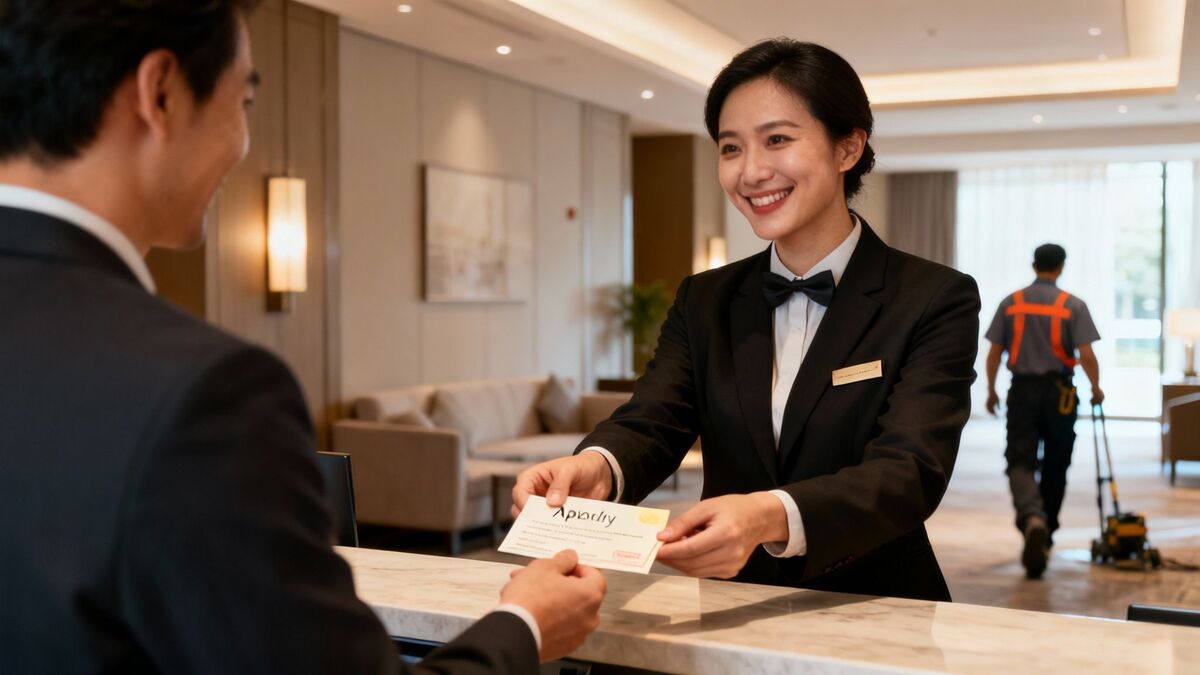
A single bad experience doesn't have to cost you a customer. In fact, a brilliant recovery can transform an unhappy guest into a fiercely loyal advocate. The key is to stop seeing complaints as failures. Instead, see them as golden opportunities to prove you’re listening and that you genuinely care.
This is another critical part of learning to act faster. Slow, inconsistent, and manual responses are the enemy of loyalty. When a guest has a problem, they want to feel heard now—not two days later after their negative review has already gone live. Before a crisis ever hits, you need a clear game plan with effective negative review response strategies.
Building a scalable, systematic approach to service recovery ensures every issue gets handled with the same speed and empathy, regardless of who's on shift. It’s all about creating a reliable process that turns complaints into moments of connection.
Automating Your Recovery Workflow
Imagine a guest leaves a review mentioning a "noisy room." In a typical manual setup, that feedback might not be seen for hours, or even days. By the time a manager reads it, the guest is long gone, and the chance to make it right has vanished. This reactive approach is a recipe for losing customers for good.
Now, let's rethink that process with automation. This is precisely what the Resolutions Engine is built for.
Resolutions Engine’s Function: The Resolutions Engine is your system for automated service recovery. It acts as an always-on manager that flags negative feedback in real-time and instantly kicks off a predefined workflow to solve the problem. You set the rules—for instance, creating a trigger for any feedback containing keywords like "noisy," "dirty," or "broken." The moment that feedback is detected, the engine springs into action.
This shifts you from a reactive stance to a proactive one, making sure no complaint ever falls through the cracks. It’s about building a system that guarantees a swift, consistent, and empathetic response every single time.
A well-executed service recovery can increase customer retention by up to 96%. The speed and quality of your response are direct investments in future loyalty.
A Practical Example of Automated Resolution
Let's go back to that "noisy room" complaint. With the Resolutions Engine in place, the moment that review gets posted, a series of actions can happen automatically:
Immediate Ticketing: A maintenance ticket pops up and is assigned to your facilities team to inspect the room's soundproofing or AC unit.
Manager Notification: The front desk manager gets an instant alert on their phone, so they know about the issue and the guest involved.
Personalized Guest Communication: An automated but personalized email is sent to the guest. It acknowledges their feedback, sincerely apologizes for the disturbance, and includes a pre-approved offer, like a 20% discount on their next stay.
This entire sequence unfolds in minutes, not days. The guest feels heard and valued, your team has a clear action plan, and a potential one-star review is turned into a five-star recovery story. This is how you operationalize empathy at scale. For more in-depth guidance, check out our complete guide on how to respond to customer complaints with professionalism and care.
Comparing Manual vs Automated Recovery
The difference between handling service recovery manually versus automatically is night and day. It directly impacts your team's efficiency and, ultimately, your ability to keep customers coming back.
The table below breaks down just how much an automated system like the Resolutions Engine can change the game.
Manual vs Automated Service Recovery
Metric | Manual Process (Without Automation) | Automated Process (With Resolutions Engine) |
|---|---|---|
Response Time | Hours or days; dependent on staff availability | Instant; real-time triggers ensure no delays |
Consistency | Varies by employee; tone and solution differ | Standardized; every guest receives the same high level of care |
Team Burden | High; requires constant monitoring and follow-up | Low; automates ticketing, alerts, and initial communication |
Resolution Rate | Lower; issues are often missed or addressed too late | Higher; every issue is flagged, tracked, and resolved systematically |
Guest Impression | Feels ignored or that their feedback isn't valued | Feels heard, valued, and impressed by the swift response |
By automating your service recovery, you free up your team to focus on high-touch interactions while the system handles the immediate, critical steps. This systematic approach doesn't just solve problems—it builds the deep-seated trust that is the very foundation of lasting customer loyalty.
Grow Stronger: Design Loyalty Programs That Guests Actually Love
Let's be honest: most loyalty programs are forgettable. A generic "earn one point for every dollar spent" model doesn't create an emotional connection. It just creates a transactional one. To build a program that guests actually love—and more importantly, talk about—you have to deliver personalized value that shows you see them as people, not just numbers in a database.
This is your chance to move beyond simple discounts and start building genuine affinity. The secret is using the guest data you already have to offer rewards that feel thoughtful and exclusive. That means connecting your loyalty initiatives directly with your core operational systems, like your Property Management System (Mews) or your Point of Sale (Toast). When these systems talk, the magic happens.
Moving Beyond Points to Personalization
A seamless link between your POS and loyalty program lets you create truly personalized perks. Think about a regular at your restaurant who always orders the calamari. Instead of a generic 10% off coupon, your Toast integration flags their return, and your server gets a prompt to offer a complimentary calamari appetizer "just for being one of our favorite regulars."
That small, personalized gesture creates a memorable moment that a points-based system just can't replicate. It shows you’re paying attention. For a hotel, this might mean tapping into data from your PMS like Mews to automatically surprise a frequent guest who has stayed five times with a complimentary room upgrade at check-in.
These surprise-and-delight moments are powerful precisely because they're unexpected. They break the mold of predictable rewards and build a real emotional bond, which is the cornerstone of long-term customer loyalty.
Loyalty Programs are Now a Global Standard
It's no surprise that loyalty programs have become a global standard, with more than 90% of companies now offering some form of rewards. The loyalty management market is exploding, projected to hit $41.21 billion by 2032, driven largely by digital transformation and AI-powered personalization. The proof is in the results: 74% of consumers say they're loyal to at least one brand, and an impressive 86% have recommended a brand they love, proving these programs are highly effective at driving advocacy.
The most successful loyalty programs don't just reward transactions; they recognize and celebrate the relationship. They make your best customers feel like true insiders.
When designing programs that genuinely resonate, it's essential to move beyond traditional points systems and embrace a data-driven approach. You can explore this data-driven guide to modern loyalty marketing for more advanced strategies.
Measuring What Truly Matters
A great loyalty program isn't just about making guests feel good; it needs to deliver measurable business results. While tracking points redeemed is useful, focusing on these indicators will give you a much clearer picture of your program's real impact.
Repeat Visit Rate: This is the most straightforward measure of loyalty. Are your members coming back more often than non-members? If this number is climbing, your program is working.
Customer Lifetime Value (CLTV): A successful loyalty program should significantly increase the total amount a customer spends with you over their entire relationship. Track the CLTV of members versus non-members to prove the program's ROI.
Redemption Rate: This metric tells you how engaged your members actually are. If redemption rates are low, your rewards might not be compelling enough, or the process could be too complicated.
By focusing on these metrics, you can continuously refine your program to ensure it not only builds an emotional connection but also drives sustainable, profitable growth.
Grow Stronger, Part 2: Turn Positive Feedback into Your Best Marketing Asset
Alright, the final piece of the loyalty puzzle is learning how to grow stronger by turning your happiest customers into your most powerful marketing tool. Once you've collected feedback and taken action, it’s time to show that positive sentiment to the world. This builds trust with new prospects and drives more business.
Social proof is incredibly powerful. Think about it—when new visitors see authentic, glowing experiences from people just like them, it creates instant credibility. This isn't about slapping a few stale, cherry-picked testimonials on your homepage. It's about building a live, transparent showcase of your commitment to the customer experience.
Showcase Your Success in Real-Time
To pull this off without adding more work to your plate, you need a tool that automatically brings your best feedback to the forefront. This is where the Spotlight: Feedback Wall becomes a total game-changer for your website.
So, what is it?
The Spotlight: Feedback Wall is a dynamic website widget that pulls in a live, curated feed of your best reviews from all over the web.
It showcases positive feedback as it comes in, creating an ever-fresh stream of social proof that's always current.
Why does this matter so much? Instead of just telling potential customers you offer a great experience, you're showing them with real, unfiltered proof. That kind of authenticity builds immediate trust and helps turn hesitant visitors into confident buyers.
By displaying a constant flow of positive customer stories, you create an undeniable narrative of excellence. It signals that your business isn't just great occasionally—it's consistently great. That’s a key driver for both new and repeat business.
Your happiest customers are your most effective salespeople. Giving them a platform to share their experiences is one of the smartest marketing investments you can make.
Ready to turn your guest feedback into a powerful growth engine? Now is the perfect time to see these strategies in action.
Start your Free Trial of FeedbackRobot today to begin collecting smarter feedback and acting on it faster. Or, be among the first to launch your own Spotlight: Feedback Wall and transform your website into a powerful magnet for new customers.
Common Questions on Building Guest Loyalty
We get it. The idea of setting up a new system for guest loyalty can feel like a big lift, especially when you're already juggling a million things. Here are some straight-up answers to the questions we hear most from busy hospitality owners just like you.
How Quickly Can I Actually See Results?
While building true, lasting loyalty is more of a marathon than a sprint, you can absolutely see operational wins in the first 30 days. Think about it: using a tool like our Resolutions Engine to automate and speed up responses to negative feedback stops a bad experience from turning into a lost customer. That's an immediate impact.
You'll also get quick insights from AI Summaries, which instantly analyze guest sentiment. This helps you spot the low-hanging fruit—the quick fixes your team can tackle right away to make the guest experience better from day one.
What’s the Single Most Important Loyalty Metric to Track?
Things like Net Promoter Score (NPS) are useful, for sure. But if you have to pick just one, the most important metric for guest loyalty is your repeat customer rate. It's that simple.
This number cuts through all the noise and tells you exactly what percentage of your business comes from people who chose to come back. It’s the ultimate proof that your efforts to collect smarter feedback and act faster are actually hitting the bottom line.
Can a Small, Independent Business Really Use This Tech?
Absolutely. In fact, smaller, independent businesses often see the biggest benefits. A Feedback Operating System completely levels the playing field. It gives independent hotels and restaurants the power to deliver the kind of swift, consistent service recovery that used to be reserved for huge chains with massive support teams.
Our Resolutions Engine puts your service recovery on autopilot, and Radar brings all your review intelligence into one place. This saves your small team countless hours and makes a massive difference in guest satisfaction, helping you compete and win.
Ready to turn guest feedback into your most powerful engine for growth? The Feedback Operating System gives you the tools to listen at scale and respond with the speed and empathy that builds real loyalty.
What is the most effective way to build customer loyalty?
Consistency and recognition. When a business consistently delivers high quality and recognizes its regular guests through personalized feedback loops, loyalty follows naturally.
Can feedback loops replace a traditional points-based loyalty program?
They should work together. A points program gets them in the door, but a 'Feedback Loop' makes them feel heard and valued, which is a far stronger emotional bond.
How does responding to reviews increase loyalty?
It shows you aren't a faceless corporation. When a guest sees a manager personally address their praise or concern, it creates a sense of relationship and trust.
Should I reward customers for giving feedback?
Be careful. Reward 'engagement,' not 'positive scores.' Offering a small 'thank you' discount for completing a survey shows you value their time and encourages them to return.
What role does personalization play in loyalty?
Huge. Using AI to remember a guest's past feedback (e.g., 'We're glad the steak was perfect this time!') makes them feel like a VIP, not just a transaction number.
Stop reading about it. Let your agent handle it.
25 free AI actions · no credit card required
Start Free