

Guest Satisfaction Measurement: Turn Feedback into Growth
Unlock how guest satisfaction measurement turns feedback into fast, actionable insights that boost loyalty and revenue.

Feb 24, 2026 · 18 min read
Free tool
AI Negative Review Responder
Turn 1-star reviews into recovery opportunities with AI-crafted responses.
As a busy owner in hospitality, you know that guest satisfaction isn't just a number—it's the engine of your business. Measuring it means understanding how your guests really feel about their experience, from check-in to check-out. It’s the process of collecting feedback, analyzing it intelligently, and acting on it decisively to build loyalty, protect your reputation, and drive revenue.
What you measure is what you can manage. This guide gives you an actionable framework to do just that.
Why Old-School Guest Satisfaction Measurement Is Broken

If you’re still wrestling with comment cards, manually checking five different review sites, or drowning in annual survey spreadsheets, you're operating with a blindfold on. The old ways of measuring guest satisfaction are slow, disconnected, and tell you what went wrong last month—not what you can fix right now.
Today's guests move fast. A single bad experience can become a one-star review before they’ve even left your property. This reactive approach puts you in a constant state of defense, trying to fix problems long after they’ve already damaged your reputation and bottom line. It's time to collect smarter so you can act faster.
The Problem with Disconnected Data
The biggest failure of traditional methods is fragmented data. Your guest feedback is scattered everywhere:
Online Travel Agencies (OTAs) like Booking.com
Review platforms like Google and TripAdvisor
Social media comments and direct messages
Internal post-stay email surveys
Each source gives you a tiny piece of the puzzle. Without a unified view, you can't see the full picture. This chaos makes it impossible to spot recurring trends, identify the root cause of a complaint, or act on critical feedback before it’s too late. It’s like trying to navigate with a dozen different, uncoordinated compasses.
The real cost of outdated guest satisfaction measurement isn't just a bad review. It's the missed opportunity to recover a guest relationship, fix a recurring operational issue, and turn a frustrated visitor into a loyal advocate.
Interestingly, even with these operational hurdles, the industry is adapting. The Global Guest Review Index (GRI) recently hit 86.7%, a slight increase despite record tourist numbers and immense pressure on staff. This shows that while guests are more demanding, hotels that effectively manage feedback are succeeding.
Comparing Old vs New Guest Satisfaction Methods
The gap between outdated methods and a modern approach is widening. Here’s a quick breakdown of how things have changed.
Metric | Traditional Method (The Past) | Feedback Operating System (The Future) |
|---|---|---|
Speed | Slow, manual data entry | Real-time, automated collection |
Scope | Limited to post-stay surveys | Continuous, multi-channel (email, SMS, reviews) |
Action | Reactive, fixing old problems | Proactive, identifying trends and preventing issues |
Data | Siloed in different spreadsheets | Centralized in a single dashboard |
Insights | Basic scores and averages | AI-powered sentiment and theme analysis |
This isn't just an upgrade; it's a completely different way of thinking about feedback.
Moving From Passive Collection to Active Management
The solution is to shift from passive data collection to an active Feedback Operating System. This isn't just another tool; it's a fundamental change in how you approach guest satisfaction measurement. Instead of seeing feedback as a historical report card, you start treating it as a real-time growth engine for your business.
This modern approach is built on a simple but powerful principle our customers live by: collect smarter, act faster, and grow stronger. By unifying all your feedback channels into one intelligent hub, you stop reacting and start proactively managing the guest experience.
For a deeper dive into modern feedback strategies, check out our guide on how to measure customer service effectively. This is the first and most critical step toward transforming feedback from a chore into a competitive advantage.
Unify Your Feedback Channels into One Hub

Let's be direct: the first step in any modern guest satisfaction measurement strategy is to end the chaos. Your guests are talking about you everywhere—Google, TripAdvisor, social media, OTAs, plus your own surveys. Trying to keep up by jumping between a dozen different tabs isn't just a headache; it’s how you miss critical feedback and damage your reputation.
Think about your front desk manager's morning. Are they logging into five different sites, copy-pasting reviews into a spreadsheet, and trying to connect the dots? A serious complaint about cleanliness on a smaller OTA could sit there for days, while a glowing review on Google never gets the prompt thank-you it deserves. This scattered approach makes it impossible to collect smarter and blinds you to the full picture of your guest experience.
You can't manage what you don't measure in one place. Bringing all your feedback together isn't a "nice-to-have"—it's the foundation of any system that actually works.
Ending the Manual Review Grind with Radar
This is exactly where a unified review intelligence hub comes in. Instead of you chasing feedback all over the internet, you need a system that brings it all to you. This is what we built Radar for.
Radar is our unified review intelligence feature that automatically pulls in reviews and mentions from every platform that matters and organizes them into a single, clean dashboard. It puts an end to the mind-numbing task of manual review checks, giving your team back the time to focus on what really moves the needle—improving the guest experience.
No more missed comments. No more delayed responses. The tool gives you a real-time command center for your online reputation. You can finally act faster because the moment feedback is posted anywhere, it’s right there in front of you.
By centralizing feedback, you transform a scattered collection of opinions into a structured, real-time stream of business intelligence. This is the shift from being reactive to becoming proactive.
For example, see how this dashboard consolidates various feedback sources into one clear view, helping you spot trends instantly.
The interface makes it easy for a manager to see at a glance if a recent operational change is hitting the mark or falling flat with guests.
Connecting Feedback to Guest Data
But unification goes beyond just online reviews. To truly get the most out of your guest satisfaction measurement, you need to connect feedback directly to your operational data.
Integrating your feedback platform with your Property Management System (PMS) like Mews or your Point of Sale (POS) system like Toast creates a much richer story. When a review is linked to a specific guest profile, you suddenly gain powerful context:
Which room did they stay in?
What did they order from the restaurant?
Was this their first visit, or are they a loyal regular?
This is how you get to the root cause of problems, not just patch up the symptoms. You can see if a specific room consistently gets noise complaints or if a new menu item is a recurring disappointment. If you're wrestling with reviews across many platforms, you might find some useful insights in this article on which tools are best for managing multi-channel customer feedback.
It's also crucial to remember that where guests leave feedback is always changing. Recent data shows that Google review volume shot up 15.7% year-over-year, closing the gap with traditional leaders like Booking.com. This trend underscores why you need a system that adapts automatically, without you having to manually track which new platform is gaining traction. You can dig deeper into these changing review trends on shijigroup.com.
Ask the Right Questions at the Right Moment
Having all your feedback in one place is the first victory. But the real secret to modern guest satisfaction measurement is to stop waiting for feedback and start asking for it—at exactly the right time.
Effective feedback isn’t about sending a long, generic survey a week after someone leaves. It’s about capturing their feelings in the moments that actually define their experience.
This shift from passive collection to active inquiry is how you get ahead of problems. Instead of learning about a bad experience from a one-star review posted days later, you can catch and fix an issue while the guest is still on your property. This proactive approach is central to our philosophy: collect smarter so you can act faster.
It’s all about precision. Asking a guest about their check-in a week later is useless. Sending a quick SMS 30 minutes after they get to their room? That’s brilliant.
Design Targeted Surveys in Seconds
Creating custom surveys for every touchpoint sounds like a ton of work, but it doesn't have to be. This is where the right technology makes you faster and more effective. Instead of fumbling with a survey builder from scratch, you should be using a tool that generates what you need based on a simple goal.
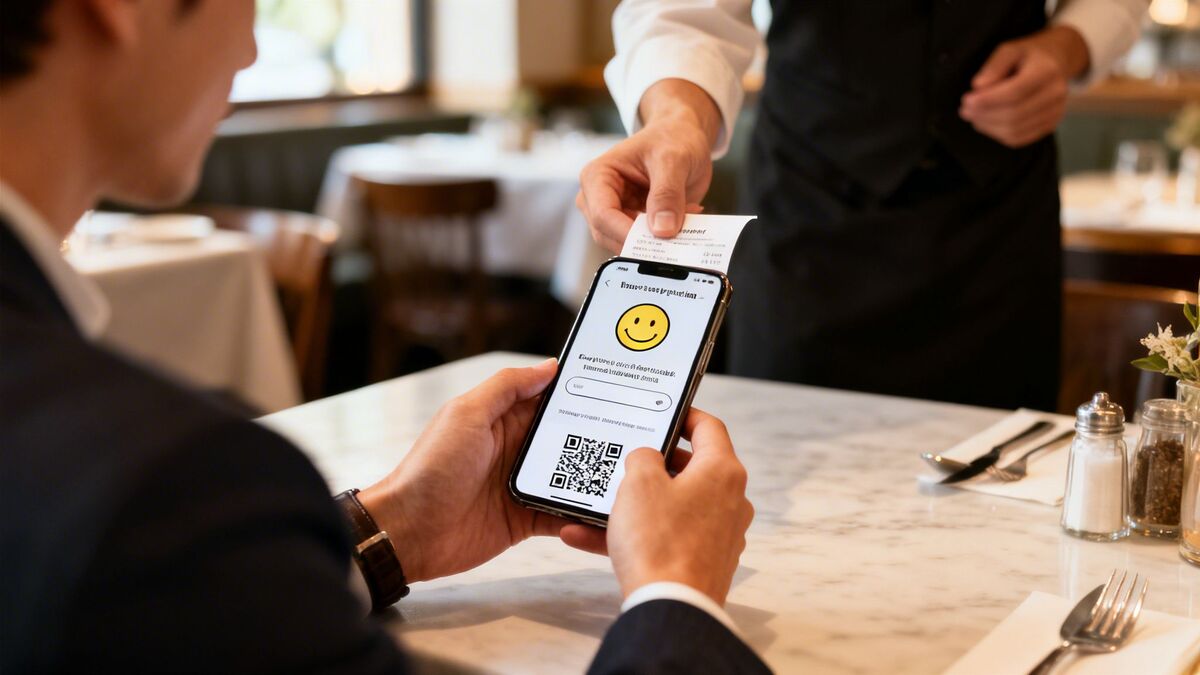
Our Prompt to Survey feature does exactly this. You just type in a goal, like "Ask about the dining experience at my restaurant," and our system instantly creates a targeted, ready-to-send survey. It can be deployed via a QR code on a receipt, an SMS, or an email, letting you capture insights right in the moment.
Imagine a restaurant manager who notices a slump in weekday lunch sales. Using Prompt to Survey, she can create a quick, two-question survey on the spot and add the QR code to lunch receipts. By the end of the day, she has immediate, actionable feedback about the menu or service speed that she can use to make changes for tomorrow.
Moving from a single, post-experience survey to multiple, in-journey micro-surveys gives you a continuous, real-time pulse on guest satisfaction. It transforms feedback from a report card into a conversation.
Choosing the Right Guest Satisfaction KPI
Not all questions are created equal, and not all metrics do the same job. Using the wrong one is like using a hammer to turn a screw—you might get it done, but it’s going to be messy and ineffective. To measure guest satisfaction properly, you have to match the metric to the moment.
When it comes to guest feedback, three key performance indicators (KPIs) do most of the heavy lifting: CSAT, NPS, and CES. Knowing which one to use when is critical for getting clear, useful answers.
Here’s a simple guide to the three most important KPIs in hospitality and when you should use them.
Choosing the Right Guest Satisfaction KPI
To get the most out of your surveys, you need to pick the right tool for the job. This table breaks down which satisfaction metric to use for different goals and customer touchpoints.
KPI | What It Measures | Best Used For (Example) |
|---|---|---|
CSAT (Customer Satisfaction) | In-the-moment happiness with a specific interaction. The classic "How was your...?" question. | A QR code at the spa front desk asking guests to rate the check-in process on a 1-5 scale immediately after their appointment. |
NPS (Net Promoter Score) | Overall loyalty and the likelihood a guest will recommend you. The "How likely are you to recommend us?" question. | An email survey sent 24 hours after check-out to gauge the guest's overall feeling about their entire stay and predict repeat business. |
CES (Customer Effort Score) | The ease of an experience. The "How easy was it to...?" question. | A pop-up survey on your website after a guest makes an online booking, asking them to rate how easy the process was. |
Understanding these distinctions is crucial. You wouldn't use NPS to ask about the quality of a single cup of coffee, just like you wouldn't use CSAT to measure long-term brand loyalty.
Think of it this way:
CSAT is your transactional tool, perfect for pinpointing operational strengths and weaknesses at specific touchpoints like the front desk or poolside bar.
CES helps you find and eliminate friction, making sure your processes—like booking or checking out—are smooth and guest-friendly.
NPS gives you that high-level view of brand health, telling you if you're creating enthusiastic fans or frustrated detractors.
By using the right tool for the job, your guest satisfaction measurement becomes surgical and far more powerful.
Instantly Understand What Your Guests Are Saying
So you’ve centralized all your feedback with a tool like Radar and you’re asking all the right questions using Prompt to Survey. Great. But now comes the part that trips up most businesses: making sense of it all.
You’re sitting on a mountain of raw data—star ratings, NPS scores, and hundreds, maybe thousands, of open-ended comments. Manually reading through every single one to find the "why" behind the numbers is a full-time job you simply don't have.
This is where modern guest satisfaction measurement flexes its muscles. It’s about moving past just knowing your CSAT score is a 4.2 and instantly understanding why it isn't a 4.8. You need to see, at a glance, if the "amazing coffee" is boosting your score while the "slow check-in" is dragging it down. This is how you act faster based on smart data, not just gut feelings.
Without a system to analyze themes and sentiment, all that valuable feedback is just noise. You need a way to turn that volume into clear, actionable signals.
Uncover Themes and Sentiment with AI
The old-school way of sifting through reviews is not only painfully slow, but it’s also riddled with human bias. It’s easy to fixate on one particularly angry review while completely missing a subtle but persistent complaint mentioned by dozens of guests. This is where AI becomes your most valuable analyst.
We built our AI Summaries feature to solve this exact problem. Think of it as your instant insights and sentiment analysis engine. Instead of losing hours reading, you get a clean, concise breakdown of the most common themes and the emotions tied to each one.
The system automatically scans every piece of feedback, identifies the key topics, and sorts them into positive, negative, or neutral buckets. Within seconds, you know what’s working and what’s broken. This lets you stop guessing and start fixing the root causes of guest friction. You can see a full breakdown in our guide on using AI for survey analysis.
The goal is to spend less time reading and more time acting. AI doesn't replace your judgment; it supercharges it by showing you exactly where to focus.
The screenshot below shows how AI Summaries can turn a messy wall of text into a clear, prioritized list of guest feedback themes.
Here, you can instantly see that while "food quality" is a major strength, "staff attitude" is a recurring negative theme that needs immediate attention.
From Buried Data to Clear Insights
Let’s look at a real-world example. The owner of a multi-location wellness clinic was struggling to figure out why one of their five branches consistently lagged behind in its NPS score. The raw feedback was a jumble of good and bad comments, and a quick scan revealed no obvious patterns. Building a spreadsheet to manually track themes would have taken days.
By running all the feedback through AI Summaries, a clear pattern emerged in less than a minute. The system pinpointed "scheduling issues" and "appointment availability" as a major negative driver, but only at the underperforming location. Digging in, the AI highlighted phrases like "long wait for an opening" and "difficult to book online." This insight, completely buried in the raw data, allowed the owner to fix a specific operational bottleneck in that branch's booking system.
That’s the power of turning qualitative feelings into quantitative facts. What was once a vague sense that "something's wrong" became a specific, fixable problem.
This level of detail is becoming non-negotiable. While global guest reviews have remained strong, with 93% of feedback rated positively, regional performance can tell a very different story. For instance, North American hotels saw their Global Review Index dip by 3.5 points compared to pre-pandemic levels. This just goes to show how broad averages can hide critical weaknesses at the local level, making sophisticated guest satisfaction measurement a key strategic advantage. You can check out the full analysis of these global hospitality statistics on trustyou.com to see how these trends vary.
Automate Service Recovery and Close the Loop
Let's be honest—collecting feedback is the easy part. The real test of your guest satisfaction measurement strategy is what happens the moment a guest has a bad experience.
A swift, thoughtful response can turn a disgruntled customer into a lifelong fan. Silence, on the other hand, guarantees they're never coming back. This is where your strategy must move from just gathering insights to taking immediate, decisive action.
Acting on negative feedback can't be a chaotic, manual scramble. To truly act faster, you need a system that closes the loop for you, turning service recovery into a reliable process that protects your brand’s reputation around the clock.
Every piece of negative feedback is an opportunity in disguise—but it’s an opportunity with a very short expiration date.
Empower Your Team with Automated Service Recovery
When a guest leaves a two-star review at 10 PM on a Friday, who sees it? What happens next? Waiting for a manager to spot it the next morning is already too late.
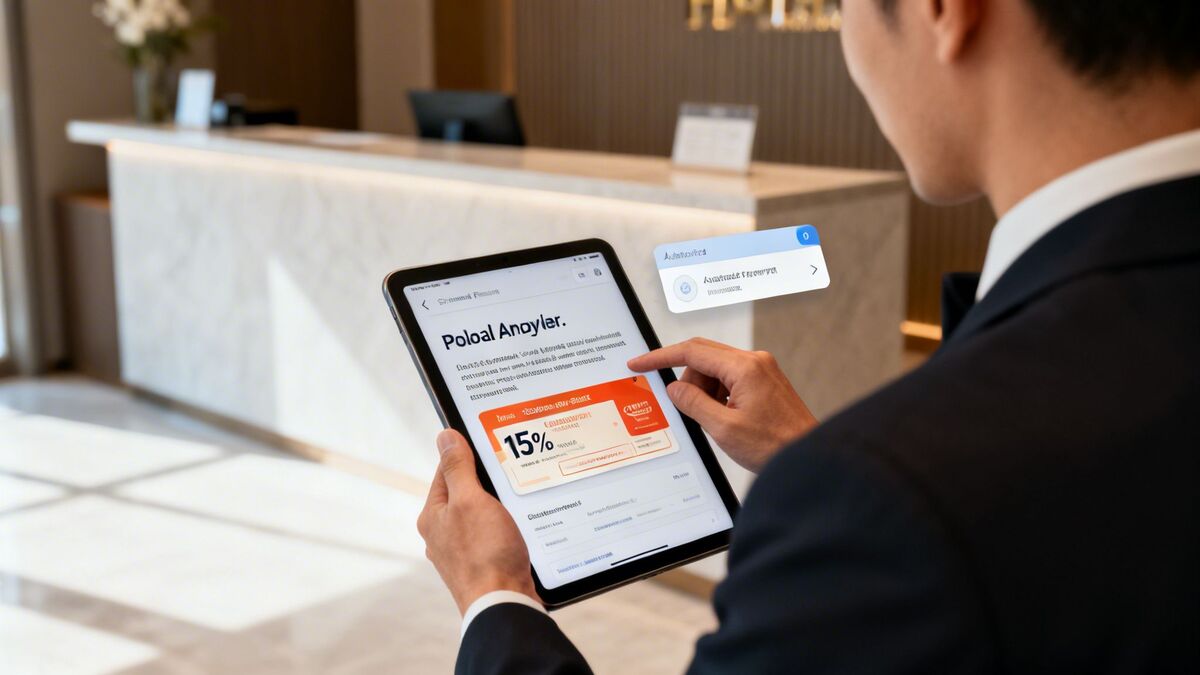
This is precisely why we built the Resolutions Engine. Think of it as your automated service recovery specialist. It’s a system designed to instantly detect negative feedback, figure out the root cause, and trigger a predefined workflow to make things right. It empowers your team to solve problems at scale without burning out.
Here’s how it works in practice:
A negative review pops up: The Resolutions Engine immediately flags a review with a low star rating or negative words, whether it’s from an internal survey or a public site like Google.
A workflow kicks in: Based on rules you create, the system launches a series of actions. For instance, it might assign the issue to the on-duty manager for a follow-up call.
The guest gets an instant response: At the same time, an automated, personalized email can be sent out, acknowledging the issue and offering a sincere apology.
That speed is a total game-changer. Research shows that a staggering 70% of customers whose complaints are handled well will do business with that company again.
A Real-World Recovery Scenario
Imagine a guest at your hotel leaves a review mentioning their room was too cold. The old way? Hope a staff member sees it, remembers to log it, and eventually tells maintenance.
With an automated system, the moment that review is posted:
The Resolutions Engine flags the keywords "cold room" and the low rating.
It instantly pings the Head of Housekeeping's phone with an alert.
Simultaneously, it triggers a personalized email to the guest from the General Manager, apologizing for the inconvenience and offering a complimentary breakfast for the next day.
The goal of automated service recovery is to transform a moment of friction into a moment of trust. You’re showing the guest they’ve been heard and that you care enough to fix it—instantly.
This isn’t just about damage control; it's about building loyalty. The guest, who might have written you off, now feels seen and valued. They’re far more likely to give you another chance and might even update their review to reflect the excellent service.
To truly automate service recovery and close the loop on guest issues, it's vital to implement clear strategies for handling customer complaints effectively.
By automating these initial steps, you ensure no unhappy guest ever slips through the cracks. This frees up your team to handle the more complex, human parts of great service, all while the system guarantees a consistent, rapid first response every single time.
Turn Positive Feedback into Future Business
A complete guest satisfaction measurement system doesn't just put out fires—it turns your biggest wins into your most powerful marketing tool. Once you've worked hard to earn those glowing reviews, the final step is to put them to work attracting your next wave of customers. This is how you go from reacting faster to actually growing stronger.
Happy guests are your best salespeople. Their honest praise builds trust far more effectively than any paid ad ever could. The key is to amplify their voices and make sure potential customers see the incredible experiences others are having.
Showcase Your Success with a Feedback Wall
Instead of letting five-star reviews get buried on third-party sites, you need to bring them home. Putting them on your own website is where they can directly influence booking decisions. It’s all about taking control of your story and using social proof to your advantage.
We designed our Spotlight: Feedback Wall for exactly this reason. It’s a tool that automatically pulls your best reviews from all over the web and displays them in a beautiful, dynamic wall right on your site.
Automated Curation: The system intelligently finds and features your top-rated feedback, so you don't have to spend hours cherry-picking reviews.
Builds Instant Trust: When a new visitor lands on your site, seeing a live feed of positive, verified reviews immediately builds credibility and confidence.
Drives Direct Bookings: By showing off real guest satisfaction front and center, you reduce hesitation and encourage visitors to book directly with you.
This simple step closes the loop on your entire feedback strategy. You've collected the data, analyzed it, and fixed the issues—now you're actively using the positive results to fuel your growth.
Your best feedback shouldn't just be a report card you look at internally. It should be a billboard that convinces new customers to choose you over the competition.
Of course, generating that steady stream of rave reviews starts with flawless execution on the ground. To ensure guests consistently leave the kind of 5-star reviews that drive future bookings, a meticulously executed Airbnb turnover cleaning checklist is an indispensable tool for short-term rental hosts.
It’s time to put this complete system to work for your business. Start your Free Trial to implement these powerful strategies, or if you're ready to show off your great feedback, launch your Spotlight: Feedback Wall today.
Common Questions About Guest Satisfaction Systems
When you're looking to upgrade how you measure guest satisfaction, a few questions always come up. Here are the answers I give service and hospitality owners most often.
How Long Does It Take to Set Up a New System?
This is the best part—it’s fast. With a modern platform like FeedbackRobot, you can plug in your channels and see your first insights in less than an hour.
Connecting to the systems you already use, like Mews or Toast, is a breeze. You can even use features like Prompt to Survey to get QR code feedback points up and running in minutes. The whole point is to get you from zero to sixty without a huge time investment.
Will This Create More Work for My Overwhelmed Team?
Absolutely not. It’s designed to do the exact opposite and take work off their plates.
Think about it: the system automates the tedious parts. Radar handles the feedback collection, AI Summaries does the analysis, and the Resolutions Engine automates service recovery. Your team can finally stop chasing down reviews manually and start focusing on the high-impact actions that actually make the guest experience better. It’s a huge time-saver.
What Is the Most Important Metric to Track?
Everyone wants to know the single "best" metric, but the truth is, there isn't one. The secret is using the right tool for the right job.
A truly effective strategy uses a mix of quantitative KPIs alongside the rich, qualitative insights from review text. You need both the 'what' and the 'why' to drive meaningful improvements.
Here’s a quick way to think about it:
Net Promoter Score (NPS): This is your big-picture metric. Track it to gauge overall brand loyalty and how likely people are to recommend you.
Customer Satisfaction Score (CSAT): Use this for specific, in-the-moment feedback. Think: rating the check-in process or a meal.
Customer Effort Score (CES): This measures friction. How easy was it for a guest to book online or get their issue resolved? That's CES.
When you combine these, you get a complete picture. You’ll collect smarter data, which helps you make the right decisions to grow stronger.
Ready to turn your guest feedback from a chore into a growth engine? With FeedbackRobot, you can centralize reviews, automate insights, and close the loop on every single guest experience.
What is the most accurate way to measure guest satisfaction?
The most accurate method is a combination of real-time transactional surveys (NPS/CSAT) and automated sentiment analysis of public reviews. This captures both the immediate reaction and the long-term perception of your brand.
How often should I review my guest satisfaction metrics?
Daily monitoring of alerts is critical for operational fixes, while a weekly deep dive into sentiment trends helps you identify broader service patterns and staff training needs.
Can I measure guest satisfaction without asking questions?
Yes. By analyzing behavior like repeat visit frequency and referral rates, you can infer satisfaction levels. However, direct feedback is required to understand the 'why' behind those behaviors.
Does guest satisfaction measurement directly impact RevPAR?
In hospitality, absolutely. High satisfaction scores lead to better online reviews, which allow for higher average daily rates (ADR) and improved occupancy, directly driving revenue per available room.
What is the best tool for measuring multi-location guest satisfaction?
A unified platform like FeedbackRobot allows you to compare satisfaction scores across all properties in one dashboard, identifying which locations are setting the standard and which need support.
Stop reading about it. Let your agent handle it.
25 free AI actions · no credit card required
Start Free

![How to Measure Customer Satisfaction Without Surveys [10 Methods]](/images/legacy/HZ9HoLgQGt0VJJpCMqdS6vtTcAE.webp)