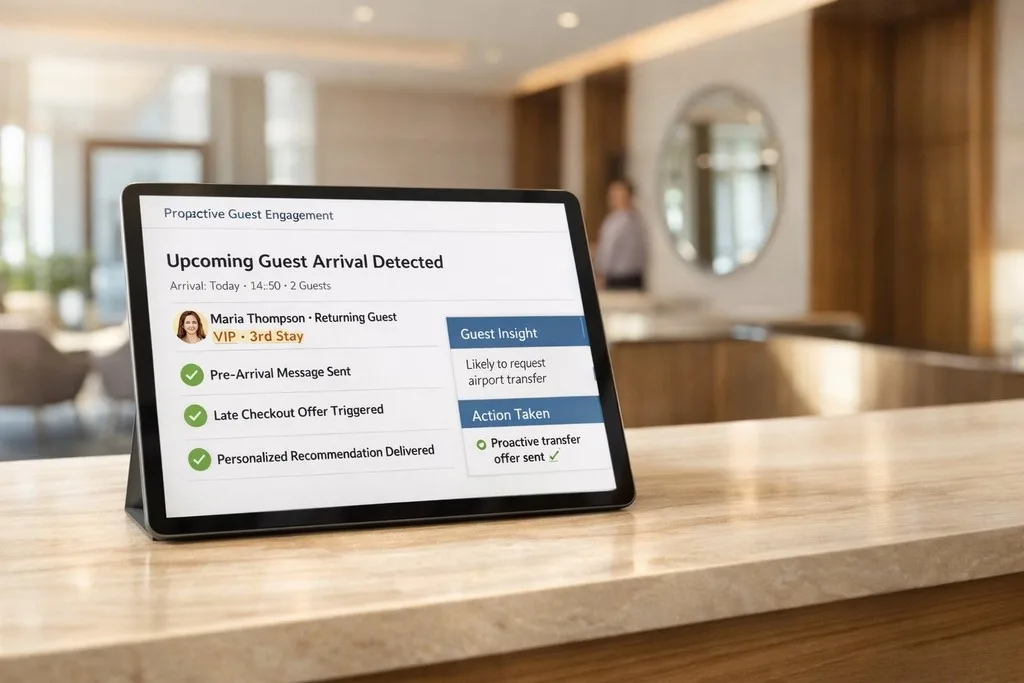
Survey Data Analysis for Hospitality: From Guest Feedback to Growth
Transform guest feedback into revenue with our guide to hotel survey data analysis. Learn to use AI to understand guest sentiment and drive growth.

Nov 7, 2025 · 14 min read
Free tool
Review QR Code Flyer Generator
Generate a print-ready QR code flyer that sends customers straight to your review page.
Survey data analysis is the process of turning raw, unfiltered guest feedback into clear, actionable insights that drive your business forward. For busy hospitality and service owners, this means moving past gut feelings and using what your customers are telling you to improve service, inspire loyalty, and ultimately, grow stronger.
Stop Guessing and Start Knowing What Guests Want
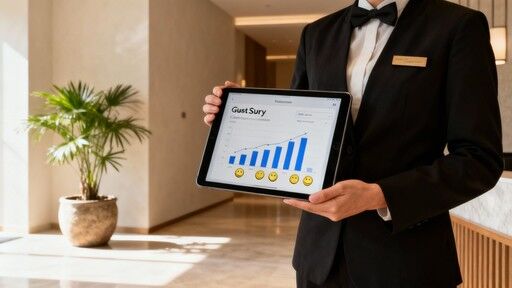
As a hospitality owner, you’re making critical calls all day long. Should you overhaul the breakfast menu? Is it time to retrain the front-desk staff? Do the rooms need a tech upgrade? Making these decisions based on assumptions is a high-stakes gamble. Survey data analysis gives you a roadmap built directly from the guest experience itself.
This isn't about becoming a statistician overnight. It's about having a system to decode guest feedback to find the hidden trends, preferences, and pain points that truly matter. Think of it as the difference between knowing a guest was unhappy and knowing exactly why they were unhappy—and what you can do to make sure it never happens again.
From Raw Data to Actionable Insights
Imagine raw feedback as a pile of fresh ingredients. On its own, it’s just a collection of individual items. Survey data analysis is the recipe that transforms those ingredients into a finished dish—a clear, effective strategy for improvement. This guide will walk you through the essential steps to make that transformation happen.
You'll learn how to:
Spot Critical Trends: Uncover the recurring themes in guest comments, whether it's consistent praise for your speedy check-in process or quiet complaints about the slow Wi-Fi.
Prioritize What Matters: Figure out which issues have the biggest impact on guest satisfaction, so you can focus your limited time and resources where they’ll count the most.
Make Data-Backed Decisions: Ditch the guesswork and start making confident choices that directly address what your guests need and expect.
This process transforms every piece of feedback—good, bad, or neutral—into a strategic opportunity. You’ll be equipped not only to fix problems as they arise but to anticipate needs, delight guests, and build a rock-solid reputation that keeps people coming back.
The table below gives a quick snapshot of how this works in practice, connecting specific feedback to tangible business actions.
From Guest Feedback to Strategic Action
Feedback Type | Insight Gained | Business Action |
|---|---|---|
Negative Comment | "Check-in took too long." | High traffic between 3-5 PM is overwhelming staff. |
Positive Comment | "The concierge, Maria, was amazing!" | Personalized recommendations are a key driver of satisfaction. |
Neutral Suggestion | "Wish there were more vegan options at breakfast." | A growing segment of guests has specific dietary needs. |
By systematically analyzing feedback, you create a direct line between what a guest says and what your business does next.
The goal of survey data analysis is simple: to help you collect smarter, act faster, and grow stronger. By truly listening to the voice of your customer at scale, you build a resilient business that earns loyalty one great experience at a time.
Understanding Your Two Types of Guest Feedback
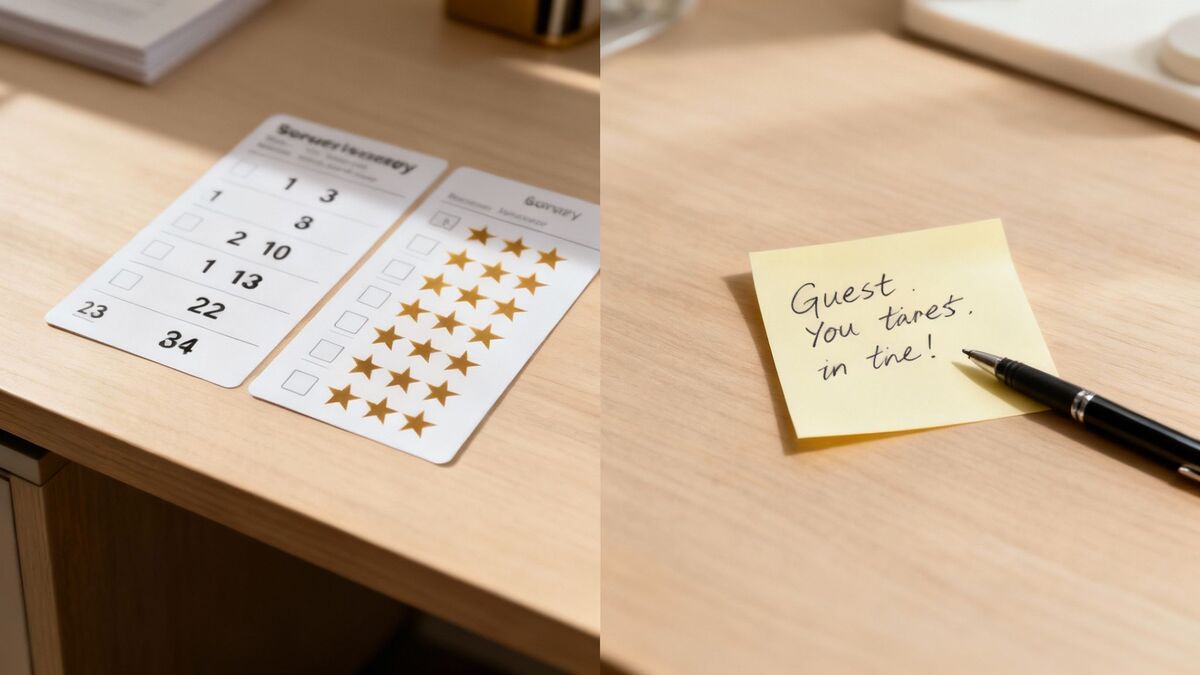
To really get the full story of your guest experience, you need to understand the two main flavors of feedback you'll be collecting. Not all data is created equal, and knowing the difference is the first step toward a smart analysis strategy.
Think of them like coordinates on a map. One tells you where you are, the other explains the terrain. You need both to find your way.
The first type is quantitative data. This is the "what"—the numbers, the scores, the measurable facts. It’s clean, simple, and tells you the score.
The second is qualitative data. This is the "why"—the open-ended comments and descriptive feedback that give the numbers meaning. It’s the story behind the score.
Quantitative Data: What Happened
Quantitative data gives you the hard numbers. This is the information that's easy to track over time, helping you spot high-level trends at a glance. For a hotel or restaurant owner, this is your performance dashboard.
Examples of quantitative feedback are things like:
Star Ratings: A guest gives your service a 4 out of 5.
Net Promoter Score (NPS): A single number showing how likely a guest is to recommend you.
Yes/No Questions: "Did your room meet your cleanliness expectations?" (Yes/No).
This data is perfect for benchmarking. If you see your average cleanliness rating dip from a 4.8 to a 4.2, you know something’s wrong. Quantitative data points you to where the problem is, but it rarely tells you what to fix. That's where its counterpart comes in.
Qualitative Data: Why It Happened
Qualitative data is the voice of your guest. It’s all the unstructured text you find in comment boxes, online reviews, and direct emails. While it's tougher to measure, this is where your most valuable, actionable insights are hiding.
Imagine a guest gives you a 3-star rating (quantitative). Without any context, you're just left guessing why. But when they add a comment—"The room was clean, but the Wi-Fi was too slow to stream anything"—you know exactly what went wrong.
This is the feedback that separates good businesses from great ones. It’s the specific detail that allows you to pinpoint operational issues, recognize standout employees, and understand the emotional drivers behind a guest's experience.
Of course, trying to manually read through hundreds of these comments is nearly impossible. This is where FeedbackRobot’s AI Summaries become a game-changer. Our platform performs instant insights & sentiment analysis, automatically processing thousands of comments to flag them as positive, negative, or neutral. Instead of getting lost in the weeds, you immediately see that "slow Wi-Fi" is a recurring negative theme. This lets you act faster on the things that truly matter to your guests.
Turning Guest Voices into Insights with AI
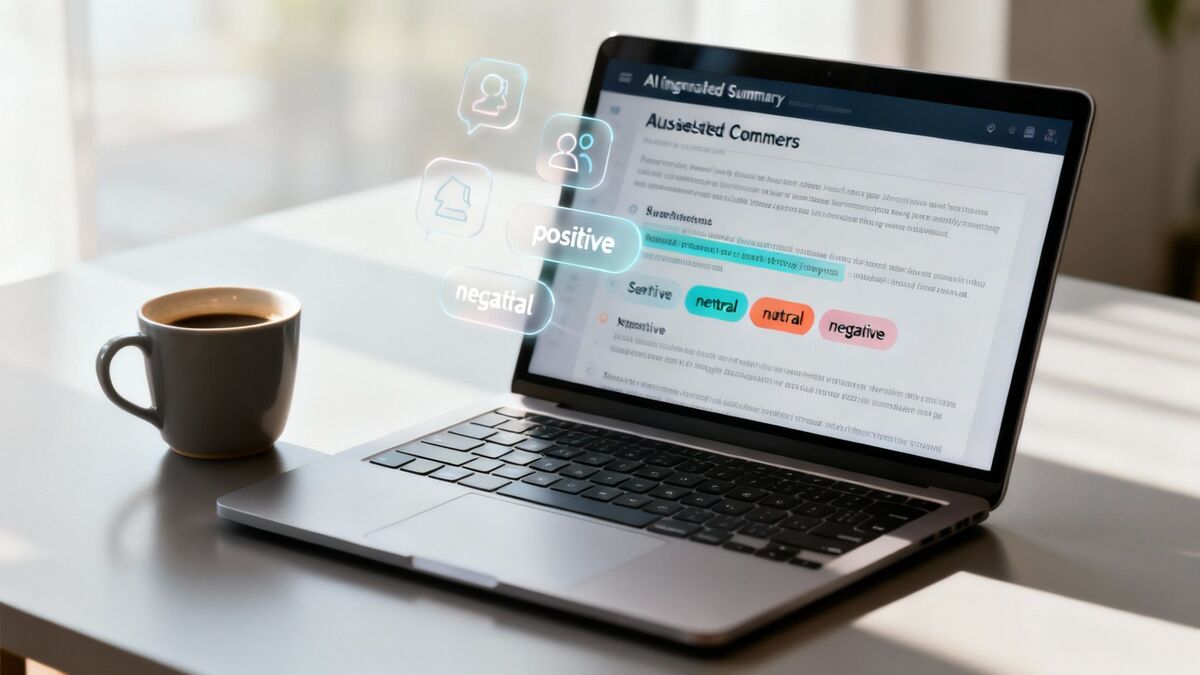
As your business grows, so does the mountain of qualitative data from guest surveys, online reviews, and direct messages. Manually sifting through every single comment isn't just slow—it's impossible. This is where AI stops being a buzzword and becomes your most powerful analyst.
The core technology here is sentiment analysis. Think of it as an AI assistant that instantly reads every piece of feedback to figure out if the emotion behind it is positive, negative, or neutral. It’s the difference between knowing you got a three-star review and understanding the guest was “disappointed” with the check-in but “delighted” with the room service.
From Words to Wisdom with AI Summaries
Instead of getting lost in a sea of individual comments, you need to see the big picture immediately. This is exactly what FeedbackRobot’s AI Summaries are built for. This powerful instant insights & sentiment analysis feature chews through thousands of comments in seconds.
It doesn’t just tag comments; it groups them by topic. You can instantly see the overall sentiment for critical areas like ‘room cleanliness,’ ‘staff friendliness,’ or ‘menu variety.’ This lets you stop reacting to isolated complaints and start proactively fixing the root causes of guest dissatisfaction.
By automating sentiment analysis, you shift from a reactive mindset to a strategic one. You can spot which parts of your service are consistently earning praise and which are creating friction—all without reading a single line of raw feedback yourself.
This ability to quickly grasp guest sentiment is a massive operational advantage. The growing global investment in analytics tools highlights this shift; spending on statistical and broader analytics software recently hit US $10.35 billion, an 11% annual increase. Businesses are relying on data to guide strategy, and AI is leading the charge.
Automated Actions Based on Guest Sentiment
Identifying sentiment is the first step; acting on it is what drives growth. With tools like FeedbackRobot Automations, you can trigger specific actions based on the sentiment of a review. This closes the feedback loop instantly and turns every review into an opportunity. To dive deeper, you can read our guide on using AI sentiment analysis for customer feedback.
Here’s how it works in practice:
Positive Sentiment: A guest leaves a glowing 5-star survey response. The system automatically sends them a follow-up email asking them to share their experience on Google or TripAdvisor, boosting your public reputation.
Negative Sentiment: A review with strong negative sentiment comes in. An alert is instantly sent to the on-duty manager, and our Resolutions Engine, your automated service recovery tool, creates a case to ensure the issue is addressed and the guest feels heard.
Neutral Sentiment: A guest provides mixed feedback. You can automatically tag their comment for a manual follow-up or send a personalized offer to encourage them to give you another try.
Automating Actions to Boost Your Reputation
Uncovering insights from your survey data is a great first step, but insights only become valuable when you act on them. The real magic happens when you turn your analysis into immediate, automated action. It’s all about building intelligent workflows that respond to guest feedback in real-time, closing the loop before a guest even checks out.
Imagine a system working for you around the clock. A guest finishes a survey and leaves a glowing 5-star review. Instantly, an email is triggered, thanking them for their kind words and gently inviting them to share that experience on Google or TripAdvisor. This is how you systematically build a powerful online reputation, one happy customer at a time.
Now, picture the opposite. A different guest submits feedback with clearly negative sentiment. Instead of that comment sitting in an inbox until Monday morning, an alert is sent directly to the on-duty manager. At the same time, our Resolutions Engine logs an automated service recovery case, making sure the issue is tracked and resolved right away. This is how you turn a potentially bad experience into a chance to show just how much you care.
Closing the Feedback Loop with Automation
This proactive approach is at the heart of any modern feedback strategy. You’re no longer just collecting data; you’re building an operational engine that drives continuous improvement. The goal is to make every single piece of feedback—positive or negative—trigger a specific, productive outcome.
Of course, this whole process starts with getting enough feedback in the first place. The quality of your analysis depends on getting a meaningful number of responses. While typical response rates for external digital surveys hover between 20% and 30%, this can vary quite a bit.
By automating responses, you prove to customers that their feedback actually matters, which in turn encourages more people to participate. You’re not just asking for their time; you’re showing them you're listening by taking immediate action.
Building Smart Workflows with FeedbackRobot
This level of responsiveness is exactly what FeedbackRobot Automations was built for. Our platform lets you create simple "if-then" rules that connect feedback directly to action. You can design custom workflows based on scores, keywords, or sentiment—no technical skills required.
Here are just a few examples of what you can set up in minutes:
Amplify Positive Voices: If a survey response includes words like "fantastic" or "excellent," automatically ask the guest to leave a public review.
Accelerate Service Recovery: If a rating is below 3 stars, instantly create a task in the Resolutions Engine for the right department manager to follow up.
Gather Deeper Insights: If a guest mentions "breakfast" but gives a neutral score, you could trigger a follow-up micro-survey asking for specific suggestions on the menu.
These automated systems bring consistency and speed, freeing up your team to focus on delivering exceptional service instead of manually sifting through feedback. It’s the key to acting faster, building loyalty, and turning guest feedback into your most powerful asset for growth. You can explore all the possibilities by learning more about our powerful FeedbackRobot Automations.
Creating a Single Source of Truth for Feedback
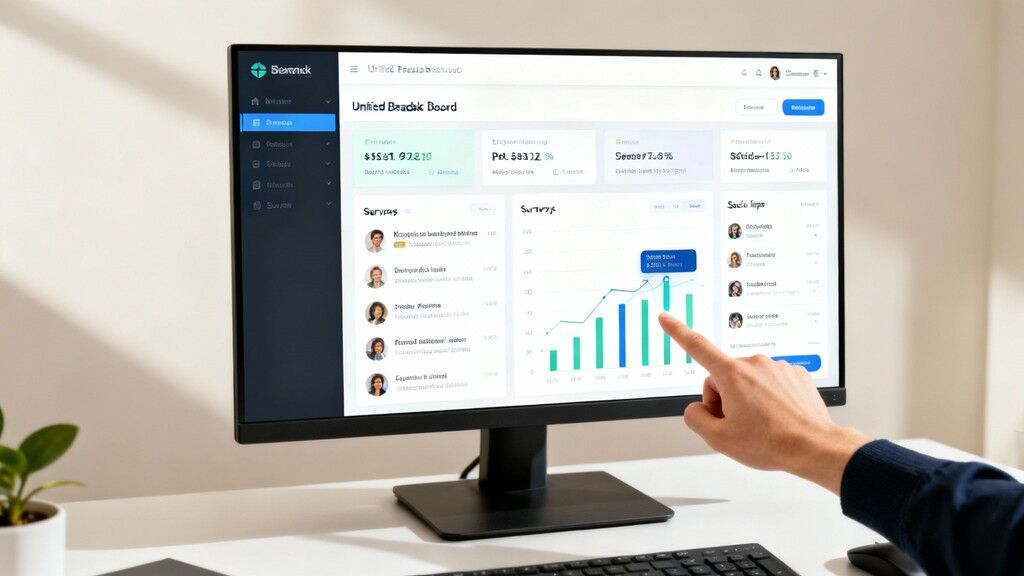
Real survey analysis means seeing the whole picture. But customer feedback rarely shows up in one neat little package. It’s scattered everywhere—a Google review here, a direct survey there, a comment on social media, and an in-app rating.
Trying to make sense of this information in separate silos is a recipe for disaster. It’s not just inefficient; it gives you a fractured, incomplete view of the customer journey.
You might be celebrating glowing survey results while completely missing a growing wave of negative TripAdvisor comments about the exact same issue. This fragmented approach makes it impossible to spot the real trends, understand the complete experience, and act with confidence. To truly collect smarter, you need a single source of truth.
Unifying Your Feedback with Radar
This is where a unified intelligence platform becomes non-negotiable. Imagine a central command center where every single piece of feedback, no matter where it came from, flows into one powerful dashboard.
That's exactly what FeedbackRobot’s Radar was built for. It’s a unified review intelligence system that pulls all your feedback channels into one cohesive view.
Instead of jumping between ten different tabs, you see everything at a glance. Radar consolidates data from online review sites, social media, and your own internal surveys, giving you a genuine 360-degree view of customer sentiment. This lets you compare feedback across channels, spot inconsistencies, and understand how your reputation looks everywhere your customers are talking.
By breaking down data silos, you move from just reacting to isolated comments to strategically managing your overall reputation. You can finally connect the dots between a low survey score for "staff friendliness" and a series of online reviews mentioning long wait times at check-in.
Smart Collection and Seamless Integration
A single source of truth isn't just about pulling data together; it's about smart collection, too. You have to proactively ask for detailed feedback at the moments that matter most.
This is where a tool like Prompt to Survey shines. It is designed to invite customers to give more detailed feedback right after a brief interaction, turning a simple touchpoint into a rich source of data.
True unification also means integrating with the systems you already use every day. FeedbackRobot connects seamlessly with hospitality platforms like Mews or POS systems like Toast. This integration automates feedback requests based on guest actions, like checking out or paying a bill, ensuring you’re consistently gathering fresh insights without any manual effort.
By bringing all your data together with Radar and using smart tools like Prompt to Survey, you build a comprehensive feedback ecosystem. You get a complete, unfiltered understanding of the customer journey, making your survey data analysis more accurate, powerful, and actionable.
For more ideas, check out our list of the top customer feedback analysis tools available today.
Building Your Hospitality Feedback Operating System
We've walked through the different pieces of a powerful survey analysis, but real growth happens when you connect them into a single, cohesive strategy. This isn't just about having the right tools; it’s about building a Feedback Operating System that places the guest's voice at the very heart of your daily operations. This is how you shift from simply reacting to feedback to proactively shaping every guest experience.
This system is built on three core pillars that work together, helping you collect smarter, act faster, and grow stronger.
Your Integrated Feedback Workflow
First, think of FeedbackRobot's Radar as your central nervous system. It pulls in every single piece of feedback—from your surveys, Google reviews, and social media mentions—into one unified review intelligence dashboard. No more chasing down scattered data. You get one clear, complete picture of how guests feel.
Next, our AI Summaries deliver instant insights & sentiment analysis. Instead of your team spending hours sifting through comments, you get a top-level view of what guests love and what needs fixing in just a few seconds. This lets you spot key trends immediately and point your team in the right direction.
Finally, Automations and the Resolutions Engine are what drive decisive action. When negative feedback comes in, a service recovery case is automatically created. When a guest is thrilled, they’re automatically prompted to share that positivity online. This creates a powerful, self-sustaining loop of reputation management and operational improvement. This holistic approach is crucial, much like how global organizations use survey data to understand complex systems. For example, the World Bank relies on survey data to discover insights on global financial inclusion and drive its strategy.
This integrated system turns feedback from a passive report card into an active, real-time guide for your business. It’s a new way of operating where every guest's voice directly fuels smarter decisions and faster growth.
Ready to see this system in action? Don't just analyze your data—operationalize it. Start your free 14-day trial of FeedbackRobot today and build an operating system that turns guest feedback into your most valuable asset.
Or, see how you can showcase your best feedback with our new Spotlight: Feedback Wall to build powerful social proof and attract more guests.
Your Questions, Answered
Got questions about analyzing guest feedback in the hospitality world? We've got answers. Here are some of the most common things hotel and service owners ask.
What’s the Real Goal of Survey Data Analysis?
At its core, the goal is to turn all that raw guest feedback into a clear roadmap for making your business better. It’s about getting past guesswork and using what your customers are actually telling you to make smarter decisions.
Ultimately, this helps you improve service, build loyalty that keeps guests coming back, and, of course, increase revenue. You collect smarter feedback so you can act faster on what truly matters to your guests.
How Can AI Actually Help with Qualitative Data?
Let's be honest, nobody has time to manually read through hundreds of open-ended comments. It's just not possible at scale. This is where AI steps in. It automates the heavy lifting by performing sentiment analysis, instantly telling you if feedback is positive, negative, or neutral.
For example, FeedbackRobot’s AI Summaries give you instant insights & sentiment analysis without the manual work. The system groups comments by topic, so you can immediately see the big picture—like a recurring complaint about slow Wi-Fi—without getting buried in individual reviews.
How Do I Bring All My Feedback Together from Different Channels?
Guest feedback is all over the place—in your surveys, on Google, scattered across social media. Trying to track it all separately is a recipe for missing the full story. A unified platform is the only way to manage it effectively.
This is exactly what FeedbackRobot’s Radar was built for. It provides unified review intelligence by pulling all that scattered feedback into one single, easy-to-use dashboard. This gives you a complete 360-degree view of guest sentiment, letting you spot trends no matter where they pop up.
How Can I Automatically Take Action on the Feedback I Get?
Collecting insights is great, but they're useless if you don't act on them. The trick is to connect analysis directly to action. FeedbackRobot Automations let you build simple workflows that trigger based on guest sentiment.
For instance, if a guest leaves glowing feedback, you can automatically send a follow-up asking for an online review. If the feedback is negative, our Resolutions Engine can instantly create an automated service recovery ticket for your team. This ensures you close the feedback loop right away, turning a potential problem into a chance to impress. That's how you move from just analyzing data to achieving operational excellence.
Ready to stop guessing and start knowing what your guests really want? FeedbackRobot helps you build a complete system to collect smarter, act faster, and grow stronger.
How do I turn raw survey data into actionable growth?
Stop looking at the 'Average' and start looking at the 'Trends.' An average score of 4.2 doesn't help you; knowing that your 'Friday Night' score dropped from 4.8 to 3.5 tells you exactly where the fire is.
What is 'Topic Clustering' in survey analysis?
It’s an AI feature that groups similar comments together. It tells you that '25 people mentioned the lighting was too dark,' allowing you to fix a specific physical issue rather than guessing.
Why is 'Sentiment Scoring' better than just star ratings?
Star ratings are binary. Sentiment analysis reads the *words* to understand the intensity of the emotion. A 3-star review with 'loving' words is a very different insight than a 3-star review with 'angry' words.
Can I analyze survey data for specific staff members?
Yes. By including a question like 'Who served you today?' or linking to your POS ID, you can run an analysis that shows which staff members are your 'Brand Ambassadors' and which need more training.
What is the 'Time-to-Resolution' metric?
It measures how long it takes from a guest submitting a negative survey to a manager closing the loop. Decreasing this time is one of the fastest ways to improve overall guest satisfaction.
Stop reading about it. Let your agent handle it.
25 free AI actions · no credit card required
Start Free