How to Increase Customer Retention: An Actionable Guide for Hospitality Owners
Discover how to increase customer retention in Hospitality with practical strategies, examples, and quick wins to drive loyalty.

Nov 11, 2025 · 16 min read
Free tool
AI Negative Review Responder
Turn 1-star reviews into recovery opportunities with AI-crafted responses.
In hospitality, turning guest feedback into your most powerful growth engine isn't just a nice-to-have; it's the secret to winning. It's about building a system to collect smarter insights, act faster to fix problems and personalize stays, and ultimately grow stronger with a loyal customer base. This isn't about guesswork; it's a reliable process for turning first-time visitors into regulars who sing your praises.
Your Blueprint for Lasting Guest Loyalty
As a busy owner, you know that keeping a guest is far cheaper and more profitable than finding a new one. But building a system that actually fosters that loyalty can feel like another mountain to climb when you're already stretched thin.
Let’s talk numbers for a second. The data is clear: even a small 5% bump in customer retention can explode your profits by anywhere from 25% to 95%. Those stats aren't just trivia; they highlight retention as one of the most powerful, cost-effective growth strategies you have.
This guide cuts through the generic advice to give you a practical playbook. We’ll focus on a simple but powerful framework: collect smarter, act faster, and grow stronger. It’s all about creating a repeatable process that makes every single guest feel heard, valued, and eager to come back.
Defining Your Retention Goals
Before you can improve anything, you have to know what you're measuring. Fuzzy goals like "offer better service" are impossible to track and even harder to achieve.
Instead, let's get specific with concrete metrics that tie directly to the health of your business. This is your starting line.
Here are the goals that really move the needle:
Boost Repeat Visit Rate: Get more guests to return within a set timeframe, like 30, 60, or 90 days.
Increase Customer Lifetime Value (LTV): Raise the total amount a guest spends with you over their entire relationship with your brand.
Improve Net Promoter Score (NPS): Nudge your neutral "Passive" guests into becoming enthusiastic "Promoters" who actively recommend you to others.
These aren't just numbers on a report. They're direct signals of how happy your guests are and how stable your business is. Understanding them is the first real step toward improving them. For a deeper look, check out our guide on how to improve customer satisfaction.
Key Metrics That Matter
To hit those goals, you need to track the right data. Forget about drowning in complex dashboards. For a hospitality business, a few key metrics will give you the most actionable information.
Here's a quick look at the metrics that matter most.
Key Metrics for Hospitality Retention
Metric | What It Measures | Why It Matters for Your Business |
|---|---|---|
Customer Churn Rate | The percentage of customers who don't return over a specific period. | This is your primary red flag for guest dissatisfaction. A high churn rate tells you there are urgent problems in the guest experience that need fixing now. |
Repeat Purchase Rate | The percentage of your customer base that has made more than one visit. | This directly measures loyalty. A rising rate means your efforts are paying off and guests are choosing you over the competition. |
Net Promoter Score (NPS) | Guest willingness to recommend your business on a scale of 0-10. | NPS is a powerful predictor of future growth. "Promoters" are your free marketing team, while "Detractors" can actively harm your online reputation. |
By zeroing in on this core set of metrics, you can cut through the noise and get a brutally honest look at how you're doing. This data-driven foundation is what allows you to make smarter decisions, act with confidence, and build a business that guests can't wait to come back to.
Unify Guest Feedback to Stop Guessing
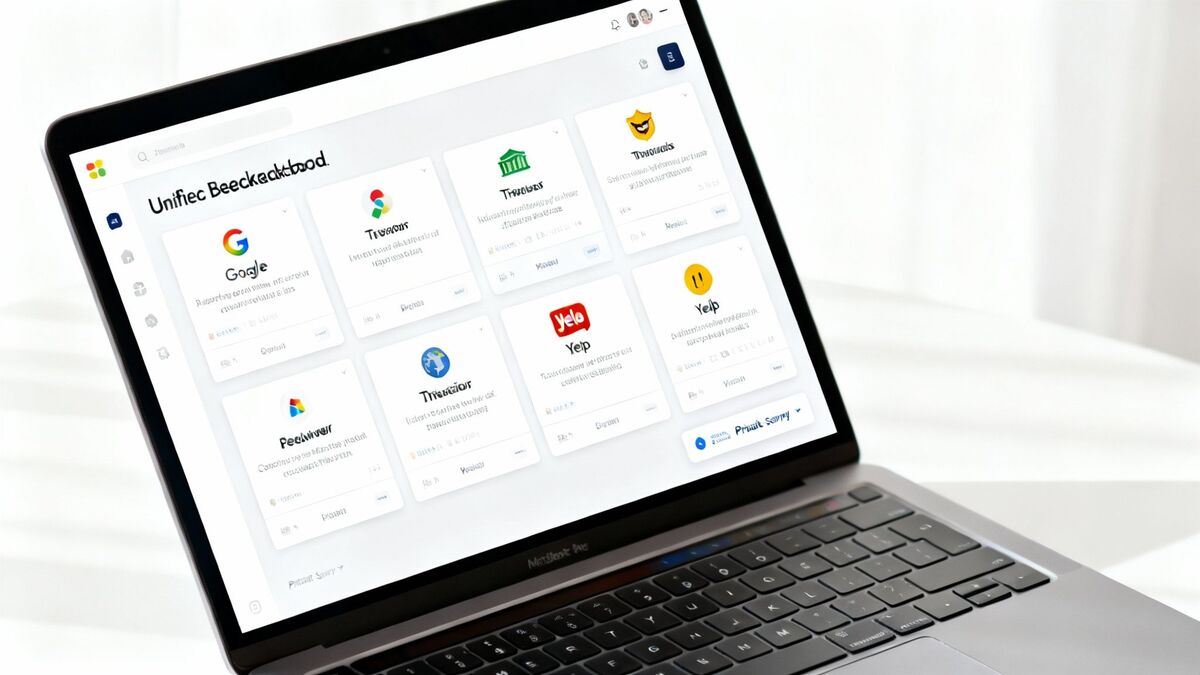
Your guests are constantly telling you how to earn their loyalty. The problem? Those clues are scattered everywhere—a glowing Google review here, a frustrated comment on TripAdvisor there, and a quiet word to your front desk staff.
Trying to piece it all together manually is like trying to hear a whisper in a hurricane. You end up just guessing what guests really want.
It's time to stop guessing and start listening systematically. The only way to meaningfully boost customer retention is to build a unified feedback loop. This means creating one central hub where every piece of guest feedback—public and private—comes together. This turns a chaotic stream of opinions into a clear, actionable source of intelligence. Only then can you shift from reactive problem-solving to proactively shaping the guest experience.
Bring All Your Reviews Under One Roof
First things first: you need to consolidate all your public reviews. Juggling multiple tabs for Google, Yelp, TripAdvisor, and other platforms is a massive time sink, and it makes it nearly impossible to spot the big-picture trends. You need a single source of truth.
This is exactly what a Feedback Operating System is built for. The central hub is Radar, our unified review intelligence feature. We designed Radar to be your command center, pulling every public review from every major platform into one clean, intuitive dashboard.
The real power here isn't just convenience; it's clarity. When you see a complaint about slow service pop up on Google, Yelp, and your internal surveys all in the same week, you know you have a systemic issue, not just a one-off bad day.
By centralizing this data, you immediately start to collect smarter insights. You can track your overall rating trends, compare performance across different locations, and see how you stack up against the competition—all without ever leaving the platform.
Capture In-the-Moment Feedback Proactively
Public reviews are vital, but they often represent the most extreme experiences—either the ecstatic or the deeply disappointed. To get the full picture, you have to hear from the silent majority. This means getting proactive. Instead of waiting for guests to find you online, invite them to share their thoughts privately, right after their experience.
This is where our Prompt to Survey feature comes in. This functionality intelligently triggers a survey invitation moments after a guest completes their visit. For example, by integrating with your Mews PMS or Toast POS, a survey can be automatically sent via SMS or email right after check-out or payment.
This simple action delivers two huge benefits for customer retention:
It Gathers Richer, More Honest Insights: Guests are far more likely to provide detailed, constructive feedback in a private survey than in a public review. This gives you the specific details you need to make meaningful improvements.
It Acts as a Service Recovery Funnel: It gives a slightly unhappy guest a direct channel to voice their concerns to you, not the world. This lets you resolve their issue before it becomes a negative one-star review, turning a potential detractor into a loyal advocate.
By combining a unified view of public reviews with a proactive private feedback channel, you build a comprehensive listening engine. This foundation is crucial for any business serious about understanding and improving the guest experience. For more detailed strategies, explore our guide on how to collect customer feedback effectively.
Act Faster with AI Insights and Automated Recovery
Collecting feedback is a great start, but its value disappears the longer it sits unread. In hospitality, speed is everything. A delayed response doesn't just feel like poor service; it feels like you don't care. This is the moment a manageable issue spirals into a lost customer and a damaging public review.
The real advantage in customer retention comes from your ability to act on feedback with speed and precision. Thankfully, you no longer need to manually sift through hundreds of comments or craft individual responses to every complaint. Modern tools do the heavy lifting, helping you move from insight to action in minutes, not days.
Decode Guest Feedback Instantly with AI
Imagine waking up to dozens of new reviews and survey responses. Manually reading each one to find the common threads could take your entire morning—time you simply don't have. This is where artificial intelligence becomes your most valuable assistant.
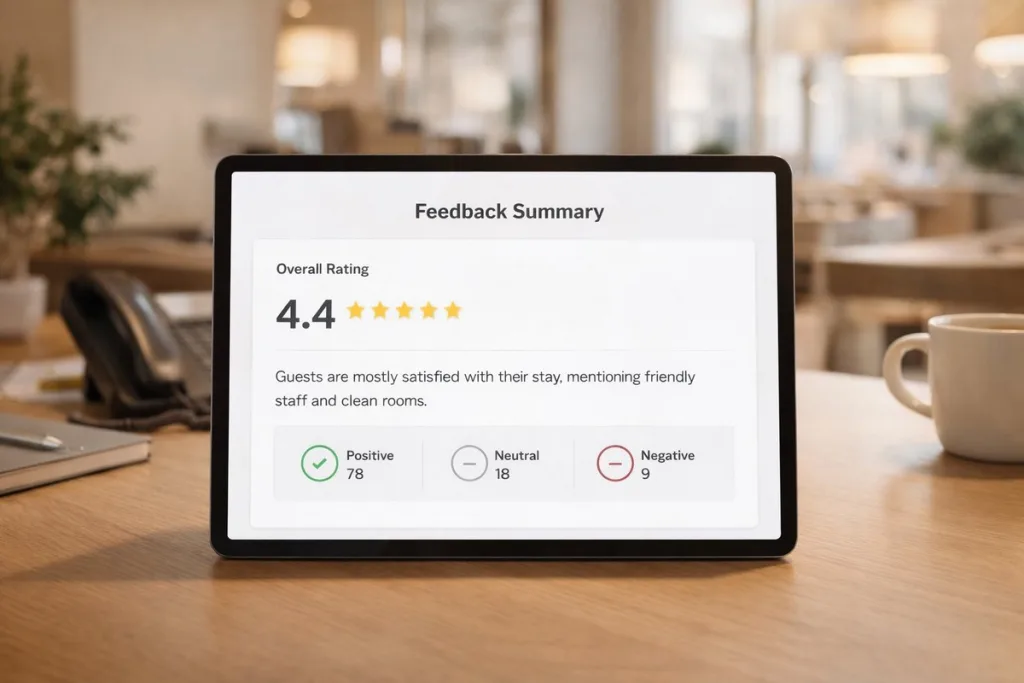
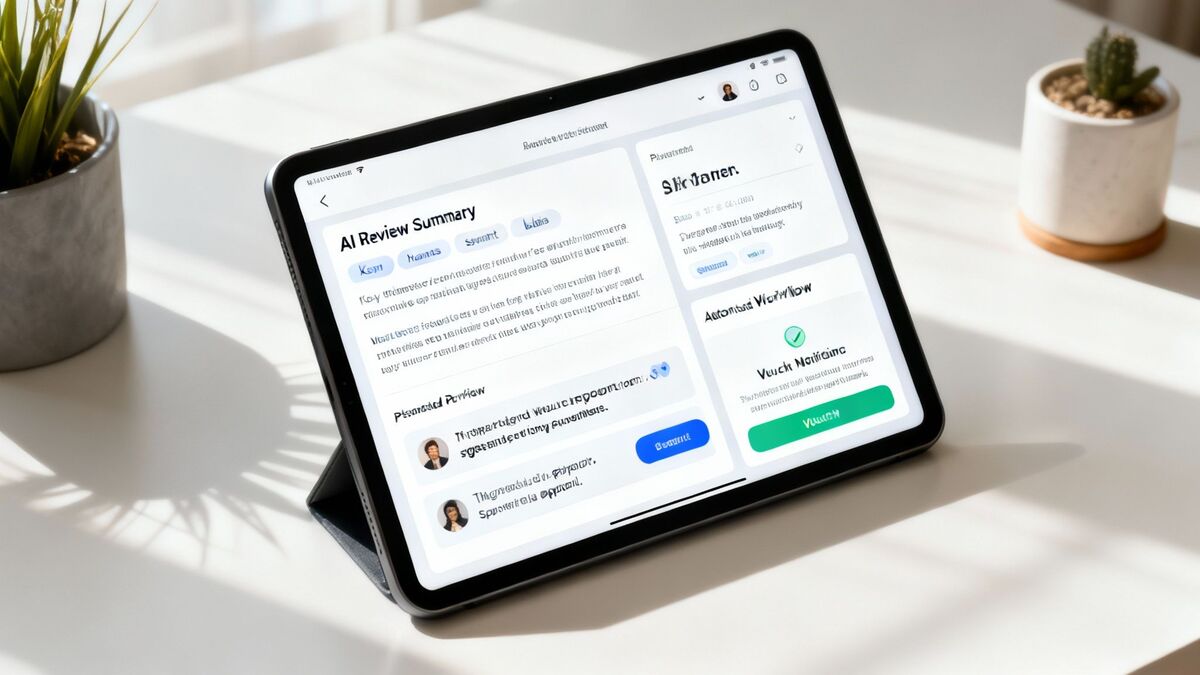
Our AI Summaries feature is built for this exact scenario. It acts as your personal data analyst, providing instant insights and sentiment analysis by scanning all your incoming feedback from every source and distilling it into clear, actionable intelligence.
Here’s how it works its magic:
Identifies Key Themes: It automatically detects recurring topics, showing you that guests are consistently mentioning "slow drink service," "amazing dessert," or "uncomfortable beds."
Analyzes Guest Sentiment: The AI goes beyond keywords to understand emotion, flagging feedback as positive, negative, or neutral. This helps you immediately prioritize the most urgent issues.
Pinpoints Specifics: It highlights the exact phrases and comments driving the sentiment, so you know precisely what needs attention.
Instead of spending hours reading, you get the critical takeaways in seconds. This lets you act faster on what truly matters, whether it's coaching your team on service speed or celebrating a menu item that guests are raving about.
Automate Service Recovery to Build Loyalty
How you respond to negative feedback is one of the most critical moments in the customer journey. A fast, empathetic response can turn a furious guest into a lifelong advocate. But when your team is stretched thin, it's easy for these opportunities to slip through the cracks.
This is where automation becomes your safety net. Meet the Resolutions Engine, a tool that provides automated service recovery, transforming your feedback system from a passive listening post into an active problem-solver.
Think about this real-world scenario: A guest leaves a 2-star review on Google, mentioning their steak was cold. The old way involved hoping a manager saw it, finding the guest's contact info, and manually sending an apology. By then, the damage is done.
With the Resolutions Engine, a workflow is triggered automatically the moment that review posts.
Within minutes, the system can:
Send a personalized, empathetic email acknowledging their specific complaint.
Include a digital voucher for a complimentary entrée on their next visit.
Create a task for the general manager to follow up with a personal call the next day.
This immediate, proactive response shows the guest they've been heard and that you're committed to making things right. A poor experience can send customers running; research shows that 70% of customers will abandon a brand after just two bad experiences. By automating your initial recovery step, you ensure no complaint goes unanswered, drastically improving your chances of winning that guest back.
The difference between manual and automated recovery is night and day. And if you want to dive deeper into crafting the perfect response, check out our guide on how to respond to customer complaints.
Manual vs. Automated Service Recovery
The gap between the old, manual way of handling guest issues and a modern, automated approach is massive. One lets problems fester, while the other builds loyalty in real-time.
Action | Manual Process (The Old Way) | Automated with Resolutions Engine |
|---|---|---|
Issue Detection | A manager manually checks review sites daily (or weekly). | System instantly flags negative keywords and low ratings in real-time. |
Response Time | Hours or days, depending on who sees it and when. | Minutes, with an immediate, automated first-touch response. |
Personalization | Generic, copy-pasted apology templates are often used. | Dynamic fields pull in the guest's name and specific issue for a tailored message. |
Resolution Offer | Requires manual approval and creation of a voucher or discount. | Automatically issues a pre-approved offer based on the severity of the complaint. |
Consistency | Varies greatly depending on the manager on duty and their training. | Every guest receives a consistent, on-brand, and timely resolution, every time. |
Ultimately, automation isn't just about efficiency—it's about ensuring every unhappy customer gets the attention they deserve, turning a potential loss into a long-term win.
Personalize the Guest Experience to Build Loyalty
Once you have a solid system for listening to feedback and recovering from service hiccups, the next frontier for boosting retention is deep personalization. Guests don't just come back for a great meal or a comfy bed; they return because they feel seen, remembered, and valued.
Generic, one-size-fits-all service is completely forgettable. Real loyalty is built in those small moments where you show a guest you know them, turning a simple transaction into a memorable human connection. This is how you transform happy customers into passionate advocates for your brand.
Segment Guests for Smarter Communication
The first step toward true personalization is admitting that not all guests are the same. Trying to please everyone with the same message is a recipe for mediocrity. Instead, you need to segment your guests into meaningful groups based on their behavior and feedback history.
This simple act lets you stop shouting into the void and start having relevant conversations. For instance, you could create dynamic segments like:
High-Value Regulars: Guests who visit often and have a high Customer Lifetime Value (LTV).
First-Time Families: New guests visiting with kids, who have totally different needs and priorities.
Recent Detractors: Guests who just left negative feedback and need a delicate, recovery-focused touch.
Weekend Promoters: Loyal guests who mostly visit on weekends and have given you a high Net Promoter Score (NPS).
With these segments, you can tailor your offers with laser precision. Imagine sending an exclusive invite for a new tasting menu only to your 'High-Value Regulars,' or a 'kids eat free' promo to your 'First-Time Families.' That level of relevance is what makes guests feel truly understood.
Unlock Powerful Insights with Integrations
Real personalization runs on data. To get the richest insights, your feedback system needs to talk to the other platforms you rely on every day, like your Point of Sale (POS) or Property Management System (PMS).
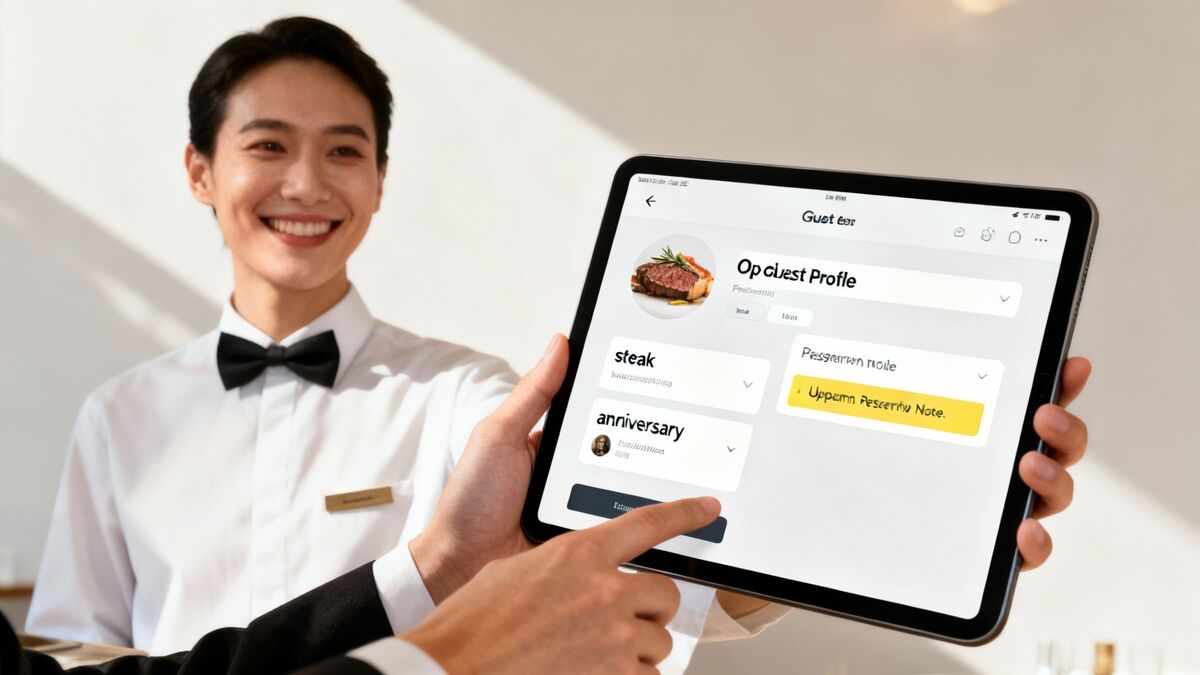
Connecting your Feedback Operating System to a POS like Toast or a PMS such as Mews is a total game-changer. This integration links every piece of feedback directly to a specific transaction, stay, or guest profile. Suddenly, abstract comments gain powerful context.
This isn't just about collecting data for data's sake. It's about empowering your team to create those "wow" moments. When you connect the dots, you can anticipate needs and delight guests in ways your competitors simply can't.
Think about the possibilities this opens up:
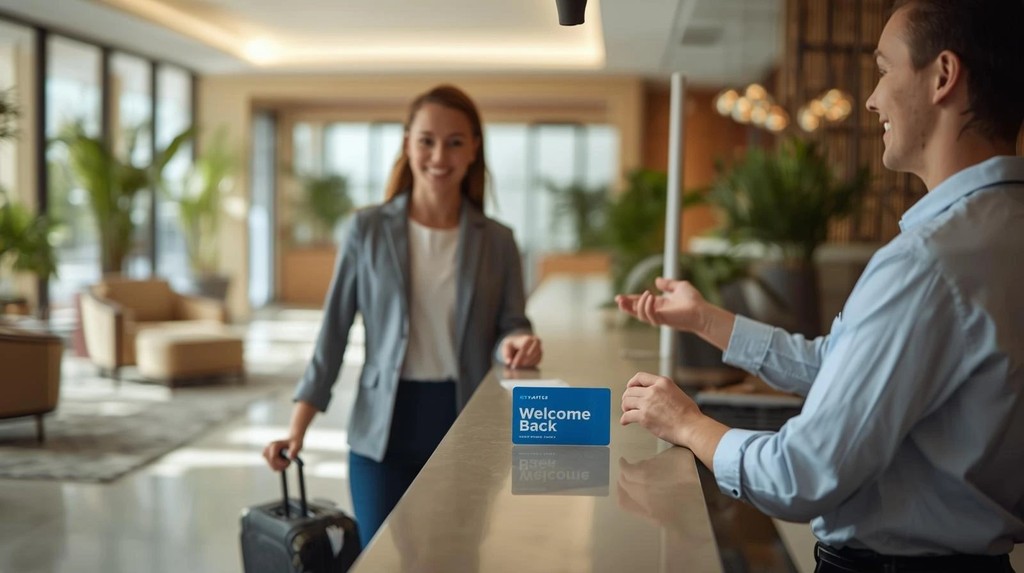
A guest praised your ribeye special in a survey last month and has a reservation for next Friday. Your system can flag this, allowing your host to say, "Welcome back! I know you enjoyed the ribeye last time—it's on the menu again tonight."
A hotel guest’s survey mentions the room was a bit chilly. On their next stay, you can proactively set their room temperature a few degrees warmer and leave a note acknowledging their preference.
This is how you shift from reactive service to proactive hospitality. It’s how you collect smarter data from integrated systems, act faster with personalized gestures, and grow stronger by building an army of loyal fans. These small, thoughtful touches are the building blocks of exceptional customer retention, proving you’re not just listening—you’re remembering.
Measure Your Impact and Showcase Success
You've built a powerful system to listen, act, and personalize. But how do you prove it’s actually working? The final piece of the puzzle is measuring your results and turning that success into a magnet for new customers.
This is where you connect your retention strategy directly to the bottom line.
Tracking your impact isn't just about vanity metrics; it's about demonstrating a clear return on investment (ROI). When you can show how better feedback management leads to a higher repeat customer rate or a stronger Net Promoter Score (NPS), you validate the entire strategy. It’s proof that listening isn’t just a cost—it’s a powerful driver of growth.
Connect Feedback Initiatives to Business Metrics
To really see what’s working, you need to watch how your key business metrics change as you roll out your new feedback strategy. Look for direct links between what you're doing and what happens next.
For instance, after launching automated service recovery with the Resolutions Engine, are you seeing a dip in your customer churn rate? As your NPS improves, are you also noticing a rise in average guest spend? These are the connections that matter.
The financial incentive is huge. Customers who have had positive past experiences tend to spend 140% more than those who have had negative ones. This stat alone shows that creating happy, loyal guests directly translates to a healthier business. Find more insights on customer retention and spending habits.
Turn Positive Feedback into a Marketing Asset
Think about it: your happiest customers are your most credible marketers. Their authentic praise is far more persuasive than any ad you could run. The only challenge is making sure potential customers actually see this powerful social proof.
This is where you complete the growth flywheel—collect, act, grow, and now, attract. You can leverage your best feedback to build trust and draw in new business without spending a dollar on ads.
The Spotlight: Feedback Wall is a feature built specifically for this. It automatically curates your best reviews and survey testimonials and showcases them in a beautiful, dynamic wall right on your website.
Here’s a look at how the Spotlight: Feedback Wall can turn guest praise into compelling social proof on your site.
This visual display instantly builds credibility. It shows potential guests that you're a business that truly values customer experience.
Instead of manually cherry-picking testimonials, the Spotlight: Feedback Wall does the heavy lifting. You can set rules to automatically feature feedback that hits certain criteria, like 5-star ratings or comments containing specific positive keywords like "amazing service" or "delicious food."
This automated system ensures your website always displays fresh, relevant, and compelling proof. It transforms your hard-won positive feedback from a private metric into a public asset that actively works to attract your next loyal customer.
This is how you grow stronger—by turning satisfied guests into a powerful marketing engine.
Your Top Questions About Guest Retention, Answered
As someone running a busy hospitality business, you're always looking for straightforward ways to keep guests coming back. We get asked a lot about the nuts and bolts of increasing guest retention, so here are some clear, practical answers to the most common questions.
How Long Does It Take to Actually See an Increase in Guest Retention?
Seeing a real, measurable lift in your overall retention rate is a marathon, not a sprint. While you can certainly save a guest from leaving a negative review in a matter of minutes with a quick, automated response, a sustained increase in repeat visits usually takes about three to six months of consistent effort.
The good news? You'll spot signs of progress much sooner. Things like a healthier Net Promoter Score (NPS) or a noticeable uptick in positive online reviews often start showing up within the first 60 days. The key is consistency. A dedicated focus on the guest experience compounds over time, leading to that long-term rise in repeat business and a much healthier Customer Lifetime Value (LTV).
What's the Single Most Important Factor for Retention in Hospitality?
Hands down, it's service recovery.
No matter how buttoned-up your operation is, mistakes are just part of the deal in a human-centric business like hospitality. A server will have an off day. An order will get mixed up. It happens.
What truly defines your brand—and builds incredible loyalty—isn't avoiding mistakes altogether. It's how you respond to them. A guest who runs into a problem that gets resolved quickly, generously, and with genuine empathy often becomes even more loyal than a guest who never had an issue at all.
This is why having a system for immediate recovery is non-negotiable. It transforms a moment of friction into a powerful opportunity to prove you care. A guest who feels heard and valued after an issue is a guest who will trust you and come back.
The Resolutions Engine is so critical here because it automates that crucial first step. By instantly acknowledging an issue and kicking off a resolution, it ensures every single complaint becomes a chance to build loyalty, not lose a customer for good.
How Can My Busy Team Implement This Without Adding More Work?
That’s a totally fair question. The whole point of a modern feedback system is to reduce manual work, not create more of it. It’s designed to bring efficiency so your team can get back to focusing on what they do best: delivering amazing, person-to-person service.
Think of it like adding an incredibly efficient assistant to your crew. Here’s how it lightens the load:
Radar gets rid of the soul-crushing task of manually checking ten different review sites by pulling all your feedback into one clean, unified dashboard.
AI Summaries save your managers hours of reading by instantly analyzing feedback and flagging the most critical themes and sentiments.
The Resolutions Engine takes care of the initial service recovery automatically, making sure no negative comment slips through the cracks when your team is slammed.
By automating the tedious data collection and the initial response, you're taking tasks off your team's plate. This frees them up to act faster on the insights and pour their energy into what truly matters—creating those memorable guest experiences.
Ready to turn your guest feedback into your most powerful retention tool? FeedbackRobot helps you collect smarter, act faster, and grow stronger. Generate your Boutique Hotel Guest Experience Survey.
Stop reading about it. Let your agent handle it.
25 free AI actions · no credit card required
Start Free