How to Handle Customer Complaints: Turn Negative Feedback Into Loyal Customers
Learn how to handle customer complaints and turn negative feedback into loyal customers.

Feb 4, 2026 · 18 min read
Free tool
AI Survey Generator
Describe what you want to learn and get a ready-to-send survey in seconds.
Handling customer complaints effectively isn't just about putting out fires. For busy hospitality and service owners, it’s about having a system to listen, acknowledge, solve, and actually learn from every single piece of feedback. This transforms a negative experience into a genuine opportunity to collect smarter, act faster, and grow stronger.
Your Blueprint for Turning Complaints Into Opportunities

Let's reframe this. A customer complaint isn't a threat—it's a goldmine of insights you can't afford to ignore. For a hotel manager, restaurant owner, or retail operator, a single mishandled issue can quickly spiral into lost revenue and a tarnished reputation.
The hard truth is that 91% of unhappy customers won't even bother to complain directly to you. They just leave. And they probably won't come back.
The few who do speak up are handing you a priceless gift: a chance to fix a problem and win them back for good. This guide gives you a modern, repeatable process to turn this challenge into a real competitive advantage. It’s all about creating a reliable system, not just winging it and hoping for the best.
The Modern Complaint Handling Framework
A solid strategy for handling customer complaints really boils down to four core pillars. Nailing these is non-negotiable for any service business that wants to thrive.
Listen Actively: This means capturing feedback from everywhere—from a quiet word at the front desk to a scathing Google review. You need to hear the full story, not just the highlights.
While addressing individual complaints is crucial, a holistic approach to customer service can proactively minimize negative interactions. Implementing modern customer service best practices ensures consistent positive experiences, fostering loyalty and driving business growth. Discover actionable strategies to elevate your service standards and build lasting customer relationships by exploring these essential customer service best practices.
Acknowledge and Empathize: Before you jump to a solution, validate their feelings. A simple, "I can absolutely understand why you're frustrated," can completely change the tone of the conversation.
Resolve Efficiently: Empower your team to solve problems quickly. Fast, effective action shows you respect the customer's time and value their business.
Learn and Improve: Treat every complaint like a data point. When you start spotting trends, you can fix the root cause of an issue instead of just patching up the symptoms over and over again.
This framework isn't just about making one customer happy. It’s about building a system that turns every piece of feedback into fuel for growth. When you collect smarter data and act faster on issues, you build a stronger, more resilient business.
This process is fundamental, not only for fixing immediate problems but also for figuring out how to increase customer loyalty in the long run. If you're looking for more strategies and discussions on resolving issues effectively, the Disputely blog for dispute resolution insights is a great resource. By adopting this proactive mindset, you stop constantly putting out fires and start building an operation that customers genuinely trust and recommend.
A Practical Framework for Resolving Customer Issues
When a customer complains, your team is on the clock. This isn't just damage control; it's a critical moment where you can either lose a customer forever or turn them into a vocal advocate. A proven, tactical playbook for your front-line team is essential to ensure every interaction builds trust, even when things go wrong.
The entire process begins long before a solution is offered. It starts with genuinely hearing what the customer has to say, whether it's during a tense phone call or by deciphering the frustration in a one-star review. In fact, research shows that customers often value being heard even more than getting an immediate fix.
To do this right, you need to capture the full story from the very beginning. This is where you can collect smarter data right at the point of service. A powerful starting point is FeedbackRobot's Prompt to Survey, a feature designed for this exact moment. Instead of hoping a customer writes a lengthy email later, your staff can send a quick, structured survey via SMS or QR code. This gives them an immediate, easy outlet to provide detailed feedback while the experience is still fresh.
Acknowledge and Validate Without Admitting Fault
Once you understand the issue, the next step is to acknowledge the customer's feelings. This one move de-escalates tension and shows the customer you see them as a person, not just a problem. It’s all about validating their experience without prematurely admitting fault or making promises you can't keep.
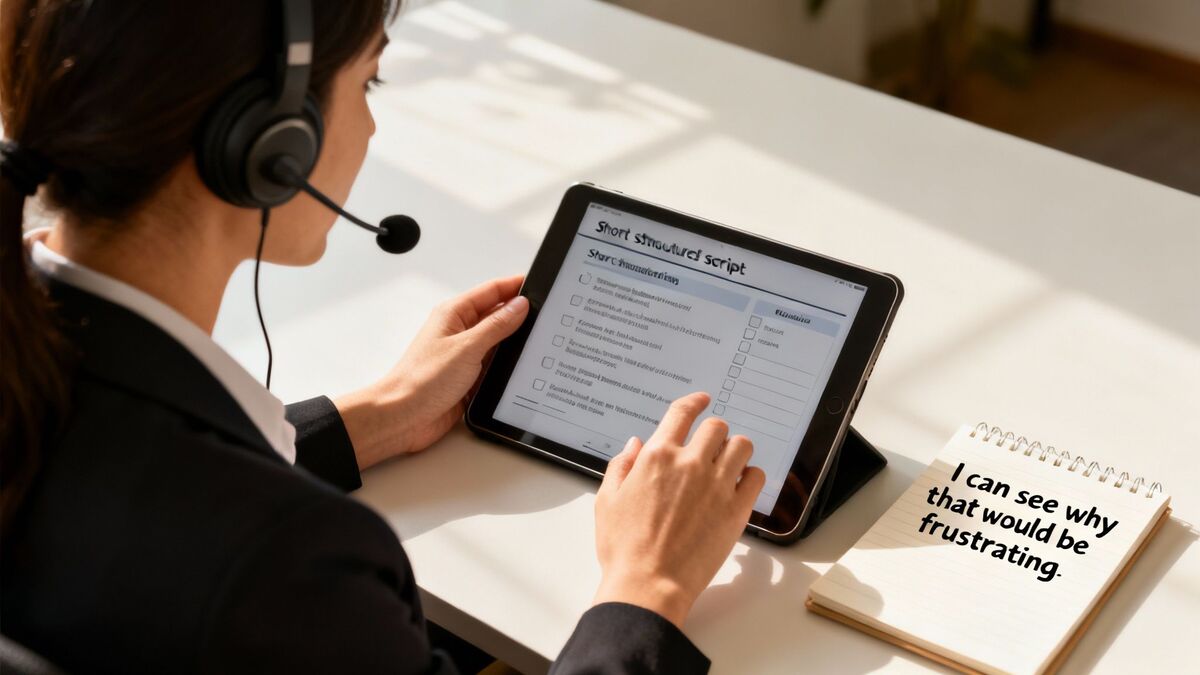
Your team needs simple, go-to phrases that convey understanding.
"Thank you for bringing this to our attention. I can see why that would be so frustrating."
"I understand completely. That is not the experience we want for our guests."
"It sounds like we really missed the mark here, and I'm sorry you had to deal with that."
These statements don't accept blame, but they absolutely validate the customer's emotional response. Training your team on these subtle but powerful scripts is a key part of effective complaint management.
Build Connection Through Empathy
With the initial tension eased, you can move toward building a real connection. This is where you shift from just acknowledging the problem to showing you're on their side. Empathy isn't just about saying "I'm sorry"; it's about proving you genuinely care about the outcome.
A study found that 78% of customers will do business with a company again after a mistake if the customer service is excellent. Your empathetic response is the bridge that makes this possible.
Imagine a guest at your hotel complains about a noisy room. An empathetic response goes beyond a simple room change. It sounds more like this: "I can only imagine how disruptive that must have been when you were trying to rest. Let's get this sorted for you right away. I'm going to find you one of our quietest rooms and personally make sure it's perfect for you."
This response shows you're taking ownership of the solution, not just the problem. Exploring more customer service best practices can arm your team with even more strategies for these critical conversations.
Empower Your Team to Resolve the Issue
The final step is to act faster by empowering your team to deliver a solution. A customer who has to wait for a manager's approval feels devalued, and the frustration just builds with every passing minute. Your team needs the authority to resolve common issues on the spot.
This doesn't mean giving them a blank check. It means creating clear guidelines for what they can offer.
A Sincere Apology: Sometimes, a heartfelt apology is all that's needed.
A Specific Solution: If a restaurant order was wrong, remake it correctly and have the manager deliver it personally.
A Meaningful Gesture: Offer a discount on a future service, a complimentary dessert, or a room upgrade.
This simple framework—listen, acknowledge, empathize, and resolve—turns a negative situation into a positive touchpoint. By equipping your team with the right tools and training, you ensure every complaint is handled with the speed and empathy needed to not just save a customer, but to grow stronger by earning their loyalty.
Unifying Your Feedback Channels to Act Faster
Complaints don’t arrive neatly in one inbox. They're scattered across Google Reviews, angry social media comments, front-desk conversations, and direct emails. This fragmentation is where opportunities get lost, problems fester, and your team is left playing catch-up.
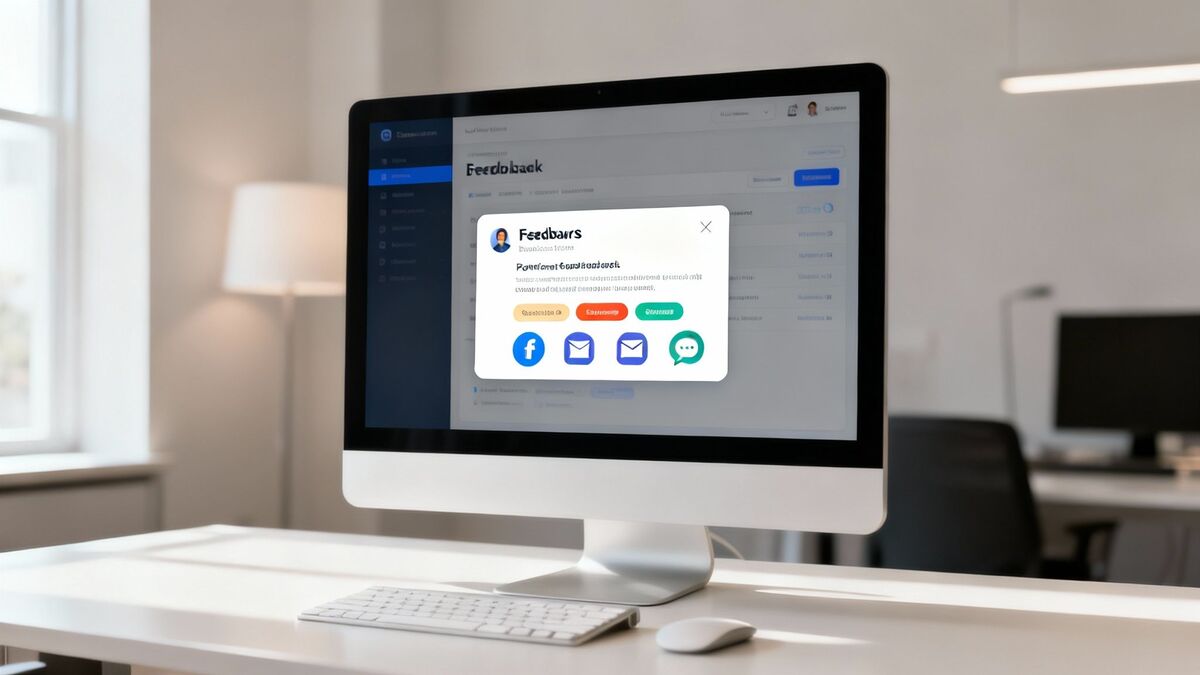
Think about a busy hotel manager on a Friday night, dealing with a guest furious about a noisy room. That frustration is more common than you’d imagine. A huge 36.7% of people have felt frustrated when speaking to a company's customer service team. One-third of them absolutely hate explaining their issues to multiple reps—a scenario that’s almost guaranteed when your feedback is siloed.
When a customer has to repeat their story to three different people, you've already failed them. The secret to handling customer complaints effectively is to create a single source of truth.
Bring Everything Under One Roof
Your first move is to stop juggling tabs and inboxes. You need a system that brings every single piece of feedback—from a public review to a private message—into one centralized dashboard. This isn't just about convenience; it's about context.
When your team can see a customer's entire feedback history in one place, they can respond with real intelligence and empathy. This is the whole idea behind FeedbackRobot's Radar, our unified review intelligence system.
Radar acts like an air traffic control tower for your reputation. It constantly scans the web and your internal channels, pulling in feedback from all sources:
Online Review Sites: Google, Yelp, Tripadvisor, and dozens more.
Social Media: Mentions and direct messages from the platforms where your customers are actually talking.
Direct Channels: Emails, survey responses, and even notes from in-person conversations.
This unified view ensures no complaint ever falls through the cracks. It empowers your team to see the full story before they even start to type a response.
Get Instant Answers with AI
Once you've centralized your feedback, the next challenge is making sense of it all. As a busy owner, you don’t have time to read hundreds of reviews every week just to spot trends. You need insights, not just more data. This is where artificial intelligence becomes your most valuable employee.
By unifying your feedback channels, you move from a reactive, fire-fighting mode to a proactive, problem-solving mindset. You stop asking "What happened?" and start understanding "Why is this happening?"
We built our AI Summaries feature for this exact purpose. It gives you instant insights and sentiment analysis across all your channels. The AI reads every piece of feedback, understands the context and emotion, and then summarizes the key themes for you in real-time.
For instance, a restaurant owner using FeedbackRobot can see at a glance that "cold food" was a recurring complaint last Saturday night. Instead of waiting for a weekly report or discovering the trend a month later, they can immediately investigate what happened in the kitchen and fix it before the next service. That's the power of moving from raw data to actionable intelligence.
Before we move on, let's look at the difference a unified system makes. Moving from scattered spreadsheets and inboxes to a central hub like FeedbackRobot is a night-and-day operational shift.
Complaint Handling Before vs After a Unified System
Metric | Traditional Approach (Siloed) | Unified Approach (with FeedbackRobot) |
|---|---|---|
Response Time | 24-48 hours, or missed entirely. | <1 hour with real-time alerts. |
Team Effort | Manual copy-pasting, multiple logins. | Automated collection, single dashboard. |
Context | Zero history; each interaction is new. | Full customer history at a glance. |
Trend Spotting | Relies on manual reports, often weeks late. | AI-driven insights, identified in real-time. |
Accountability | Unclear ownership, "Who saw this?" | Clear assignments and escalation paths. |
The table makes it clear: a unified system isn't a luxury. It's the foundation for a modern, responsive customer experience.
Connect the Tools Your Team and Customers Already Use
True unification means plugging into the tools you rely on every day. When you consider integrating communication channels like WhatsApp for direct customer chats, those conversations should flow right into your central system. This creates a seamless loop for both your customers and your team.
For hospitality businesses, this is a game-changer. Imagine connecting FeedbackRobot with your property management system, like Mews, or your POS system, like Toast. A negative review mentioning a specific room number or order could automatically be linked to the guest's profile or transaction details.
This gives your team immediate, actionable context to resolve the issue with precision and speed, showing the customer that you're truly listening. This is how you collect smarter to act faster and ultimately grow stronger.
Automating Service Recovery and Resolution
Once you have all your feedback in one place, the real work begins: acting on it. And when it comes to service recovery, speed is everything. Every minute you wait to respond to a complaint, the customer's frustration grows.
If you need word-for-word scripts to send right now, our library of complaint response examples covers 10 copy-paste replies for the most common scenarios — wrong orders, billing errors, rude staff, and more.
Trying to manually reply to every single piece of negative feedback is a recipe for burnout. It’s slow, inconsistent, and simply impossible to keep up with as your business scales. The game-changer is shifting from manual, reactive firefighting to smart, automated resolutions that solve problems before they blow up.
This is where you learn to act faster and smarter. Instead of hoping a manager stumbles upon a negative review hours later, you can have smart rules and triggers that take immediate, precise action. It turns complaint handling from a defensive chore into a proactive system for winning back unhappy customers.
For many owners, "automation" sounds complicated or expensive. It's not. Think of it as creating simple, logical "if this, then that" recipes that run in the background 24/7. It’s like having a digital assistant who’s always on watch and knows exactly what to do when a specific problem pops up.
Creating Your Automated Resolution Playbook
Every business has its common, recurring issues—the same handful of complaints that pop up week after week. By identifying these patterns, you can build a playbook of automated actions that are both deeply personal and incredibly effective. Automation doesn't have to feel robotic; it’s about delivering the right solution, to the right person, at the right time. Every time.
Here are a few real-world examples of how this plays out:
For a Hotel: A guest leaves a 1-star review mentioning a "dirty room." An automation can instantly ping the head of housekeeping's phone with a high-priority alert and create a task for the front desk manager to call the guest personally.
For a Restaurant: A customer’s feedback includes the phrase "long wait times." The system can automatically email them a sincere apology along with a 15% discount code for their next visit.
For a Healthcare Clinic: A patient survey mentions "poor communication" from the billing office. This can automatically trigger a task for a patient care coordinator to schedule a follow-up call within the hour.
These aren't generic, one-size-fits-all replies. They are targeted, relevant actions that prove you’re listening and taking their specific feedback seriously. The engine behind this capability is FeedbackRobot's Resolutions Engine, a powerful brain built specifically for automated service recovery.
Think about a restaurant owner endlessly scrolling through reviews, their heart sinking at a one-star rant about cold food that’s already going viral. What's worse is that 56% of customers won't even complain after a bad experience—they just vanish. That's silent revenue suicide, especially when U.S. firms lose $75 billion every year to poor service. Learn more about these powerful customer support statistics and trends.
How the Resolutions Engine Works for You
The Resolutions Engine is designed to let you build custom rules based on the actual content of the feedback you receive. It uses a simple but powerful "IF/THEN" logic that you can tailor to your exact business needs. It’s your 24/7 watchdog, ensuring no complaint ever falls through the cracks.
You can set up rules based on a mix of different factors:
Sentiment: Is the feedback positive, negative, or neutral?
Keywords: Does it mention specific terms like "billing," "rude staff," or "broken AC"?
Rating: Is the review 1-star, 5-star, or somewhere in between?
Source: Did it come from Google, a survey, or a direct email?
By combining these triggers, you can build incredibly sophisticated workflows that handle issues with surgical precision. For instance, you could create a rule that looks like this:
IF a review is from Google AND the rating is 1 or 2 stars AND the AI Summary mentions 'billing issue', THEN automatically assign a task to the accounts team AND send the customer a pre-approved email template explaining how to get in touch directly.
This level of automation means the right person on your team gets notified instantly, already equipped with the context they need to resolve the problem. It kills the guesswork and the delays that so often turn a small hiccup into a major disaster. To see how to get started, you can explore our guide on feedback resolution automation.
By automating your service recovery, you free up your team to focus on the human side of the job—building relationships and solving complex problems—while the system handles the initial response and routing. This is how you handle customer complaints at scale and build a stronger, more resilient business.
From Resolution to Reputation Building

Fixing a customer's problem is good. But using that win to build social proof? That’s how you get stronger. The process doesn’t end once you’ve solved the issue; that’s just the halfway mark. The final step—and the most important one—is closing the feedback loop and turning a negative experience into a powerful marketing asset.
This is where you shift from playing defense to playing offense. You listened, you empathized, and you delivered a solution. Now it's time to take that hard-earned goodwill and use it to boost your public reputation. After all, a customer you’ve successfully won back is often far more loyal than one who never had an issue in the first place.
But this requires a delicate touch. You need a system to follow up, confirm the customer is genuinely happy, and then politely ask them to share that positive outcome with the world.
The Art of the Follow-Up and the Ask
Timing and tone are everything. Wait a day or two after you’ve confirmed the issue is resolved. This gives the customer time to actually appreciate the fix and lets the initial frustration fade away. Your follow-up needs to feel personal and focused on their satisfaction, not just your desire for a better review.
Start by simply checking in to make sure everything is still working for them. Once they confirm they're happy, you can gently make the request.
Here’s a quick script you can adapt:
"I’m so glad we were able to get that sorted out for you, and I really appreciate your patience. Your feedback was incredibly helpful for us. If you feel we’ve truly made things right, would you consider updating your original review? It would mean a lot to our team."
This works because it’s respectful and non-demanding. It frames the request around their feelings, giving them an opportunity to acknowledge the great resolution without feeling pressured.
Turn Great Resolutions into Your Best Marketing
What if you could automatically show off these hard-won victories? Manually collecting and posting testimonials is a huge time sink, which is why most busy owners never get around to it. This is where technology can step in and put your reputation-building on autopilot.
We built FeedbackRobot's Spotlight: Feedback Wall for this exact reason. Think of it as a tool that automatically finds your best reviews—especially those that started negative and ended positive—and curates them into a beautiful, dynamic display right on your website.
The Spotlight: Feedback Wall acts as a live stream of social proof. It connects directly to your review sources and uses smart filters to showcase your 4- and 5-star feedback. It turns every positive resolution into a marketing asset that builds trust with potential customers before they ever walk in the door or click "book now."
This isn’t just about showing off good reviews; it’s about telling a story of excellent service recovery. When a potential customer sees a review that says, "Had an issue, but the team fixed it immediately," it’s often more powerful than a generic 5-star comment.
The Bottom Line: Your Reputation Is Your Revenue
The stakes in the service industry are incredibly high. Think about a retail store clerk facing a returns dispute; if it's handled poorly, 73% of shoppers will jump to a competitor after just one bad experience.
But what happens when you nail it? Three in four consumers will actually spend more with companies that provide an amazing customer experience. And while 51% of people are quick to share bad service, a massive 72% trust online reviews far more than traditional ads. You can find more powerful insights about what drives customer decisions on blog.hubspot.com.
This just highlights the immense power of turning a public negative into a public positive. Every resolved complaint is a chance to prove your commitment to customer satisfaction where everyone can see it.
Your system for handling complaints shouldn't just be about damage control. It should be a growth engine. By collecting smarter feedback, acting faster with automated resolutions, and then amplifying your wins, you create a virtuous cycle that strengthens your brand, builds trust, and drives real revenue.
Ready to turn your feedback into your most powerful marketing tool? Start your Free Trial of FeedbackRobot today and be the first to get access to our brand-new Spotlight: Feedback Wall. Stop just managing complaints—start building a reputation that grows your business.
Common Questions on Handling Complaints
Rolling out a new process can feel like a huge lift, especially when you're already juggling a million things. Let's tackle the most common questions we hear from owners and managers about building a modern complaint handling system.
How Much Power Should I Give My Frontline Staff?
This is a big one. The short answer: more than you probably think. Empowerment is the key to resolving issues fast and leaving the customer feeling heard, not handed off.
A great rule of thumb is to let your team offer a solution one level above what the customer is asking for. If a guest complains their steak was overcooked and wants it taken off the bill, empower your server to do that and offer a free dessert. It turns a negative moment into a memorable recovery.
Worried about the cost? Set clear financial guardrails. For example, you might authorize your team to issue up to a $50 credit without needing a manager. You can build these exact rules into tools like FeedbackRobot’s Resolutions Engine, which provides a framework for automated service recovery. This gives your team the freedom to act fast while you maintain control and track every resolution.
What's the Best Way to Handle a Public Complaint?
When a bad review pops up on Google or Yelp, the golden rule is to take it offline.
Your public response should be quick, professional, and empathetic. Acknowledge their experience, apologize sincerely, and then immediately provide a direct line—like an email address or phone number—to sort out the details privately.
"We're so sorry to hear your experience didn't meet your expectations. That's not the standard we aim for. Please email our manager, Sarah, at [email protected] so we can learn more and make things right."
This approach shows potential customers you're responsive without getting into a public back-and-forth. After you’ve resolved the issue privately, you can gently ask if they'd consider updating their review. Our unified review intelligence feature, Radar, helps you keep an eye on all these platforms from one place, so you never miss a chance to turn a critic into a fan.
How Do I Get My Team on Board with a New System?
The key is to frame it as a tool that makes their jobs easier, not harder. Nobody wants more admin work.
Show them how the new system cuts down on repetitive tasks, gives them clear scripts for those really tough conversations, and empowers them to solve problems on the spot without hunting down a manager. It’s about giving them more autonomy, not more chores.
A great way to build buy-in is by sharing wins. Use AI Summaries to pull positive trends and success stories from customer feedback and share them with the whole team. When they see how their efforts are directly moving the needle, they'll feel more invested. Start with a small pilot group, celebrate their successes, and let the positive momentum build from there.
Ready to stop just reacting to complaints and start proactively building a stronger business? FeedbackRobot gives you the tools to collect smarter, act faster, and grow stronger.
What is the most important rule for handling a complaint?
Empathy first. Acknowledge the frustration before you try to fix the problem. When a customer feels 'Heard,' they are much more likely to be reasonable during the resolution phase.
How do I turn a complaint into a loyal customer?
The 'Service Recovery' approach. Resolve the issue generously and follow up a few days later to ensure they are still happy. This 'above and beyond' care creates an emotional bond that simple satisfaction doesn't.
Should I empower my staff to handle complaints on the spot?
Absolutely. Giving your front-line staff the authority to fix a problem (like comping a meal or providing a discount) is the fastest way to stop a complaint from escalating.
How do I 'Diagnose' the root cause of recurring complaints?
Use AI 'Theme Analysis.' If the same complaint about 'Wait Time' appears across multiple reviews, you have a process failure, not just a one-off issue. Fix the process to stop the complaints.
How do I 'Diagnose' the root cause of recurring complaints?
Use AI 'Theme Analysis.' If the same complaint about 'Wait Time' appears across multiple reviews, you have a process failure, not just a one-off issue. Fix the process to stop the complaints.
Stop reading about it. Let your agent handle it.
25 free AI actions · no credit card required
Start Free