How to Handle a Complaint from a Customer: An Actionable Guide
Learn how to handle a complaint from a customer using proven strategies. Turn negative feedback into loyalty with actionable steps for your service business.

Jan 29, 2026 · 13 min read
Free tool
AI Negative Review Responder
Turn 1-star reviews into recovery opportunities with AI-crafted responses.
For a busy hospitality or service owner, a customer complaint isn't a problem—it’s a gift. It's a direct signal telling you where your business is leaking revenue and an opportunity to turn a bad experience into one that builds loyalty. It all comes down to a simple formula: collect smarter, act faster, and grow stronger. Get this right, and you don’t just save one customer; you fortify your entire operation.
Why Ignoring Complaints Is Costing You Money
Every unanswered email, ignored social media comment, or poorly handled face-to-face issue is more than a missed opportunity—it’s a direct hit to your bank account. I get it. When you're busy running your business, it's easy to see complaints as just more noise.
But the first step to protecting your revenue is to start seeing them as critical intel. Each complaint is a flare, signaling exactly where your business needs attention.
This isn't just a feeling; the numbers are brutal. Poorly handled complaints cost U.S. companies a staggering $75 billion a year from customers walking away. Globally, that number blows up to $3.7 trillion in lost revenue. It's a devastating figure for any business that relies on repeat customers.
The Danger of Silent Churn
You know what’s more dangerous than an angry customer? A quiet one.
A shocking 56% of customers who have a bad experience won't even tell you. They just leave. This "silent churn" is a hidden killer for growth because you never get the chance to fix what went wrong. You just lose them and are left wondering why.
The real problem isn't the customer who complains; it's the dozens who experience the same issue but never say a word. The vocal customer is giving you a gift: a chance to fix a problem that's likely affecting many others.
Old-school feedback methods just don't cut it anymore. That dusty comment box or hoping a manager is free? They’re useless in a world where a one-star Google review is just a few taps away. You can't afford to miss these signals. You need a modern, systematic way to collect feedback smarter and act on it faster.
Shifting from Problem to Opportunity
The key to handling customer complaints well is a simple mindset shift: see them as opportunities, not problems to be buried. When you resolve an issue effectively, you can turn an unhappy customer into one of your most loyal advocates—someone who spends more and tells their friends about you.
By actively listening and responding to feedback, you don't just stop the bleeding. You build a stronger, more resilient brand. To get a head start, check out our guide on how to reduce customer churn.
Your Framework for Resolving Customer Complaints

When a customer is upset, the last thing your team needs is a rigid script. What they really need is a simple, repeatable framework that empowers them to act with confidence. It doesn't matter if the complaint comes in at your front desk, in a Google review, or through an Instagram DM—the core principles of great service recovery are always the same.
Think of this as your playbook for turning a negative moment into a genuine opportunity to build loyalty. It’s not about being perfect; it’s about being prepared to make things right when you’re not. The real goal is to move beyond just fixing a problem and, instead, fully repair the relationship with your customer.
First, Just Listen
Before you can dream of solving anything, you have to truly understand the issue from the customer’s point of view. This means active listening, not just waiting for your turn to talk. Let them get their full story out without interruption.
Imagine a guest at your hotel is frustrated because their room wasn’t ready at check-in. Instead of immediately jumping to excuses about housekeeping being behind, a smart team member just listens. They might ask clarifying questions like, "So you arrived at 3 PM and were told it would be another hour?" This small act proves you're actually paying attention and gathering the facts.
Acknowledge and Empathize
Okay, you've heard them out. This next step is absolutely crucial: validate their feelings. This isn't about admitting fault right away; it's about acknowledging their frustration.
A simple phrase like, "I can absolutely see why you're upset. Waiting for your room after a long flight is the last thing anyone wants," can completely change the tone of the conversation. This is where the human touch makes all the difference. Empathy shows you see them as a person, not just a problem to be solved.
Solve the Problem Together
Now it’s time to offer a real solution. But instead of just dictating a fix, try involving the customer whenever you can. A great question to ask is, "How can we make this right for you?" You might be surprised—their request is often far more reasonable than what you were about to offer.
Let’s say a diner complains their steak was overcooked. A fantastic response is, "I am so sorry about that. We can have the chef fire up a new one for you right away. Or, if you're short on time, we can take that off your bill and bring you a complimentary dessert." This gives them a sense of control and shows you’re committed to a fair outcome.
Follow Up to Close the Loop
Fixing the immediate issue is only half the battle. A follow-up is what demonstrates that you haven't forgotten about them the second the crisis is over. This is the step that separates good service from truly great, memorable service.
A day after that hotel check-in issue, a quick email from the manager saying, "Hi Mr. Smith, I just wanted to personally check in and ensure the rest of your stay is going smoothly," can turn a resolved complaint into a five-star review. This is how you act faster to solidify loyalty and show you genuinely care about their entire journey, not just the transaction.
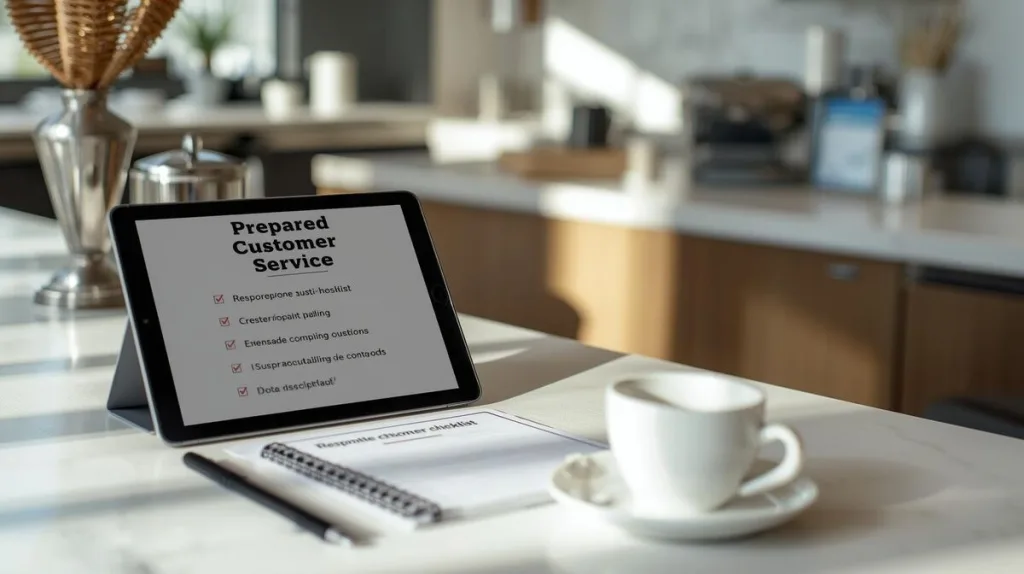
Here’s a simple table that breaks down this approach into a repeatable process your entire team can use.
The 5-Step Service Recovery Framework
This table summarizes the essential stages for effectively handling any customer complaint, from initial contact to final resolution and follow-up.
Stage | Key Action | Example Phrase |
|---|---|---|
Acknowledge | Immediately recognize the complaint and the customer's effort. | "Thank you for bringing this to our attention." |
Listen & Empathize | Let the customer share their full story without interruption. Show you understand their feelings. | "I can see how frustrating that must have been for you." |
Apologize | Offer a sincere, genuine apology for the negative experience. | "I'm truly sorry that we didn't meet your expectations." |
Resolve & Offer | Provide a clear, fair solution to the problem. Involve them if possible. | "To make this right, we'd like to offer you..." |
Follow Up | Check in after the fact to ensure satisfaction and close the loop. | "I just wanted to follow up and make sure everything is now to your satisfaction." |
By ingraining this 5-step framework into your team's DNA, you create a consistent, empathetic response that can de-escalate tough situations and even strengthen customer relationships.
Bring All Your Customer Feedback Into One Place
Let's be real. Customer complaints don't show up in a neat little inbox. They're all over the place—a spicy Google review here, an angry Instagram DM there, a frustrated comment to your front desk staff, and a dozen emails you haven't gotten to yet. Trying to manage this chaos manually is a surefire way to miss critical issues and deliver slow, inconsistent responses.
To collect smarter, you have to stop chasing feedback and let it come to you. This is where a unified feedback system isn't just a nice-to-have; it's a must. It’s about creating one single source of truth for every piece of customer sentiment, good or bad.
The stakes are higher than ever. By 2025, 89% of businesses are expected to compete primarily on customer experience. Yet, it only takes one bad interaction to lose 32% of customers for good. And in the age of the internet, a single complaint can do serious damage—a staggering 94% of consumers say they've avoided a business because of a negative online review. That number should keep any service-based business owner up at night.
Your Central Command for the Customer's Voice
This chaos is exactly why we built the Feedback Operating System around a central hub.
Radar is our unified review intelligence feature that acts as your command center. It pulls in reviews and mentions from across the web into one clean, organized dashboard. No more jumping between a dozen tabs just to keep up. This unified view stops critical complaints from slipping through the cracks and gives you a complete, unbiased picture of customer sentiment as it happens.
Prompt to Survey is how you capture crucial in-person feedback. A manager can chat with a guest, and with a single tap, send a structured survey right to their phone. That in-the-moment verbal feedback is instantly logged alongside your online reviews, turning casual comments into actionable data.
Consolidating feedback isn't just an organizational hack; it's a strategic necessity. When you see everything in one place, you move from putting out individual fires to spotting the patterns that could prevent the next one.
Before you can resolve complaints effectively, you have to hear them all first. Learning how to gather customer feedback that drives growth is the foundation of any great resolution strategy.
If you're ready to build this kind of integrated setup, we've got a complete guide on creating a modern customer feedback and response system.
Not sure what to actually write back? Start with these examples of responding to customer complaints — 10 ready-to-send replies covering everything from billing disputes to abusive complaints.
Use Automation to Speed Up Your Resolutions
Let's be real: your team is swamped. Manually responding to every single piece of feedback isn't just tough—it's impossible to do well when you're growing. This is where the right tech becomes your best friend, helping you respond faster and more consistently without sounding like a robot. It’s all about building a system that helps you act faster, every single time.
Imagine a hotel guest leaves a negative survey about a noisy room. Instead of that feedback sitting in an inbox until Monday morning, a system automatically triggers a personalized apology email with a room upgrade offer for their next stay. That’s not science fiction; it’s how smart hospitality leaders are turning bad experiences into lifelong loyalty.
Let Your System Do the Heavy Lifting
This is exactly why we built the Feedback Operating System with powerful automation at its core.
The Resolutions Engine is our feature for automated service recovery. It lets you create simple "if-this-then-that" workflows that handle the first few, time-sucking steps of fixing a problem. This frees up your team to focus on the high-touch, human conversations that really matter.
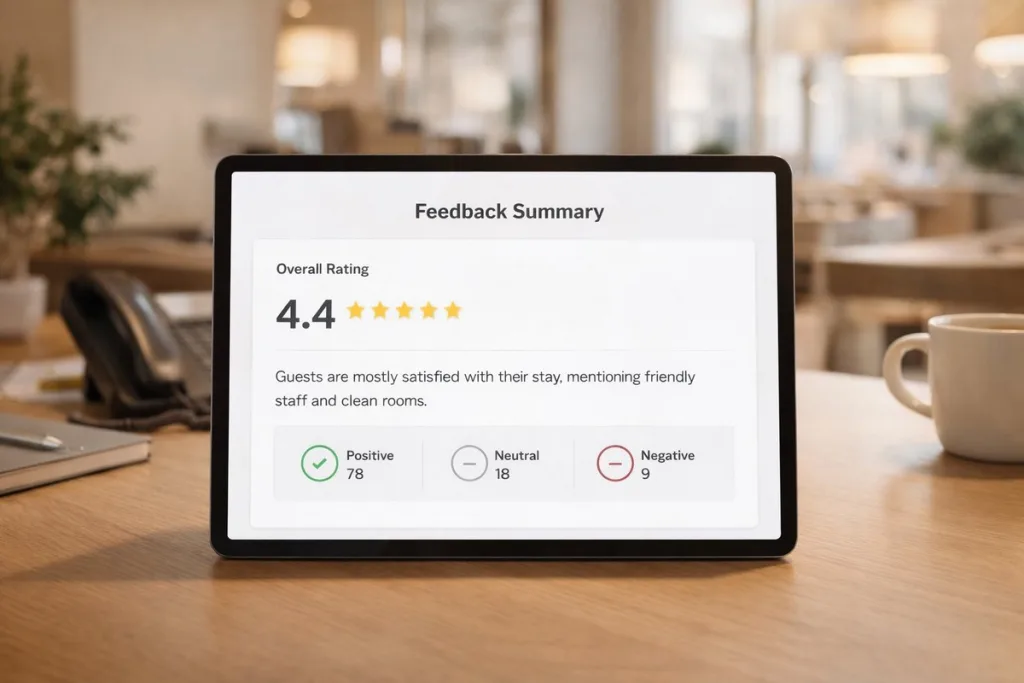
AI Summaries provide instant insights & sentiment analysis. Instead of reading every long, rambling review, this feature instantly scans walls of text, identifies the sentiment (positive, negative, neutral), and pulls out the key themes. Your manager can grasp the core issue in ten seconds, not ten minutes.
That speed is the difference between actually resolving a complaint and just managing it.
You can set up rules to:
Instantly Acknowledge Feedback: An automated email can immediately let a customer know you got their message and you're on it. This one small step can stop a minor issue from blowing up.
Categorize Issues by Urgency: Create rules that flag feedback containing keywords like "food poisoning" or "unsafe" and instantly alert a manager.
Trigger Smart Service Recovery: Automatically send a discount code, a follow-up survey, or a request for more information based on the customer’s rating or sentiment, especially through integrations with your POS like Mews or Toast.
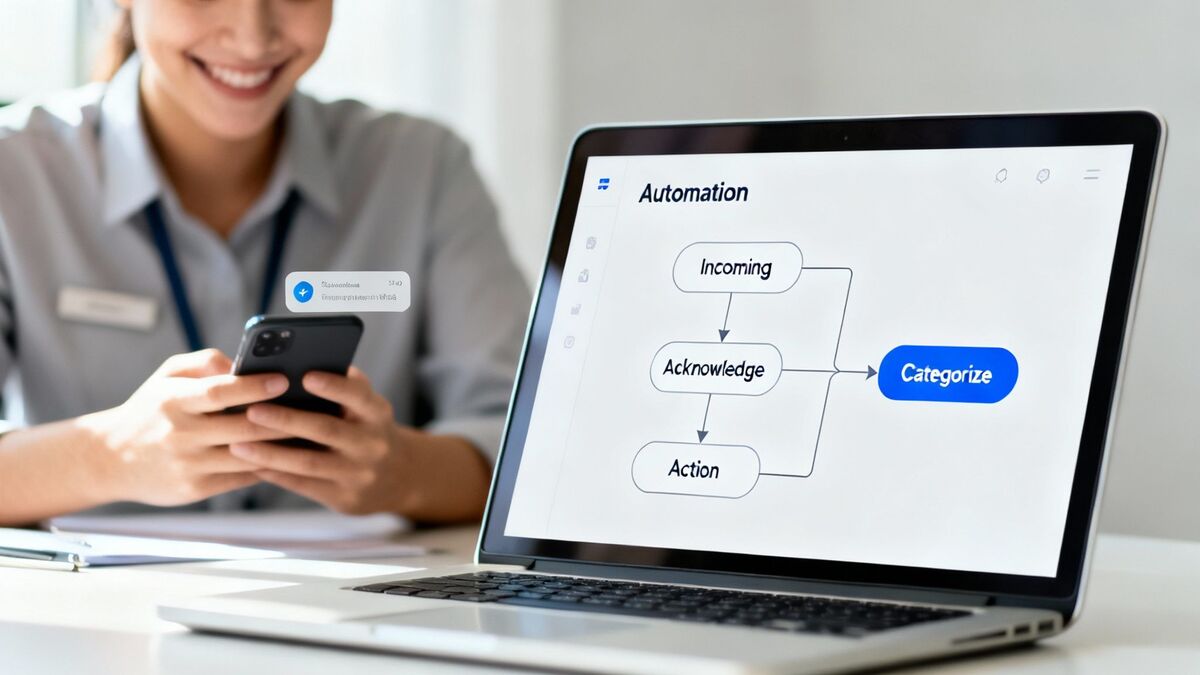
This workflow shows a rule that kicks in when a rating is 2 stars or less, automatically sending an apology and a discount to win back that customer. Simple, but incredibly effective.
If you want to go deeper on designing these workflows, check out our full guide on feedback resolution automation. By automating the initial response and triage, you give your team the power to handle customer complaints with incredible speed and precision, making sure no one ever feels ignored.
Shift from Reactive Fixes to Proactive Improvements
Resolving a customer’s problem is good. But preventing the next ten from ever happening? That’s how you win.
This is the all-important pivot from putting out daily fires to rebuilding your operations so they’re fire-resistant. The goal is to turn customer feedback from a simple service task into your most valuable source of business intelligence. You’re using the data from every complaint to spot systemic issues, operational weaknesses, and recurring friction points before they bleed you dry.
This shift has never been more critical. In 2022, a staggering 74% of U.S. customers said they experienced bad service, an 8% jump from the year before. The consequences are brutal: 70% of customers will jump ship to a competitor after just one poor experience.
These aren't one-off incidents; they're symptoms of deeper problems. You can explore more customer service statistics on Nextiva to see just how high the stakes are.
From Raw Feedback to Actionable Insights
To get ahead of the curve, you have to look past the single incident and start hunting for patterns. Using our Feedback Operating System makes this easy.
Radar, with its unified review intelligence, gives you a bird's-eye view of what customers are really saying. Instead of just seeing one complaint about a slow check-in at your hotel, Radar might reveal that "slow check-in" is a theme that spikes every single Tuesday afternoon. Suddenly, it’s not an employee problem—it’s a scheduling problem.
Then, you can use our AI Summaries to get to the core insight instantly. This feature acts like your personal data analyst, churning through hundreds of reviews to pull out key themes and sentiment.
The real power isn't just knowing what people are complaining about, but in understanding why and when. This is how you connect the dots between feedback and operational change.
For instance, your AI Summaries might flag a recurring complaint about a specific menu item always being "cold" in your restaurant.
Reactive Fix: You comp the meal for that one customer. Problem solved... for now.
Proactive Improvement: You use that insight to investigate your kitchen line. Is there a bottleneck? Does a specific station need another heat lamp? Is there a handoff issue?
This is how you use feedback to grow stronger. By analyzing the trends, you translate scattered complaints into concrete improvements—adjusting staff schedules, refining kitchen procedures, or retraining your team on a specific process. You stop treating the symptoms and start curing the disease.
For a structured playbook you can put in place immediately, our guide to customer service best practices covers 12 tactics ranked by real-world impact — from AI-automated responses to proactive outreach before complaints escalate.
Turn Positive Resolutions Into Your Best Marketing
You did it. You took a frustrated customer, solved their problem, and turned a bad experience into a good one. But your job isn't over—in fact, the most valuable part is just getting started.
That positive resolution is a powerful story just waiting to be told. For too long, businesses have treated complaint resolution as a defensive cost center. It's time to flip that script and see it for what it is: a proactive marketing engine. When you fix a mistake and make a customer happy, you’ve created a genuine advocate. The final piece of the puzzle is learning how to amplify their voice.
Showcase Your Wins to Build Trust
This is where you shift from just fixing problems to publicly celebrating your commitment to customers. We built the Spotlight: Feedback Wall for exactly this reason. It’s a core part of our Feedback Operating System that lets you curate your best reviews and testimonials and display them beautifully right on your website.
This isn’t about bragging or just showing off five-star ratings. It’s about building undeniable social proof. It tells potential customers, "Hey, even when things don't go perfectly, we show up and make it right." That kind of transparency builds incredible trust before a new customer even considers buying from you.
Here’s a look at how the Spotlight: Feedback Wall turns your great service into a visual asset.
A simple, clean display like this transforms your hard-won feedback into a compelling reason for new customers to choose you. It proves your commitment in a way no traditional ad ever could.
Turn Happy Customers Into a Growth Engine
By showcasing these success stories, you complete the feedback loop. You listened, you acted, and now you’re using that positive outcome to attract more business. This is how you grow stronger from customer feedback, not just survive it.
To really get the most out of these moments, dig into customer engagement best practices that help turn satisfied customers into your most powerful marketing channel.
Your best marketing isn't what you say about yourself; it's what a once-unhappy customer says about you after you've earned back their trust. That's the story that sells.
This entire playbook—from unifying feedback with Radar and automating fixes with the Resolutions Engine to showcasing wins with the Spotlight: Feedback Wall—is about making your feedback truly operational. You're not just managing complaints; you're building a system that fuels continuous improvement and growth.
Ready to turn your customer feedback into your greatest asset? The Feedback Operating System gives you the tools to collect smarter, act faster, and grow stronger. Create a custom Fine Dining Restaurant Feedback Form.
What is the 'First 15 Minutes' rule in complaint handling?
Speed is the #1 factor in guest satisfaction after a failure. If you can acknowledge and begin resolving a complaint within 15 minutes, you have a 90% chance of saving that customer.
How do I handle an 'Abusive' customer professionally?
Set boundaries. 'I want to help you, but I need us to remain professional to do so.' If they continue to be abusive, you have the right to end the interaction and escalate to ownership.
Should I document every customer complaint?
Yes. A 'Complaint Log' helps you identify 'Repeat Offenders' (both guests and staff) and provides legal protection if a situation ever escalates further.
How can I empower my staff to handle complaints on their own?
Give them a 'Recovery Budget.' Allow every server or clerk to 'comp' up to $20 of value (like a dessert or a drink) without asking for manager permission to fix issues on the spot.
What is the 'Service Recovery Paradox'?
It’s when a guest's loyalty increases *after* a failure because they were so impressed with how you handled the resolution. Use complaints as an opportunity to prove your excellence.
Stop reading about it. Let your agent handle it.
25 free AI actions · no credit card required
Start Free