Customer Service Recovery: Scripts, Steps & Examples (2026)
Turn service failures into loyal customers with 4 copy-paste recovery scripts for restaurants, hotels and retail, plus the HEARD framework.

Feb 9, 2026 · 19 min read
Free tool
AI Survey Generator
Describe what you want to learn and get a ready-to-send survey in seconds.
Let's be direct. As a busy hospitality or service owner, that sinking feeling when a customer complaint lands is all too familiar. It’s easy to see it as a failure. But what if that exact moment was your single best chance to build unbreakable loyalty?
That's the power of customer service recovery. This isn't just about damage control; it's the strategic process of turning a bad experience into a great one, transforming an unhappy customer into one of your most vocal advocates. It’s how you collect smarter, act faster, and grow stronger.
The Hidden Opportunity in Customer Complaints

A complaint isn't just a problem to solve—it’s a critical moment of truth. It’s your chance to prove how much you value your customers' business. When you handle it right, you reframe the entire relationship.
From Problem to Powerful Connection
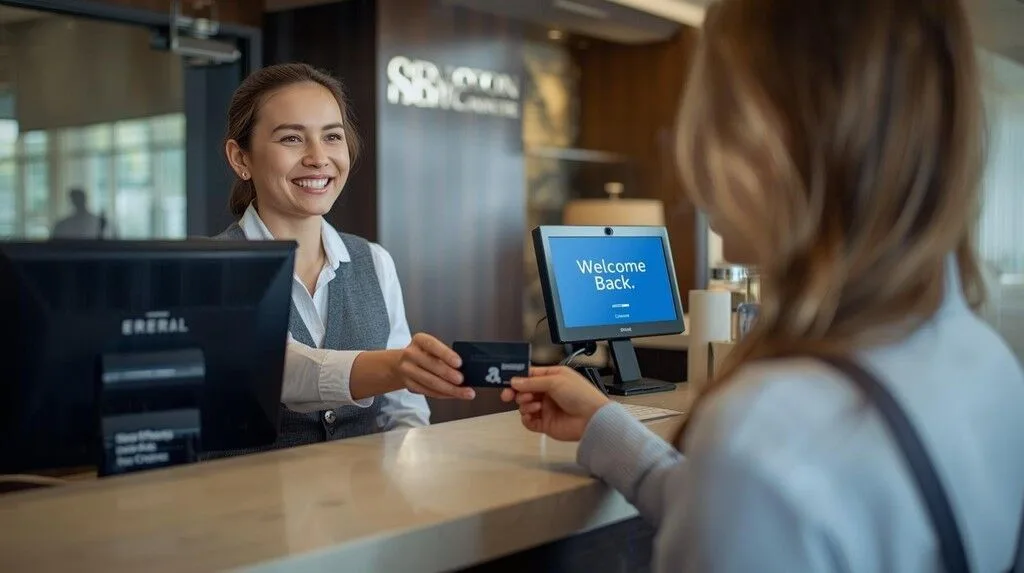
Think about it. When something goes wrong, a customer feels let down. But when you step in, listen with genuine empathy, and fix the issue with care, something incredible happens. The initial problem fades, replaced by a feeling of being seen and respected.
This powerful shift is backed by a well-documented phenomenon known as the Service Recovery Paradox. The principle is simple: customers who experience a great recovery can become even more loyal than customers who never had a problem at all.
The numbers don't lie. A staggering 94% of American customers say they'll recommend a company whose service they rate as 'very good'. A well-handled issue doesn't just save a customer; it creates a loyal fan who tells others about their amazing experience.
Why Mindset Matters in Recovery
The first step is to stop seeing complaints as a threat and start treating them as valuable data. Every piece of negative feedback is a free consultation on how to make your business better. It’s a gift.
By adopting this mindset, you can:
Pinpoint operational weaknesses: Uncover hidden friction in your service delivery before it affects hundreds of other customers.
Strengthen customer relationships: Show customers you’re committed to their satisfaction. This builds trust far more effectively than a flawless but impersonal experience ever could.
Generate positive word-of-mouth: A customer whose problem is solved with speed and empathy is highly likely to share that story.
A complaint is a customer telling you exactly how to improve your business. Ignoring it is like throwing away a winning lottery ticket.
Instead of dreading complaints, learn to see them as invitations to prove how great your company really is. An effective recovery strategy allows you to collect smarter feedback, act faster on issues, and ultimately grow stronger as a business.
If you're looking for tactical advice on where to start, check out our complete guide on how to handle customer complaints. This approach not only keeps customers around but also fuels a powerful cycle of continuous improvement.
Understanding the Real Cost of a Botched Recovery
When you fail to fix a customer’s problem, it’s not just a missed opportunity—it’s a direct hit to your bottom line. A great service recovery can actually build more loyalty than if the problem never happened. But a poor one? That actively drives away business.
Every bungled complaint turns into a real financial loss, pushing the customers you worked so hard to win straight to your competitors. Don't think of recovery as simple damage control. It's revenue protection, plain and simple.
When a customer has a problem, they're at a crossroads. Your response decides whether they stick around and spend more, or walk away for good.
The Financial Drain of Customer Churn
The most immediate fallout from a failed recovery is churn. When a customer leaves, you don't just lose the money from that one sale. You lose their entire lifetime value—every future purchase, every potential upsell, and all the friends they might have referred.
This isn’t a slow leak; it’s a busted pipe. The numbers are staggering: globally, businesses lose an estimated $3.7 trillion annually from bad customer experiences. In the U.S. alone, that figure is $75 billion a year lost specifically to poor service.
And the stakes are sky-high. A whopping 70% of customers say they’d switch to a competitor after just one bad service interaction. You can dig into more of these eye-opening customer service statistics and their impact.
This data makes one thing crystal clear: investing in a solid recovery process isn't an expense. It's a high-return investment in keeping the customers you already have.
The Amplifier Effect of Negative Reviews
A single unresolved complaint doesn't stay quiet anymore. In our connected world, one person's bad experience can snowball into a public relations headache overnight. Around 40% of consumers in the U.S. and the UK will post about a negative experience online, blasting their frustration across Google, Yelp, TripAdvisor, and social media.
This creates a ripple effect with some seriously damaging consequences:
Damaged Reputation: Negative reviews scare off potential customers before they even think about giving you a try.
Higher Acquisition Costs: As your online reputation takes a hit, you have to spend more on marketing just to counteract the negativity and bring in new people.
Lost Trust: Trust is everything. A pattern of unresolved issues tells the market that your business can't be relied on.
"A single negative review can wipe out the goodwill from ten happy customers. A failed recovery doesn't just lose you one customer; it actively warns others away."
This is exactly where you need to collect smarter and act faster. By catching negative sentiment before it becomes a public review, you can step in and turn things around.
Radar, our unified review intelligence dashboard, gives you the intel to spot trouble early. From there, you can use our Prompt to Survey feature to privately reach out to an unhappy customer right after their experience. This gives you a crucial window to fix the problem before it escalates online—a proactive move that protects your brand and your revenue.
Building Your Service Recovery Playbook

Trying to handle service failures on the fly is like navigating a storm without a map. A solid customer service recovery depends on a clear, repeatable playbook that your team can execute with confidence, especially when the pressure is on.
This isn’t about handing out rigid scripts. It’s about building a framework that empowers your staff to manage stressful situations with genuine care and authority. A great playbook turns a moment of friction into a chance to prove your commitment to your customers.
The Five Pillars of Effective Recovery
At its heart, a successful recovery process follows a logical path designed to de-escalate tension and rebuild trust. Every step is critical for making the customer feel heard and valued, not just processed.
Your playbook should guide your team through these five crucial actions:
Listen with Intent: Stop everything and give the customer your full attention. This isn't just hearing their words; it's about understanding the frustration behind them without already planning your response.
Acknowledge and Empathize: Verbally confirm you understand their problem and validate their feelings. Simple phrases like, "I can see why you're so frustrated," or "That sounds incredibly difficult," show the customer you're on their side.
Take Ownership and Apologize: Offer a sincere apology for the mistake, no matter who was at fault. Taking ownership shows accountability and immediately shifts the conversation from confrontational to collaborative.
Offer a Fair Resolution: Propose a solution that not only fixes the problem but also compensates them for the hassle. Empower your team with pre-approved options so they can resolve issues right on the spot.
Follow Up and Confirm: A quick follow-up after the fix shows the customer you haven’t forgotten them. This final step confirms the issue is truly resolved and reinforces that you care about their long-term satisfaction.
A well-executed recovery doesn't just solve a problem; it demonstrates character. It tells your customer, "When things go wrong, you can count on us to make it right." This is how you build loyalty that lasts a lifetime.
From Framework to Action
Knowing the steps is one thing, but putting them into practice is another. To make your playbook truly effective, you need to give your team practical tools they can remember under stress. One of the most respected frameworks for this is the HEARD method.
Think of it as the muscle memory for your customer service team. It’s simple, actionable, and works in almost any scenario, from a cold meal at a restaurant to a software bug that’s derailed a customer’s workday.
This simple acronym provides a memorable, step-by-step guide that any team member can follow.
The HEARD Method for Service Recovery
Step | Action | Why It Works |
|---|---|---|
Hear | Actively listen to the customer's full story without interrupting. Let them get everything off their chest. | This shows respect and allows you to gather all the facts, ensuring you understand the real issue. |
Empathize | Acknowledge the customer's feelings and express genuine sympathy for their experience. | Empathy builds a human connection and de-escalates anger by showing you understand their frustration. |
Apologize | Offer a sincere, unconditional apology for the service failure. Avoid making excuses or placing blame. | A genuine apology takes ownership and is the first step toward rebuilding trust with the customer. |
Resolve | Ask the customer what they would consider a fair outcome, or offer a clear, immediate solution. | This empowers the customer in the process and ensures the solution actually meets their needs. |
Diagnose | After resolving the issue, investigate the root cause to prevent it from happening to anyone else. | This turns a single complaint into a valuable learning opportunity, strengthening your entire operation. |
By building your playbook around a solid framework like HEARD, you create consistency. Your customers get the same high level of care no matter who they talk to, reinforcing your brand’s reputation for reliability. This is how you turn mishaps into memorable moments of exceptional service.
Ready-to-Use Service Recovery Scripts
The HEARD framework tells you how to recover. These scripts give your team the exact words. Copy, adapt to your brand voice, and train before the next issue arrives.
Script 1: Restaurant — Slow Service or Cold Food
Situation: Guest complains about slow service, cold food, or a long wait mid-meal or at checkout.
"I completely understand your frustration, and I sincerely apologize for the wait. That is not the experience we want for you. I am going to personally speak with the kitchen right now to get this sorted. In the meantime, I would like to offer you [complimentary dessert / discount on tonight's bill] as an apology. Thank you for being patient and giving us the chance to make it right."
Script 2: Hotel — Room Issue or Maintenance Complaint
Situation: Guest reports a room problem in person or via message during their stay.
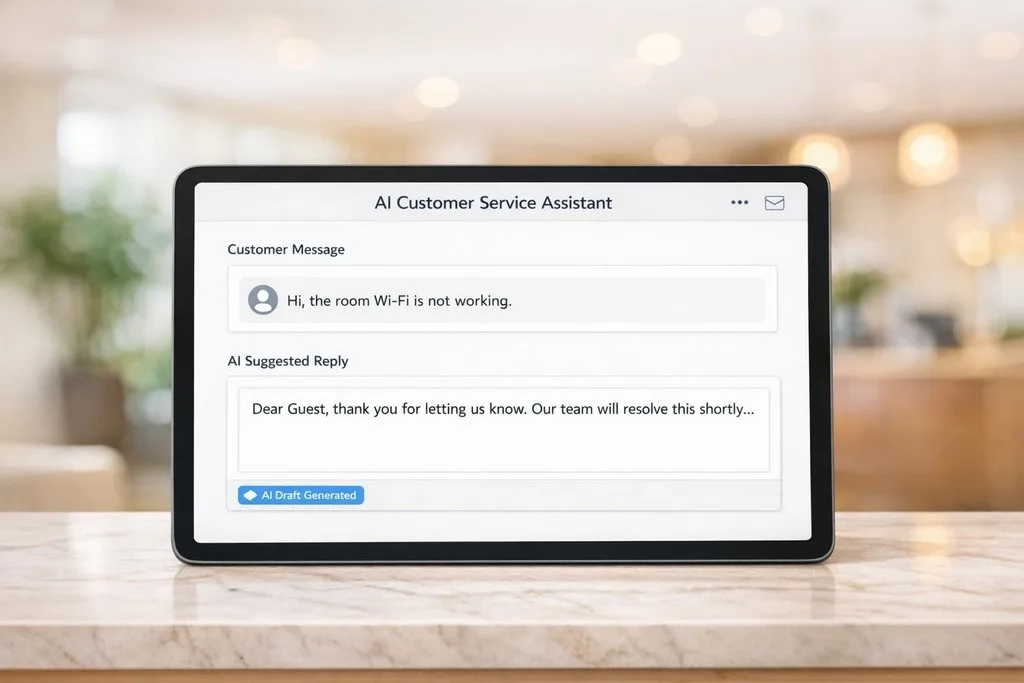
"Thank you for letting us know right away. I'm truly sorry you're dealing with this. I'm going to move you to a new room immediately and have maintenance fix this so it doesn't happen again. I'd also like to add [complimentary breakfast / late checkout] to your reservation as a thank-you for your patience. Can I walk you to the new room now?"
Script 3: Retail — Wrong Item or Damaged Order
Situation: Customer received the wrong product, a damaged item, or an incomplete order.
"I'm so sorry — that's completely our mistake and I want to fix it right now. I'm going to [send the correct item with next-day shipping / issue a full refund]. You won't need to return the incorrect item. I'd also like to give you [a discount code for your next order] as an apology. What works best for you?"
Script 4: Responding to a Negative Online Review
Situation: Customer left a 1-3 star review on Google, Yelp, or TripAdvisor.
"Thank you for taking the time to share your experience, [Name]. I'm genuinely sorry we didn't meet your expectations. I would love the opportunity to make this right — please reach out to me directly at [email or phone] so I can personally look into what happened. Your feedback helps us improve, and I hope to welcome you back for a much better experience."
Adapt tone and specifics to your brand. Respond within 24 hours for online reviews and within minutes for in-person issues. For teams managing high review volume, FeedbackRobot's Resolutions Engine drafts on-brand responses automatically so nothing is missed.
How to Put Your Recovery Strategy into Action

A well-designed playbook is a great start, but it’s just a document if your team can't execute it flawlessly, especially when things get busy. Trying to manually track every piece of feedback, remember who to follow up with, and make sure every issue gets resolved is a recipe for burnout and missed opportunities.
This is where you need a system—a Feedback Operating System. It turns your strategy from a document on a hard drive into a seamless, scalable reality.
The goal is to move from manual, inconsistent responses to an intelligent system that makes world-class service feel easy, day in and day out. As you build your playbook, it’s also the perfect time to think bigger. You might want to design a true omnichannel customer experience, creating a consistent feel across all your touchpoints. This systematic approach is what bridges the gap between your goals and perfect execution.
Collect Smarter Before It Goes Public
Let's be honest: the best service recovery is the one you handle before it ever becomes a one-star review online. When you proactively ask for feedback, you gain the power to solve issues privately. You turn a potential public complaint into a story of incredible service.
This is exactly what we mean by our first core value: collect smarter.
Instead of just waiting for customers to find you on Google or Yelp, you can intercept their feelings right at the point of experience. This is where our Prompt to Survey feature comes in. It lets you capture real-time feedback using QR codes on receipts, table tents, or in follow-up emails, creating a direct, private line to your customers at that critical moment.
For instance, a hotel guest can scan a QR code at checkout, or a diner can tap a survey link on their receipt. It’s immediate and low-effort, letting them share their thoughts while the experience is still fresh. This gives you a golden opportunity to act faster and fix things on the spot.
Your best chance to recover from a service failure is in the minutes—not days—after it happens. Prompt to Survey opens a direct, private line to your customers at that critical moment.
Better yet, Prompt to Survey connects directly with the systems you already use. If you run a hotel on Mews or a restaurant on Toast, you can automatically send feedback requests right after a guest checks out or a diner pays their bill. This kind of automation ensures you never miss a chance to gather those crucial insights.
Act Faster with a Unified Command Center
In today’s world, feedback is coming from all directions—Google, TripAdvisor, Yelp, social media, and your own internal surveys. Juggling a dozen browser tabs and logins just to keep up is a massive time sink. Worse, it leads to slow responses and a scattered view of what’s really going on.
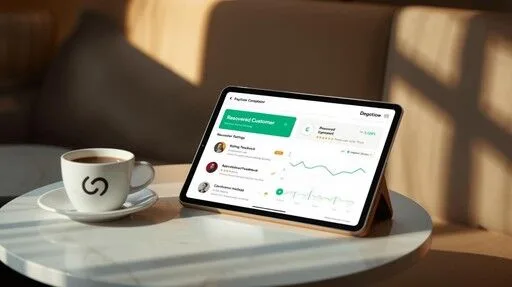
This is why having a unified command center is a game-changer. FeedbackRobot’s Radar is your unified review intelligence dashboard, pulling every review and survey response into one clean, easy-to-use hub.
Radar brings in feedback from all the major public review sites and combines it with the private feedback you’re collecting through tools like Prompt to Survey. Suddenly, you have a complete, 360-degree view of customer sentiment, without any of the chaos.
Here’s how Radar helps you act faster:
Unified View: See every single review from every platform in one place. No more jumping between different websites.
Real-Time Alerts: Get instant notifications for new reviews so you can respond to negative feedback in minutes, not hours.
Trend Spotting: Easily identify recurring issues or patterns of praise across all your locations and channels.
Imagine you manage a chain of cafes. With Radar, you could instantly see that "cold coffee" complaints are spiking at your downtown shop, while your suburban branch is getting rave reviews for its new barista. This kind of insight lets you diagnose and solve operational problems before they spiral, helping you grow stronger.
It completely transforms feedback from a chore into actionable business intelligence.
Automating Resolution with AI and Empathy

A great recovery playbook works wonders, but in a world that demands instant responses, speed is your greatest ally. Let’s be honest—manually handling every single issue just doesn’t scale. To really master customer service recovery, you have to blend smart automation with a genuinely human touch.
This is how you grow stronger from mistakes. It’s not about replacing your team with robots. It’s about arming them with AI-driven tools that take care of the immediate, repetitive tasks, freeing up your best people to handle the complex, high-stakes conversations that build real loyalty.
Instantly Understand the “Why” with AI Summaries
Before you can fix a problem, you have to understand it—and fast. But who has time to read through hundreds of comments and reviews just to find the root cause of an issue? This is where AI lets you see the big picture in seconds.
FeedbackRobot’s AI Summaries feature is like having your own personal data analyst. It scans all your incoming feedback—from surveys to online reviews—and uses instant insights & sentiment analysis to tell you exactly what customers are talking about and how they feel.
Instead of manually tallying complaints, you get a clean, concise overview of key themes. Is the "slow check-in process" a recurring pain point? Are multiple guests raving about the "amazing new dessert"? AI Summaries cuts through the noise so you can spot trends and fix systemic problems before they blow up.
Powering Proactive Recovery with the Resolutions Engine
Now for the real game-changer. Imagine a system that not only detects a bad experience but also kicks off the entire recovery process for you, automatically and instantly. That’s the power of the FeedbackRobot Resolutions Engine, our automated service recovery powerhouse.
This tool lets you shift from reactive apologies to proactive solutions. You set the rules, and the system executes them with precision and care, 24/7.
With the Resolutions Engine, your service recovery starts the moment a customer shares their feedback, not hours later when a manager finally sees the email. This speed is what turns a negative experience into a story of incredible service.
Let's break down how it works. You can create simple "if-then" rules that trigger a multi-step recovery sequence:
Detect Negative Feedback: The system automatically flags feedback with low scores or negative sentiment.
Craft an Empathetic Reply: It sends an immediate, personalized email that acknowledges the issue and apologizes sincerely.
Issue a Fair Resolution: The system can automatically generate and send a unique discount code, a voucher for a future visit, or a gift card.
Notify the Right Manager: It simultaneously alerts the location manager or department head so they are aware and can provide a human follow-up if needed.
This entire process happens in seconds. The customer feels heard and valued right away, your team is kept in the loop, and a potential one-star review is transformed into a second chance. For a deeper dive, you can learn more about feedback resolution automation in our dedicated article.
Balancing Automation and the Human Touch
The hospitality and service industries are rightfully cautious about automation. But the data shows a clear trend: AI in customer-facing roles has moved from a niche experiment to a mainstream strategy. In fact, 88% of contact centers now use AI-powered solutions.
Yet, a huge implementation gap exists—only 25% have fully integrated automation into their daily operations. The reward for closing this gap is huge; early adopters have seen AI slash call-related costs by up to 19%.
AI isn't meant to handle every nuance of human emotion. Think of it as the perfect first responder. It delivers the speed, consistency, and initial acknowledgment that modern customers expect. This buys your team the time to step in with the empathy, creativity, and personal connection that only a human can provide. For a real-world example of AI streamlining customer issues and saving millions, check out Klarna's AI chatbot for customer service.
By automating the first steps, you ensure every customer gets a fast, fair response, allowing your team to shine where it matters most.
Turning Successful Recoveries into Marketing Wins
A world-class customer service recovery program doesn’t just stop at saving an unhappy customer. It’s your secret weapon for creating your best marketing assets. When you successfully turn a bad experience into a great one, you don’t just dodge a negative review—you create a loyal advocate who’s eager to share their story.
This final step is all about closing the loop and turning those hard-won operational victories into fresh business. This is how you grow stronger, building a virtuous cycle where exceptional service fuels positive feedback, which in turn attracts new customers. You're not just fixing problems; you're building a rock-solid reputation.
From Private Wins to Public Proof
The big challenge has always been broadcasting these wins. A happy customer might tell a few friends, but how do you show potential buyers that you’re a business that genuinely cares and always makes things right? You need a way to amplify those positive voices and build undeniable social proof.
That’s exactly why we built our Spotlight: Feedback Wall. It’s a simple, dynamic feature that lets you showcase your best reviews and testimonials directly on your website. Think of it as a live, curated feed of customer happiness.
Your best marketing isn't what you say about yourself; it's what your happy customers say about you after you've proven you have their back. The Feedback Wall puts those powerful stories front and center.
Instead of letting your best feedback collect dust in a dashboard, the Feedback Wall turns it into a powerful conversion tool. It shows prospects you not only listen but consistently deliver experiences worth talking about. You can dive deeper into turning praise into compelling assets in our guide to building a customer testimonial landing page.
Create Your Flywheel of Growth
When you combine a solid recovery process with the Feedback Wall, you create a powerful engine for growth. Here’s how the cycle works:
Collect Smarter: You capture feedback privately using tools like Prompt to Survey.
Act Faster: You resolve issues in the moment using the Resolutions Engine.
Grow Stronger: You turn recovered customers into advocates and showcase their glowing reviews on your Feedback Wall, attracting new business.
Stop leaving money on the table. It's time to turn every piece of feedback—good or bad—into your competitive edge.
Ready to see how it all works? Get your free trial or learn more about our new Spotlight: Feedback Wall launch. Turn your customer service into your best marketing campaign.
For a structured playbook you can put in place immediately, our guide to customer service best practices covers 12 tactics ranked by real-world impact — from AI-automated responses to proactive outreach before complaints escalate.
Got Questions? We’ve Got Answers.
We've walked through the strategy, the tools, and the mindset for a top-tier customer service recovery plan. But theory is one thing, and practice is another. To help you get it right, here are some straight-up answers to the questions we hear most often from business owners just like you.
What’s the Single Most Important First Step in Recovery?
Listen. That's it. Before you jump to solutions or apologies, you have to genuinely listen with empathy. The goal is to make the customer feel heard and understood, not just processed.
Acknowledging their frustration without getting defensive is what turns the tide. It de-escalates the tension and opens the door for you to actually fix things. This is where you can collect smarter, not harder. Our Prompt to Survey feature gives you a private channel to hear the full story before it spills onto public review sites.
How Can I Train My Team to Handle Angry Customers?
Scripts feel robotic and often make things worse. The key is to train your team on frameworks, not memorized lines. A simple, proven method like HEARD (Hear, Empathize, Apologize, Resolve, Diagnose) gives them a reliable process to follow while still sounding human.
Run role-playing sessions for common screw-ups. Most importantly, give your team the autonomy to offer a few pre-approved resolutions on the spot. Nothing says "we trust you" like letting your team solve a problem without needing a manager's sign-off. This is also where you can act faster. Our Resolutions Engine can automate the initial apology and compensation, freeing up your team for the high-touch, human conversations that really count.
How Do I Know if My Recovery Efforts Are Actually Working?
You need to look at both the hard numbers and the softer signals. On the quantitative side, track the retention rate of customers who had a problem versus those who didn't. If your recovery is working, that gap should be small or nonexistent. Also, keep an eye on your online review scores and overall sentiment over time.
To grow stronger, you need clear data. Our Radar dashboard pulls all your reviews into one place, while our AI Summaries spot trends in customer mood with instant insights & sentiment analysis, saving you from reading every single comment. The ultimate proof of success? When a once-furious customer not only comes back but starts telling their friends how well you handled their issue. That’s the win.
Ready to stop reacting to feedback and start mastering it? FeedbackRobot gives you the tools to collect smarter, act faster, and grow stronger.
What is 'Customer Service Recovery' and why is it profitable?
Service recovery is the process of fixing a failure so well that the customer becomes more loyal than if the problem never happened. It's profitable because retaining an existing guest is 5x cheaper than acquiring a new one.
What is the 'Service Recovery Paradox'?
It’s the psychological phenomenon where a guest’s satisfaction with a brand increases after a service failure is resolved successfully. High-quality recovery turns a mistake into a marketing win.
How does automation help with service recovery?
Automation identifies negative feedback the moment it is submitted. By triggering an instant alert to a manager, you can attempt to 'recover' the guest while they are still on-site, which is 10x more effective than calling them later.
What are the 5 steps of effective service recovery?
The HEARD method: Hear the guest out, Empathize with their frustration, Apologize sincerely, Resolve the issue immediately, and Diagnose the root cause to prevent it from happening again.
Should I track my 'Recovery Rate' as a KPI?
Absolutely. Measuring how many negative experiences were turned into positive resolutions gives you a clear picture of your team's conflict-resolution skills and your brand's overall resilience.
Stop reading about it. Let your agent handle it.
25 free AI actions · no credit card required
Start Free