

Restaurant Review Management: 12 Tools + Free Reply Generator
Try our free negative review response generator, then compare 12 platforms that automate replies at scale across all your restaurant locations.

Jan 17, 2026 · 24 min read
Free tool
AI Negative Review Responder
Turn 1-star reviews into recovery opportunities with AI-crafted responses.
In your restaurant, guest feedback is everything. In 2026, a single glowing review can drive dozens of new customers through your door. As a busy owner, manually tracking every review is impossible. This is where dedicated restaurant reputation management tools become essential for growth.
Before picking a platform, see how your restaurant handles a real negative review right now. Use the free Negative Review Response Generator — paste in any review, select your restaurant type, and get a response you can post immediately. Then use this guide to find the tool that runs this automatically across every location, every night.
These platforms do more than just show you your star ratings. They are a central command center for your online presence, helping you listen at scale, understand guest sentiment, and respond effectively to protect and enhance your brand. They solve the critical problem of fragmented feedback by aggregating reviews, analyzing trends, and automating responses, allowing you to collect smarter insights, act faster on issues, and grow stronger as a business. Beyond traditional review platforms, understanding new avenues for tracking what customers say about your brand is becoming increasingly vital. You can explore advanced methods with AI brand monitoring strategies to get a more complete picture of your online standing.
While managing restaurant reviews is crucial, the principles of effective online reputation management extend across all consumer-facing industries. For businesses in the retail sector, understanding and leveraging customer feedback is equally vital for driving sales and fostering loyalty. Discover how top platforms are helping retail businesses refine their customer experience and boost their online presence in our guide to the best customer review platforms for retail.
This guide provides a comprehensive roundup of the best restaurant reputation management tools available today. We'll dive deep into each platform, analyzing key features, pros and cons, pricing, and specific use cases tailored for restaurant owners and multi-location brands. You’ll find direct links and screenshots for each tool, helping you compare options and choose the right solution to turn guest feedback into your most valuable asset.
1. FeedbackRobot
It also helps to know where you stand before you compare platforms: the free reputation report card scores your star rating, review volume, reply rate and review velocity against restaurant benchmarks in about a minute.
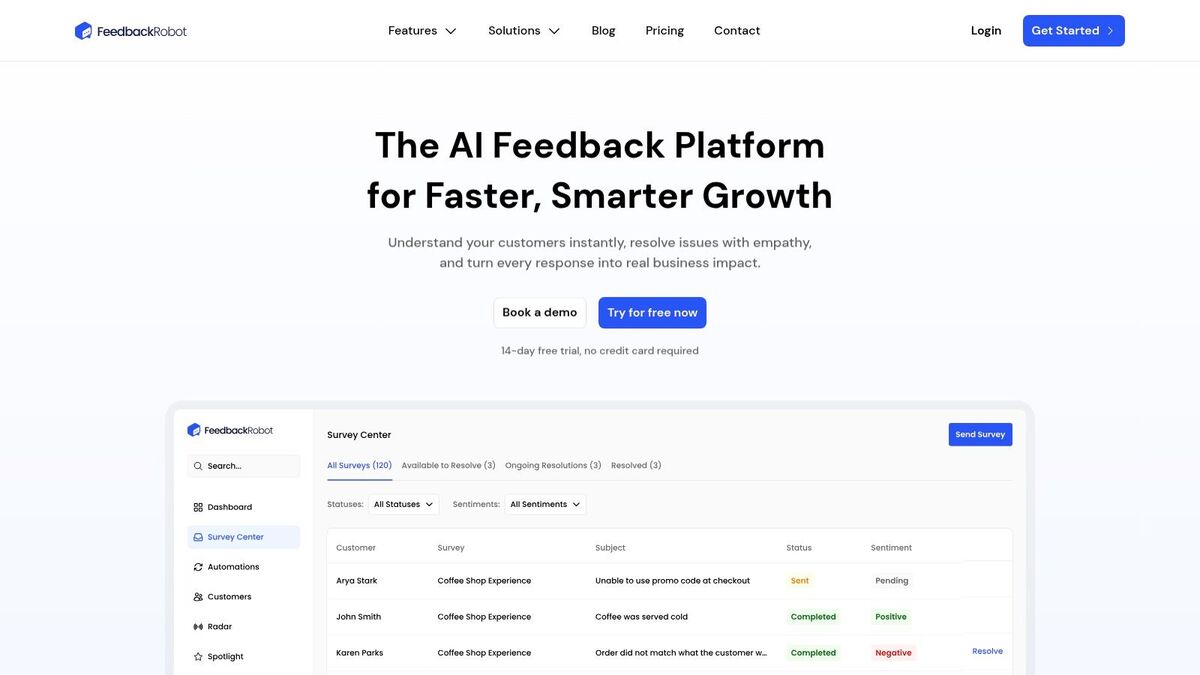
FeedbackRobot stands out as a powerful, AI-first platform designed to transform customer feedback into a core operational asset. It's not just a review aggregator; it's a complete Feedback Operating System engineered for busy restaurant owners who need to collect smarter, act faster, and grow stronger. The platform’s end-to-end workflow automates the entire reputation management cycle, from gathering input to resolving issues and showcasing positive sentiment, making it a comprehensive solution for modern hospitality brands.
Its core strength lies in turning reactive support into proactive guest retention. The platform excels at capturing customer sentiment across multiple channels, including QR code surveys on tables, embedded forms on your website, and major review platforms like Google and Yelp. This multi-channel approach ensures no feedback, positive or negative, slips through the cracks.
Key Features for Restaurants
FeedbackRobot's suite of tools is specifically built to address the unique challenges of the restaurant industry.
Prompt to Survey: This feature allows you to create ready-to-send, AI-generated surveys from a simple prompt. As a busy owner, you can quickly deploy QR codes on receipts or tables to capture in-the-moment feedback about food quality, service, or ambiance before a guest has the chance to post a negative review online.
Radar: This unified review intelligence dashboard pulls in reviews from all major platforms into one place. Radar provides a single source of truth for your online reputation, helping you track performance across different locations and spot emerging trends without logging into multiple sites.
AI Summaries: Instead of manually reading hundreds of reviews, this feature provides instant insights & sentiment analysis. The AI identifies key themes (e.g., "slow service on weekends," "popular new menu item") and calculates an overall sentiment score, so you can quickly understand what’s working and what isn’t. By leveraging automatic sentiment analysis for reviews, you can learn how AI helps categorize feedback on feedbackrobot.com.
Resolutions Engine: This automated service recovery tool is a game-changer. You can set up triggers that automatically craft empathetic replies, issue a discount for a future visit, or assign a follow-up task to a manager when negative feedback is received. This ensures swift and consistent service recovery, turning a poor experience into a loyal customer.
Pricing and Implementation
FeedbackRobot offers a transparent pricing structure designed to scale with your business needs.
Yearly billing provides a 15% discount. A 14-day free trial is available with no credit card required, allowing you to test the full feature set and see its impact firsthand. Implementation is straightforward: start by creating a survey, generating a QR code, and placing it at key customer touchpoints.
Pros & Cons
Pros | Cons |
|---|---|
Comprehensive AI Workflow: Automates everything from survey creation to analysis and resolution, saving significant staff time. | Key Features Gated: Advanced automation, custom domains, and API access are exclusive to the highest-tier Scale plan, which might be a barrier for smaller, growing teams. |
Centralized Visibility: The Radar dashboard and unified inbox offer a complete, cross-platform view of your restaurant's reputation. | Limited Social Proof: The website does not prominently feature third-party awards or customer testimonials, requiring potential enterprise clients to request references during the sales process. |
Actionable Guest Recovery: The Resolutions Engine enables proactive, automated service recovery to reduce churn. | |
No-Risk Trial: A 14-day free trial without a credit card makes it easy to evaluate the platform's value. |
Website: https://www.feedbackrobot.com
2. Google Business Profile
As the digital front door for most restaurants, Google Business Profile (GBP) is the non-negotiable starting point for reputation management. This free-to-use platform is where customers find your location on Maps, check your hours, and, most importantly, leave and read Google reviews. For any restaurant, actively managing this profile isn't optional; it's a fundamental aspect of local SEO and online visibility. The dashboard provides essential, built-in restaurant reputation management tools without any software cost.
From your GBP dashboard, you can directly reply to every review, set up notifications for new feedback, and even generate a direct link or QR code to encourage patrons to share their experience. For businesses looking to enhance their online presence, consider best practices for optimizing your Google Business Profile for local leads.
Key Features & Assessment
While its reach is unparalleled and the cost is zero, GBP has limitations. It only manages Google reviews, meaning you still need a separate process for sites like Yelp or Tripadvisor. It lacks the advanced analytics, sentiment analysis, and automated response capabilities found in dedicated platforms.
Feature Analysis | Assessment |
|---|---|
Review Management | Direct replies and flagging tools are straightforward and effective for handling Google-specific reviews. |
Review Generation | The shareable link/QR code feature is a simple but powerful tool for soliciting fresh feedback. |
Cost | Free. This makes it the most accessible reputation tool available for any business, regardless of budget. |
Limitations | Lacks multi-site aggregation, sentiment analysis, and automation. Managing multiple locations requires logging into each profile individually. |
Website: google.com/business
3. Yelp for Business
For many diners, Yelp remains a go-to platform for discovering new restaurants, making it a critical channel for reputation management. Claiming your free Yelp for Business page is the first step, giving you direct control to update business information, upload photos, and respond publicly or privately to reviewers. While often viewed as a simple review site, Yelp offers a suite of built-in tools designed to convert high-intent searchers into customers, making it an essential component of any restaurant's online presence strategy.
The platform allows you to engage directly with customers through public comments and direct messages, providing valuable opportunities for service recovery. Effectively handling negative feedback on this high-visibility site is crucial; for guidance, review best practices for how to respond to customer complaints. Yelp also provides business analytics to track page views and customer leads, offering insights into your audience's engagement.
Key Features & Assessment
Yelp's strength lies in its dedicated user base actively seeking dining experiences. However, its strict review solicitation policies can be challenging, and unlocking premium features requires a budget. Unlike all-in-one platforms, it only manages your reputation within the Yelp ecosystem, leaving you to manage other sites separately.
Feature Analysis | Assessment |
|---|---|
Review Management | Direct public and private response tools are effective for engaging with the Yelp community. |
Paid Advertising | Self-serve Yelp Ads offer flexible, no-commitment options to target local diners, though ROI can vary. |
Cost | Freemium. Core profile management is free, but optional upgrades and ads add ongoing costs to enhance visibility. |
Limitations | Lacks multi-site aggregation. Strict review policies and the cost of premium features can be significant drawbacks. |
Website: business.yelp.com
4. Tripadvisor for Restaurants
As the world's largest travel guidance platform, Tripadvisor is a critical channel for restaurants, especially those in tourist-heavy locations. Claiming your free listing through the Management Center is the first step, giving you direct control to respond to reviews, update business information, and upload photos. This platform is less a comprehensive reputation tool and more of an essential channel-specific dashboard for engaging with an audience actively planning where to dine. Its influence on traveler decisions makes it a vital piece of the reputation puzzle.
The platform's power lies in its massive, high-intent audience. Users on Tripadvisor are not just browsing; they are actively researching and making booking decisions. By managing your presence here, you tap directly into a pre-qualified stream of potential customers. The included mobile app allows for on-the-go management, which is a significant plus for busy restaurant owners who need to respond to feedback promptly.
Key Features & Assessment
While the Management Center is free, unlocking Tripadvisor's full potential often involves paid products like Tripadvisor Ads (a cost-per-click model to boost visibility) or a Premium subscription. These add-ons help you stand out from the competition but require a dedicated budget, and pricing can be opaque, varying by location and restaurant size.
Feature Analysis | Assessment |
|---|---|
Review Management | The Management Center provides robust tools for direct review responses, photo management, and listing updates. |
Review Generation | While it lacks direct solicitation tools, a strong, well-managed profile naturally encourages reviews from platform users. |
Cost | Freemium. The basic Management Center is free. Ads are CPC-based with flexible budgets, and Premium subscription costs vary. |
Limitations | Management is limited only to the Tripadvisor ecosystem. The platform lacks the centralized dashboard features of dedicated restaurant reputation management tools and does not offer sentiment analysis or automation. |
Website: tripadvisor.com/Owners
5. OpenTable for Restaurants
For restaurants driven by reservations, OpenTable is a powerful ecosystem that combines guest management with reputation building. More than just a booking platform, it offers integrated restaurant reputation management tools that connect the diner's experience directly to their feedback. This closed-loop system prompts verified diners for reviews post-meal, ensuring feedback is from actual customers and providing a direct line of communication for service recovery. By linking guest data, booking history, and reviews, OpenTable helps restaurants turn operational insights into a stronger online reputation.
Within the platform, restaurants can manage their profile, respond to diner reviews, and use direct messaging to engage with guests before and after their visit. The key advantage is context; each review is tied to a specific reservation, giving managers the background needed for a personalized and effective response. This makes it an invaluable tool for improving service and encouraging repeat business from a loyal customer base.
Key Features & Assessment
OpenTable's strength lies in its all-in-one approach for reservation-heavy establishments, but this focus comes with trade-offs. While it excels at capturing feedback from its vast diner network, it doesn't monitor or aggregate reviews from external sites like Google or Yelp. Its core function is guest and table management, with reputation features serving as a valuable, but secondary, component.
Feature Analysis | Assessment |
|---|---|
Review Management | Excellent for managing reviews from verified diners within the OpenTable network. Direct messaging tools allow for proactive service recovery. |
Review Generation | Automated post-dining review prompts are highly effective at generating a steady stream of feedback from confirmed guests. |
Cost | Varies significantly. Plans range from a monthly subscription (Basic/Core/Pro) to per-cover fees for diners booked through the OpenTable network. |
Limitations | Reputation management is confined to the OpenTable platform. It lacks multi-site review aggregation and advanced sentiment analysis found in specialized tools. |
Website: restaurant.opentable.com
6. Birdeye (Restaurants)
Birdeye offers an all-in-one local reputation suite that is particularly well-suited for restaurants and multi-location businesses. It centralizes a wide array of functions, including review monitoring, listings management, customer messaging, and even social media scheduling. This approach allows restaurant managers to consolidate their digital presence and customer interactions into a single, unified dashboard, reducing the need to juggle multiple platforms.
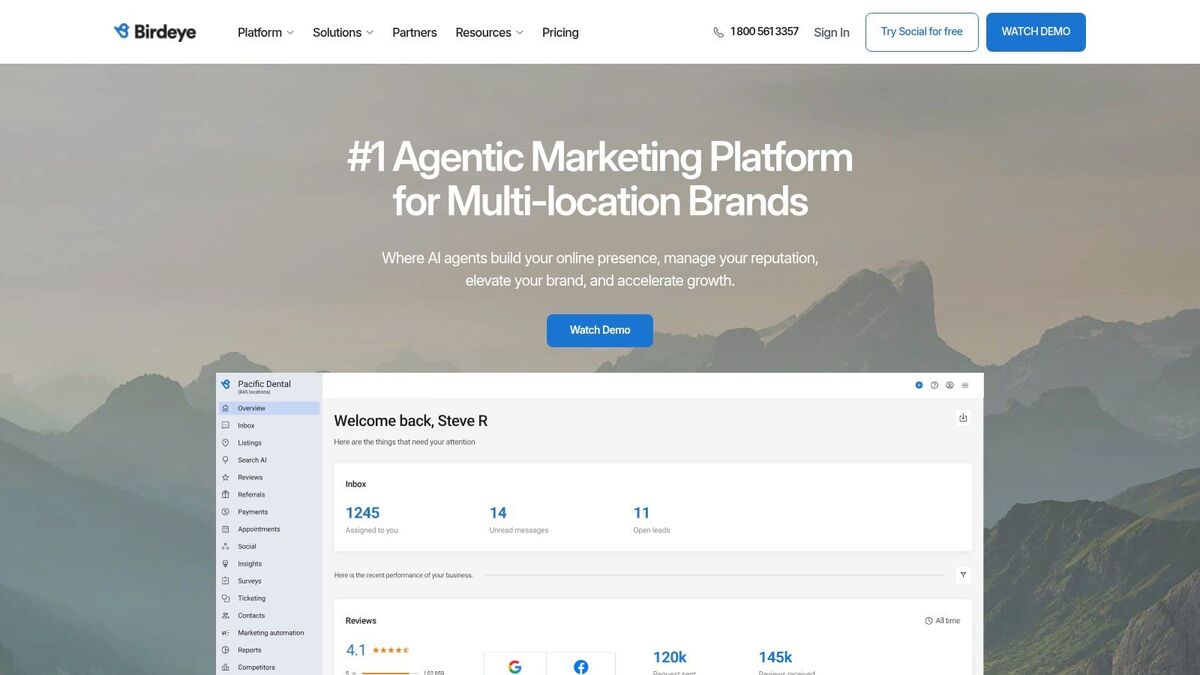
The platform stands out by combining its broad channel coverage with AI-assisted response technology, called BirdAI, helping teams manage feedback more efficiently. By integrating reviews, social media, and messaging, Birdeye aims to reduce vendor sprawl and streamline the entire customer experience lifecycle. For those exploring comprehensive solutions, understanding how platforms like Birdeye fit into a broader strategy is key; you can discover more about building a robust restaurant reputation management plan to see how these tools work together.
Key Features & Assessment
Birdeye's strength lies in its extensive feature set, covering more than just reviews. However, this comprehensive approach comes with a custom pricing model that requires direct contact with their sales team, which can make initial budget planning a challenge for smaller independent restaurants.
Feature Analysis | Assessment |
|---|---|
Review Management | Excellent multi-site aggregation from Google, Yelp, Facebook, and more. BirdAI assists with drafting responses to save time. |
Review Generation | Strong tools for sending review requests via text and email to capture fresh feedback from recent diners. |
Cost | Custom Quote-Based. Pricing is not public and requires a sales consultation, which is typical for enterprise-level platforms. |
Limitations | The quote-based pricing can be a barrier for businesses that prefer transparent, fixed-tier plans. The platform's breadth can be overwhelming for teams needing a simple review-only tool. |
Website: birdeye.com
7. Podium
Podium shifts the focus of reputation management from passive monitoring to active, real-time engagement through text messaging. This platform excels at capturing customer feedback in the moment by sending SMS-based review invitations shortly after a transaction. By leveraging the high open rates of text messages, restaurants can significantly increase the volume and velocity of new reviews on sites like Google, which is a key factor in local search rankings. The platform consolidates all guest text conversations into a single inbox, making it a powerful tool for direct communication and service recovery.
Podium’s strength lies in its ability to integrate review generation directly into the customer service workflow. Instead of waiting for a guest to find your profile, it proactively asks for their opinion at the peak of their experience. This approach not only boosts review counts but also opens a direct channel for resolving issues before a negative review is even written, making it one of the more proactive restaurant reputation management tools available.
Key Features & Assessment
While highly effective for SMS-driven review acquisition, Podium's pricing structure is quote-based, which can make it a higher-cost option for smaller, independent restaurants. Its core value is in using text messaging as a multi-purpose tool for reviews, communication, and even payments, which may be more than what a business solely focused on online review monitoring needs.
Feature Analysis | Assessment |
|---|---|
Review Management | Centralized inbox for SMS conversations and review alerts streamlines communication, but review response is less automated than dedicated platforms. |
Review Generation | Excellent. SMS-based review invitations are highly effective for increasing review volume and velocity on key sites. |
Cost | Quote-based. Pricing varies based on usage and features, which can be less transparent than tiered plans. |
Limitations | Focus is heavily on SMS, with less emphasis on advanced sentiment analysis or automated service recovery workflows found in other systems. |
Website: podium.com
8. Reputation (formerly Reputation.com)
Reputation positions itself as an enterprise-grade customer experience (CX) platform built for large, multi-location brands like restaurant chains and franchise groups. It moves beyond simple review monitoring, offering a comprehensive suite of tools for review management, surveys, social media listening, and business listings, all tied together with powerful analytics. This platform is designed for organizations that require centralized control, consistent brand messaging, and detailed performance reporting across dozens or hundreds of locations.
For restaurant groups, Reputation offers tools to compare performance between locations, identify systemic operational issues through sentiment analysis, and deploy service recovery workflows at scale. Its strength lies in providing a single source of truth for CX data, enabling regional managers and corporate teams to make informed, data-driven decisions. This makes it a formidable choice among restaurant reputation management tools for large-scale operations.
Key Features & Assessment
While its capabilities are extensive, Reputation is built for a specific user: the enterprise. The platform's complexity and pricing structure may be prohibitive for independent restaurants or small groups. Access to the product is typically through a demo-led sales process, reflecting its focus on custom, large-scale deployments rather than self-service.
Feature Analysis | Assessment |
|---|---|
Review Management | Centralized dashboard for monitoring and responding to reviews across all major sites for every location. Includes approval workflows for team management. |
Review Generation | Integrated survey and feedback tools help generate first-party reviews and guide happy customers to third-party sites. |
Cost | Enterprise-level. Pricing is customized based on the number of locations and modules required. Not suitable for small businesses. |
Limitations | The platform can be complex and requires a significant budget. The sales process is not transparent and requires direct engagement. |
Website: reputation.com
9. ReviewTrackers
ReviewTrackers offers a focused, reviews-first platform designed to help small and mid-sized restaurant groups transition from manual monitoring to a more streamlined system. It excels at centralizing reviews from all major sites into a single dashboard, providing alerts, response tools, and trend analytics. This approach empowers busy managers to track customer sentiment and operational issues without juggling multiple browser tabs, making it a practical step up from free tools.
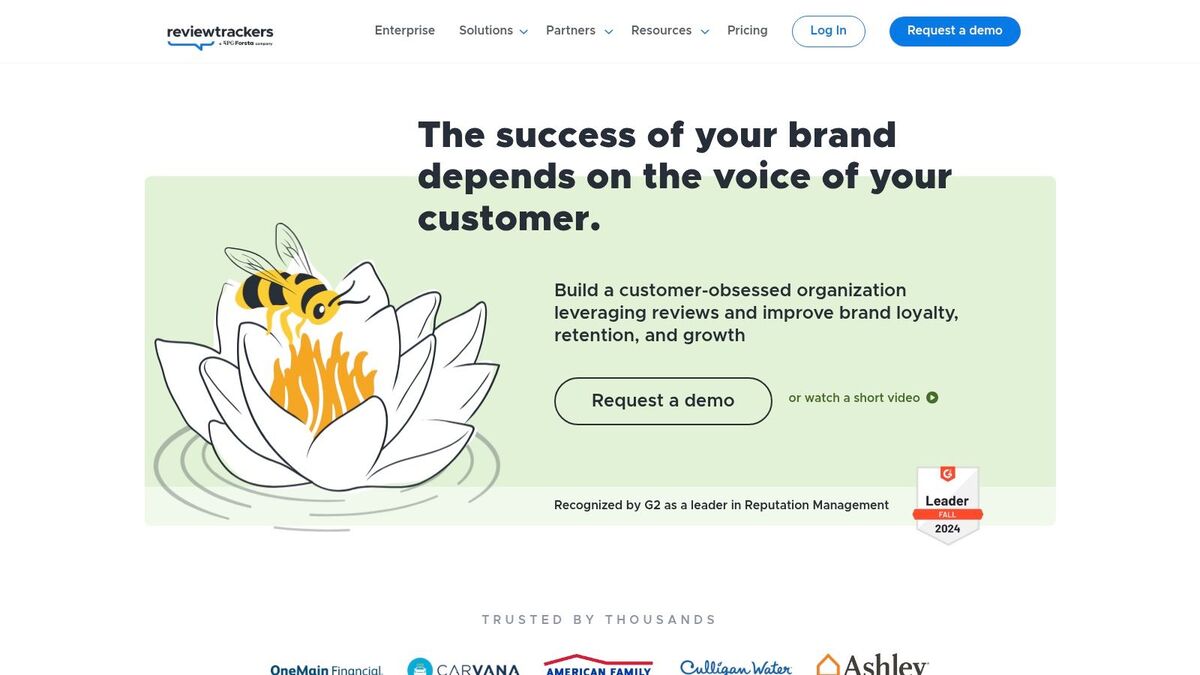
The platform is built around a location-based pricing model, making it a scalable solution as a restaurant brand grows. While its core function is review management, ReviewTrackers also offers optional add-ons for services like local listings management and even managed response services, allowing businesses to offload some of the day-to-day work. It's one of the more straightforward restaurant reputation management tools for teams needing a dedicated but uncomplicated solution.
Key Features & Assessment
ReviewTrackers provides a strong foundation for review aggregation and response with a clean, user-friendly interface. However, its a la carte model means that some advanced features, like competitive intelligence or full-suite social media management, may require additional investment or are not part of the core package. This makes it ideal for businesses whose primary pain point is consolidating online reviews.
Feature Analysis | Assessment |
|---|---|
Review Management | Excellent aggregation from dozens of sites with timely alerts and simple workflows for responding directly from the dashboard. |
Review Generation | Provides tools to request reviews from customers, though not as deeply integrated with on-premise feedback as some competitors. |
Cost | Custom Quote. Pricing is typically based on the number of locations, requiring a conversation with their sales team to get an exact figure. |
Limitations | The core package is heavily focused on reviews; advanced analytics and listings management often come as paid add-ons. |
Website: www.reviewtrackers.com
10. SOCi (for Multi-location Brands)
For franchise groups and large restaurant chains, managing reputation across hundreds of locations is a monumental task. SOCi is an enterprise-grade CoMarketing Cloud designed specifically for this challenge, centralizing local search, social media, and review management into a single, cohesive platform. It's built less for the independent restaurateur and more for the corporate marketing team overseeing brand consistency and local performance at scale.
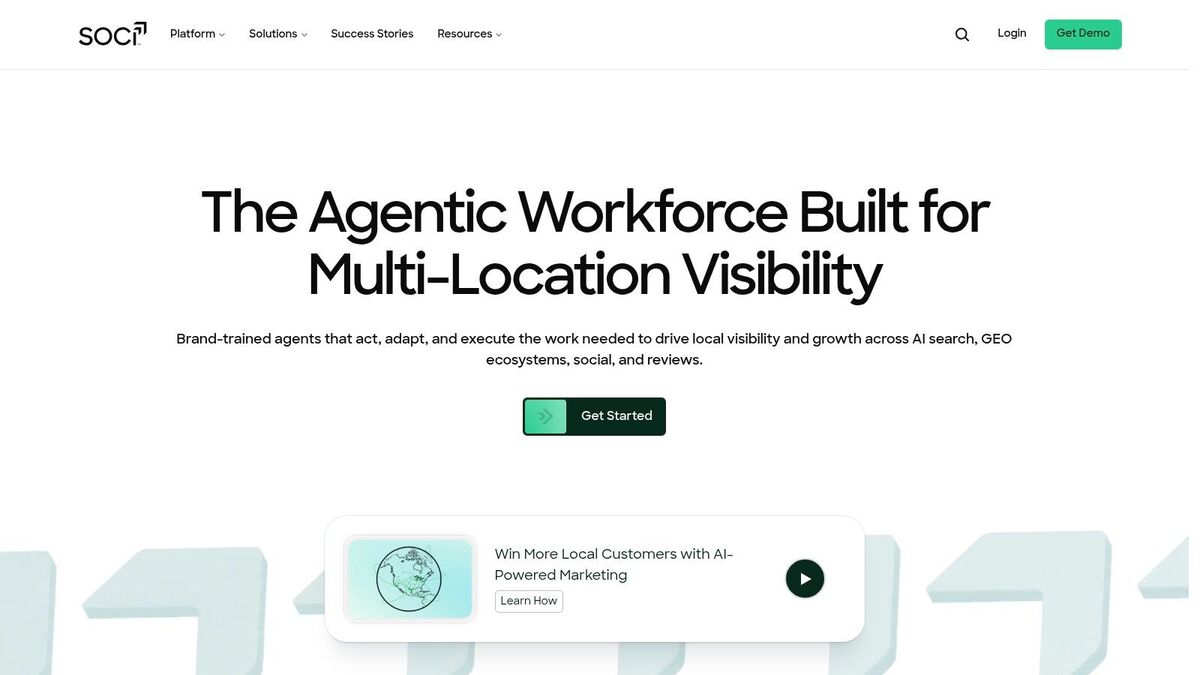
SOCi's standout feature for restaurant reputation management is "Genius Reviews," which leverages GPT-4 to generate on-brand, AI-assisted review responses. This allows corporate teams to establish response guidelines and empower local managers to reply quickly without going off-script. The platform's governance tools and approval workflows are critical for maintaining a unified brand voice while still allowing for localized, authentic engagement. It’s a powerful tool for complex organizations needing to coordinate marketing efforts.
Key Features & Assessment
While SOCi excels at centralized control, its enterprise focus means it's not a fit for smaller operators. The platform is comprehensive, covering more than just reviews, but this complexity comes with a steep price tag and a sales-led onboarding process. Access to features and pricing information requires a demo, reflecting its target market of large, multi-location brands.
Feature Analysis | Assessment |
|---|---|
Review Management | Enterprise-grade. Centralized dashboard with AI-powered "Genius Reviews" for on-brand, scalable responses and strict approval workflows. |
Review Generation | Less of a primary focus, as the platform is more geared towards managing and responding to existing feedback across a wide digital footprint. |
Cost | Custom/Enterprise. Pricing is not public and requires a custom quote based on the number of locations and features needed. |
Limitations | Overkill and cost-prohibitive for single-location restaurants or small groups. The sales-driven model lacks transparency for those exploring options. |
Website: https://www.meetsoci.com
11. Yext
Yext is primarily a listings management platform designed to ensure consistency across the digital ecosystem, a crucial task for multi-location restaurant groups. It syncs business information like name, address, and phone (NAP) across dozens of directories, from Google and Apple Maps to Yelp. This foundational accuracy is paired with review monitoring tools, making it a hybrid platform that tackles both visibility and reputation, particularly for chains that need centralized control.
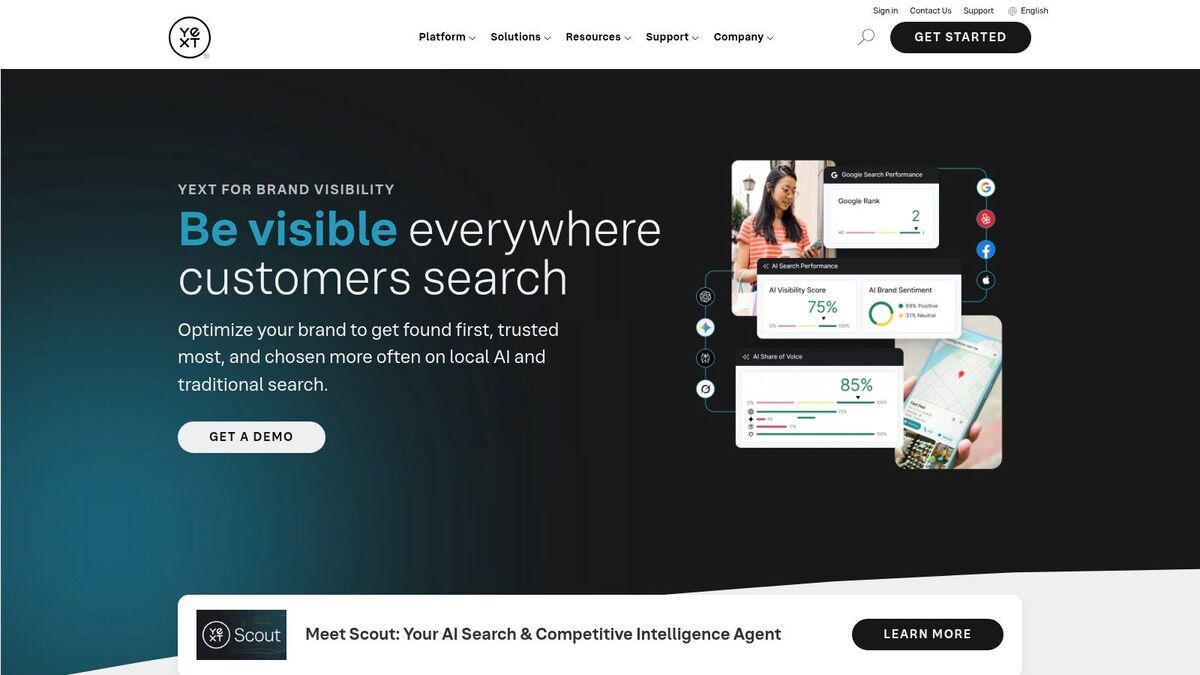
While its core strength lies in broadcasting correct location data, Yext provides the necessary tools to monitor and respond to reviews from a single dashboard. This combination helps restaurant brands save significant time that would otherwise be spent manually updating individual profiles on each publisher's site. It’s a powerful tool for maintaining brand consistency at scale.
Key Features & Assessment
Yext excels at solving the data consistency problem for enterprises, which is a key part of online reputation. However, its reputation management features are more foundational compared to specialized platforms. For restaurants seeking deep operational insights from feedback, a dedicated tool might be a better fit, but for wide-scale listings control, Yext is a market leader.
Feature Analysis | Assessment |
|---|---|
Review Management | Centralized monitoring and response capabilities are included, covering a wide network of partner sites. |
Review Generation | Lacks dedicated tools like QR-code surveys or SMS campaigns for proactively generating new reviews. |
Cost | Quote-based. Pricing is often enterprise-level, making it a significant investment for single-location or small-chain restaurants. |
Limitations | Reputation management is a secondary feature to its core listings product. The platform can feel complex, and some users express concerns about data ownership after canceling a subscription. |
Website: www.yext.com
12. Capterra – Reputation Management Software Category
Instead of being a direct tool, Capterra serves as a crucial starting point in your search for the right software. It's a massive software marketplace where you can compare dozens of restaurant reputation management tools side-by-side. For restaurant owners short on time, this platform is an efficient research hub for shortlisting potential vendors based on verified user reviews, feature sets, and industry suitability before committing to demos. It helps you quickly understand the landscape of available solutions.
Think of Capterra as the research phase before you invest. You can filter platforms by specific needs like sentiment analysis or survey capabilities, read what other restaurateurs are saying, and see at-a-glance comparisons. This process helps you identify a handful of top contenders, like Birdeye or Broadly, ensuring you only spend time evaluating tools that truly fit your operational requirements and budget.
Key Features & Assessment
While it won't manage your reviews for you, Capterra empowers you to make a more informed purchasing decision. Its value lies in saving time and providing a market-wide perspective that is difficult to get otherwise. It’s an essential first step for any restaurant serious about finding the perfect reputation management partner.
Feature Analysis | Assessment |
|---|---|
Vendor Shortlisting | Excellent for building a comparison list with filters for features, integrations, and business size. |
User Reviews | Aggregated, verified user feedback provides real-world insights into a platform's strengths and weaknesses. |
Cost | Free. The platform is free for buyers to use for research and comparison. |
Limitations | It's an aggregator, not a service provider. You must engage with vendors directly for trials or purchases, and some listings may be promoted. |
Website: capterra.com/reputation-management-software/
When a review arrives — positive or negative — the response is as visible as the review itself. Every prospective customer who reads a complaint also reads whether the restaurant addressed it. A complete framework for handling each rating type is in our guide on how to respond to Google reviews.
Top 12 Restaurant Reputation Management Tools — Feature Comparison
Product | Core features | UX / Quality | Value proposition | Target audience | Price |
|---|---|---|---|---|---|
FeedbackRobot | AI-generated surveys, cross-channel capture, shared team inbox, real-time sentiment, automations | Fast responses, AI summaries, centralized workflows | Turn feedback into retention and operational actions; social-proof widgets | Hotels, restaurants, retail, clinics, professional services, multi-location teams | Starter · Growth · Scale · 14‑day free trial |
Google Business Profile | Manage/reply to Google reviews, direct review link/QR, notifications | Ubiquitous reach, simple dashboard, essential for local search | Baseline reputation management and SEO impact | Local restaurants and storefronts | Free |
Yelp for Business | Claim page, reply to reviews, ads, upgrade packages, messaging | High-intent diners, on-platform discovery | Drive visibility and bookings via Yelp audience and ads | Restaurants focused on local discovery | Free listing; ads/upgrades billed (variable) |
Tripadvisor (Management Center + Ads) | Reply to reviews, listing edits, CPC ads, Premium tools, mobile app | Popular research channel, mobile-friendly tools | Capture researching diners and boost conversion with Premium/ads | Restaurants aiming at tourists and research-driven diners | Ads/Premium pricing varies by location (variable) |
OpenTable for Restaurants | Reservations + guest data, review prompts, messaging, POS integration | Tight booking-to-feedback flow, guest profiles | Convert bookings into insights and service recovery | Reservation-driven restaurants and groups | Tiered plans (Basic/Core/Pro) + possible cover fees |
Birdeye | Centralized reviews, BirdAI responses, listings, social scheduling, multi-location | Unified dashboard, broad channel coverage | All-in-one reputation + messaging to reduce vendor sprawl | Multi-location restaurants and mid-market brands | Custom / quote-based |
Podium | SMS review invites, consolidated messaging, payment links, 10DLC support | High review velocity via text, conversational UX | Drive reviews and payments through SMS-first workflows | Local businesses prioritizing SMS engagement | Custom / quote-based |
Reputation (formerly Reputation.com) | Multi-location dashboards, sentiment analytics, surveys, workflows | Enterprise reporting and governance | Governance at scale with deep CX analytics for franchises | Large chains, franchises, enterprise hospitality | Enterprise pricing (custom) |
ReviewTrackers | Centralized review monitoring, alerts, analytics, location pricing | Clean dashboards, alerting for managers | Practical toolkit for SMBs to scale review ops | Independents and small restaurant groups | Location-based / quote-based |
SOCi (CoMarketing Cloud) | GPT-4 review responses (Genius Reviews), governance, local social/review integrations | Brand-compliant AI responses at scale | Centralized local marketing ops for franchises | Multi-location brands and franchises | Enterprise pricing (custom) |
Yext | Listings sync across publishers, review monitoring, analytics | Keeps NAP consistent across directories | Reduce listing drift and maintain discovery across publishers | Chains and multi-location operations | Quote-based / enterprise packages |
Capterra (Reputation Mgmt category) | Vendor listings, feature filters, user reviews, comparison grids | Marketplace UX for shortlisting vendors | Save evaluation time and surface vendor ratings | Buyers researching reputation software | Free to use (aggregator) |
If you're comparing options, our full guide to the best reputation management software ranks 12 platforms by AI response speed, integrations, and pricing — a useful shortlist before committing to a platform.
Tools handle the monitoring and aggregation — but the response itself still needs to be right. The guide to responding to negative reviews covers exactly what to say for the most common complaint types in hospitality: staff interactions, wait times, factual disputes, and the one-star with no text.
Managing existing reviews is one half of the equation — building the volume that makes your rating durable is the other. The guide to getting more Google reviews covers the full strategy for restaurants: QR codes at the table, post-visit SMS triggers, and how to turn resolved complaints into five-star reviews.
For restaurants specifically, two Google guides are worth bookmarking: how to ask for Google reviews covers the post-visit SMS and QR code flows that work best in hospitality, and how to remove a Google review explains what actually qualifies for removal when a review is fake or violates policy.
See the full restaurant reputation management guide for industry-specific tactics and platform comparisons.
How to Choose the Right Tool and Turn Feedback into Fuel for Growth
Navigating the landscape of restaurant reputation management tools can feel overwhelming, but the journey from raw customer feedback to measurable business growth is clearer than ever. We've explored a wide spectrum of platforms, from essential free listings like Google Business Profile to comprehensive, enterprise-level solutions like SOCi and Yext. Each tool offers a unique approach to the same core challenge: understanding and influencing how customers perceive your brand.
The central takeaway is that modern reputation management is no longer a passive, defensive activity. It’s an active, data-driven strategy. The best tools don't just help you react to a negative review; they empower you to proactively gather insights, identify operational weaknesses, and celebrate your team's successes. It's about transforming every comment, star rating, and survey response into fuel for your restaurant's engine.
Making the Right Choice: Your Restaurant's Needs First
Selecting the perfect tool from this list isn't about finding the one with the most features. It's about identifying the one that aligns with your specific operational reality. Before you make a decision, consider these critical factors:
Your Stage of Growth: A single-location cafe has vastly different needs than a 50-unit franchise. Smaller operations might thrive with a combination of native platforms and a focused tool like FeedbackRobot, while larger chains will need the scalability and centralized control offered by platforms like Reputation or SOCi.
Your Biggest Pain Point: Are you struggling with low review volume? Look for tools with strong review generation features. Is your team overwhelmed by responding to feedback? Prioritize platforms with AI-powered response suggestions and automation. Are you blind to operational trends? Focus on tools with advanced sentiment analysis and reporting.
Tech Stack Integration: Your reputation tool shouldn't live on an island. Consider how a new platform will connect with your existing systems, such as your POS (like Toast) or PMS (like Mews). Seamless integrations create automated workflows, like triggering a survey after a payment, which saves time and captures more accurate, in-the-moment feedback.
Team Capacity and Buy-In: Who will be using this software daily? Your General Manager? A corporate marketing team? The best tool is one that your team will actually adopt. Look for intuitive interfaces, mobile accessibility, and features that make their jobs easier, not more complicated.
From Implementation to Impact: A Winning Strategy
Once you've chosen a tool, successful implementation requires a clear strategy. Don't just turn on the software and hope for the best. Instead, commit to a process. Start by establishing a baseline of your current online reputation. Then, set clear, measurable goals. Do you want to increase your average star rating by 0.5 points in six months? Or decrease negative sentiment mentions about "service speed" by 20%?
Empower your team by assigning clear ownership for monitoring and responding to feedback. Use the tool's insights to guide staff training and celebrate positive mentions publicly. This creates a virtuous cycle where exceptional service generates positive reviews, which in turn attract more customers and motivate your team. By strategically using one of these powerful restaurant reputation management tools, you shift from simply managing reviews to actively engineering a five-star customer experience.
The ultimate goal is to create a closed-loop system where you collect smarter feedback from all channels, act faster on operational insights and service recovery, and grow stronger as a brand that customers trust and champion. This is the new recipe for success in the competitive hospitality industry.
Ready to transform your feedback from a chore into your greatest asset? FeedbackRobot is the only Feedback Operating System built to unify your reviews, surveys, and messages into a single engine for growth. See how our Radar dashboard, AI Summaries, and Resolutions Engine can help you collect smarter, act faster, and grow stronger.
🚀 Struggling with a Tough Review?
Don’t let a single customer complaint damage your hard-earned reputation. Use our free AI Negative Review Responder to generate professional response examples for bad feedback and customer complaints in seconds.
Whether it's a complaint about service speed or food quality, our tool helps you turn your most challenging feedback into a marketing opportunity and shows every guest that you care.
What is the biggest threat to a restaurant's online reputation?
Unanswered negative reviews regarding food safety or service speed. Reputation tools flag these high-priority keywords immediately so management can address them before they go viral.
Can restaurant tools integrate with Toast or Clover POS?
Yes. Integration is key. By syncing with your POS, the tool automatically sends a text survey the moment a check is closed, capturing feedback while the meal is still fresh in the guest's mind.
How do I encourage more 5-star reviews on Google?
Use a 'Survey-First' approach. Ask guests for private feedback via a QR code; happy guests are then automatically prompted to share their experience publicly on Google.
Is there a way to filter out fake restaurant reviews?
While you can't block them, reputation tools make it easy to flag suspicious reviews for platform moderation and help you craft factual, professional rebuttals to set the record straight.
Do these tools help with Yelp 'Search' visibility?
By consistently generating fresh content and engagement on your Yelp profile, you appear more active to Yelp’s algorithm, which can improve your placement in local searches.
Put this on autopilot
Negative Review Response
A ready-made FeedbackRobot automation that runs this for you — deploys free in under 5 minutes.
Stop reading about it. Let your agent handle it.
25 free AI actions · no credit card required
Start Free

![How to Measure Customer Satisfaction Without Surveys [10 Methods]](/images/legacy/HZ9HoLgQGt0VJJpCMqdS6vtTcAE.webp)